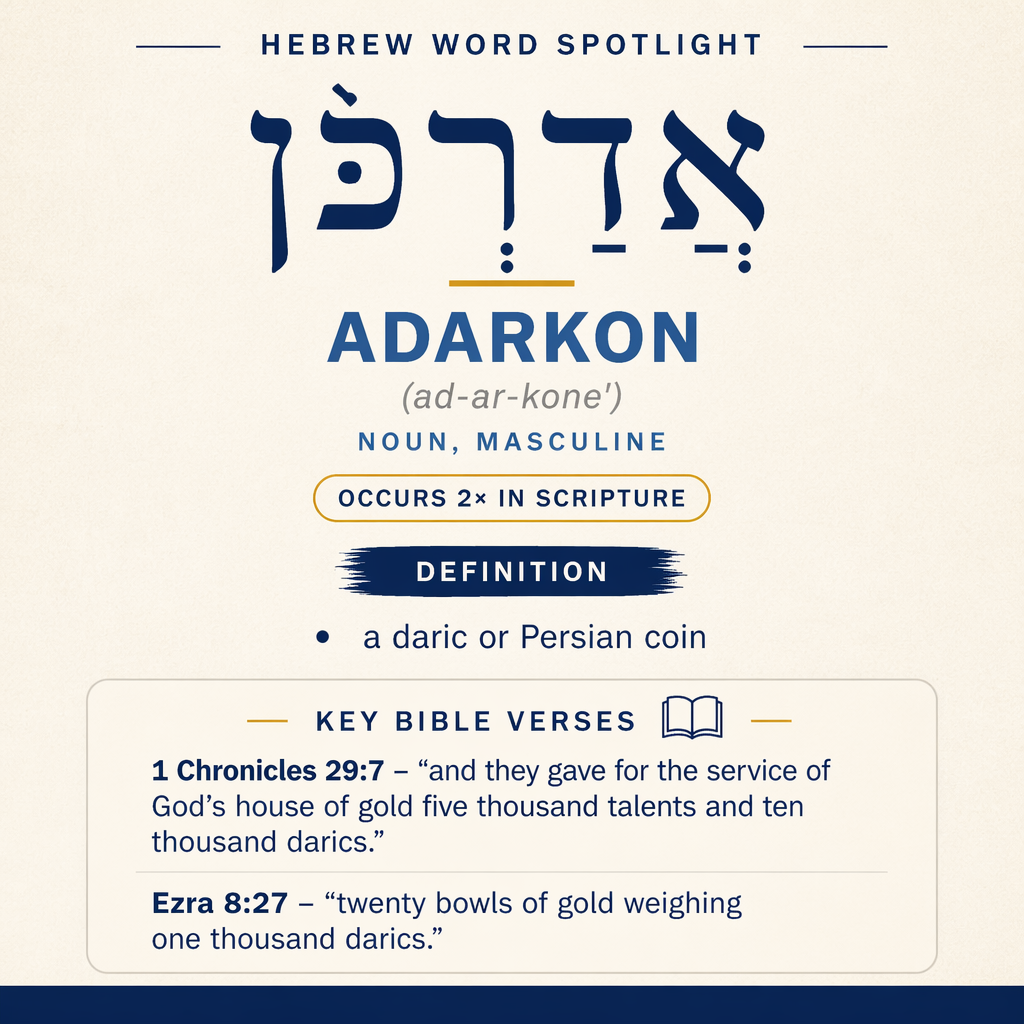
‘adarkon

ad-ar-kone’
Parts of Speech: Noun Masculine

‘adarkon Definition

NAS Word Usage – Total: 2

  1. drachma, dram, daric – unit of weight and value (of gold, money) equal to 128 grains or 4.32 grams

Understanding the Meaning of ‘Adarkon in Hebrew

In the study of Hebrew language and its Biblical roots, one might come upon the word ‘adarkon. This term often raises questions about its meaning and usage in context. So, what does ‘adarkon mean in Hebrew? Simply put, ‘adarkon refers to a “spear” or a “weapon” used in battle. This term can provide insights into ancient warfare and the cultural significance of weaponry in Hebrew history.

Books Worth Reading:
Sponsored
Book 3154Book 3131Book 3162Book 3129Book 3161

Etymology of ‘Adarkon

The word ‘adarkon is derived from the Hebrew root word “דִּרְקוֹן” (d’rakon), which relates to the action of piercing or penetrating. The term is often found in texts describing conflict, protection, and survival during ancient times.

Adarkon connects to various narratives in which battle and survival are significant themes. For example, the term often appears in verses that depict conflicts among the Israelites and their enemies. Understanding the word’s origins helps one appreciate the importance of weaponry in those historical contexts.

Use in Ancient Texts

Biblical References

In the Hebrew Bible, the mention of weapons, including ‘adarkon, highlights the importance of physical strength and protection. For instance, in various warfare scenarios depicted in books like Joshua and Judges, the mention of a spear or weapon infers the dire circumstances faced by the Israelites.

Books Worth Reading:
Sponsored
Book 3154Book 3131Book 3162Book 3129Book 3161

In Judges 5:8, a unique situation illustrates the context in which weapons like ‘adarkon were critical to survival: “They chose new gods; then was war in the gates: was there a shield or spear (adarkon) seen among forty thousand in Israel?” This verse underscores the absence of protective measures and the reliance on weapons in dire straits, emphasizing the fearlessness and valor required in battle.

The Role of ‘Adarkon in Warfare

The word serves as a reminder of the tangible aspects of warfare faced by biblical figures. Spear-like weapons played crucial roles in defending territory and asserting dominance over enemy groups. Adarkon signifies strength, bravery, and resourcefulness in the face of peril.

Consider a hypothetical scenario: an Israelite warrior standing with his fellow soldiers, preparing for an imminent clash. Each warrior grips their adarkon tightly, a symbol of their shared commitment to defend their land. The spear becomes more than a weapon; it embodies their hope, loyalty, and determination.

Books Worth Reading:
Sponsored
Book 3154Book 3131Book 3162Book 3129Book 3161

Cultural Significance

Symbols of Power

In light of history, weapons such as ‘adarkon were seen as symbols of power and strength. Owning an adarkon may have signified not just military might but also social status. Warriors who could wield such weapons were often revered in their communities.

For instance, a person well-versed in the arts of warfare—perhaps a chief or designated leader—would carry his adarkon with pride. This connection to the spear represents both a personal identity and an allegiance to one’s people, culture, and traditions.

The Evolution of Weaponry

Over time, the significance of ‘adarkon also reflects the evolution of weaponry in Hebrew culture. In earlier periods, spears were among the most common weapons used in battles, transitioning to more advanced forms as technologies improved.

Books Worth Reading:
Sponsored
Book 3154Book 3131Book 3162Book 3129Book 3161

For example, during the time of King David, a well-known biblical warrior and leader, various texts reference the evolution in weapons—from simple spears to more complex armaments that included metal components. The versatility and adaptability of ‘adarkon showcase the ingenuity of those who fought and survived in ancient times.

Modern Interpretations and Uses

Contemporary References

In modern Hebrew, the word ‘adarkon may not be as frequently used, but its implications remain relevant. Understanding the historical context of the term may offer insights into how ancient experiences shape contemporary culture.

For instance, certain filmmakers may choose to incorporate characters wielding an ‘adarkon during historical reenactments of biblical battles, enhancing the authenticity of the portrayal. Such references deepen the audience’s understanding of not just the term but also the challenges faced by historical figures.

Books Worth Reading:
Sponsored
Book 3154Book 3131Book 3162Book 3129Book 3161

Learning Through Historical Fiction

Consider a classroom setting where students explore historical themes through literature. A teacher might introduce the term ‘adarkon while discussing a book that depicts Israelite life. Through the lens of a gripping narrative, students learn not just language but also the values of courage, community, and survival in a challenging world.

By linking the term ‘adarkon with real-world examples, students can better grasp its significance beyond mere language—it becomes a narrative thread that weaves together the complexities of ancient culture.

Examining Related Terms

Synonyms in the Hebrew Language

To fully understand ‘adarkon, it is beneficial to examine related Hebrew words conveying similar meanings. Terms such as “חנית” (chanit) refer specifically to a spear and highlight different aspects of weaponry. ‘Adarkon carries connotations of strength and fearlessness, while chanit might emphasize precision and skill.

Books Worth Reading:
Sponsored
Book 3154Book 3131Book 3162Book 3129Book 3161

Both words, when encountered in biblical narratives, underscore the choices made in battle and the distinctions between various types of weaponry used. Through careful analysis, readers can appreciate the nuanced language employed to convey these themes.

Contextual Differences

The difference between ‘adarkon and other similar terms like “מחסל” (machsel) for “slaughter” or “killing” also opens doors to understanding the cultural context. While ‘adarkon emphasizes the weapon itself, terms like machsel reflect the broader aspects of conflict and its aftermath.

This distinction illustrates how language embodies not just action but also the ethics and emotions surrounding warfare. The word ‘adarkon can symbolize the choices made by warriors, while machsel may evoke thoughts of loss and survival, highlighting the multifaceted nature of language and its implications in Biblical texts.

Books Worth Reading:
Sponsored
Book 3154Book 3131Book 3162Book 3129Book 3161

Conclusion: A Word Embedded in History

‘Adarkon is not merely a word; it encapsulates a rich tapestry of Hebrew history tied to conflict, courage, and the people of ancient Israel. To recognize its meaning is to delve into the heart of what these warriors faced. Each reference to ‘adarkon carries further implications about survival, identity, and the social structures that shaped those biblical times.

As one encounters the term across various texts, it becomes evident how deeply interwoven it is with the experiences and struggles of a people navigating through historical adversities. The conversation around ‘adarkon continuously evolves, shedding light on new interpretations and modern understandings while paying homage to its ancient roots.

Little Known Secrets

The Hebrew word “adarkon” carries intriguing meanings that many may not be familiar with.

Books Worth Reading:
Sponsored
Book 3154Book 3131Book 3162Book 3129Book 3161
  1. Meaning in Context: In biblical Hebrew, “adarkon” typically refers to a “young man” or “youth.” It emphasizes not just age but also the potential and vigor associated with youthfulness.
  2. Cultural Significance: The term can reflect societal views of young men in ancient Hebrew culture, where they were seen as future leaders, warriors, and bearers of family honor.
  3. Root Word Connection: “Adarkon” is connected to the root word “dar,” which means “to dwell” or “to live.” This connection implies a deeper significance relating to the vibrancy and liveliness of youth.
  4. Related Terms: The word is related to other Hebrew words like “adira,” meaning “noble,” and “ge’ullah,” meaning “redemption.” These connections layer additional meanings regarding the roles young men played in spiritual and communal contexts.
  5. Biblical References: While “adarkon” may not appear frequently in biblical texts, its presence in less common translations highlights it among discussions about lineage and heritage, particularly in narratives involving David and his successors.
  6. Symbol of Transition: The term often symbolizes a critical transition in life from boyhood to manhood, carrying with it various responsibilities in family and faith.
  7. Adarkon’s Variants: Different dialects of Hebrew, such as Aramaic, might feature variants of the word, showing how language evolves yet retains foundational meanings across cultures.
  8. Modern Usage: In contemporary Israeli culture, “adarkon” can be used informally to refer to a young man, illustrating how ancient language persists in modern society, often in unexpected ways.
  9. Literary Usage: Poets and writers have used “adarkon” to invoke themes of youth, courage, and the burdens of expectation, demonstrating its enduring resonance in literature beyond the biblical texts.
  10. Connection to Age: Interestingly, the usage of “adarkon” often implies not just youth but the fleeting nature of that phase of life, encouraging reflections on growth and change.

Conclusion

In summary, the Hebrew word “adarkon” carries rich meanings and interpretations that reflect its usage in scripture and tradition. While it may not be commonly encountered in everyday language, its roots and context provide insight into ancient beliefs and practices. Understanding “adarkon” helps us appreciate the depth of the Hebrew language and the cultural background of the Bible. By exploring such words, we can deepen our knowledge of the text and its impact on history and faith.

Common Questions Related to What Does ‘adarkon Mean In Hebrew

Q. What does the word ‘adarkon mean in Hebrew?
A. ‘Adarkon means “I will lead” or “I will guide” in Hebrew. It is derived from the root words that involve guidance or direction.

Q. Can you explain the Hebrew root of ‘adarkon?
A. Yes! The root of ‘adarkon is related to the Hebrew verb for “to lead” or “to guide,” indicating a sense of direction and authority.

Books Worth Reading:
Sponsored
Book 3154Book 3131Book 3162Book 3129Book 3161

Q. Is ‘adarkon used frequently in the Hebrew Bible?
A. No, ‘adarkon is not commonly found in the Hebrew Bible. It is more of a modern or poetic usage rather than a frequently used Biblical term.

Q. In what context might ‘adarkon be used today?
A. It might be used in prayers, poetry, or discussions about leadership, guidance, and the importance of leading others on the right path.

Q. What are some similar Hebrew terms to ‘adarkon?
A. Similar terms include “nahal,” which means “to lead” in a more gentle way, and “yatza,” which can mean “to go out” or “to direct.”

Books Worth Reading:
Sponsored
Book 3154Book 3131Book 3162Book 3129Book 3161

Q. Are there any Biblical figures associated with the meaning of ‘adarkon?
A. Yes, figures like Moses and Joshua can be seen as ‘adarkon figures, as they led the Israelites to the Promised Land.

Q. How can understanding ‘adarkon help us today?
A. Understanding ‘adarkon can help us appreciate the importance of good leadership and guidance in our own lives and communities.

Q. Does ‘adarkon have a different meaning in another context?
A. While the primary meaning is related to leading, the context can change its nuance, such as when discussing spiritual leadership versus physical leadership.

Books Worth Reading:
Sponsored
Book 3154Book 3131Book 3162Book 3129Book 3161

Q. How is ‘adarkon pronounced in Hebrew?
A. ‘Adarkon is pronounced as “ah-dar-kohn,” with emphasis on the second syllable.

Q. Can ‘adarkon be used metaphorically?
A. Yes, ‘adarkon can be used metaphorically to describe guiding someone through difficult times or leading a group in a moral or ethical direction.

About the Author

Ministry Voice

{"email":"Email address invalid","url":"Website address invalid","required":"Required field missing"}

Want More Great Content?

Check Out These Articles 

mba ads=78