Exploring the Meaning of Opheilema in Greek
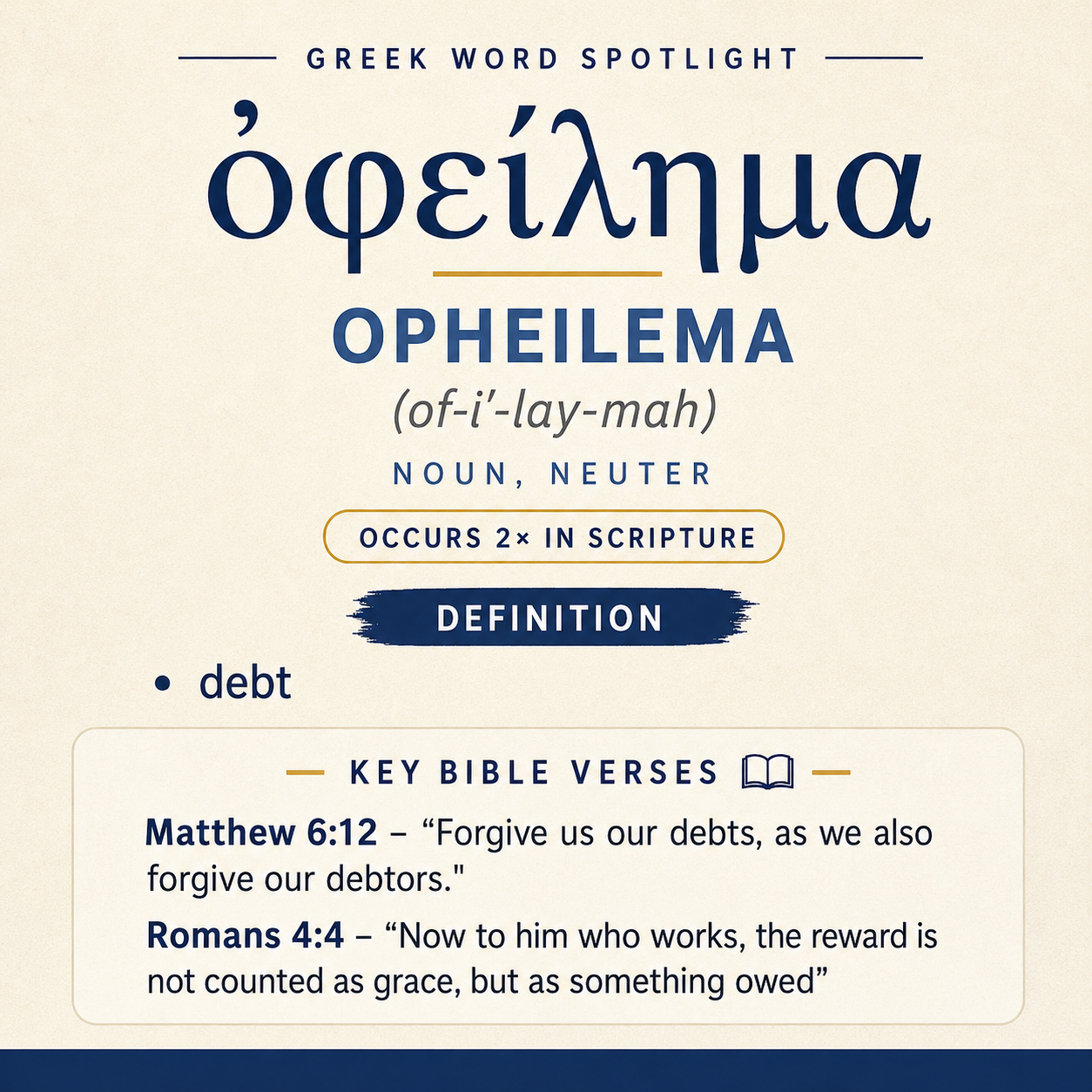
ὀφείλημα means “debt” and appears twice in Scripture: Matthew 6:12 and Romans 4:4.
Biblical Occurrences
It occurs 2 times in Scripture. The references are Matthew 6:12 and Romans 4:4.
Learn More →Verse Usage
In Matthew 6:12 it appears in the request, “Forgive us our debts.” In Romans 4:4 it describes something “owed,” not counted as grace.
Learn More →ὀφείλημα refers to a “debt,” a concrete financial image used in Scripture for what is owed and what may be forgiven. It appears in the Lord’s Prayer and in Paul’s explanation of how reward can be viewed as something owed rather than as grace.
Root and Related Words
ὀφείλημα (Opheilema) derives from the verb ὀφείλω (opheilo), “to owe” (Strong’s G3784). The noun expresses the result or reality of owing: an obligation framed in the language of debt.

Occurrences
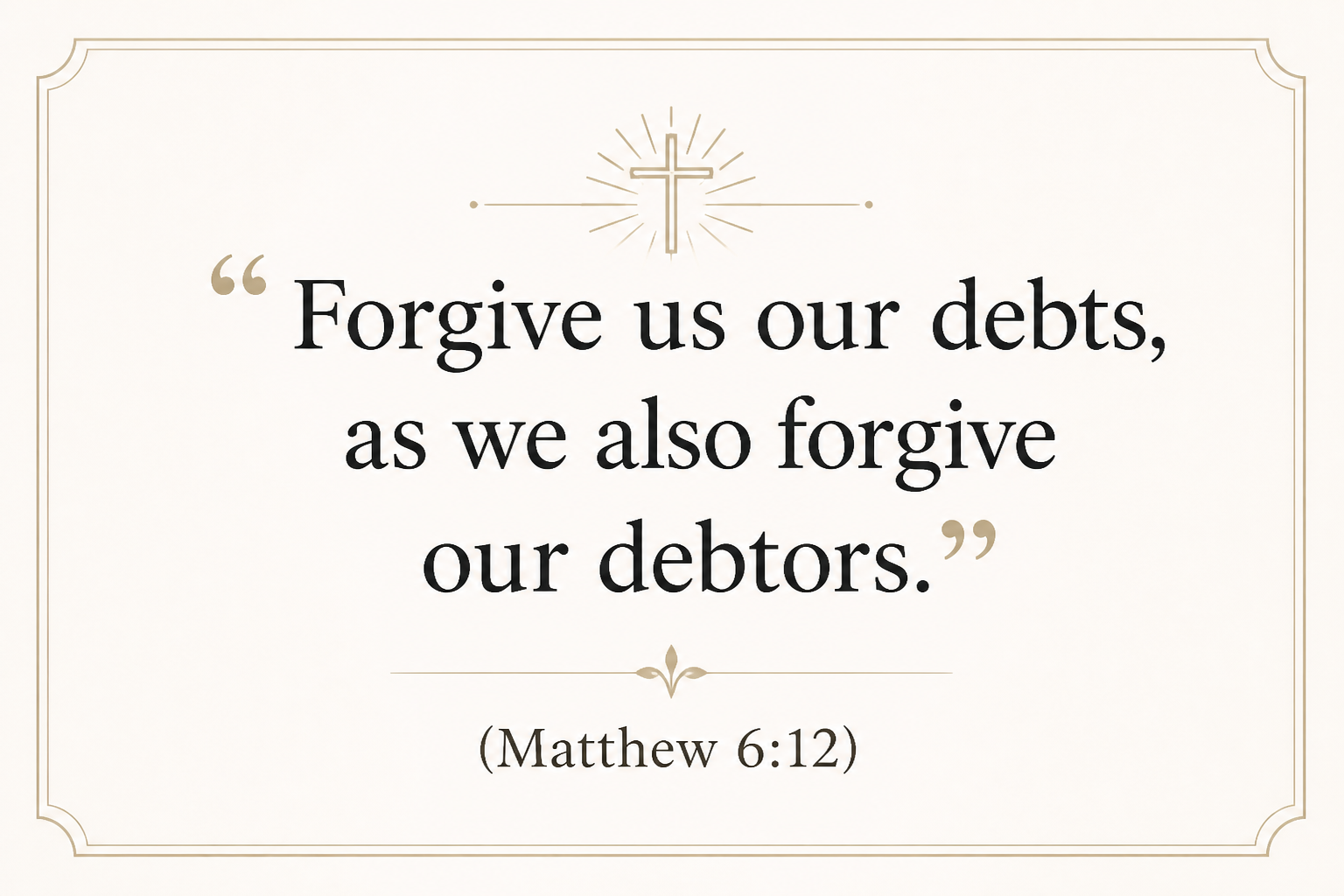
“Forgive us our debts, as we also forgive our debtors.” (Matthew 6:12)
Here ὀφείλημα stands within a petition addressed to God: “Forgive us.” The request assumes a relationship in which something genuinely stands against the petitioner—something describable as “debts”—and the needed action is release from that liability. The line also binds together two directions of forgiveness: the plea “Forgive us our debts” is paired with the pattern “as we also forgive our debtors.” In this setting the word carries the weight of what can be counted up as owed and then remitted. The sentence places “debts” alongside “debtors,” making the image relational as well as transactional: an obligation exists because one party owes another, and forgiveness is pictured as canceling that claim. The prayer’s structure makes ὀφείλημα more than a private feeling; it is something that can be held, demanded, or forgiven, and the worshiper asks for divine forgiveness while acknowledging a human practice of forgiving those who owe.
“Now to him who works, the reward is not counted as grace, but as something owed.” (Romans 4:4)
In Romans 4:4 the idea of debt is used to clarify a contrast: “not counted as grace” versus “as something owed.” The verse describes a familiar scenario from labor and payment. If a person “works,” then “the reward” can be reckoned in the category of obligation—what is due—rather than in the category of grace. In this scene, the debt concept functions as an accounting category: the reward is “counted” not as an undeserved gift but as an entitlement that follows from labor. The language presses the difference between a payment that must be rendered because it is owed and a benefit that is given as grace. The verse thus employs the debt image to illustrate how certain kinds of giving belong to the realm of obligation, not generosity; the reality of owing is the key point that explains why the reward in such a case would not be “counted as grace.”
Sense and Usage
Across these two passages, ὀφείλημα operates as a metaphor grounded in everyday realities: debts can be incurred, they can stand on a ledger, and they can be discharged. In Matthew 6:12, the term appears inside a prayer for forgiveness and is paired with the community’s corresponding practice of forgiving “debtors.” The prayer form treats debts as a genuine liability needing release, and it frames forgiveness in the familiar act of remitting what another owes. The wording implies a situation where obligations are real and personal: the one who forgives has a rightful claim, and forgiveness is pictured as laying down that claim.
In Romans 4:4, debt language is pressed into service for a theological distinction without changing the basic imagery. A worker’s “reward” can be considered “something owed,” meaning it is viewed as a due payment, not as grace. This use highlights the way “debt” language can mark the boundary between what is due by obligation and what is given freely. The verse does not require the reader to imagine a specific creditor or a specific debt instrument; instead, it relies on the simple logic of owing: when something is owed, it belongs to the realm of obligation, and it is counted accordingly.
Taken together, these occurrences show how “debt” can describe more than a financial situation while still preserving the clarity of the underlying picture. A debt is the kind of thing that can be held against someone (Matthew’s plea for forgiveness presumes this) and the kind of thing that can define the nature of a payment (Paul’s contrast assumes the accounting of what is owed). The term’s power in both contexts lies in its objectivity: a debt is not merely a mood or an impression, but a recognized obligation that may be either satisfied or forgiven.
Imagery
Both passages lean on the plain imagery of a ledger and a settled account. Matthew 6:12 presents forgiveness as the canceling of what is owed, joined to the community’s own release of others from obligation. Romans 4:4 uses the same conceptual world to distinguish a payment rendered because it is due from a benefit that would be “counted as grace.” In each case, ὀφείλημα brings a concrete sense of accountability into view: what is owed can be reckoned, and it can also be forgiven.
Sources: Lexical data from Strong’s Exhaustive Concordance and the Translators Brief Lexicon of Extended Strongs for Greek (STEPBible, CC BY). Occurrence data from the Translators Amalgamated Greek New Testament (STEPBible, CC BY). Scripture quotations from the World English Bible (public domain).