
Exploring the Meaning of Nomisma in Greek
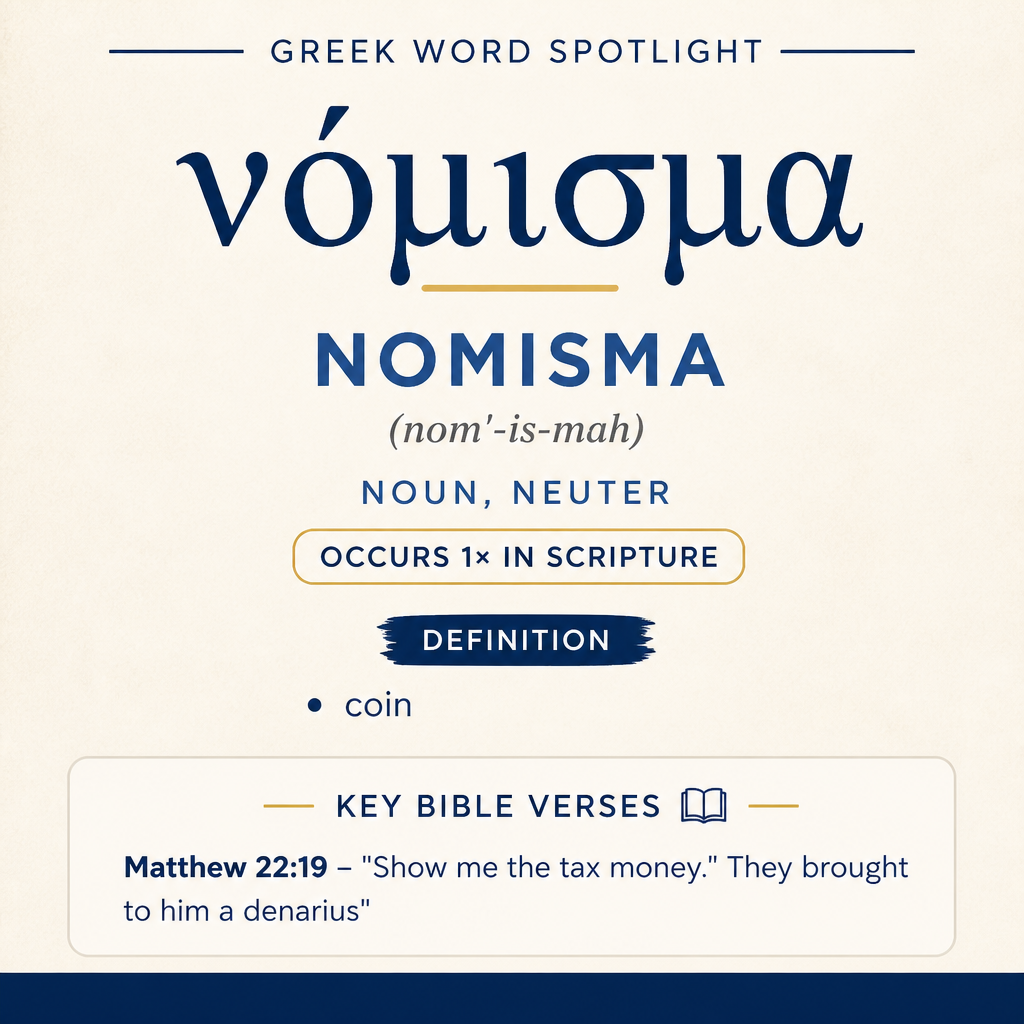
νόμισμα (Nomisma) means “coin” and appears once in Scripture, in Matthew 22:19.
Biblical Usage
It occurs 1 time in Scripture. In Matthew 22:19, it refers to the tax money requested by Jesus.
Learn More →Verse Context
In Matthew 22:19, the request “Show me the tax money” is met by bringing a denarius.
Learn More →νόμισμα means “coin” and appears once in the New Testament, in a scene about paying tax. In its single attestation, it names the physical money produced on demand for inspection.
Root and Related Words
νόμισμα (Nomisma) is related to the verb νομίζω (nomizō), “to think” (Strong’s G3543).
Occurrences
“Show me the tax money.” They brought to him a denarius. (Matthew 22:19)
In Matthew 22:19, νόμισμα stands in the imperative request, “Show me the tax money.” The word points to a tangible object that can be displayed, held out, and examined. The response matches that request with an actual piece of currency: “They brought to him a denarius.” Within the line as quoted, the narrative focus is not on an amount in the abstract but on a single, identifiable monetary item that can be produced in the moment.
Because the request is specific—“the tax money”—νόμισμα functions as the concrete evidence of what is being discussed. The passage’s movement is from speech to sight: a verbal question about tax is met by the presentation of a coin. The word therefore works as a hinge between a disputed issue (“tax”) and a visible, ordinary object (“a denarius”) that can be shown.
Sense and Usage
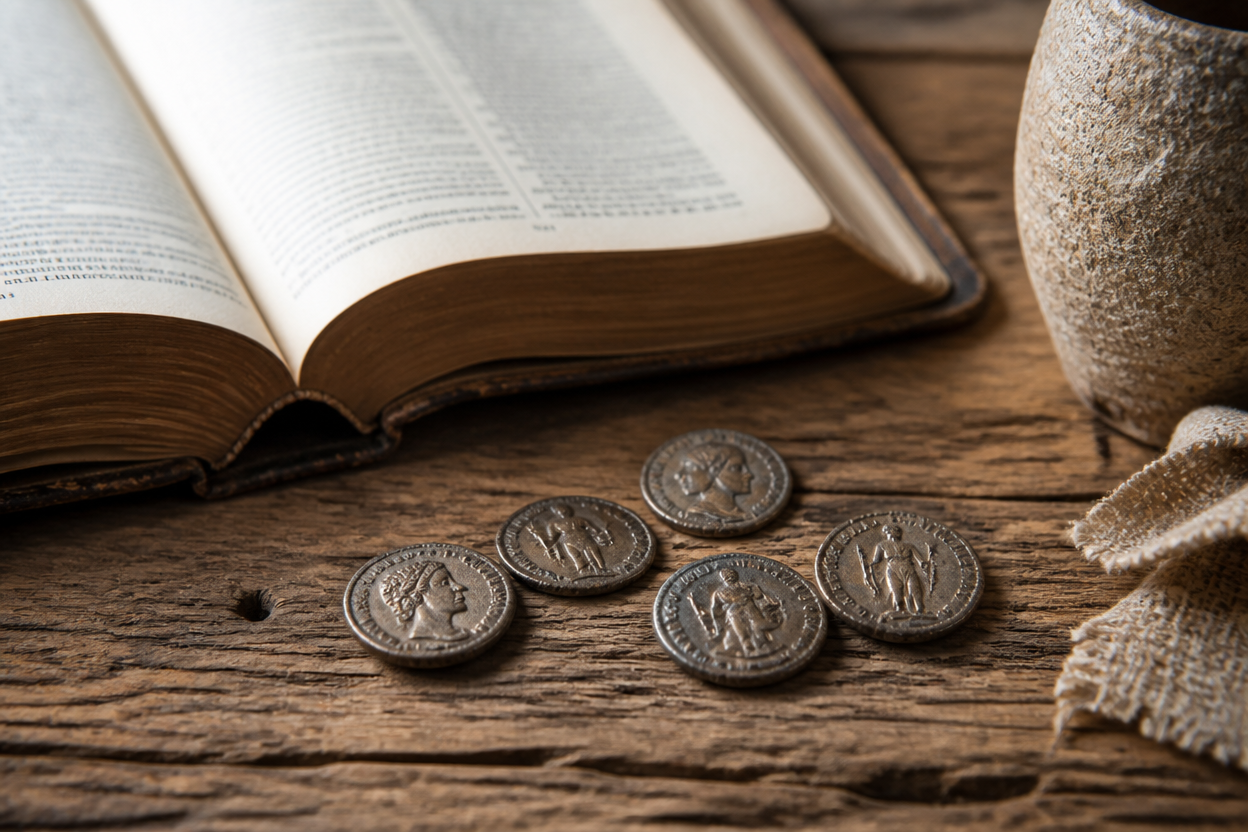
As “coin,” νόμισμα names a unit of money in its physical form, not merely the concept of payment. Matthew 22:19 frames it as something that can be requested and produced: “Show me…” implies visibility and inspection, and “They brought…” implies portability. The coin is treated as an object with enough specificity to be introduced into the conversation as a shared reference point.
The verse’s pairing of “tax money” with “a denarius” shows how νόμισμα can be used for money designated for a particular public obligation. The line does not describe the coin’s appearance or value in detail; instead it emphasizes the coin’s role as the representative piece of money tied to the tax question. In that setting, νόμισμα gathers the whole matter of payment into something small and concrete that can be set before someone when words alone are contested.
The scene also shows that the word can operate with ordinary, recognizable currency: the money requested is not hypothetical. The coin is close at hand, present among the speakers, and readily brought forward. That immediacy keeps νόμισμα grounded in everyday exchange, where questions of obligation are handled with a piece of metal that can be shown.
Imagery
Matthew 22:19 gives νόμισμα the imagery of an outstretched coin presented for scrutiny. The moment is visually simple—“Show me…” followed by “They brought…”—and the coin becomes the focal point where an argument about tax is anchored in something visible and touchable.
Sources: Lexical data from Strong’s Exhaustive Concordance and the Translators Brief Lexicon of Extended Strongs for Greek (STEPBible, CC BY). Occurrence data from the Translators Amalgamated Greek New Testament (STEPBible, CC BY). Scripture quotations from the World English Bible (public domain).




