
Exploring the Meaning of Hodoiporeo in Greek
ὁδοιπορέω means “to journey” and appears once in Scripture, in Acts 10:9.
Scripture Occurrence
This word occurs 1 time in Scripture. Its single occurrence is Acts 10:9.
Learn More →Context in Acts
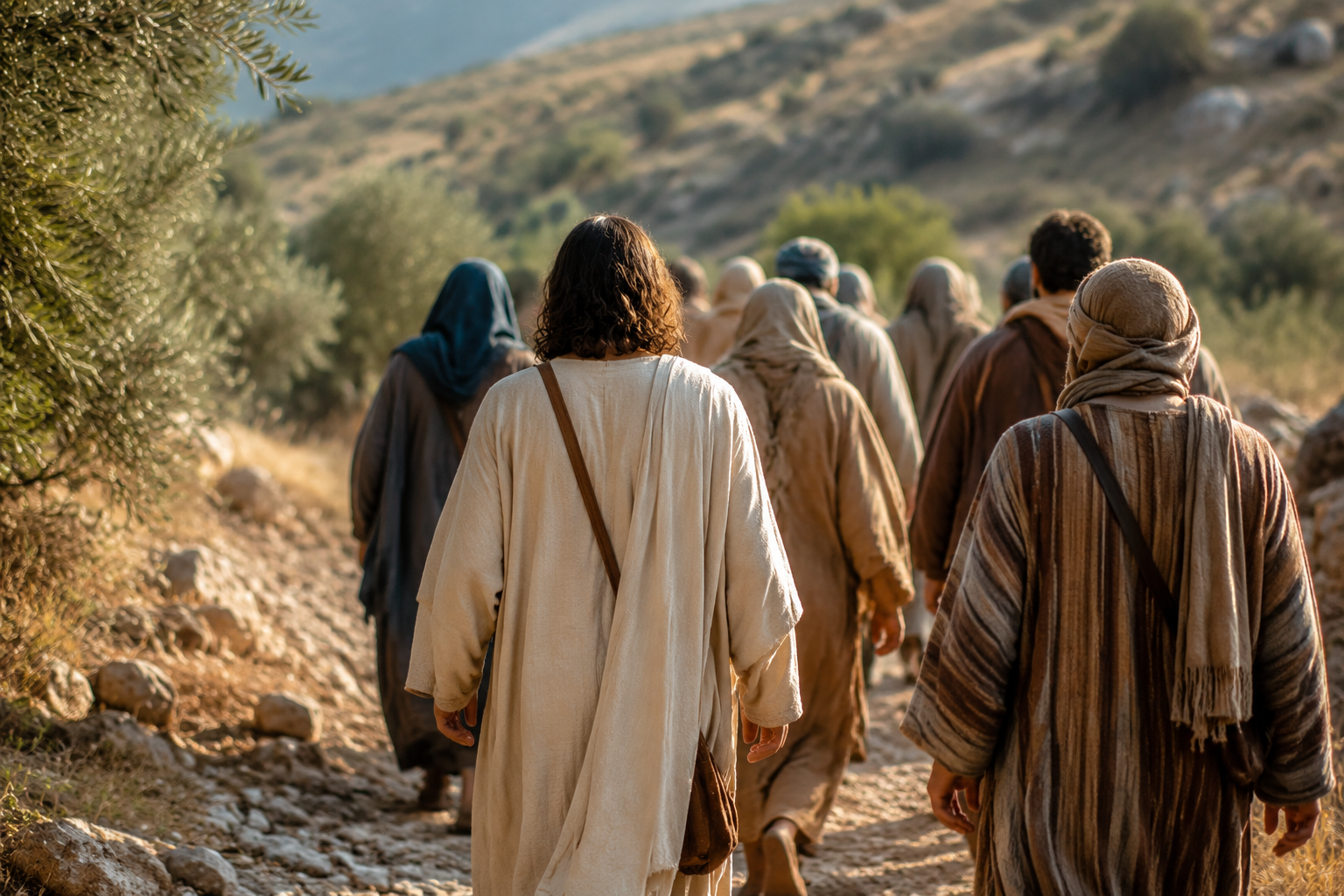
In Acts 10:9, it describes people being “on their journey” and nearing the city. In that setting, Peter goes up on the housetop to pray.
Learn More →ὁδοιπορέω means “to journey” and appears once in the New Testament, in Acts 10:9. In that setting it describes movement toward a city as the backdrop for Peter’s prayer at midday.

Root and Related Words
ὁδοιπορέω is connected with two Greek words: hodos (ὁδός), “road,” and poreuomai (πορεύω), “to travel.” Together they frame the verb’s imagery as travel conceived along a road, emphasizing movement from one place toward another.
Occurrences
“Now on the next day as they were on their journey, and got close to the city, Peter went up on the housetop to pray at about noon.” (Acts 10:9)
In Acts 10:9, ὁδοιπορέω supplies the narrative’s sense of active transit: “they were on their journey” as the group “got close to the city.” The verb places the reader with travelers who are already underway and nearing their destination. This travel note is not merely a time marker (“on the next day”) but a situational marker: events unfold while movement is in progress.
The verse also juxtaposes two kinds of action occurring in the same timeframe. While “they were on their journey” and approaching the city, “Peter went up on the housetop to pray at about noon.” The travel of the group creates the immediate context for Peter’s separate movement—he ascends to a rooftop—so that the setting combines outward progress along a route with a purposeful pause for prayer in a specific place and hour. ὁδοιπορέω thus contributes the feel of an approach: the city is coming into view, the day is advancing, and the scene is poised for the next development.
Because the verse speaks of drawing near (“got close to the city”), the journey is portrayed as having direction and nearing completion, not as wandering or aimless motion. The verb situates travel as part of an itinerary: there is a “next day,” there is a “city,” and there is a measurable point along the route—close enough for the narrative to highlight it. In this single attestation, ὁδοιπορέω functions as a concise way to set travel in motion and to locate the action at a particular stage of that motion.
Sense and Usage
The sense “to journey” in ὁδοιπορέω is expressed in Acts 10:9 through the portrayal of travel as an ongoing activity (“were on their journey”) that advances toward a clear geographic goal (“got close to the city”). The verb, especially when paired with a nearness indicator, presents a journey not as an abstract idea but as a lived interval of time in which other actions can occur. In this way, “journey” becomes a narrative container: it gathers time (“on the next day,” “about noon”), movement (approaching the city), and concurrent actions (Peter’s going up to pray) into a single frame.
The connection with hodos (ὁδός), “road,” brings a concrete mental picture to “journey”: travel conceived as being on a route. The association with poreuomai (πορεύω), “to travel,” reinforces the idea of purposeful motion. In Acts 10:9, these associations fit the verse’s phrasing: the travelers are not simply in motion; they are approaching a city by stages, with the narrative noting the moment when they are “close.” ὁδοιπορέω therefore supports a scene in which the journey has momentum and direction and is far enough along to be worth mentioning precisely then.
Within the verse, the verb also underscores how ordinary travel time can be significant time. The statement about the journey is immediately followed by a description of Peter’s prayer at noon. The effect is to present the travel as the moving backdrop against which a decisive moment of prayer is placed. “Journey” is not treated as empty space between events; it is the setting of the moment, marking the day’s progress and the group’s proximity to a destination, while another action—Peter’s ascent and prayer—takes place in parallel.
Imagery
Acts 10:9 evokes the imagery of a road-bound approach to a city: travelers advancing through the day, drawing near to their destination. Against that forward motion stands a still point—Peter going up to a housetop to pray “at about noon.” ὁδοιπορέω carries the sense of ongoing movement that makes the pause for prayer feel situated in real time and real distance: the road is being traveled, the city is near, and the hour is fixed.
Sources: Lexical data from Strong’s Exhaustive Concordance and the Translators Brief Lexicon of Extended Strongs for Greek (STEPBible, CC BY). Occurrence data from the Translators Amalgamated Greek New Testament (STEPBible, CC BY). Scripture quotations from the World English Bible (public domain).




