
Exploring the Meaning of Hekatontarches in Greek
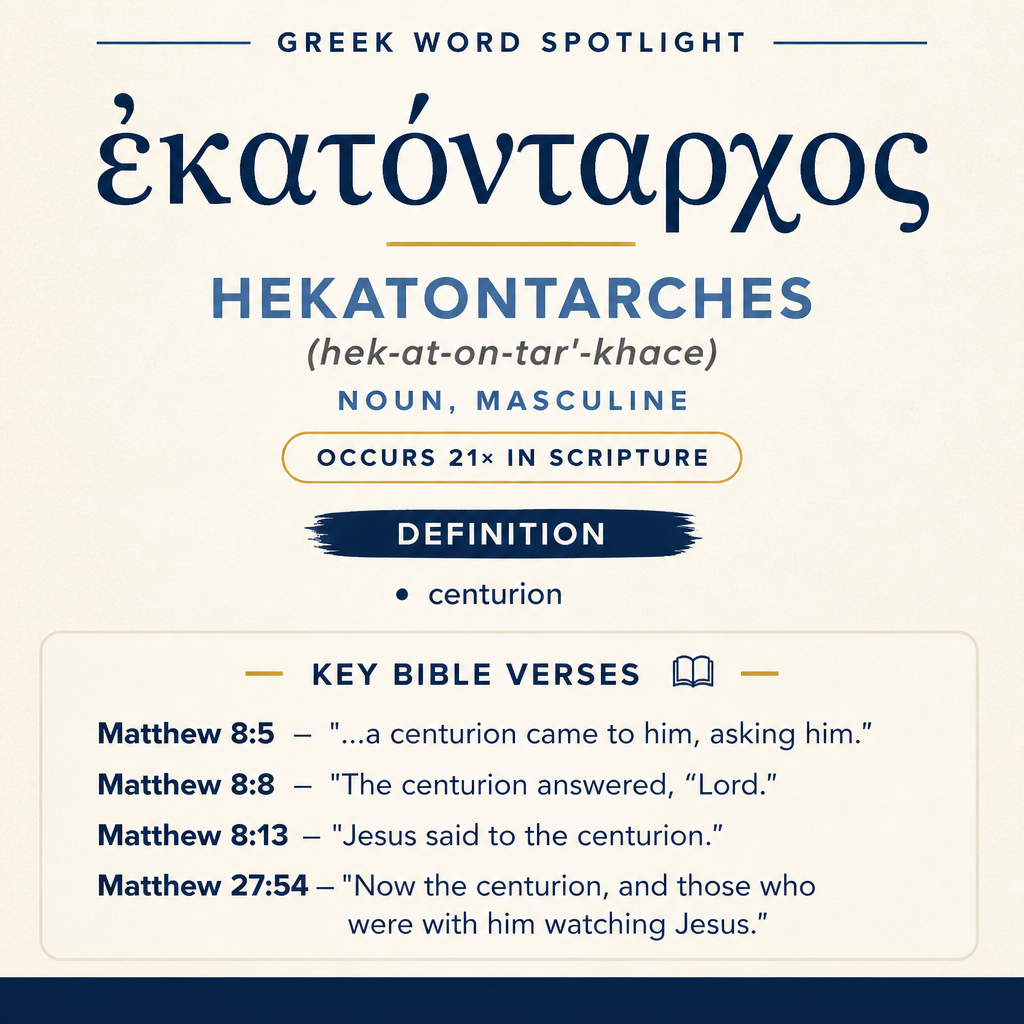
ἑκατόνταρχος means “centurion” and occurs 21 times in Scripture, including Matthew 8, Matthew 27, Luke 7, Luke 23, and Acts 10.
Gospel Scenes
In Matthew 8 and Luke 7, a centurion approaches Jesus concerning his servant. In Matthew 27:54 and Luke 23:47, a centurion witnesses events at Jesus’ death.
Learn More →Hekatontarches means “centurion,” and in the New Testament it appears in Gospel scenes of healing and crucifixion, as well as in Acts narratives involving Roman military authority and public order. In these passages, the centurion repeatedly functions as a recognizable figure of command whose words and actions carry weight in moments of crisis.
Occurrences
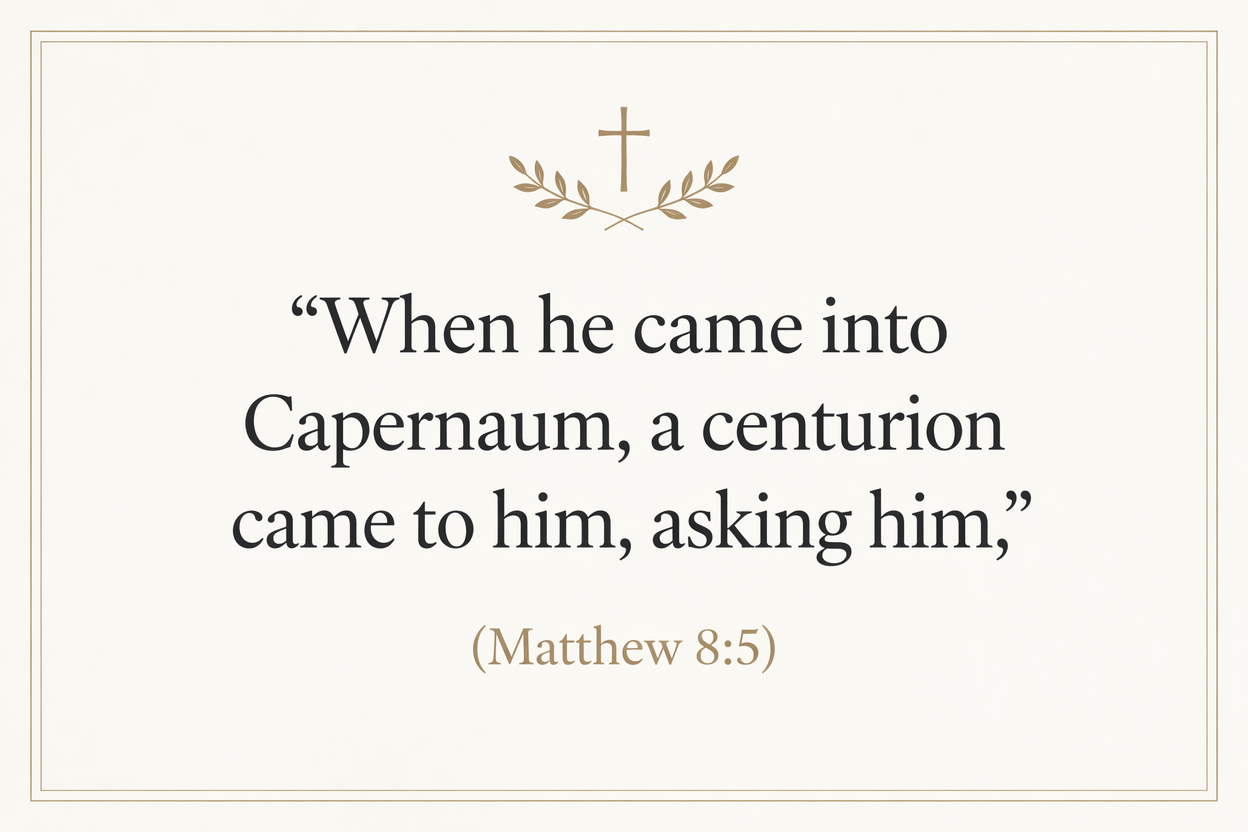
“When he came into Capernaum, a centurion came to him, asking him,” (Matthew 8:5)
Here the centurion initiates the encounter by approaching and asking. The word places the petitioner within a military rank, so the request comes from someone associated with authority and command, yet he comes as a supplicant to Jesus.
“The centurion answered, “Lord, I’m not worthy for you to come under my roof. Just say the word, and my servant will be healed.” (Matthew 8:8)
In his own speech, the centurion expresses unworthiness and frames healing as something accomplished by Jesus’ spoken command. The centurion’s role as a centurion colors the force of “Just say the word”: he speaks as one familiar with orders being issued and obeyed, even while he places himself below Jesus.
“Jesus said to the centurion, “Go your way. Let it be done for you as you have believed.” His servant was healed in that hour.” (Matthew 8:13)
The centurion becomes the direct addressee of Jesus’ response and the recipient of a granted request. The narrative keeps the centurion in view as the one whose believing is named and whose household matter (his servant) is resolved immediately.
“Now the centurion, and those who were with him watching Jesus, when they saw the earthquake, and the things that were done, feared exceedingly, saying, “Truly this was the Son of God.”” (Matthew 27:54)
At the crucifixion, the centurion is part of a watch detail “watching Jesus,” and his reaction stands out as interpretive speech in response to signs (“the earthquake, and the things that were done”). The centurion here embodies an official observer whose fearful confession is voiced publicly and includes those under his watch (“those who were with him”).
“A certain centurion’s servant, who was dear to him, was sick and at the point of death.” (Luke 7:2)
The centurion is introduced indirectly through relationship: the servant belongs to him and is “dear to him.” The word “centurion” identifies the master’s status, while the scene foregrounds his personal attachment and the urgency of the servant’s condition.
“Jesus went with them. When he was now not far from the house, the centurion sent friends to him, saying to him, “Lord, don’t trouble yourself, for I am not worthy for you to come under my roof.” (Luke 7:6)
The centurion operates through intermediaries: he “sent friends,” and their message conveys his posture of restraint and humility. The centurion’s house is the practical destination, and the rank-title helps explain why he can dispatch messengers even as he declines to receive Jesus under his roof.
“When the centurion saw what was done, he glorified God, saying, “Certainly this was a righteous man.”” (Luke 23:47)
Again at the crucifixion, the centurion is positioned as a witness who “saw what was done” and responds with praise (“he glorified God”) and an evaluative statement about Jesus. The centurion’s designation matters because his conclusion comes from a figure tasked with oversight at an execution scene.
“Now there was a certain man in Caesarea, Cornelius by name, a centurion of what was called the Italian Regiment,” (Acts 10:1)
The word identifies Cornelius by his military office and connects him with an organized unit (“the Italian Regiment”). “Centurion” here serves as a social locator within Roman structures, establishing him as a person with a defined place in the public order of Caesarea.
“They said, “Cornelius, a centurion, a righteous man and one who fears God, and well spoken of by all the nation of the Jews, was directed by a holy angel to invite you to his house, and to listen to what you say.”” (Acts 10:22)
In this report, “centurion” sits alongside character testimony: he is called “a righteous man and one who fears God,” and is “well spoken of.” The office-title is not presented as a barrier to piety or reputation; rather, it marks the surprising breadth of his respectability and the significance of his invitation “to his house.”
“Immediately he took soldiers and centurions and ran down to them. They, when they saw the chief captain and the soldiers, stopped beating Paul.” (Acts 21:32)
Here “centurions” appears in the plural as part of a rapid-response force. The presence of centurions—together with soldiers and the “chief captain”—is enough to halt violence. The word contributes the sense of organized, ranked enforcement arriving on scene, bringing immediate control.
“When they had tied him up with thongs, Paul asked the centurion who stood by, “Is it lawful for you to scourge a man who is a Roman, and not found guilty?”” (Acts 22:25)
The centurion is the nearby official (“who stood by”) in a moment of restraint and impending punishment. Paul addresses him as the relevant channel within the chain of command, raising a legal question at the point where action is about to be taken.
“When the centurion heard it, he went to the commanding officer and told him, “Watch what you are about to do, for this man is a Roman!”” (Acts 22:26)
The centurion functions as an intermediary between the bound prisoner and higher authority. Hearing Paul’s protest, he reports upward and urges caution, showing the centurion’s role in relaying information that affects decisions and treatment of detainees.

Sense and Usage
Across these passages, “centurion” consistently marks a person whose position implies recognized authority, whether exercised directly (arriving with forces to stop a beating) or indirectly (sending friends with a message). The title often frames how speech acts land in the narrative. In Matthew 8:8 the centurion’s confidence in a spoken command fits naturally with the identity of someone accustomed to orders; the word thereby sharpens the logic of his request without requiring any additional explanation.
At the crucifixion scenes (Matthew 27:54; Luke 23:47), the centurion is not a marginal onlooker but part of the official presence “watching Jesus” and observing “what was done.” Because he is a centurion, his response reads as the reaction of an appointed witness whose job involves supervision; yet his words go beyond procedure into confession and praise. The title therefore carries a tension: the centurion represents imperial order at the site of death, but in both accounts he becomes a vocal interpreter of the event.
Luke 7 places “centurion” in a domestic crisis. The servant is “dear” and near death, and the centurion’s humility is expressed through careful distance—sending others, asking Jesus not to be troubled. The word helps hold together the social reality of a commanding officer with the personal reality of concern for a dependent. Similarly in Acts 10, “centurion” identifies Cornelius within a regimented world (“the Italian Regiment”), yet Acts 10:22 couples the office with a reputation for righteousness and fear of God, and with an angelic directive centered on hospitality and listening. The title remains intact, but the narrative associates it with receptivity and respect rather than coercion.
In Acts 21–22, the centurion appears within a layered command structure: soldiers, centurions, and a commanding officer. Here the word signals the practical mechanics of authority—running to a disturbance, stopping violence by presence, standing by during restraint, and passing information up the chain. The centurion is close enough to the action to hear Paul’s question and consequential enough to intervene by alerting the commanding officer. In these scenes, “centurion” is the kind of role that connects street-level events with formal decisions.
Imagery
In these texts, the centurion stands at crossroads: between sickness and recovery (Matthew 8:13; Luke 7:2), between execution and confession (Matthew 27:54; Luke 23:47), and between mob violence and imposed order (Acts 21:32). The word repeatedly evokes a figure positioned to observe, to speak, and to send or summon others—someone whose office places him near decisive moments, and whose response, in several scenes, becomes part of what the reader is meant to hear.
Sources: Lexical data from Strong’s Exhaustive Concordance and the Translators Brief Lexicon of Extended Strongs for Greek (STEPBible, CC BY). Occurrence data from the Translators Amalgamated Greek New Testament (STEPBible, CC BY). Scripture quotations from the World English Bible (public domain).




