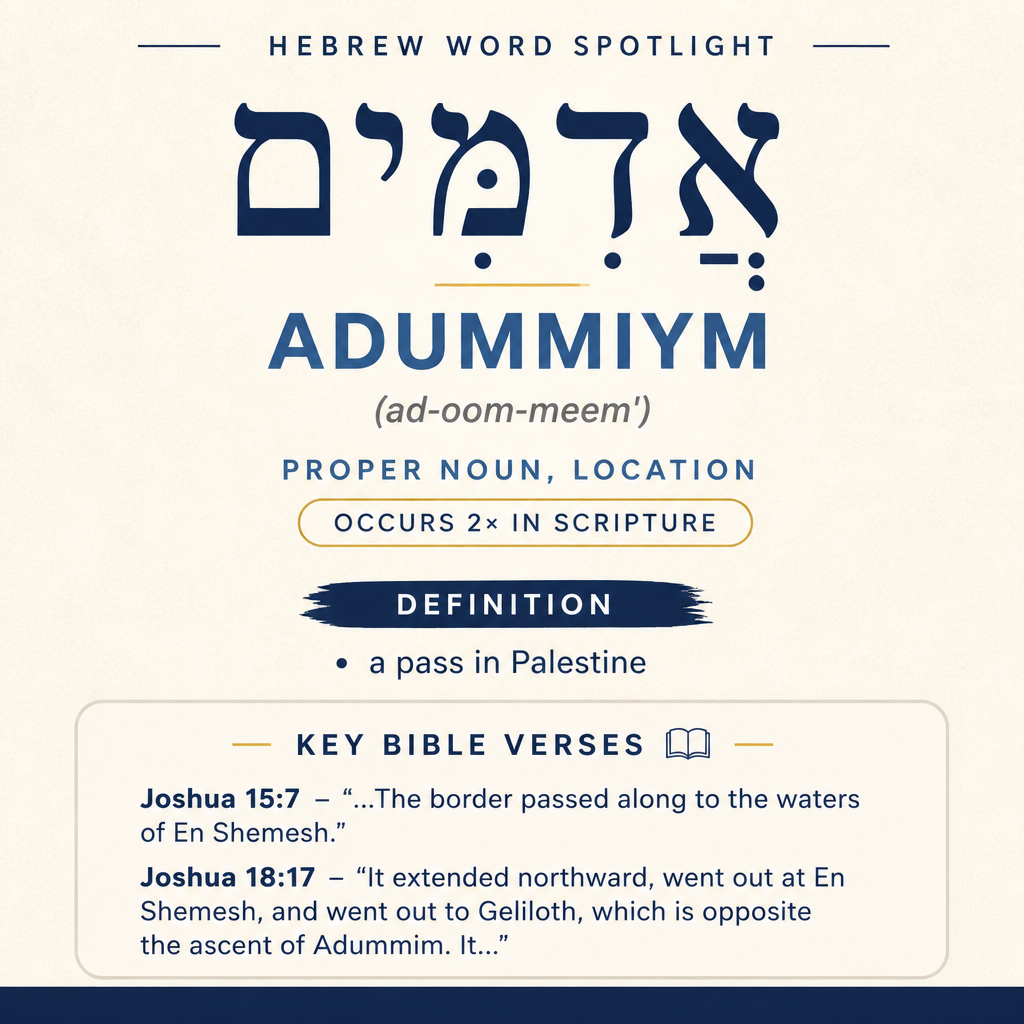
‘Adummiym

ad-oom-meem’
Parts of SpeechProper Name Location

‘Adummiym Definition

NAS Word Usage – Total: 2
Adummim = “ruddy one: quieted ones?”

  1. pass or ridge of hills, west of Gilgal

Understanding the Meaning of Adummiym in Hebrew

The Hebrew word “Adummiym” often poses questions for those studying Biblical language. What does it mean, and why is it significant in the texts where it appears? The straightforward answer to this question is that “Adummiym” refers to a color, specifically meaning “red” or “ruddy.” This word is derived from the root “Adam,” which links back to the word for “man” and alludes to the earthiness and humanity tied to the color red.

Books Worth Reading:
Sponsored
Book 3162Book 3131Book 3129Book 3161Book 3154

The Etymology of Adummiym

To fully grasp the meaning of “Adummiym,” it is essential to explore its roots. The Hebrew language is rich with meanings and nuances, and understanding the origin of the words enhances comprehension. “Adummiym” stems from the root word “Adam” (אָדָם), which translates to “man” or “mankind.” This connection is deeply significant, for it relates to the concept of humanity being formed from the red earth, specifically clay or soil, which carries a reddish hue.

One could imagine a young student learning about creation in a classroom, drawing pictures of Adam from the dust of the ground. As they paint with shades of red and brown, they unconsciously connect these colors with the meaning of “Adummiym” and its implications of life, creation, and humanity.

Usage in Biblical Text

The term “Adummiym” appears within certain scriptural contexts, adding richness to the narratives. In the Bible, “Adummiym” is often associated with the redness of objects or certain characters. A well-known example can be found in the Old Testament during the story of Esau in Genesis 25:25. Esau is described as “a hairy man, like a garment of hair,” and the text further describes him as “red” (Adummi) as well.

Books Worth Reading:
Sponsored
Book 3162Book 3131Book 3129Book 3161Book 3154

By examining this context, one can see how “Adummiym” serves not only as a descriptor but as a significant factor in narrative structure. Esau’s redness symbolizes not just his appearance but also his character. He is often portrayed as impulsive and passionate, which reflects the fiery nature of the color red.

Symbolism of Red in Hebrew Culture

Colors in Hebrew culture hold profound symbolic meaning. Red, or “Adummiym,” is often tied to a variety of themes, including life, sacrifice, and even sin. For instance, in rituals and offerings, red animals were significant. In Leviticus, the color red signals not just the physical but spiritual aspects of life and death.

The symbolism of red can be illustrated through the story of the Passover in Exodus. The Israelites were instructed to mark their doorframes with the blood of a lamb—a vivid red symbolizing salvation and protection. This act not only embodies the meaning of “Adummiym” in its color but also connects to the themes of redemption and sacrifice inherent in the Hebrew faith.

Books Worth Reading:
Sponsored
Book 3162Book 3131Book 3129Book 3161Book 3154

In this way, the color red, embodied by “Adummiym,” can evoke a spectrum of emotions and meanings—each a layer of understanding within the text.

Adummiym in Contemporary Language and Culture

Interestingly, the influence of “Adummiym” extends beyond Biblical texts into modern Hebrew. The word retains a basic meaning related to color but can apply in a range of contexts, from literary works to everyday conversations.

For example, a modern artist describing a vibrant sunset might refer to the “Adummiym” hues filling the sky. This direct use of the ancient term brings forth a connection not only to the heritage of the language but also to visual experiences that resonate through time and culture.

Books Worth Reading:
Sponsored
Book 3162Book 3131Book 3129Book 3161Book 3154

In education, Hebrew language classes often emphasize words like “Adummiym” to illustrate how ancient texts still hold value and relevance today. A teacher might conduct an art project where students create depictions of scenes from the Bible that include colors like red and ask them to incorporate the word “Adummiym” into their descriptions. This exercise enhances their understanding of both the language and its rich historical context.

The Theological Underpinnings of Adummiym

Beyond its lexical meaning, “Adummiym” invites theological exploration. The characterization of Esau and the symbolism of red in sacrificial contexts push into deeper meanings about human nature and divine presence. For instance, some theologians will examine how red often represents the “flesh” or the earthly nature of humanity, cautioning against the carnal desires epitomized by figures like Esau.

In scholarly discussions, an academic might argue that the association of “Adummiym” with sin is poignant. The color red is often used in Biblical imagery to signify shedding blood or the need for atonement. In this sense, one can see “Adummiym” as a powerful metaphor for the need for redemption throughout scripture.

Books Worth Reading:
Sponsored
Book 3162Book 3131Book 3129Book 3161Book 3154

Imagine a church seminar focusing on this theme, exploring how this ancient word still resonates in teachings about morality and spirituality. Participants could discuss how the vivid imagery of red inspires deeper understanding of Biblical principles.

Adummiym in Hebrew Poetry and Literature

Hebrew poetry is renowned for its imagery and use of color to convey feelings and concepts. “Adummiym,” with its connotations, often appears in poems where emotions need vivid representation. The fiery undertones found in descriptions of love, conflict, or sacrifice often use the word “Adummiym” to create an emotional landscape.

In a classroom setting, a teacher might assign students to read selections from the Song of Songs, a poetic book celebrating love, where shades of red are invoked to represent passion. Here, “Adummiym” serves not only as a descriptive but also as a tool for evoking emotion in both the poets and their audience.

Books Worth Reading:
Sponsored
Book 3162Book 3131Book 3129Book 3161Book 3154

Students might be encouraged to write their own poems where they incorporate “Adummiym” to represent various themes, such as love or power, thereby engaging deeply with the emotional weight that this one word carries within the broader text of their learning.

Conclusion Lacking Today

The exploration of “Adummiym” in Hebrew continues to yield a multifaceted understanding of the term. The word, deeply woven into the fabric of the Biblical narrative, serves as a lens to explore many dimensions of humanity, spirituality, and culture. The significance of “Adummiym” transcends color, connecting individuals to the stories and meanings that span generations. As we examine its use, symbolism, and impact within both ancient texts and modern applications, the word stands as a testament to the richness of the Hebrew language.

Little Known Secrets

The Hebrew word “Adummiym” holds fascinating insights that go beyond its basic meaning.

Books Worth Reading:
Sponsored
Book 3162Book 3131Book 3129Book 3161Book 3154
  1. Color Reference: The root of “Adummiym” is closely related to the word “adom,” which means “red” in Hebrew. This connection indicates that “Adummiym” often refers to something that is red or reddish in color.
  2. Symbolic Meaning: In biblical texts, colors have deep significance. The color red, associated with blood, can symbolize life, sacrifice, and conflict. Thus, “Adummiym” can carry these meanings in various contexts.
  3. Context in Scripture: “Adummiym” appears in the Bible in a specific context related to animals, often referring to livestock that was reddish in hue. This can symbolize purity and value in ancient Hebrew culture.
  4. Cultural Associations: The ancient Israelites had a strong connection to livestock, making the reddish animals important for sacrificial purposes. Since many sacrifices were performed with these animals, “Adummiym” ties into themes of worship and atonement.
  5. Use in Descriptions: The term is also used to describe warriors and individuals who exhibit fierce qualities, drawing an analogy between the color red and attributes like strength and valor.
  6. Phonetic Similarity: Interestingly, “Adummiym” has a phonetic similarity to the word “adam,” which means “man” or “human.” This connection may evoke themes of humanity and the life force often represented by the color red.
  7. Ritual Significance: In certain Jewish traditions, rituals involving red items, such as the red heifer, are of particular importance for purification, interlinking the term with rituals of holiness and cleansing.
  8. Literary Use: Poets and writers within biblical literature often use “Adummiym” for its vivid imagery, helping to convey emotions and deep meanings in their narratives.
  9. Connection to Blood: The color red is often associated with blood, which further emphasizes themes of sacrifice and the depth of emotional experiences tied to life and death in the biblical narrative.
  10. Archaeological Insights: Some archaeological findings suggest that reddish pigments were widely used in ancient rituals, linking back to the physical representation of “Adummiym” in cultural practices.

Conclusion

In summary, the word “Adummiym” in Hebrew carries significant meaning. Often translated as “red” or “reddish,” it can symbolize different concepts, from describing animals to representing qualities like passion or strength. Understanding “Adummiym” helps us appreciate the depth of the Hebrew language and its connection to the culture and history of the Bible. By exploring words like this, we can get a clearer picture of the messages and themes that run throughout the Biblical texts.

Common Questions Related to What Does Adummiym Mean In Hebrew

Q. What does the Hebrew word “Adummiym” mean?
A. “Adummiym” means “reddish” or “reddish-brown” in Hebrew. It relates to the color red.

Q. Where in the Bible can we find the word “Adummiym”?
A. The word “Adummiym” appears in the Bible in the book of Ezekiel, specifically in Ezekiel 1:7, describing the color of the legs of the creatures seen in the vision.

Books Worth Reading:
Sponsored
Book 3162Book 3131Book 3129Book 3161Book 3154

Q. What does “Adummiym” tell us about the creatures in Ezekiel’s vision?
A. The word “Adummiym” helps us understand that the creatures had a distinct reddish color, which may symbolize strength or energy.

Q. Is “Adummiym” related to any other Hebrew words?
A. Yes, “Adummiym” comes from the root word “Adam,” which means “red” or “man.” This connection highlights a link between color and humanity.

Q. What is the significance of the color red in Hebrew culture?
A. In Hebrew culture, the color red can symbolize various things, including sacrifice, vitality, and even sin, as in the phrase “scarlet sin.”

Books Worth Reading:
Sponsored
Book 3162Book 3131Book 3129Book 3161Book 3154

Q. How do translations of “Adummiym” vary in different versions of the Bible?
A. Some Bible translations may simply translate “Adummiym” as “red” or “reddish,” while others might provide descriptions based on context.

Q. Are there other occurrences of reddish colors described in the Bible?
A. Yes, various other reddish colors are mentioned, like in descriptions of animals, clothing, and natural phenomena, emphasizing the prominence of colors in biblical imagery.

Q. How does the word “Adummiym” connect to the idea of creation in the Bible?
A. The connection of “red” to creation might relate to the idea of life and vitality, as red often symbolizes blood and life in Hebrew thought.

Books Worth Reading:
Sponsored
Book 3162Book 3131Book 3129Book 3161Book 3154

Q. Can “Adummiym” be used to describe anything other than living creatures?
A. While “Adummiym” is often used for living beings, it may also be used poetically or symbolically to describe objects or elements that have a reddish hue.

Q. Why is understanding words like “Adummiym” important for studying the Bible?
A. Learning specific words like “Adummiym” helps us understand the deeper meanings and imagery in the text, enriching our understanding of the biblical narrative.

About the Author

Ministry Voice

{"email":"Email address invalid","url":"Website address invalid","required":"Required field missing"}

Want More Great Content?

Check Out These Articles 

mba ads=72