Exploring the Meaning of Zoogoneo in Greek
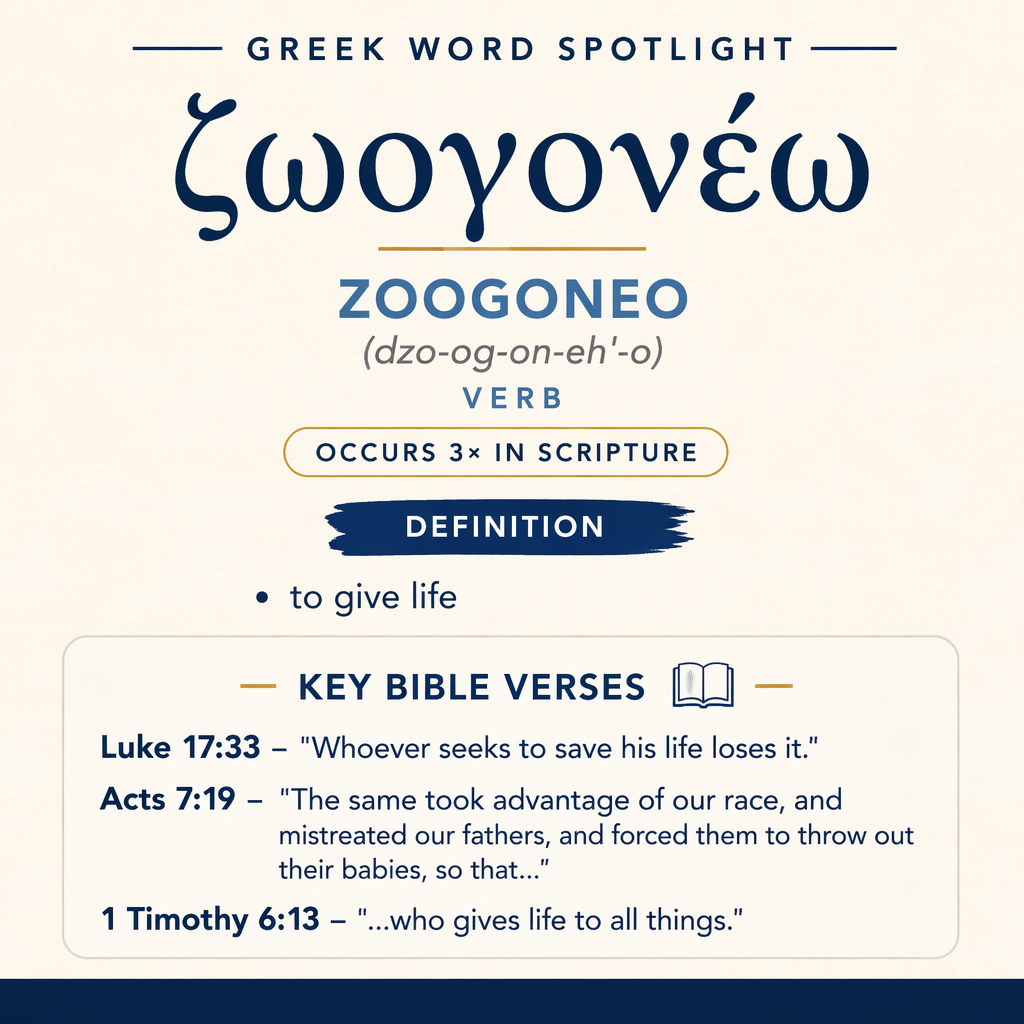
ζωογονέω means “to give life” and appears three times in Scripture: Luke 17:33, Acts 7:19, and 1 Timothy 6:13.
Where It Appears
This word occurs three times in Scripture: Luke 17:33, Acts 7:19, and 1 Timothy 6:13.
Learn More →Context Snapshots
In Luke 17:33 it contrasts losing life with preserving it; in 1 Timothy 6:13 it describes God who gives life to all things.
Learn More →ζωογονέω means “to give life.” It appears in three passages that speak of life being preserved or withheld, and of God as the giver of life.
Root and Related Words
Zoogoneo is related (per Strong’s) to ginomai (γίνομαι), “to be” (Strong’s G1096), and to zoon (ζῷον), “living thing” (Strong’s G2226). These associations place the verb in the orbit of “being” and “living beings,” fitting its use in contexts where life is either maintained or denied.
Occurrences
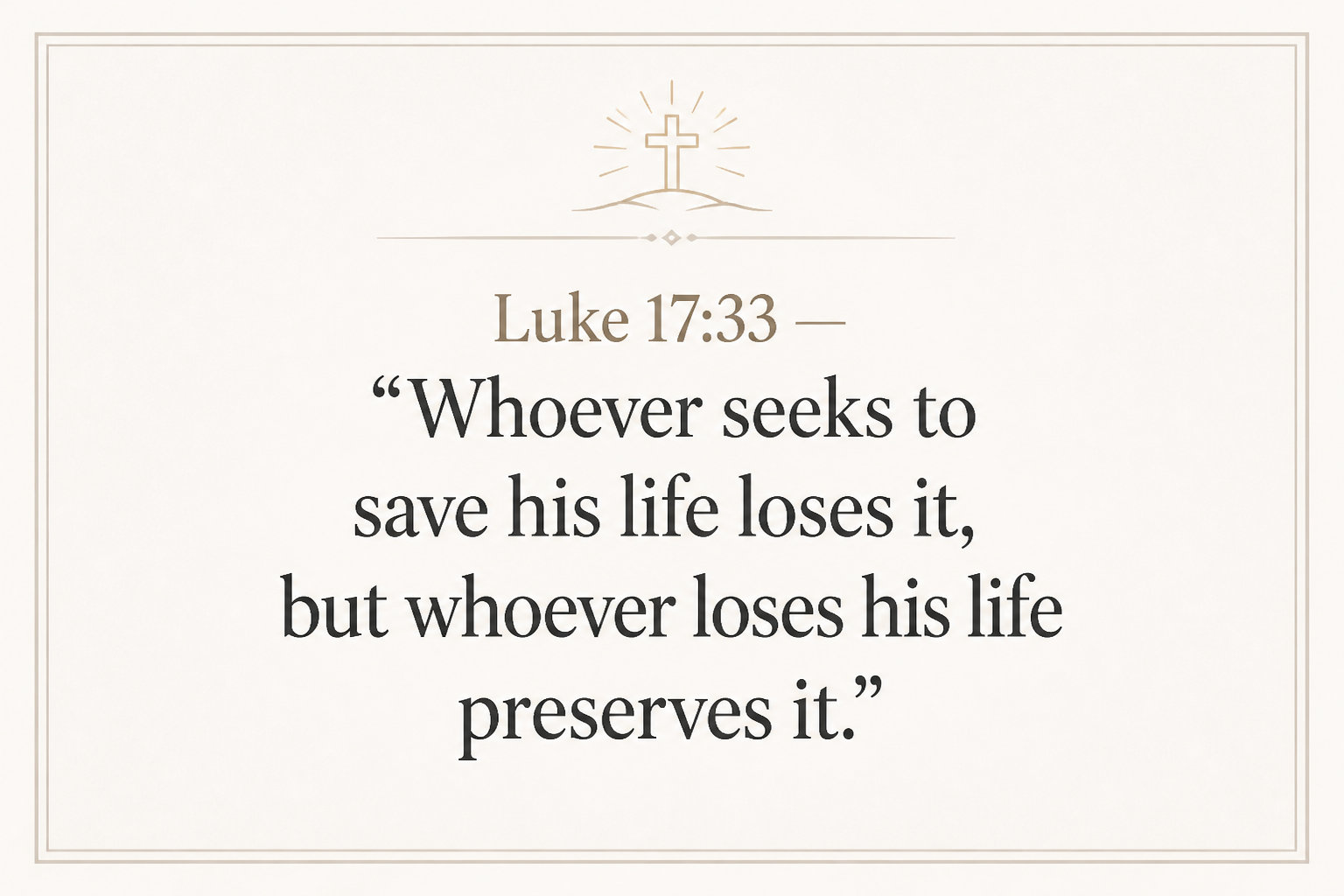
Luke 17:33 — “Whoever seeks to save his life loses it, but whoever loses his life preserves it.”
In this saying, the focus is the paradox of life held too tightly versus life relinquished. The verse contrasts two outcomes: seeking “to save” one’s life results in losing it, but losing one’s life results in preserving it. Within that contrast, zoogoneo contributes the notion of life being kept in existence—life being held intact rather than extinguished. The verb stands on the “preserves it” side of the sentence, so its force is not simply that life exists, but that life is actively kept from slipping away. The sentence structure itself heightens the point: two parallel clauses pivot on the fate of “his life,” and the verb marks the surprising reversal where loss leads to preservation. The scene is not a narrative event but a compact aphorism; the verb gives linguistic weight to the outcome that looks impossible on the surface (life kept through loss).
Acts 7:19 — “The same took advantage of our race, and mistreated our fathers, and forced them to throw out their babies, so that they wouldn’t stay alive.”
Here the verb appears in a dark description of oppression directed against infants. The line moves from exploitation (“took advantage”) to cruelty (“mistreated”) and then to a coercive policy (“forced them to throw out their babies”), culminating in the stated purpose: “so that they wouldn’t stay alive.” In this context zoogoneo is tied to the continued survival of vulnerable lives. The verb’s contribution is stark: the action described is designed to prevent life from being maintained. The emphasis is not on the beginning of life, but on the refusal to allow life to continue. Because the subject is “their babies,” the verb carries an especially concrete sense—life as the breath and continuation of a child’s existence—while the clause “so that…” makes explicit that the aim is the opposite of giving life: it is the systematic blocking of life’s preservation.
1 Timothy 6:13 — “I command you before God, who gives life to all things, and before Christ Jesus, who before Pontius Pilate testified the good confession,”
In this charge, the verb functions as a title-like description of God: “God, who gives life to all things.” The immediate scene is formal and solemn—“I command you before God… and before Christ Jesus”—and the participial phrase identifies God by an action characteristic of him. Zoogoneo here has an all-encompassing scope: “all things” fall under the giving of life. Unlike Luke 17:33, where the word is tied to an individual’s “his life,” and unlike Acts 7:19, where it is bound to the survival of “babies,” this occurrence broadens the horizon to everything that lives and continues. The verb thereby anchors the command in the presence of the one whose prerogative is life-giving, and it sets that reality alongside the remembered public testimony of “Christ Jesus… before Pontius Pilate.” The sentence does not explain how God gives life; it uses the description to establish the gravity of the command.
Sense and Usage
Across these three passages, “to give life” plays out in two closely related directions: life preserved against loss, and life granted as a defining divine act. In Luke 17:33 the verb sits in a moral and existential contrast where life is “preserved” through a surprising path; the stress falls on life not being surrendered to destruction even when it is “lost” in another sense. In Acts 7:19, the same life-preserving idea is inverted by negation and purpose: the oppression aims at a condition where babies do not “stay alive,” so the word’s semantic core is felt by its denial—life is something that could have been maintained but is intentionally prevented. In 1 Timothy 6:13, the verb is elevated from human experience to theological framing: God is characterized as the one who gives life comprehensively, and that characterization functions rhetorically to heighten the seriousness of the command.
These uses show the verb working naturally with different kinds of subjects and scopes. It can be applied to the life of an individual (“his life”), to the survival of infants (“their babies”), and to the entire realm of living reality (“all things”). It can also appear with explicit contrast (lose/preserve), with explicit purpose (so that they wouldn’t…), or as an identifying description (God, who…). In each case the word does not merely point to “life” as a static state; it presents life as something sustained, retained, or bestowed, whether the agent is implied (as in the proverb-like statement of Luke) or explicit (as in the description of God in 1 Timothy), or whether hostile agents act to prevent that outcome (as in Acts).
Imagery
The imagery associated with zoogoneo in these verses ranges from personal preservation to threatened infancy to universal divine agency. Luke 17:33 frames life as something that can be “preserved” even when one has “lost” it, creating a picture of life slipping away and yet being kept. Acts 7:19 places the word in the brutal setting of infants cast out so they would not remain alive, making the preservation of life a contested and vulnerable reality. 1 Timothy 6:13 lifts the gaze to God as the one who gives life to all things, presenting life not as fragile circumstance only, but as something grounded in the action of the life-giver.
Sources: Lexical data from Strong’s Exhaustive Concordance and the Translators Brief Lexicon of Extended Strongs for Greek (STEPBible, CC BY). Occurrence data from the Translators Amalgamated Greek New Testament (STEPBible, CC BY). Scripture quotations from the World English Bible (public domain).