
Exploring the Meaning of Pseudes in Greek
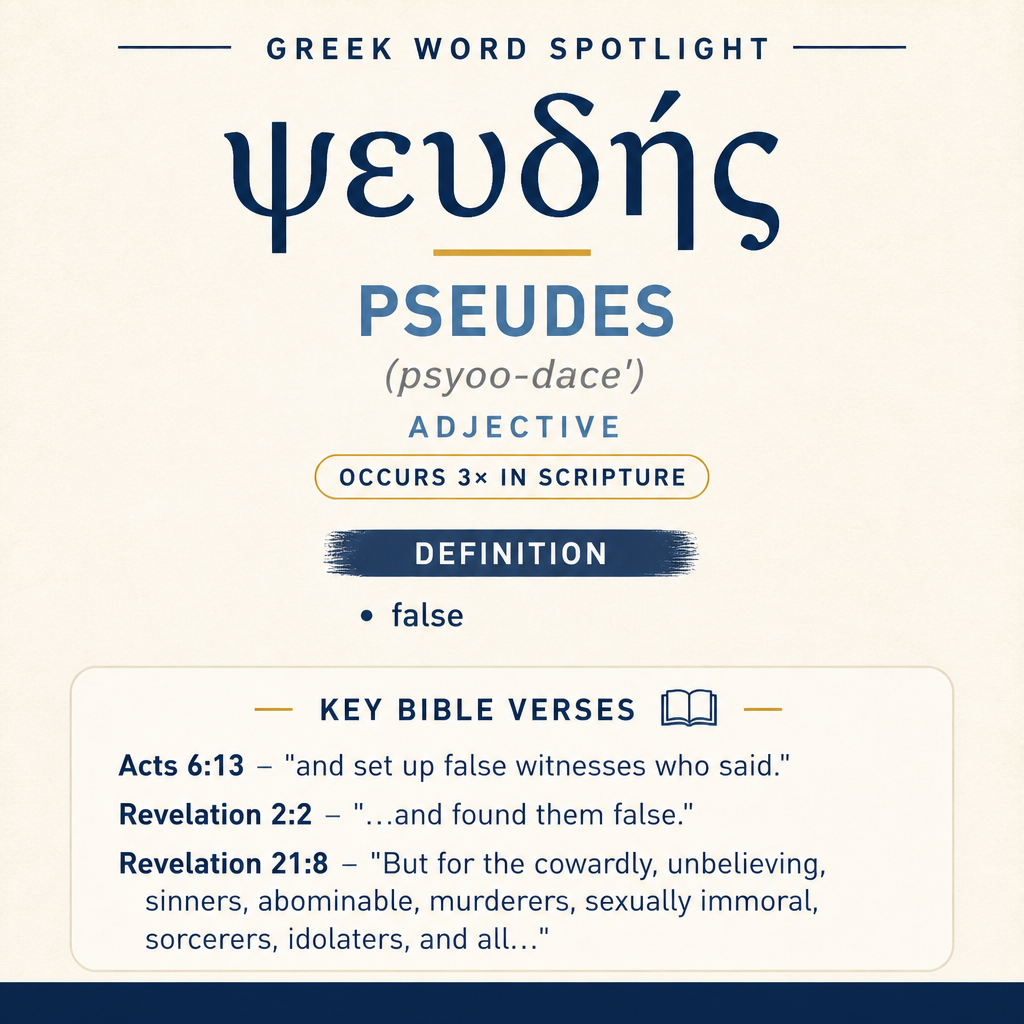
ψευδής means “false” and appears three times in Scripture: Acts 6:13; Revelation 2:2; Revelation 21:8.
Scripture Occurrences
It occurs three times: Acts 6:13; Revelation 2:2; Revelation 21:8.
Learn More →Textual Examples
In Acts 6:13 it describes “false witnesses,” and in Revelation 21:8 it appears with “all liars.”
Learn More →ψευδής describes what is false, marking persons, claims, or speech as out of accord with what is true. It appears in a judicial setting in Acts and in two evaluative judgments in Revelation, where the label “false” sorts reliable from unreliable and truthful from deceptive.
Root and Related Words
ψευδής is connected with the verb pseudomai (ψεύδομαι, Strong’s G5574), “to lie.” The adjective and verb belong to the same word-family, pairing the act of lying with the resulting character of falseness attributed to testimony, people, or speech.

Occurrences
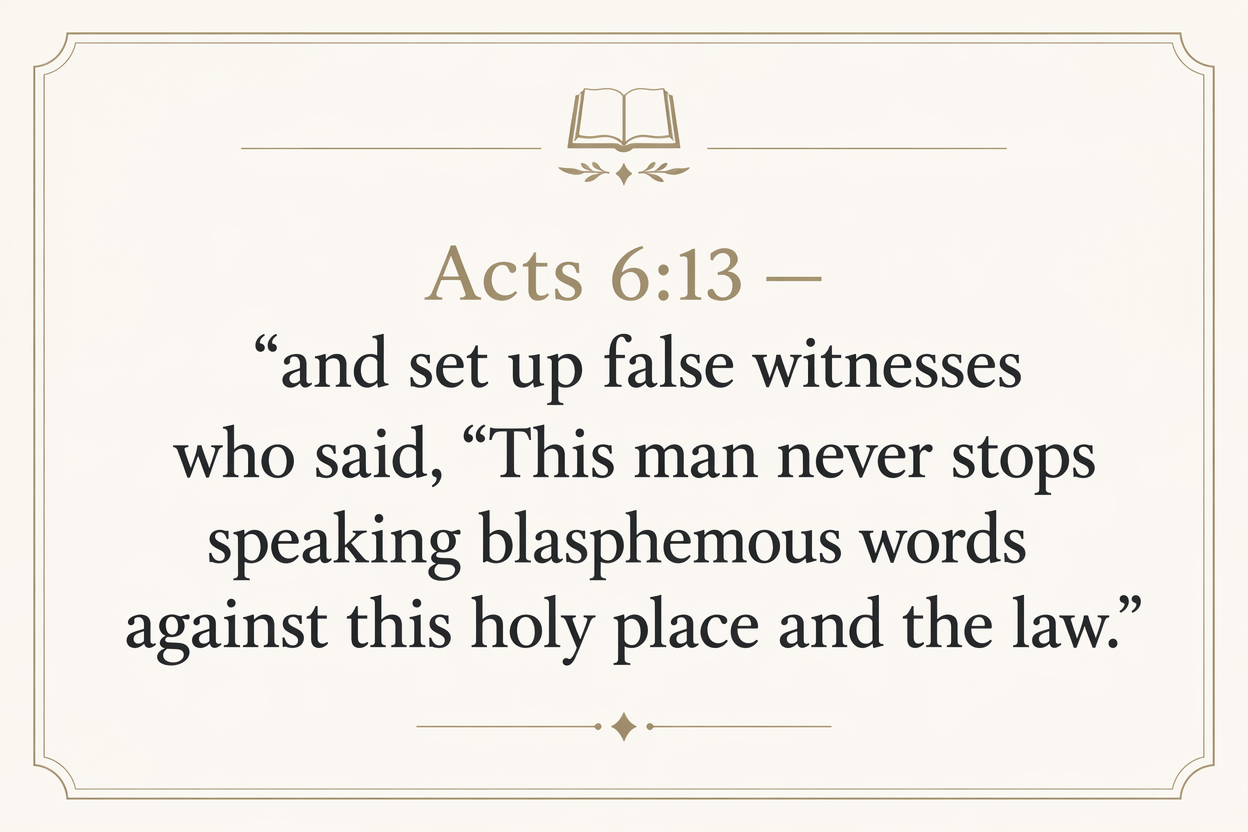
Acts 6:13 — “and set up false witnesses who said, “This man never stops speaking blasphemous words against this holy place and the law.”
Here ψευδής modifies “witnesses,” placing the term inside a courtroom-like situation where testimony is meant to establish facts. The verse highlights a deliberate construction—“set up false witnesses”—so the falseness is not accidental misunderstanding but a staged misrepresentation. The content of their accusation is then quoted (“This man never stops…”), and ψευδής frames that quoted charge as coming from a source already branded unreliable. The adjective therefore functions as an interpretive signal: before the reader weighs the specific words about “this holy place and the law,” the speaker’s status is marked as false.
Revelation 2:2 — “I know your works, and your toil and perseverance, and that you can’t tolerate evil men, and have tested those who call themselves apostles, and they are not, and found them false.”
In this scene ψευδής stands at the end of a process: the community has “tested” certain claimants, and the test yields a verdict—“they are not… found them false.” The adjective does not describe a casual error but a failed identity-claim (“call themselves apostles”) exposed through examination. The surrounding phrases connect falseness with moral and communal discernment: intolerance of “evil men,” sustained “toil and perseverance,” and the ability to evaluate competing claims of authority. ψευδής, placed as the outcome of testing, becomes a formal assessment of what these self-appointed figures are when their claim is weighed.
Revelation 21:8 — “But for the cowardly, unbelieving, sinners, abominable, murderers, sexually immoral, sorcerers, idolaters, and all liars, their part is in the lake that burns with fire and sulfur, which is the second death.”
Although ψευδής itself is not repeated in this quotation, the theme of falseness is carried by the category “all liars,” which names people by their relationship to deceptive speech. The verse places lying within a catalog of grave moral identities (“murderers… idolaters”), and then assigns a unified outcome: “their part is in the lake that burns with fire and sulfur.” The effect is to show falseness—expressed here as lying—not merely as a mistake in words but as a defining trait with ultimate consequences. Within the verse’s structure, deceptive speech is treated as a settled posture included among other forms of rebellion and corruption.
Sense and Usage
Across these passages ψευδής functions as a verdict-word: it stamps an evaluation onto witnesses and would-be apostles, and it resonates with the final condemnation of liars. In Acts 6:13, falseness attaches to legal testimony—speech offered as evidence—so the adjective undermines credibility at the outset and alerts the reader that the quoted accusations come from a corrupt channel. The focus is public and procedural: falsehood is weaponized through “witnesses,” not kept private.
In Revelation 2:2, the word works in a different register: the issue is not courtroom testimony but communal discernment about leadership and authority. The claim “call themselves apostles” is subjected to scrutiny, and ψευδής names the result. The adjective therefore supports a contrast between appearance and reality: a self-designation can be asserted, but it can also be tested and exposed as false. The phrasing “they are not” alongside “found them false” gives ψευδής a clarifying force; it separates what is merely claimed from what stands when examined.
Revelation 21:8 intensifies the moral weight associated with falseness by locating liars among a comprehensive list of condemned identities and by assigning them a shared destiny. Read alongside the earlier uses, the trajectory is clear: falseness can begin as corrupt testimony (Acts), can be exposed through testing of claims (Rev 2), and belongs to a larger moral category of persons whose speech aligns with deception (Rev 21). In all three settings, falseness is not portrayed as neutral; it is socially disruptive (misleading others), spiritually dangerous (distorting claims of authority), and morally decisive (named among those receiving judgment).
Imagery and Force
The passages attach ψευδής to concrete scenes of evaluation. Acts 6:13 pictures a tribunal-like moment where words are marshaled as weapons, and the label “false witnesses” exposes a manufactured narrative aimed at condemning “this man.” Revelation 2:2 evokes the image of a community acting like an examiner, weighing claimants and issuing a finding. Revelation 21:8 shifts to a final horizon in which liars stand among the condemned and face “the lake that burns with fire and sulfur,” giving the language of falseness an ultimate seriousness that matches the consequences it brings.
Sources: Lexical data from Strong’s Exhaustive Concordance and the Translators Brief Lexicon of Extended Strongs for Greek (STEPBible, CC BY). Occurrence data from the Translators Amalgamated Greek New Testament (STEPBible, CC BY). Scripture quotations from the World English Bible (public domain).




