Exploring the Meaning of Paramuthia in Greek
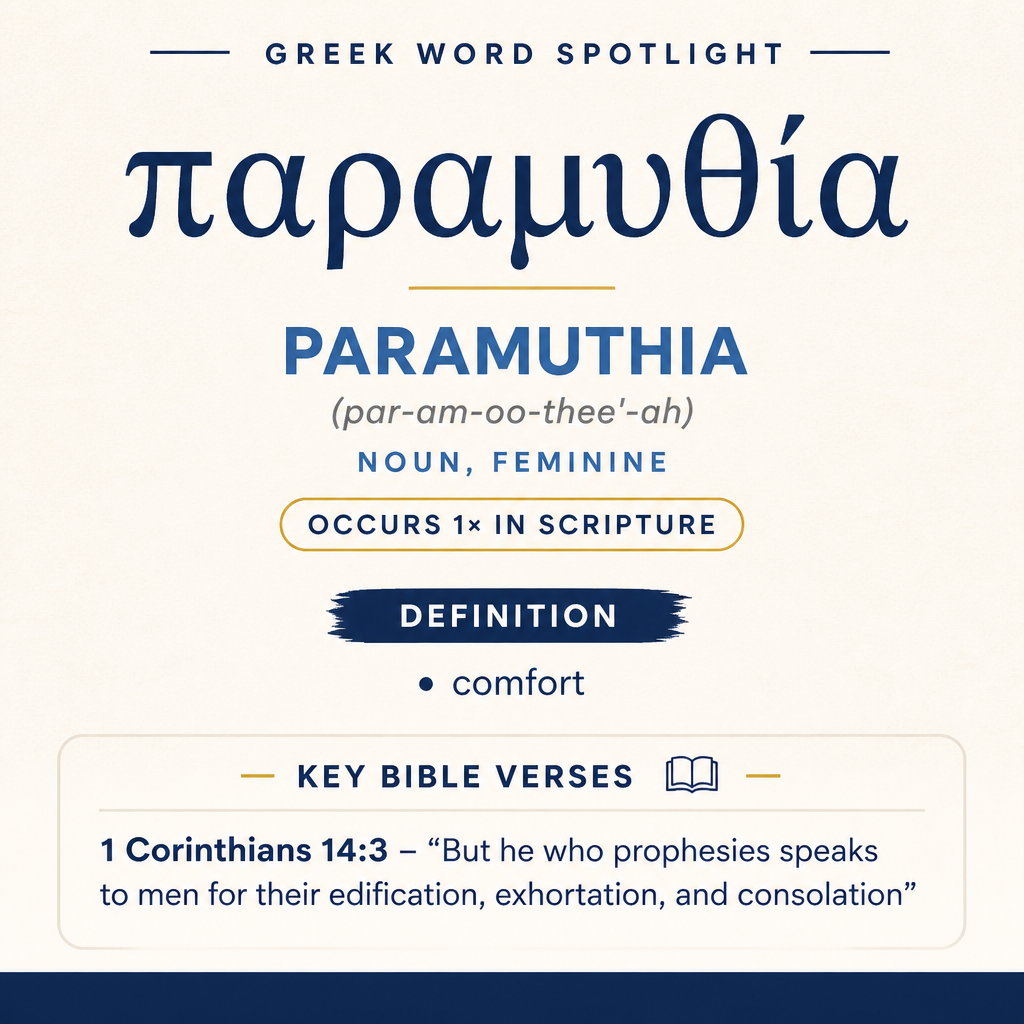
παραμυθία means “comfort” and appears once in Scripture in 1 Corinthians 14:3.
Scripture Occurrence
It occurs one time in Scripture. The occurrence is in 1 Corinthians 14:3.
Learn More →Context in Verse
In 1 Corinthians 14:3, it is rendered “consolation.” The verse links it with edification and exhortation.
Learn More →παραμυθία denotes “comfort” and is attested once in the New Testament, within Paul’s discussion of congregational speech in 1 Corinthians 14. In that setting it names one of the concrete benefits produced when prophecy is spoken in the assembly.
Root and Related Words
παραμυθία is related to the verb paramytheomai (παραμυθέομαι), “to encourage” (Strong’s G3888). The noun expresses, in a nominal form, the kind of supportive effect associated with that verbal action.

Occurrences
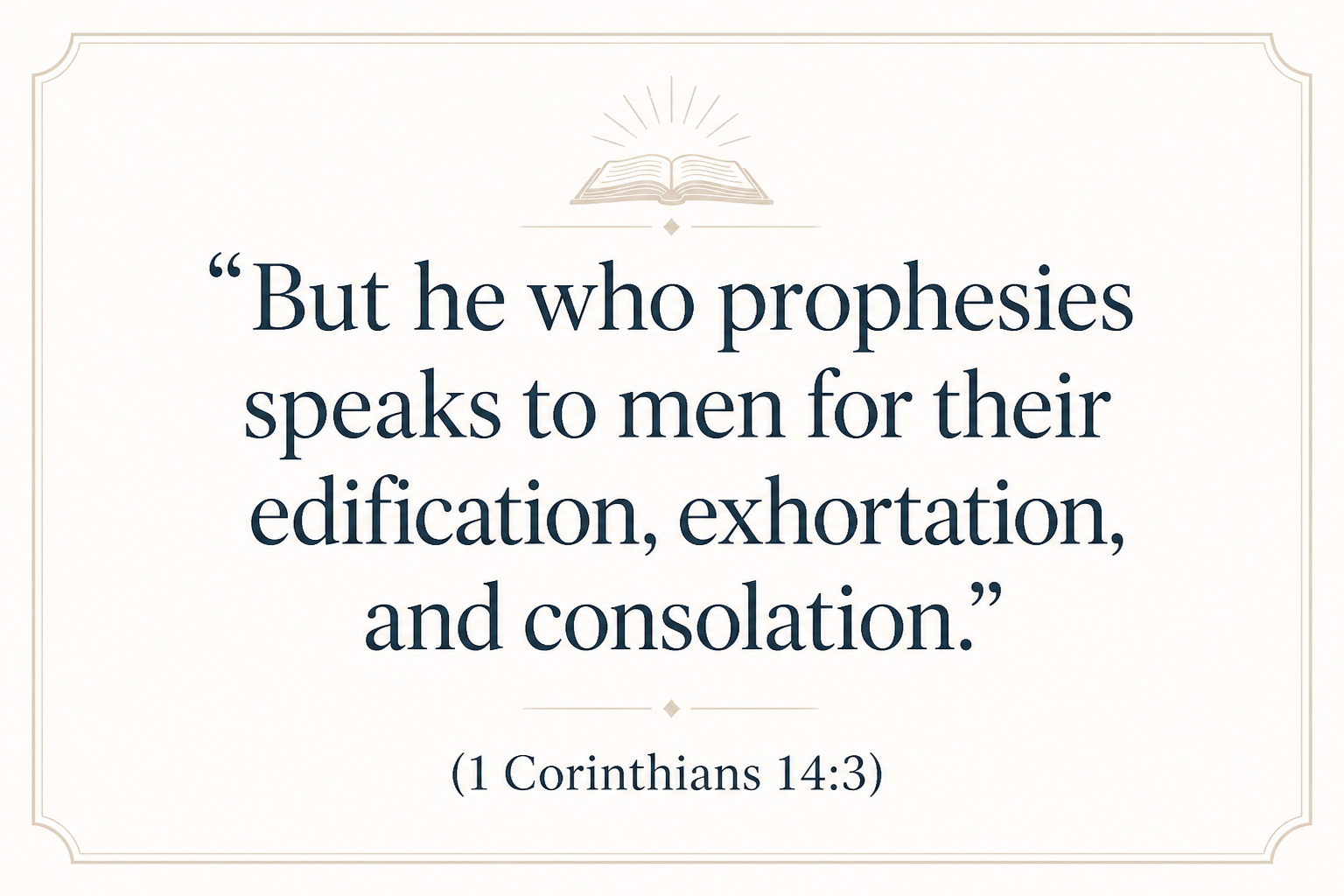
“But he who prophesies speaks to men for their edification, exhortation, and consolation.” (1 Corinthians 14:3)
Here παραμυθία appears within a coordinated trio of aims: “edification, exhortation, and consolation.” The verse frames prophecy as speech directed “to men,” emphasizing its intelligible and communal orientation; it is not presented as a private exercise but as verbal ministry that reaches others. In this list, “consolation” (παραμυθία) names a particular outcome of prophetic speech alongside “edification” (building up) and “exhortation” (urgent urging). The placement of παραμυθία after those two terms highlights comfort as neither incidental nor secondary: it is set out as a defined purpose of prophecy, a kind of strengthening that meets hearers where they are and addresses them in a way that supports and steadies them.
The wording also shows that παραμυθία functions as something prophecy “speaks…for”—that is, it describes a telos or intended effect. Comfort is not merely an emotion that may arise; it is a recognized good that prophetic speech can aim at producing within the gathered community. By being grouped with other constructive ends, παραμυθία is portrayed as compatible with clarity, instruction, and moral urging rather than as an alternative to them.
Sense and Usage
In its lone New Testament occurrence, παραμυθία is integrated into a framework of communal formation. The verse does not define the term in abstraction; instead it embeds comfort within the practical dynamics of speaking that is meant to benefit hearers. Comfort, as named here, belongs to the realm of verbal care: something conveyed through intelligible speech that addresses people directly.
The immediate list—“edification, exhortation, and consolation”—helps situate how comfort operates in context. It appears as one element in a clustered set of pastoral outcomes. Edification suggests strengthening the community’s structure and maturity; exhortation suggests urging toward response; comfort suggests support given to those who need to be steadied. The coordination of these ends implies that comfort is not detached from growth and moral seriousness. Rather, it stands as a complementary effect of prophecy, one that can accompany instruction and urging and can be part of what makes prophecy beneficial “to men.”
Because the term is framed as an intended result of prophecy, it also carries an implicit social direction: comfort is not confined to the speaker’s internal state but is something that can be provided to others through speech. The verse’s emphasis on speaking “to men” underscores that comfort, in this usage, is communicative and relational. παραμυθία therefore fits the broader picture of congregational life in which words are assessed by whether they build up and help hearers; it names the strengthening effect that comes from speech that consoles.
Imagery and Tone
Although the verse uses no metaphor, it presents a plain scene of spoken words achieving tangible effects within a community. παραμυθία belongs to that scene as a quiet but definite outcome: prophecy is depicted not only as informing or urging, but also as bringing consolation through speech directed toward others.
Sources: Lexical data from Strong’s Exhaustive Concordance and the Translators Brief Lexicon of Extended Strongs for Greek (STEPBible, CC BY). Occurrence data from the Translators Amalgamated Greek New Testament (STEPBible, CC BY). Scripture quotations from the World English Bible (public domain).