Exploring the Meaning of Hou in Greek
οὗ means “whither” and occurs 25 times in Scripture, including Matthew 2:9; 18:20; 28:16 and Luke 4:16–17; 10:1; 23:53; 24:28.
Scripture Occurrences
It occurs 25 times in Scripture. Examples include Matthew 2:9; 18:20; 28:16 and Luke 4:16–17; 10:1; 23:53; 24:28.
Learn More →Usage Examples
In Matthew 28:16 it appears in “the mountain where Jesus had sent them.” In Luke 24:28 it appears in “the village where they were going.”
Learn More →οὗ expresses direction toward a place (“whither”), and it appears in narrative and teaching contexts to locate movement, gathering, or arrival at an intended destination. In the passages below, it ties actions to a specific goal-point in space, whether that point is discovered, appointed, or approached.

Occurrences
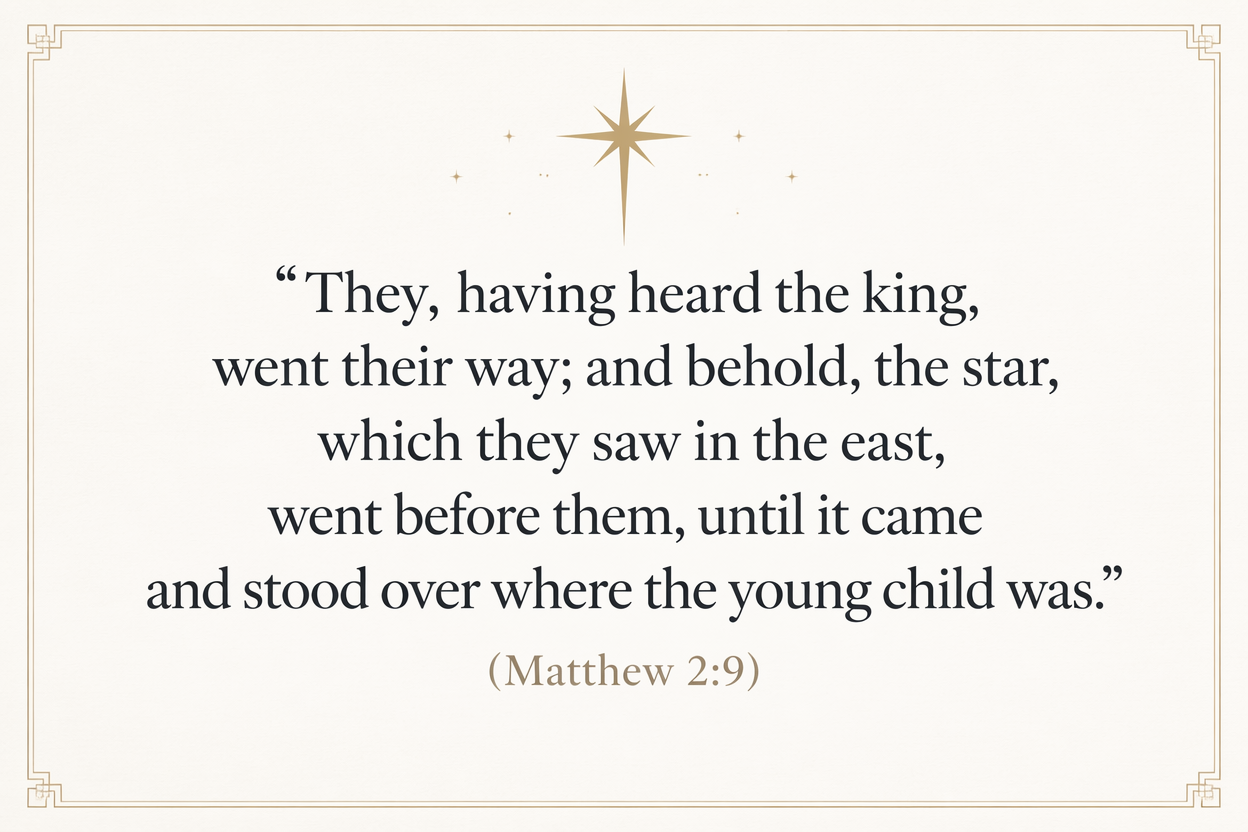
“They, having heard the king, went their way; and behold, the star, which they saw in the east, went before them, until it came and stood over where the young child was.” (Matthew 2:9)
Here οὗ anchors the Magi’s travel to a concrete endpoint. The verse narrates movement (“went their way”) guided by a moving sign (“the star… went before them”) and then marks completion when the star “stood over” the precise place toward which their journey has been directed: “where the young child was.” The force is not merely that a location exists, but that their route is oriented toward that location until it is reached.
“For where two or three are gathered together in my name, there I am in the middle of them.” (Matthew 18:20)
In this saying, οὗ frames a conditional place: the presence described is tied to the location toward which a small group has come together. The statement depends on a spatial arrangement (“gathered together… in the middle of them”) and uses the “where” clause to identify the setting that the gathering creates as its destination-point. The word links a meeting’s act of assembling to the place that assembly forms.
“But the eleven disciples went into Galilee, to the mountain where Jesus had sent them.” (Matthew 28:16)
οὗ marks a directed obedience: the disciples “went” to a specified destination, “the mountain,” and the word connects that mountain to prior direction—“where Jesus had sent them.” The point is the particular place toward which their movement is aimed, not simply the region of Galilee in general. The sentence reads as purposeful travel to an appointed endpoint.
“He came to Nazareth, where he had been brought up. He entered, as was his custom, into the synagogue on the Sabbath day, and stood up to read.” (Luke 4:16)
Although the verse begins with arrival (“He came to Nazareth”), οὗ helps fix the scene by pointing to the locale as the place toward which his coming is oriented and within which the subsequent actions occur. Nazareth is not just named; it is identified as the place connected to his upbringing, establishing the setting into which he comes and from which he proceeds into the synagogue.
“The book of the prophet Isaiah was handed to him. He opened the book, and found the place where it was written,” (Luke 4:17)
In this context, οὗ describes movement within a text: he “opened the book” and then “found the place” toward which his searching action is directed. The “where” clause locates the intended spot in the scroll—an endpoint of seeking—so that what follows can proceed from that exact location.
“Now after these things, the Lord also appointed seventy others, and sent them two by two ahead of him into every city and place where he was about to come.” (Luke 10:1)
Here οὗ projects forward movement by defining the destinations of the seventy’s mission. They are “sent… into every city and place,” and the word specifies those places as the ones toward which the Lord’s own coming is directed (“where he was about to come”). The term thus connects their advance work to the anticipated arrival point of another traveler, shaping the geography of their commission as preparatory and directional.
“He took it down, and wrapped it in a linen cloth, and laid him in a tomb that was cut in stone, where no one had ever been laid.” (Luke 23:53)
In the burial narrative, οὗ locates the tomb as the endpoint of careful actions: taking down, wrapping, and laying. The tomb is described not only as “cut in stone” but also as the place toward which the body is brought, further characterized by its unused state (“where no one had ever been laid”). The word ties the act of laying to the particular destination and its defining feature.
“They came near to the village where they were going, and he acted like he would go further.” (Luke 24:28)
οὗ highlights the directionality of the travelers’ journey: they approach the village that functions as their intended endpoint (“where they were going”). The clause does not merely state that the village exists; it identifies it as the place their travel is aimed toward. The contrast with “go further” sharpens the sense of destination, since the village is presented as the point at which their travel would naturally conclude.
“So they took away the stone from the place where the dead man was lying. Jesus lifted up his eyes, and said, “Father, I thank you that you listened to me.” (John 11:41)
In this scene, οὗ points to the location toward which the removal of the stone is directed: “from the place where the dead man was lying.” The action has a target—access to the place of the body—and the word helps identify that target with specificity. It binds the physical action (taking away the stone) to the exact place that had been enclosed, setting the stage for Jesus’ prayer.
“When they had come in, they went up into the upper room where they were staying; that is Peter, John, James, Andrew, Philip, Thomas, Bartholomew, Matthew, James the son of Alphaeus, Simon the Zealot, and Judas the son of James.” (Acts 1:13)
οὗ specifies the destination of their movement within the house: they “went up into the upper room” and that room is identified as the place toward which their ongoing lodging is oriented (“where they were staying”). The word contributes a sense of settled destination—an upstairs location that functions as their base—while the list of names underscores that this place gathers identifiable persons into one defined locale.
“Suddenly there came from the sky a sound like the rushing of a mighty wind, and it filled all the house where they were sitting.” (Acts 2:2)
Here οὗ marks the spatial extent of the sound’s effect by identifying the house as the place toward which the filling is directed: it “filled all the house where they were sitting.” The statement is vivid because the phenomenon is not abstract; it occupies a defined destination-place, the setting of their seated posture. The word ties the event to the concrete location in which the group is positioned.
“Moses fled at this saying, and became a stranger in the land of Midian, where he became the father of two sons.” (Acts 7:29)
In this summary of Moses’ life in Midian, οὗ connects a change of place with the life that unfolds there. His flight results in becoming “a stranger in the land of Midian,” and the word identifies Midian as the place toward which that relocation leads and within which a significant outcome occurs (“where he became the father of two sons”). The directional movement implied by fleeing is completed in a new locale that becomes the setting for family life.

Sense and Usage
Across these passages, οὗ consistently works as a pointer toward a place that functions as an endpoint or goal within the immediate discourse. In travel narratives (Matthew 2:9; Matthew 28:16; Luke 24:28), it binds verbs of going and coming to a destination that is either discovered (a star’s guidance), commanded (a mountain assigned), or simply intended (a village they are going to). The scenes show that the word can make the endpoint feel precise—down to a spot “over where the young child was”—rather than merely general.
οὗ also handles directed location within a bounded setting. It can mark the destination-place within a building (“the upper room where they were staying,” Acts 1:13) or within a house filled by a sound (Acts 2:2). In John 11:41 it pinpoints an enclosed location associated with the dead man, tying physical actions to the place they are aimed at. Even when the movement is not across geography but through a document (Luke 4:17), the word still functions the same way: searching is oriented toward a definable “place.”
Several occurrences show that οὗ can introduce a place that carries relational or purposeful definition. The destinations are not bare coordinates: Nazareth is identified by personal history (Luke 4:16), the appointed cities by future arrival (Luke 10:1), the tomb by its unused character (Luke 23:53), and Midian by the life event that happens there (Acts 7:29). In each case the “where” clause makes the location meaningful by tying it to the direction of action and to what happens at the endpoint.
Imagery
Read together, these uses of οὗ create a recurring picture of lines of movement converging on a particular place: a star coming to rest over a child (Matthew 2:9), disciples arriving at a designated mountain (Matthew 28:16), travelers nearing a village (Luke 24:28), friends removing a stone at a tomb (John 11:41), and a sound filling the house where a group is seated (Acts 2:2). The word supplies the “there” that completes motion—whether the motion is footsteps on a road, hands working at a burial place, or eyes searching for a written passage.
Sources: Lexical data from Strong’s Exhaustive Concordance and the Translators Brief Lexicon of Extended Strongs for Greek (STEPBible, CC BY). Occurrence data from the Translators Amalgamated Greek New Testament (STEPBible, CC BY). Scripture quotations from the World English Bible (public domain).