
Exploring the Meaning of Ereugomai in Greek
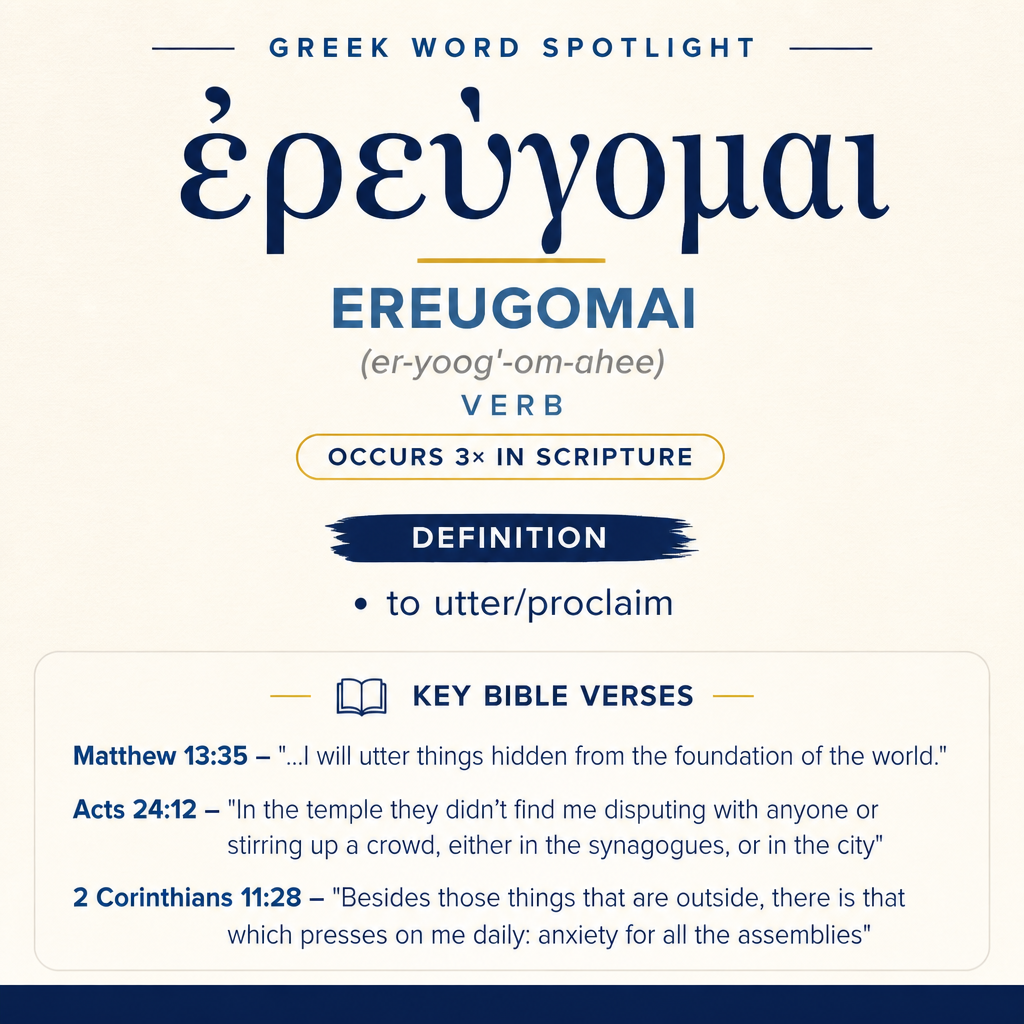
ἐρεύγομαι means “to utter/proclaim” and appears three times: Matthew 13:35, Acts 24:12, and 2 Corinthians 11:28.
Scripture Occurrences
It occurs three times in Scripture: Matthew 13:35; Acts 24:12; 2 Corinthians 11:28.
Learn More →Example Usage
In Matthew 13:35 it appears in the line, “I will utter” (in connection with speaking in parables).
Learn More →ἐρεύγομαι expresses the act of uttering or proclaiming, pictured as speech that is brought out into the open. It appears in three New Testament contexts that frame this utterance as revelatory speech, courtroom-style denial of public agitation, and the daily pressure of pastoral concern.
Occurrences
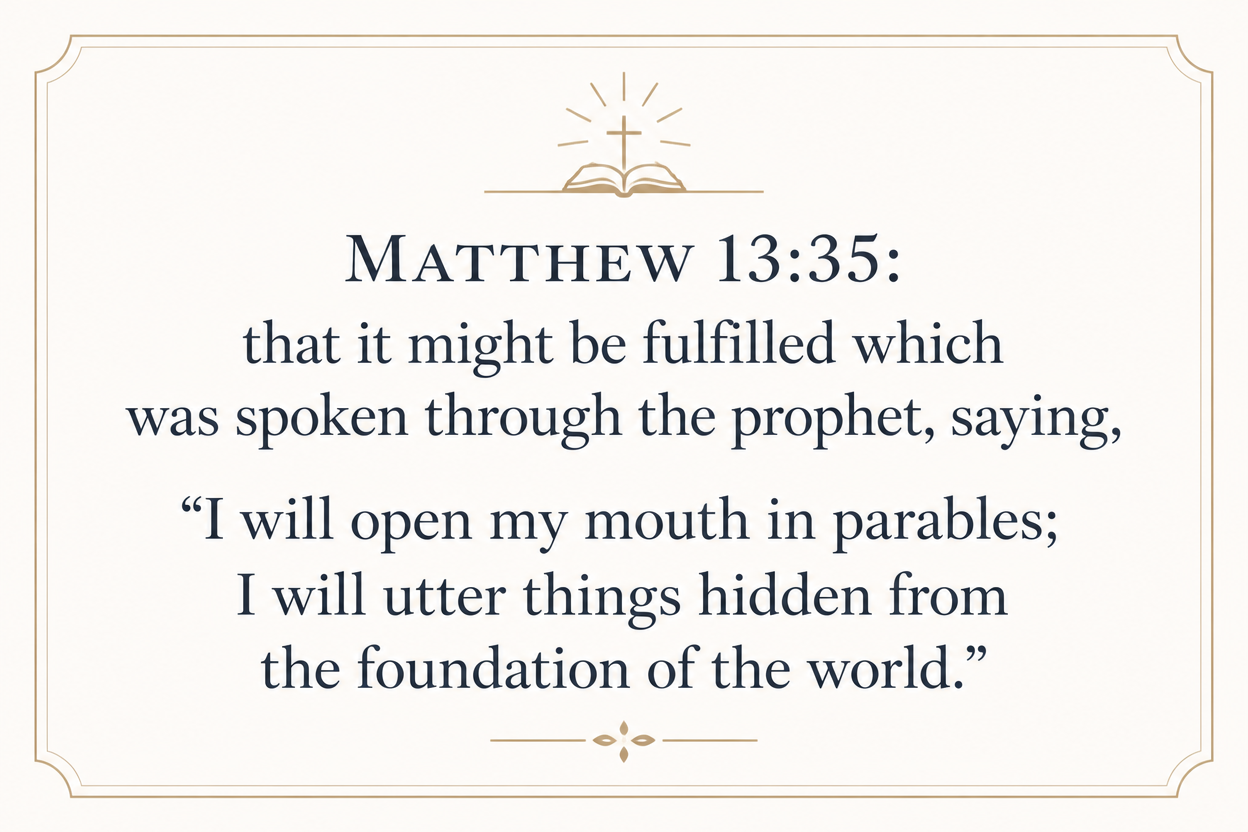
Matthew 13:35: that it might be fulfilled which was spoken through the prophet, saying, “I will open my mouth in parables; I will utter things hidden from the foundation of the world.”
Here ἐρεύγομαι is placed in parallel with “I will open my mouth in parables,” so the utterance is not casual speech but a deliberate act of voicing what had been concealed. The line contrasts the speaker’s “mouth” being opened with “things hidden,” presenting proclamation as the means by which concealed matters become publicly heard. In this scene, the verb serves the movement from hiddenness to audibility: what was “hidden from the foundation of the world” is now brought out by spoken parables, and the uttering itself is foregrounded as the instrument of disclosure.
Acts 24:12: In the temple they didn’t find me disputing with anyone or stirring up a crowd, either in the synagogues, or in the city.
In this defense statement, ἐρεύγομαι falls within a series of denials: the speaker insists that observers did not find him “disputing” or “stirring up a crowd” in any of the listed public settings—“in the temple,” “in the synagogues,” or “in the city.” Within that cluster of public actions, the verb’s basic sense of uttering/proclaiming aligns with the question of what kind of speech might have been publicly noticeable. The verse is framed by place and public impact: the issue is not private conversation but speech-act behavior in communal spaces. ἐρεύγομαι therefore contributes to a portrait of contested public speech—speech that could be construed as disruptive proclamation—only here it is invoked to deny that such observable contentious activity occurred.
2 Corinthians 11:28: Besides those things that are outside, there is that which presses on me daily: anxiety for all the assemblies.
In this line, ἐρεύγομαι is situated within a sentence about daily pressure and “anxiety for all the assemblies.” The emphasis rests on what “presses” continuously, and the content of that pressure is inward concern rather than an external event. In that setting, uttering/proclaiming is not described as a public address in a named venue, but the verb’s presence in the passage’s thought-world supports a communication-shaped burden: concern that is tied to the life of “all the assemblies” and thus to ongoing speech and report. The verse’s rhetoric is compressed—“Besides… there is… daily: anxiety”—and ἐρεύγομαι contributes to the wider frame in which proclamation and the responsibilities around communities can weigh on the speaker as a constant, pressing reality.

Sense and Usage
Across these occurrences, ἐρεύγομαι gathers its force from the kind of speech it points to: utterance as a purposeful bringing-forth. In Matthew 13:35, the verb is explicitly yoked to revelatory content—“things hidden”—so the act of uttering is portrayed as the hinge between concealment and proclamation. The utterance is not presented as mere sound or chatter; it is speech with a scope that reaches back (“from the foundation of the world”) and now becomes articulated through parables. The context supplies an imagery of speech as opening: the mouth opens, and what had been hidden is given voice.
Acts 24:12 places the verb within an evaluative, public register. The sentence is built around what was (and was not) “found” in the speaker’s behavior in the most visible social locations: temple, synagogues, city. That is, utterance is treated as something that can be observed, reported, and weighed—especially if it becomes “disputing” or “stirring up a crowd.” In this usage, ἐρεύγομαι sits near speech that can provoke response, implying that proclamation in public spaces may attract scrutiny. Yet the rhetorical aim is to distance the speaker from any speech-act that could be characterized as agitation, reinforcing that uttering/proclaiming is the sort of action that can be alleged and then refuted with reference to witnesses and location.
In 2 Corinthians 11:28, the verb belongs to a passage shaped by pressure and care for communities (“all the assemblies”). Even when the verse does not narrate a particular act of speaking, it portrays proclamation as entangled with responsibility. Anxiety is what “presses… daily,” and the object of that anxiety is corporate and widespread. In such a frame, uttering/proclaiming is not an isolated moment but part of a continuing vocation that touches many assemblies. The verb’s semantic profile fits an environment where proclamation is consequential: it links the speaker to communities whose state can create continual concern.
Taken together, these contexts show ἐρεύγομαι operating along a spectrum that runs from disclosure of hidden matters (Matthew), through the contested public sphere where speech can be misread as disturbance (Acts), to the sustained weight carried in relation to multiple assemblies (2 Corinthians). The verb consistently belongs to the domain of voiced communication rather than silent thought. Whether it is the intentional unveiling of what was hidden, the denial of disruptive public disputation, or the pressure associated with many assemblies, the word’s use is anchored in speech that matters—speech that carries content, can be witnessed, and has communal implications.
Imagery
Matthew 13:35 supplies the most vivid picture: a mouth opened so that hidden things become uttered. That image casts proclamation as a kind of release, bringing concealed matters into the open air of hearing. Acts 24:12 shifts the imagery from revelation to public space—temple, synagogues, city—where speech is not only heard but evaluated for its social effects. 2 Corinthians 11:28 turns from space to pressure: utterance belongs to a life where daily concern for assemblies presses continually, suggesting that proclamation can carry an ongoing weight beyond the moment of speaking.
Sources: Lexical data from Strong’s Exhaustive Concordance and the Translators Brief Lexicon of Extended Strongs for Greek (STEPBible, CC BY). Occurrence data from the Translators Amalgamated Greek New Testament (STEPBible, CC BY). Scripture quotations from the World English Bible (public domain).




