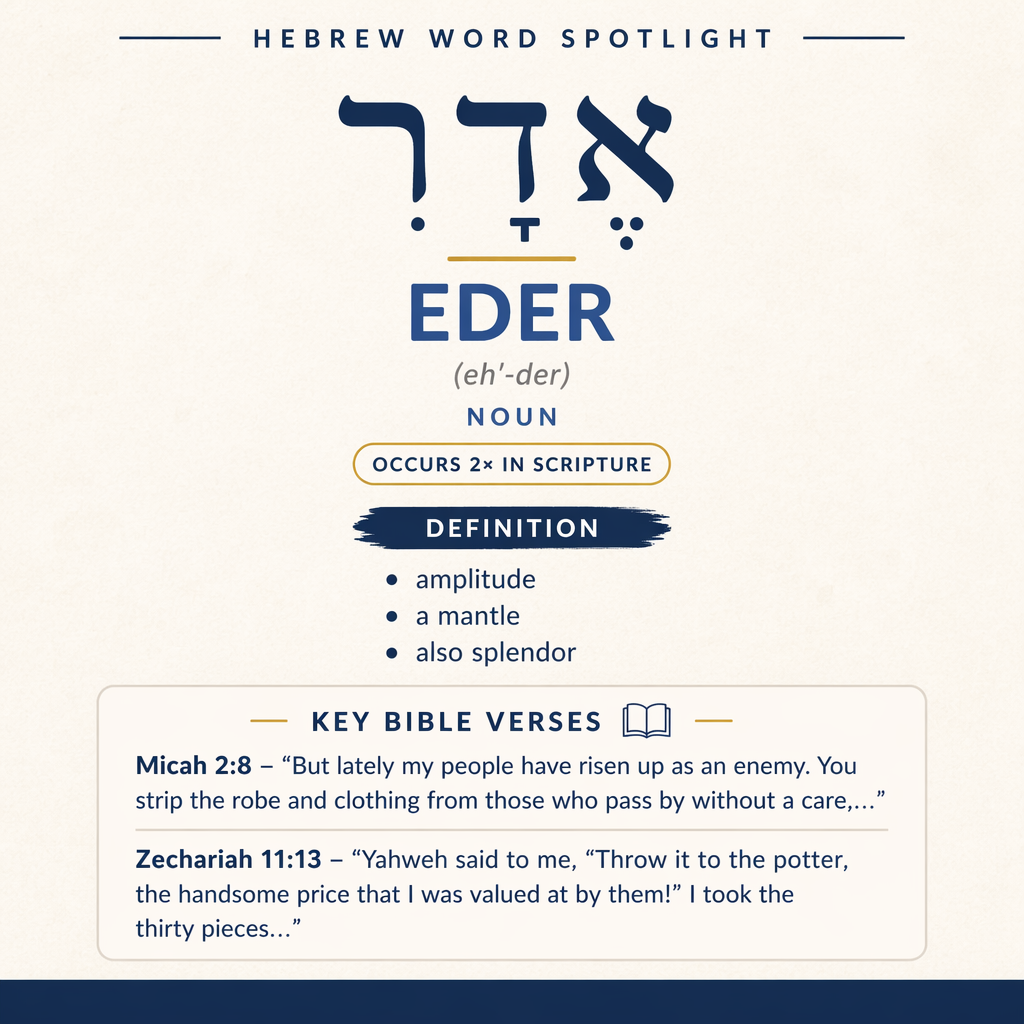
‘eder

eh’-der
Parts of SpeechNoun

‘eder Definition

NAS Word Usage – Total: 2

  1. glory, magnificence
  2. mantle, cloak (as wide)

What Does “Eder” Mean in Hebrew?

Problem Statement

When diving into the rich, ancient texts of the Hebrew Bible, readers often encounter words that hold profound meanings and cultural significance. One such word is “eder,” which can be challenging to understand without proper context. What does “eder” mean in Hebrew, and why is it important in biblical texts?

Books Worth Reading:
Sponsored
Book 3154Book 3131Book 3162Book 3129Book 3161

Answer: In Hebrew, “eder” (אֵדֶר) translates to “flock,” particularly referring to a group of sheep or livestock. This term holds various connotations in agricultural and theological contexts throughout the Hebrew Bible.


The Linguistic Roots of “Eder”

To fully grasp the meaning of “eder,” it’s helpful to explore its linguistic background. The word “eder” is related to the Hebrew root letters א (Aleph), ד (Dalet), and ר (Resh). In Hebrew, roots often serve as the foundation for many related words, contributing to a deeper understanding of their significance within scripture.

For example, the root א-ד-ר can also refer to majesty and power, as seen in the word “aderet” (אדרת), which means “glory” or “majesty.” This connection suggests that the idea of a flock in the context of “eder” may also carry implications of strength and protection, especially when considering the role of shepherds in biblical narratives.

Books Worth Reading:
Sponsored
Book 3154Book 3131Book 3162Book 3129Book 3161

Eder in the Hebrew Bible

“Eder” appears in several passages in the Hebrew Bible, which helps illuminate its meaning and usage. One noteworthy mention is found in the book of Genesis. In Genesis 35:21, the scriptures state, “Israel journeyed and spread his tent beyond the tower of Eder.” Here, “Eder” refers to a location, often translated as “the tower of the flock,” emphasizing its association with sheep and pastoral life.

The Significance of Flocks

In ancient Israel, sheep and flocks were crucial to society. They provided meat, milk, and wool, which were essential for survival. The concept of “eder” as a flock captures not only the economic importance of sheep herding but also the communal aspect of raising livestock, as families and communities often worked together to care for these animals.

For example, imagine a family in ancient times rallying together to protect their sheep from predators. In this scene, “eder” takes on a palpable meaning, as it represents not just the number of animals but the unity and shared responsibility of the community in ensuring their safety and well-being.

Books Worth Reading:
Sponsored
Book 3154Book 3131Book 3162Book 3129Book 3161

Eder as a Metaphor in Scripture

In a broader theological sense, “eder” also functions as a significant metaphor in various scriptures. The flock often symbolizes God’s people, with God himself frequently depicted as the shepherd. This imagery reinforces the idea of divine care, guidance, and protection.

One of the most quintessential examples is found in Psalm 23, which begins with “The Lord is my shepherd; I shall not want.” Here, the relationship between God (the shepherd) and his people (the flock or “eder”) can hint at themes of trust and comfort. The shepherd leads and nurtures his flock, underscoring the importance of care in a flock’s existence.

Eder in Cultural Context

Understanding “eder” also means looking at its role within the cultural practices of ancient Israel. Sheep were not only livestock but also part of many festivals and rituals. For instance, during Passover, lambs from the flocks (eder) became central to sacrificial practices, underpinning deeper spiritual narratives of atonement and redemption.

Books Worth Reading:
Sponsored
Book 3154Book 3131Book 3162Book 3129Book 3161

Consider a cultural festival where families gather to celebrate the beginning of spring with their flocks. The presence of the “eder” becomes a symbol of new life, renewal, and hope. Such communal practices tied to the concept of “eder” highlight the interconnectedness of Jewish identity with agriculture and spirituality.

Modern Applications of “Eder”

In contemporary times, the concept of “eder” remains relevant and can even be seen in modern expressions of faith. Many religious communities continue to use sheep as symbols in various teachings and worship, emphasizing lessons of care, community, and faithfulness.

For example, during a church service, a pastor might reference “eder” while discussing a parable involving sheep, drawing parallels between the behavior of a flock and the dynamics within a congregation. This use of ancient words helps to contextualize and connect scriptural teachings with present-day experiences.

Books Worth Reading:
Sponsored
Book 3154Book 3131Book 3162Book 3129Book 3161

Related Hebrew Words and Concepts

To expand the understanding of “eder,” it’s helpful to look at related terms. One such word is “tzon” (צֹאן), which is another term for “flock” but is more commonly used to refer to sheep specifically. Understanding the distinction between “eder” and “tzon” can deepen one’s appreciation of the nuances in Hebrew scripture.

Additionally, the idea of shepherding is significant in exploring related terms like “ro-eh” (רֹעֶה), meaning “shepherd.” This further enriches the themes of leadership and guidance associated with “eder,” showcasing the shepherd’s important role in the life of a flock.

Eder in Rabbinical Literature

Rabbinical interpretations of “eder” provide further insights into its meaning. Jewish sages often discuss the implications of being part of a flock and what it means to live in community. The Talmud includes discussions about the responsibilities of shepherds towards their flock, reflecting moral and ethical teachings drawn from the Biblical term “eder.”

Books Worth Reading:
Sponsored
Book 3154Book 3131Book 3162Book 3129Book 3161

For example, in discussions about charity and communal welfare, rabbinic texts might invoke the imagery of “eder,” reminding followers of the importance of caring for one another as a unified group. This aligns with the broader biblical theme of love and solidarity.

Visualizing Eder in Daily Life

To illustrate the meaning of “eder” practically, one could envision a scene at a local farmer’s market today. Families bring their sheep, demonstrating the connection between livestock and community. Vendors showcase their wool, and children play nearby, harmonizing the past with present experiences. This image allows one to see “eder” not just as a word but as a living, breathing part of communal life.

Through this understanding, it becomes clear that the essence of “eder” transcends its definition as merely a flock of sheep. It embodies relationships, community responsibilities, and nurturing bonds that were as significant in ancient times as they are today.

Books Worth Reading:
Sponsored
Book 3154Book 3131Book 3162Book 3129Book 3161

Eder in Interfaith Dialogue

“Eder” also plays a role in interfaith discussions, especially among traditions that reference biblical texts. Understanding “eder” in its historical and cultural context can lead to richer conversations about shared values of care, stewardship, and community among different faiths.

For instance, when Christians, Jews, and Muslims come together to discuss themes of leadership and guidance, the metaphor of the flock (eder) provides common ground between diverse beliefs. Each tradition may interpret the concept of “eder” differently, but all recognize its significance in nurturing community and fostering compassion.

Conclusion

“Eder” serves as more than just a word for “flock.” It invites readers and scholars to explore shared responsibility, community dynamics, and divine protection. From ancient texts to modern interpretations, the layers of meaning embedded in “eder” continue to resonate across cultures and generations, shaping understanding and practices related to care and unity.

Books Worth Reading:
Sponsored
Book 3154Book 3131Book 3162Book 3129Book 3161

Little Known Secrets

The word “eder” has interesting meanings and connections in Hebrew that many people might not be aware of.

  1. Meaning of Eder: In Hebrew, “eder” (אֵדֶר) means “flock” or “herd.” It often refers to a group of animals, especially sheep, which are significant in ancient agricultural societies.
  2. Biblical Context: “Eder” appears in the Bible, particularly in the context of pastoral life. For example, it is found in the naming of locations such as “Migdal Eder,” which means “Tower of the Flock,” referenced in Micah 4:8.
  3. Symbolism of Eder: The flock, or “eder,” symbolizes community and protection in Hebrew culture. It represents the idea of unity among people, much like how a shepherd cares for a flock.
  4. Connection to the Messiah: Some Jewish traditions connect “eder” to the Messiah, viewing the “shepherd” as a figure who will gather and protect the people, reinforcing the idea of a shepherd tending to his herd.
  5. Linguistic Roots: “Eder” is related to the root word “adar,” which means “to be glorious” or “to be majestic.” This connection highlights the importance and nobility associated with the shepherd’s role in guiding the flock.
  6. Talmudic References: In the Talmud, “eder” is often associated with discussions on laws pertaining to animals and herding, emphasizing its importance in Jewish daily life and ritual.
  7. Cultural Significance: Flocks and herds were crucial for survival in ancient Israel, making “eder” a practical term deeply rooted in the everyday life of the people, not just a concept in religious texts.
  8. Variations in Use: The word “eder” can also appear in different forms and contexts, such as in poetry and proverbs, showcasing its versatility and deep cultural significance in Hebrew literature.

Conclusion

In summary, the Hebrew word “eder” carries important meanings related to gatherings and groups. It often refers to a flock or a herd, emphasizing the idea of coming together in unity. This term highlights the cultural and social values found in Hebrew scripture, showcasing the significance of community and companionship. Understanding “eder” helps us appreciate the rich tapestry of relationships and connections in ancient Hebrew society, reminding us of the precious bonds that people share, even today.

Common Questions Related to What Does Eder Mean In Hebrew

Q. What does the Hebrew word “eder” mean?
A. The word “eder” means “flock” or “herd” in Hebrew. It often refers to a group of sheep or livestock.

Books Worth Reading:
Sponsored
Book 3154Book 3131Book 3162Book 3129Book 3161

Q. Where in the Bible can I find the word “eder”?
A. The word “eder” appears in several places in the Hebrew Bible, including the book of Genesis and the book of Micah.

Q. Is “eder” used for any specific type of animals?
A. Yes, “eder” typically refers to sheep, but it can be used more generally for other livestock as well.

Q. What is the significance of a flock in Hebrew culture?
A. In Hebrew culture, a flock often symbolizes community, care, and the relationship between a shepherd and his sheep, which can also represent God’s relationship with His people.

Books Worth Reading:
Sponsored
Book 3154Book 3131Book 3162Book 3129Book 3161

Q. Does “eder” have any related words in Hebrew?
A. Yes, related words include “ro’eh,” which means “shepherd,” and “tzon,” which refers specifically to sheep.

Q. How does the meaning of “eder” relate to Biblical stories?
A. The concept of a flock is important in many Biblical stories, like the parable of the lost sheep, highlighting the care and protection of shepherds.

Q. Are there any notable names derived from “eder”?
A. Yes, one notable name is “Migdal Eder,” which means “the tower of the flock” and is mentioned in Micah 4:8.

Books Worth Reading:
Sponsored
Book 3154Book 3131Book 3162Book 3129Book 3161

Q. What does “eder” teach us about leadership?
A. “Eder” teaches us about the qualities of a good leader, like nurturing, guidance, and taking care of the people or community they lead.

Q. How does “eder” relate to the idea of safety in the Bible?
A. In the Bible, a flock is often kept safe from harm, highlighting the importance of protection and security, much like how God watches over His people.

Q. Can “eder” be used in modern Hebrew?
A. Yes, in modern Hebrew, “eder” can still refer to a group of animals, but it may also be used metaphorically to describe groups or communities in general.

Books Worth Reading:
Sponsored
Book 3154Book 3131Book 3162Book 3129Book 3161

About the Author

Ministry Voice

{"email":"Email address invalid","url":"Website address invalid","required":"Required field missing"}

Want More Great Content?

Check Out These Articles 

mba ads=84