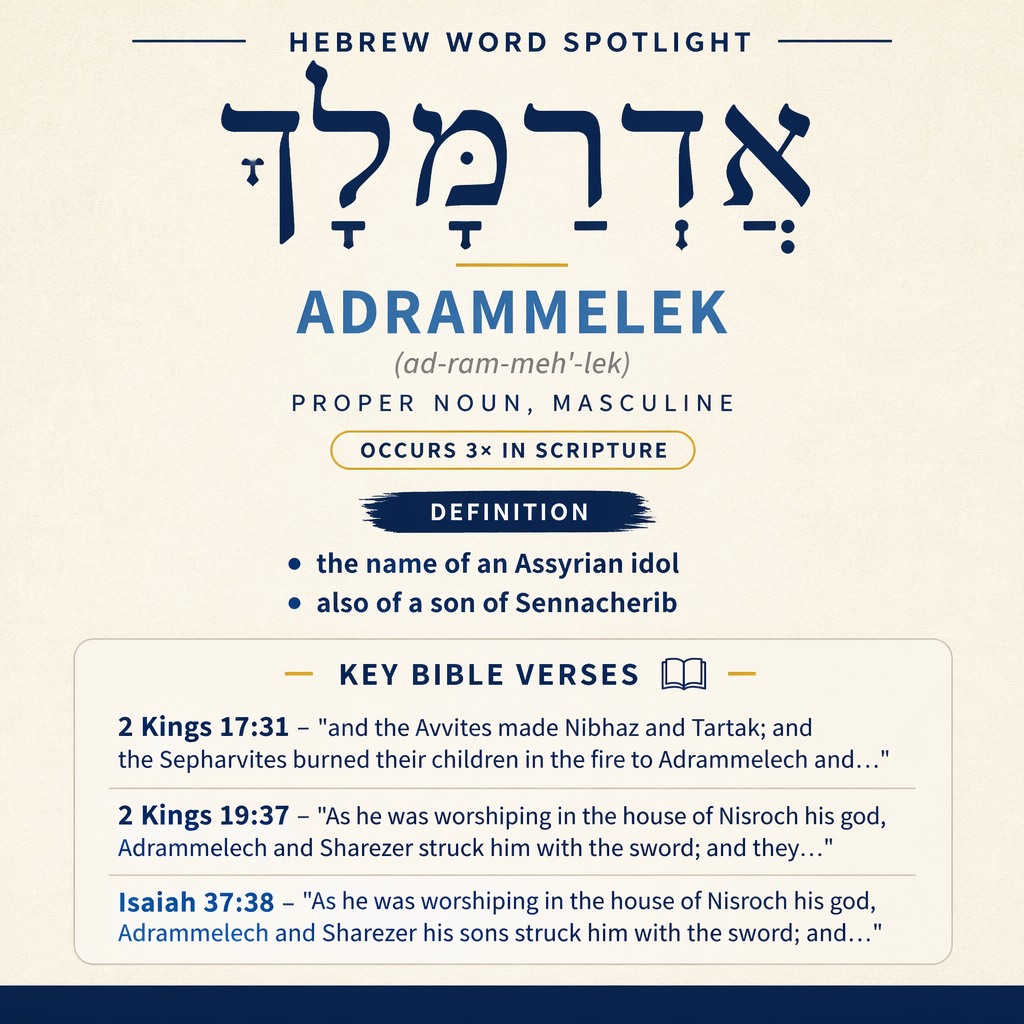
‘Adrammelek

ad-ram-meh’-lek
Parts of Speech: Proper Name Masculine

‘Adrammelek Definition

NAS Word Usage – Total: 3
Adrammelech = “honour of the king” or “Adar is prince” or “Adar is Counsellor, Decider”

  1. an idol or god of the Sepharvites, introduced to Israel by Shalmaneser the fifth
  2. the son and murderer of Sennacherib

Understanding ‘Adrammelek: The Hebrew Meaning

The name ‘Adrammelek can be puzzling for those unfamiliar with its origins in the Hebrew Bible. In the context of biblical studies, understanding what this name means and where it fits into the larger narrative can deepen our appreciation of its significance. The term ‘Adrammelek translates to “Adrammelech” in some biblical texts, typically interpreted as “noble king” or “great king.”

Books Worth Reading:
Sponsored
Book 3154Book 3131Book 3162Book 3129Book 3161

The Historical Context of ‘Adrammelek

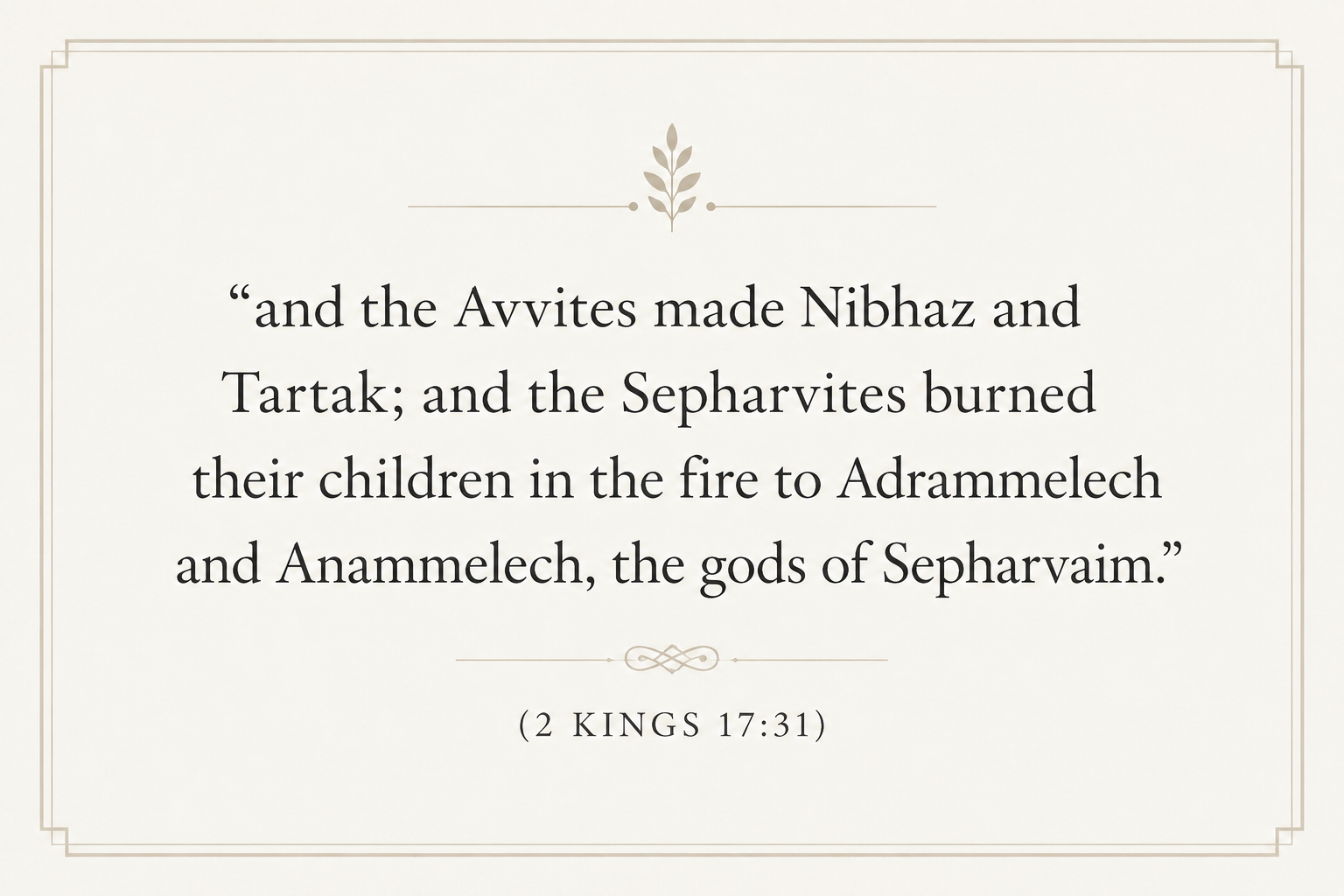
‘Adrammelek appears in 2 Kings 17:31, where he’s mentioned as a deity worshipped by the people of Sepharvaim. The name suggests a connection to ancient Near Eastern practices, where various nations worshipped a pantheon of gods. Understanding this context sheds light on how the Israelites interacted with neighboring cultures, including the variety of religious influences that may have permeated their practices.

For instance, when the Israelites were exiled or conquered, they often adopted names and deities from surrounding nations. By analyzing ‘Adrammelek, we see how the Israelites understood divinity and kingship within their society and the implications of such influences on their faith.

Symbolism of the Name

The components of the name ‘Adrammelek can be parsed for a deeper meaning. “Adar” can be understood as a reference to a deity often associated with “greatness” or “nobility.” Meanwhile, “melek” is a common Hebrew word meaning “king.” Therefore, ‘Adrammelek can signify “the noble king,” which might reflect both a title and a description of characteristics attributed to this god.

Books Worth Reading:
Sponsored
Book 3154Book 3131Book 3162Book 3129Book 3161

This symbolism can lead to various interpretations. Those engaged in Jewish studies might view ‘Adrammelek as a representation of the desire for sovereignty—one that reflects the human need for authority and rule. This name may even serve as an icon of the struggle between faith in Yahweh and the temptation to follow foreign gods.

The Worship of ‘Adrammelek

In the mentioned biblical passage, people sacrificed their children in the worship of ‘Adrammelek, which highlights the sometimes horrific zeal of ancient religious practices. This act was a sign of devotion that, from an Israelite perspective, was abhorrent and eventually provoked the condemnation from the biblical authors.

Imagine a setting where people felt compelled to make such extreme sacrifices due to societal pressures or a desire to gain favor from a deity. The act of worshiping ‘Adrammelek is not only dramatic but serves as an illustration of the extremes of devotion that can arise in cultures confronted with existential fears, such as drought, famine, or war.

Books Worth Reading:
Sponsored
Book 3154Book 3131Book 3162Book 3129Book 3161

Cultural Importance and Influence

The repercussions of ‘Adrammelek’s worship extend beyond individual acts of piety; they reflect broader sociocultural dynamics. For example, in times of crisis, the Israelites may have been drawn to more radical forms of worship, even adopting foreign customs as a way to bolster hope.

Consider how various cultures often seek solace in different belief systems—just as some modern individuals turn to alternative spiritual practices during challenging times. This analogy allows us to understand the historical context better: the Israelites’ worship of ‘Adrammelek may have been an attempt to grab onto a tangible form of hope when their own religious practices seemed inadequate.

Modern Understanding of ‘Adrammelek

In contemporary biblical scholarship, ‘Adrammelek serves as an example of how ancient polytheism influences monotheistic beliefs. Scholars often discuss how the inclusion of names like ‘Adrammelek in the Bible provides significant insight into the transition from polytheism to monotheism.

Books Worth Reading:
Sponsored
Book 3154Book 3131Book 3162Book 3129Book 3161

For instance, educators might point this out in a classroom setting when teaching students about the complexities of ancient Israel’s religious landscape. It opens up discussions about how faith evolves and how the surrounding cultures can contribute to shaping religious beliefs over time.

Comparative Analysis with Other Deities

To understand ‘Adrammelek better, it can be valuable to compare him with other deities from different cultures, such as Moloch, another god associated with child sacrifice. This comparison illuminates common themes in ancient religions concerning power, sacrifice, and fear.

Both ‘Adrammelek and Moloch serve as representations of the extreme measures people might take in pledging devotion to a higher power. In both the contexts of biblical records and archaeological finds, these cultural artifacts provide valuable insights into societal values and fears prevalent during their times.

Books Worth Reading:
Sponsored
Book 3154Book 3131Book 3162Book 3129Book 3161

Theological Implications

From a theological perspective, ‘Adrammelek also raises questions surrounding the nature of devotion and what it may demand of believers. For instance, the Bible criticizes not only the worship of ‘Adrammelek but also the very idea that following such a deity could ever bring fulfillment or satisfaction.

If a contemporary believer can see the workings of ‘Adrammelek in today’s religious landscape, it could advocate for examining what forms of modern worship may place undue demands on followers. This might resemble how individuals today sometimes encounter the pressure to conform to societal ideas of success or recognition.

Noteworthy Biblical Passages

The primary mention of ‘Adrammelek appears in 2 Kings 17:31, but exploring additional references can provide further dimensions to his understanding. Textual analyses often highlight how the mention of various deities, including ‘Adrammelek, serves a dual purpose: it narrates history while also providing moral lessons intended for the audience.

Books Worth Reading:
Sponsored
Book 3154Book 3131Book 3162Book 3129Book 3161

For example, these passages stress the catastrophic consequences of deviating from divine instructions and the resultant suffering that follows. In this light, ‘Adrammelek becomes an essential part of a larger moral narrative that seeks to guide the reader on the dangers of mixing faith traditions.

Archaeological Evidence

Archaeological findings, such as inscriptions and artifacts from cities like Sepharvaim, add a real-world layer to the understanding of ‘Adrammelek. These discoveries provide tangible evidence that worship of such deities was not merely a fantasy of biblical scribes but rooted in the cultural practices of those times.

Historians can glean insights from these excavations that assist in understanding how practices associated with gods like ‘Adrammelek influenced local societies. Discoveries may include artifacts used in sacrificial rites or images depicting gods that were commonly worshiped, further solidifying the historical accuracy of biblical narratives.

Books Worth Reading:
Sponsored
Book 3154Book 3131Book 3162Book 3129Book 3161

Translator’s and Scholar’s Interpretations

When analyzing the texts that mention ‘Adrammelek, the translation choices made by scholars and translators can significantly influence our understanding. For instance, some translations may opt to retain the original Hebrew term, while others may freely translate it as “great king.”

Analyzing these choices can illuminate the intentions of the biblical authors. By unpacking the phrasing and synonyms chosen, one might unearth subtleties that lead to different interpretation paths, enriching the understanding of the text’s theological implications.

The Evolution of ‘Adrammelek in Tradition

As stories about ‘Adrammelek were passed down through generations, the name and its implications may have transformed. The early Jewish scholars might have used ‘Adrammelek as a cautionary tale against straying from monotheism while instilling a stronger attachment to Yahweh.

Books Worth Reading:
Sponsored
Book 3154Book 3131Book 3162Book 3129Book 3161

In religious teachings today, the story of ‘Adrammelek could be utilized as a pedagogical tool to reinforce the importance of spiritual fidelity and the dangers of succumbing to cultural pressures that may lead to the worship of false gods.

‘Adrammelek in Literature and Art

‘Adrammelek does not just reside in biblical texts; he can also be found in artistic depictions and literatures reflecting on the theme of fallen kings or failed worship. Artists and writers through the ages have drawn from biblical narratives, sometimes recreating ‘Adrammelek’s story to highlight moral lessons or to critique contemporary society.

In modern media, one might find ‘Adrammelek referenced in works discussing the clash between tradition and modernity, symbolizing the age-old tension between established faiths and the allure of newer, potentially divergent spiritual paths.

Books Worth Reading:
Sponsored
Book 3154Book 3131Book 3162Book 3129Book 3161

The Significance of ‘Adrammelek for Modern Readers

For contemporary readers, ‘Adrammelek presents an excellent opportunity to engage with ancient texts while discovering their relevance in our lives today. Engaging in studies related to ‘Adrammelek fosters a deeper appreciation for the complexity not only of ancient Hebrew scripture but of the cultural and societal issues that continue to resonate in today’s religious landscape.

Considering how different societies cope with belief, sacrifice, and authority can enrich one’s understanding of both ancient and modern life. In examining ‘Adrammelek, individuals may ponder their spiritual commitments, the legacies of their cultural practices, and how they navigate faith in a multifaceted world.

Little Known Secrets

The name ‘Adrammelek’ holds fascinating significance in Hebrew and touches on a blend of history and culture.

Books Worth Reading:
Sponsored
Book 3154Book 3131Book 3162Book 3129Book 3161
  • Meaning of the Name: ‘Adrammelek’ translates to “Adrammelech” in some texts and means “noble king” or “the great king.” This reflects a combination of ‘Adar,’ associated with greatness, and ‘melek,’ which means king.
  • Biblical Reference: Adrammelek is mentioned in 2 Kings 17:31 as an idol worshiped by the people of Cuth, who were settled in the region of Samaria. This highlights the syncretism of religions during that time.
  • Cultural Context: The worship of Adrammelek is linked to the broader Canaanite culture, where multiple gods and deities were often venerated, showing how Hebrew texts sometimes incorporate surrounding cultures.
  • Association with Child Sacrifice: Some interpretations suggest that worshiping Adrammelek included practices such as child sacrifice, a grim aspect that highlights the conflicts between the worship of Yahweh and other regional deities.
  • Comparative Deities: Adrammelek is sometimes connected with the Assyrian god of fire and the sun, which indicates that the name shares similarities with ancient Near Eastern religious practices.
  • Symbol of Rebellion: In the Hebrew Bible, the worship of Adrammelek represents rebellion against God, as the Israelites are repeatedly warned against following foreign gods, showcasing the struggle between faith and cultural influences.
  • Literary Appearances: The name appears in various Jewish writings and commentaries, making it a point of discussion when exploring the interactions between Jewish beliefs and surrounding cultures.
  • Modern Usage: Interestingly, the name has been used in modern literature, sometimes symbolizing themes of conflict between tradition and change, effectiveness of modernity against ancient beliefs.

Conclusion

In conclusion, the name “Adrammelek” carries significant meaning in Hebrew. It combines the words “Adar,” which refers to a majestic or regal aspect, and “Melek,” meaning “king.” Therefore, Adrammelek can be understood as “the king is exalted” or “royal king.” This name appears in the Bible within the context of Assyrian worship and serves as a reminder of the complex interactions between cultures and religions in ancient times. By exploring names like Adrammelek, we gain deeper insights into the historical and spiritual landscape of the Hebrew Bible.

Common Questions Related to What Does ‘Adrammelek Mean In Hebrew

Q. What does the name ‘Adrammelek mean in Hebrew?
A. In Hebrew, ‘Adrammelek means “Adrammelech,” a name associated with a deity and can mean “the king is glorious” or “the greatness of the king.”

Q. Where is ‘Adrammelek mentioned in the Bible?
A. ‘Adrammelek is mentioned in 2 Kings 17:31, where he is referenced as one of the gods worshiped by the people of Sepharvaim.

Books Worth Reading:
Sponsored
Book 3154Book 3131Book 3162Book 3129Book 3161

Q. Who worshiped ‘Adrammelek in the Bible?
A. The people from Sepharvaim, a region in ancient Mesopotamia, are noted to have worshiped ‘Adrammelek along with other deities.

Q. What is the significance of ‘Adrammelek in biblical history?
A. ‘Adrammelek represents the foreign gods that the Israelites were warned against worshiping, highlighting the issue of idolatry during that time.

Q. Is ‘Adrammelek a character or a divine figure?
A. ‘Adrammelek is considered a divine figure or a deity in the context of the ancient Near East, rather than a character.

Books Worth Reading:
Sponsored
Book 3154Book 3131Book 3162Book 3129Book 3161

Q. What does the name ‘Adrammelek tell us about ancient cultures?
A. The name reflects the blending of religion and politics in ancient cultures, showing how kingship was often tied to divine authority.

Q. How is ‘Adrammelek related to other gods worshiped in the region?
A. ‘Adrammelek is related to other gods like Molech and could be seen as part of a broader pantheon that included various deities worshiped across ancient nations.

Q. What are some other names similar to ‘Adrammelek found in the Bible?
A. Similar names and deities include Molech and Chemosh, which were also associated with idolatry and child sacrifice.

Books Worth Reading:
Sponsored
Book 3154Book 3131Book 3162Book 3129Book 3161

Q. How did the worship of ‘Adrammelek affect the Israelites?
A. The worship of ‘Adrammelek led some Israelites away from their faith in Yahweh, causing conflicts and divine displeasure as noted by biblical authors.

Q. What lesson can we learn from the story of ‘Adrammelek?
A. The story of ‘Adrammelek teaches about the dangers of idolatry and the importance of remaining faithful to one’s beliefs and traditions.

About the Author

Ministry Voice

{"email":"Email address invalid","url":"Website address invalid","required":"Required field missing"}

Want More Great Content?

Check Out These Articles 

mba ads=90