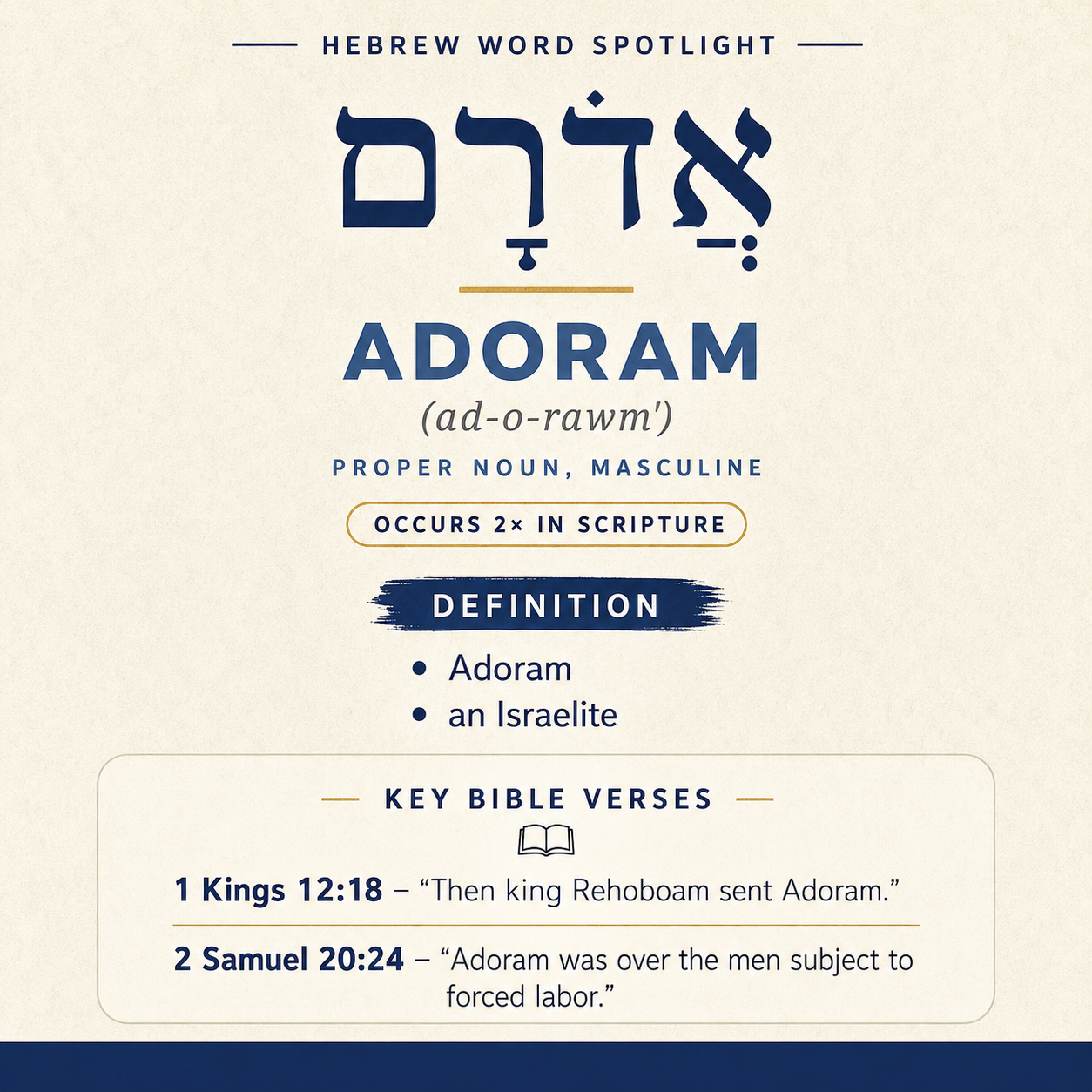
‘Adoram

ad-o-rawm’
Parts of Speech: Proper Name Masculine

‘Adoram Definition

NAS Word Usage – Total: 2
Adoram = “my lord is exalted”

  1. an officer of David
  2. an officer of Rehoboam

What Does ‘Adoram Mean in Hebrew?

Understanding the meaning of the name ‘Adoram in Hebrew can be a bit challenging due to its usage in different contexts within the Bible. The name ‘Adoram (אֲדֹרָם) is derived from two elements: “Adon,” which means “lord,” and “ram,” which can mean “exalted,” “high,” or “to rise.” Therefore, ‘Adoram can be interpreted as “exalted lord” or “lord who is high.”

Books Worth Reading:
Sponsored
Book 3154Book 3131Book 3162Book 3129Book 3161

In the Hebrew Bible, ‘Adoram is mentioned specifically in 1 Kings 4:6 and 5:14. In these passages, ‘Adoram serves as a high official in King Solomon’s administration, tasked with overseeing the forced labor of the Israelites for the construction of the Temple in Jerusalem.

Etymology of ‘Adoram

To fully grasp the meaning of ‘Adoram, it’s essential to explore its etymological roots in Hebrew.

Breakdown of the Name

  1. Adon (אדון): This part of the name translates to “lord” or “master.” It’s a term that’s commonly used in the Bible to denote authority or divinity. For instance, God is often referred to as “Adonai,” emphasizing His status as the ultimate Lord.
  2. Ram (רם): This word means “to rise” or “high.” In Hebrew scripture, it often appears in contexts that denote elevation, both in a physical and spiritual sense.

When combined, ‘Adoram (אֲדֹרָם) conveys the idea of an exalted master or a high lord, which reflects the hierarchical structures present in ancient Hebrew society.

Books Worth Reading:
Sponsored
Book 3154Book 3131Book 3162Book 3129Book 3161

Historical Context of ‘Adoram

The historical context of ‘Adoram provides another layer of understanding to the name and its implications. In the era of King Solomon, around the 10th century BCE, Israel experienced great political and architectural advancements. Solomon, known for his wisdom and building projects, required reliable officials to manage his extensive undertakings.

Role of ‘Adoram

In 1 Kings 4:6, ‘Adoram is appointed as an officer in charge of forced labor. This indicates his significant position in the royal hierarchy. The text states:

“Ahishar was over the household; and Adoram the son of Abda was a taskmaster over the levy.”

Books Worth Reading:
Sponsored
Book 3154Book 3131Book 3162Book 3129Book 3161

This passage reveals that ‘Adoram held a critical role in overseeing the work that was instrumental in constructing the First Temple, which is one of the most revered structures in Jewish history.

Implications of His Role

The role of ‘Adoram showcases how labor was organized within Israelite society. Forced labor was sometimes a contentious issue, especially during Solomon’s reign. With a name that means “exalted lord,” one can infer that ‘Adoram was both a figure of authority and a potential source of conflict due to the heavy demands of labor upon the populace.

Biblical Significance of ‘Adoram

‘Adoram’s notable mention in the Bible signifies more than just a name; it represents larger thematic elements at play during Solomon’s reign.

Books Worth Reading:
Sponsored
Book 3154Book 3131Book 3162Book 3129Book 3161

Leadership and Authority

With ‘Adoram supervising laborers, themes of leadership, authority, and responsibility unfold. The dynamics between rulers and their subjects often reflect broader ethical issues regarding power. ‘Adoram, as a servant of King Solomon, embodies one aspect of these broader questions of governance.

Labor and Society

The construction of the Temple and other projects led to significant social changes. The role of ‘Adoram signifies the necessity of management within these societal shifts. In ancient times, constructing monumental architecture required organized labor and effective oversight, demonstrating the essential nature of administration in the ancient Hebrew state.

Symbolism of Names in Hebrew Culture

In Hebrew culture, names are often reflective of the person’s role, character, or destiny. The name ‘Adoram emphasizes a higher calling or authority, reflecting the societal values associated with leadership during Solomon’s time. Just like how other Biblical names carry weight—think of Jacob (the deceiver), or Miriam (the beloved)—’Adoram’s name carries implications of authority and responsibility.

Books Worth Reading:
Sponsored
Book 3154Book 3131Book 3162Book 3129Book 3161

Theological Reflections on ‘Adoram

In the context of theology, ‘Adoram brings forward discussions revolving around servitude and authority in relation to God’s kingdom.

Serving Without Being Divine

‘Adoram’s role as a servant to the king presents an interesting contrast to the divine authority of God in the Hebrew Bible. While ‘Adoram holds a high position and bears an exalted name, he is ultimately still a servant to King Solomon. This brings forth theological reflections on the distinction between divine power and earthly authority.

Service to God Versus Human Authority

The concept of serving a higher purpose is prevalent throughout Hebrew scripture. ‘Adoram exemplifies the idea that authority does not always equate with righteousness, much like serving God always comes with particular responsibilities.

Books Worth Reading:
Sponsored
Book 3154Book 3131Book 3162Book 3129Book 3161

Modern Usage of ‘Adoram

While ‘Adoram may not be commonly used today as a name, its historical and biblical roots carry significance that can be found in various fields, especially among scholars, theologians, and those studying ancient Hebrew culture.

In Christianity and Judaism

The name ‘Adoram carries recognition among religious scholars interested in biblical names and their meanings. Many discussions arise surrounding the implications of authority and service in contemporary faith practices.

Usage in Modern Conversations

In discussions about authority and leadership, ‘Adoram can serve as a metaphorical reference. When people talk about leaders or authority figures who have a significant burden of responsibility, they might liken them to figures like ‘Adoram, emphasizing the weight of leadership and the expectation to rise to a high standard.

Books Worth Reading:
Sponsored
Book 3154Book 3131Book 3162Book 3129Book 3161

The Importance of Context

Understanding ‘Adoram goes beyond mere definition; the context in which the name appears is crucial. Political, social, and theological ramifications play into how we can interpret ‘Adoram in modern times.

Social Hierarchy in Ancient Israel

The role and identity of ‘Adoram shed light on the social hierarchies present in ancient Israel. Knowledge about his responsibilities can help us understand how labor and authority were structured during this formative period in Israel’s history.

The Impact on Modern Biblical Studies

Finally, ‘Adoram’s significance can provide insights for modern biblical studies, as scholars dive into the meanings behind names and their roles in theological frameworks. Delving into historical contexts surrounding names like ‘Adoram aids researchers in drawing connections between past and present societal structures.

Books Worth Reading:
Sponsored
Book 3154Book 3131Book 3162Book 3129Book 3161

Practical Applications of Understanding ‘Adoram

Recognizing the found meanings and implications of names like ‘Adoram has real-world applications in education and cultural studies.

Educational Approaches

For educators teaching about the Hebrew Bible, discussing names such as ‘Adoram can serve as a springboard for dialogues about power structures and governance. By examining ‘Adoram’s impact on Israel’s construction projects, lessons can be framed around leadership and responsibility for students.

Cultural Discussions

In cultural discussions surrounding authority, invoking ‘Adoram provides a historical reference point to explore how leadership has evolved. This makes the conversations around authority, service, and responsibility more relatable and anchored in historical context.

Books Worth Reading:
Sponsored
Book 3154Book 3131Book 3162Book 3129Book 3161

Through the lens of ‘Adoram, a deeper understanding of the complexities of biblical names is achieved. Each name tells a story and contributes to the larger narrative of the people and their relationship with authority, society, and God.

Little Known Secrets

The name ‘Adoram’ holds intriguing layers of meaning in Hebrew and its biblical context.

  • Meaning of the Name: The name ‘Adoram’ can be translated as “my adornment” or “my majesty,” indicating a sense of beauty or honor.
  • Biblical Role: Adoram is mentioned in the Bible as a high official under King Solomon, specifically as the master of forced labor (1 Kings 5:14). This role highlights his importance in the construction projects of the temple.
  • Alternate Spellings: In some translations, Adoram is spelled as ‘Adoniram,’ which is often used interchangeably. This can sometimes confuse readers about his identity and role.
  • Historical Significance: The historical context of forced labor in ancient Israel can be linked to the broader theme of social hierarchy and governance during the reign of Solomon, framing Adoram’s position within the structure of the kingdom.
  • Cultural Roots: The root of the name ‘Adoram’ comes from the Hebrew root word “dorm,” which means to adore or to be heavy with significance, underscoring his role as one who commands respect.
  • Symbol of Authority: In the biblical narrative, Adoram symbolizes the authority of the king and the sometimes harsh realities of labor relations, reflecting the complexities of leadership in ancient times.
  • Legacy in Hebrew Literature: The name continues to appear in discussions of biblical stewardship, justice, and the ethical implications of leadership in communities, serving as a case study for understanding authority and responsibility.

Conclusion

In conclusion, the name “Adoram” in Hebrew carries the meaning of “my adornment” or “my honor.” This reflects the significance of the name in the context of leadership and importance. Adoram is mentioned in the Bible as a figure in the time of King Solomon, serving in a role that likely demanded respect and responsibility. Understanding the meaning of names like Adoram helps us appreciate the values and beliefs of the ancient Hebrew culture, showing how names were often chosen to reflect one’s character or role in society. By exploring names and their meanings, we gain deeper insights into the messages conveyed in Biblical stories.

Books Worth Reading:
Sponsored
Book 3154Book 3131Book 3162Book 3129Book 3161

Common Questions Related to What Does ‘Adoram Mean In Hebrew

Q. What does the name ‘Adoram mean in Hebrew?
A. The name ‘Adoram means “my height” or “my exaltation” in Hebrew.

Q. Where is ‘Adoram mentioned in the Bible?
A. ‘Adoram is mentioned in the Bible in the context of King Solomon’s reign, as an official in charge of forced labor.

Q. How is ‘Adoram related to King Solomon?
A. ‘Adoram was overseer of the labor force during King Solomon’s time, helping to manage workers for building projects.

Books Worth Reading:
Sponsored
Book 3154Book 3131Book 3162Book 3129Book 3161

Q. What is the significance of the name ‘Adoram in the Bible?
A. The name suggests someone who is elevated or valued, reflecting the status of the person serving in a high position.

Q. Is ‘Adoram the same as Adoniram in the Bible?
A. Yes, ‘Adoram and Adoniram are often considered the same person, though they are spelled differently in various translations.

Q. What can we learn from the role of ‘Adoram?
A. We learn about the organization and management of labor during ancient times, as well as the complexities of leadership.

Books Worth Reading:
Sponsored
Book 3154Book 3131Book 3162Book 3129Book 3161

Q. Why might the meaning of ‘Adoram be significant today?
A. Understanding the meaning can help us appreciate leadership and responsibilities in our communities, reflecting how people are valued.

Q. Does ‘Adoram have any other meanings in the Bible?
A. In its Biblical context, ‘Adoram mainly refers to the role of the individual and their administrative duties rather than having other meanings.

Q. How do Hebrew names reflect personal qualities?
A. Hebrew names like ‘Adoram often reflect characteristics or roles, suggesting something important about the person’s life or duties.

Books Worth Reading:
Sponsored
Book 3154Book 3131Book 3162Book 3129Book 3161

Q. Can the name ‘Adoram still be used today?
A. Yes, while less common, names with Hebrew origins continue to be used today, often with similar meanings or significance.

About the Author

Ministry Voice

{"email":"Email address invalid","url":"Website address invalid","required":"Required field missing"}

Want More Great Content?

Check Out These Articles 

mba ads=90