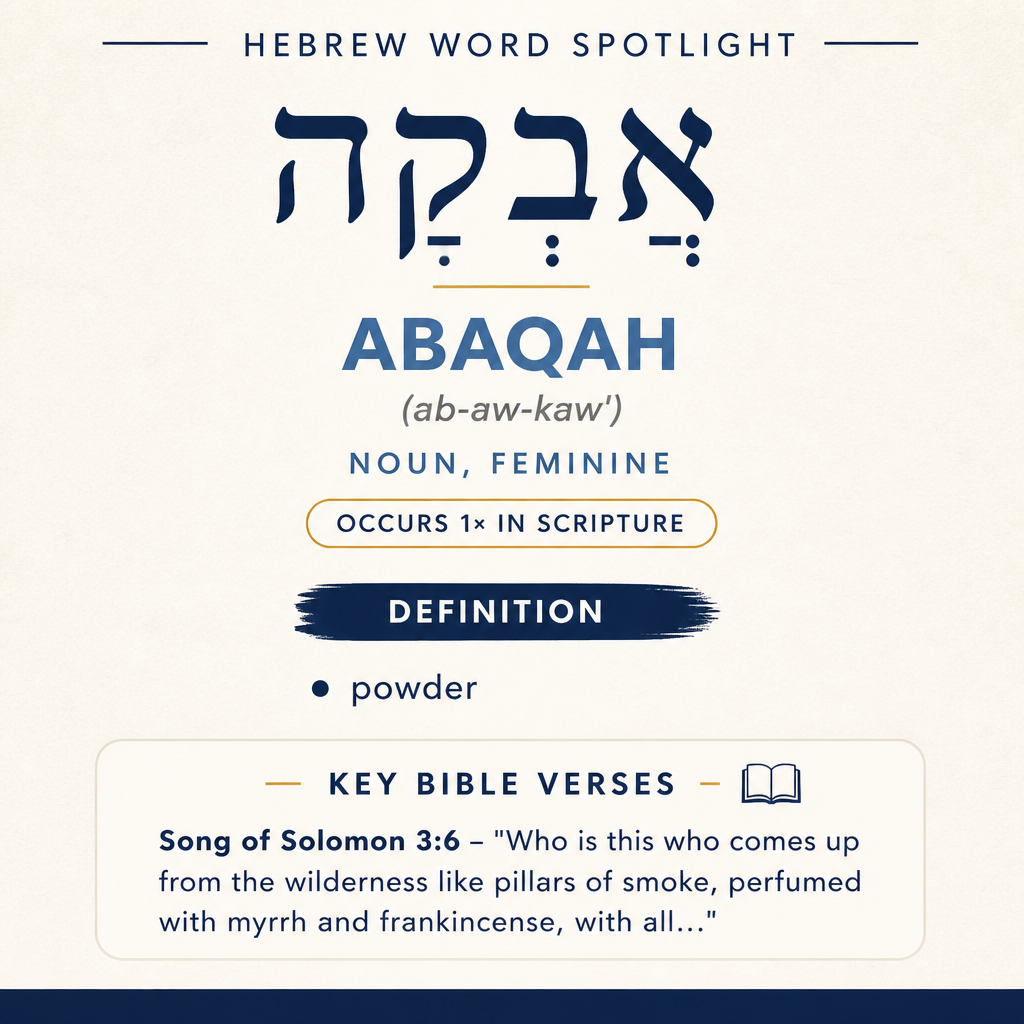
‘abaqah
‘abaqah Definition
- aromatic powders, powder
Understanding the Meaning of ‘Abaqah in Hebrew
The term “abaqah” in Hebrew may initially puzzle many, as it’s not commonly found in everyday language. The problem arises when individuals encounter this term in biblical texts or conversations about Hebrew language. What does ‘abaqah mean in Hebrew?
The answer is that “abaqah” (אֲבָקָה) primarily refers to “powder” or “dust.” It carries the connotation of fine particles that have settled or are created through the grinding of materials.
Origins and Usage of ‘Abaqah
Understanding ‘abaqah begins with its roots in the Hebrew language. The root word is עבק (avak), which translates to “dust” or “fine dust.” This root is the basis for several other related terms in Hebrew that carry similar meanings.
In biblical contexts, ‘abaqah is often associated with the dust of the earth. This term appears in poetic texts and can also have metaphorical meanings. For example, when discussing humility, ‘abaqah evokes the image of human beings being formed from the dust of the ground, as noted in the creation narratives in Genesis.
Practical Example of ‘Abaqah
Consider a gardening scenario where one is preparing soil for planting. The gardener would ensure that the soil is finely tilled and dust-like. This careful preparation mirrors the idea of ‘abaqah, emphasizing its essential role in the nourishment and growth of plants. Just like ‘abaqah serves as a fundamental component of earth, it symbolizes the basic materials and conditions of life.
Poetic and Symbolic Connotations of ‘Abaqah
In literature, Hebrew often uses the term ‘abaqah to evoke emotions or imagery. For example, in the Book of Job, a character may refer to their degradation by declaring themselves “like dust” or ‘abaqah. This usage reinforces the feeling of insignificance and reflects the human condition in the face of divine power.
A poet might use ‘abaqah to emphasize fragility or transience. For instance, they might describe a fleeting moment as “as delicate as abaḳah,” likening it to the fine dust that can easily be scattered by the wind. This metaphorical use showcases ‘abaqah’s depth and how it transcends mere physicality to capture human experiences.
Relating ‘Abaqah to Other Biblical Terms
To further grasp the meaning of ‘abaqah, it’s helpful to compare it to other relevant Hebrew words.
Dust and Earth in the Bible
The Hebrew word “afar” (עָפָר) is another translation for “dust,” closely related to ‘abaqah. However, ‘abaqah emphasizes the fine quality of dust, while “afar” can refer to dust in a broader sense. For instance, when God created Adam, He formed him from the dust (afar) of the ground. The imagery captured in ‘abaqah, on the other hand, often focuses on the smaller, more delicate particles.
Connection to Human Existence
The relationship between humans and ‘abaqah can be significant, as both ‘abaqah and its root convey themes of mortality. In many biblical texts, the acknowledgment of humanity’s earthly origin can be seen as a humbling reminder of life’s temporary nature.
For instance, Psalms frequently describe people returning to the dust. When the Psalmist remarks about humans being “dust,” it calls upon the same conceptual imagery associated with ‘abaqah. This serves to remind readers of their humble beginnings and the cyclical nature of life.
Visualizing ‘Abaqah in Everyday Life
To visualize ‘abaqah, think about scenes filled with dust kicking up as people move through old streets or a child playing in a sandbox. The fine particles remind us of both play and age. In biblical cultures, the appearance of dust could signify various activities, from agricultural work to daily chores. Dust would gather as people lived their lives, a normal part of human existence.
Significance in Rituals
In ancient Hebrew rituals, ‘abaqah and its interpretations went beyond mere physical dust. Dust was sometimes used in ceremonial contexts to represent purification or the fragility of life. Consider a scenario during Yom Kippur, a day of atonement when individuals may wear sackcloth and sit in ashes or dust as a sign of repentance. This act harkens back to the symbolism contained within ‘abaqah, embracing humility and the awareness of human shortcomings.
The Role of ‘Abaqah in Hebrew Literature
Literature is replete with references to ‘abaqah, illustrating its significance in historical and contemporary texts.
The Use of ‘Abaqah in Psalms and Proverbs
In the Book of Psalms, you may find instances where ‘abaqah is mentioned in prayers asking for divine mercy or blessings. A poet or psalmist might say, “Restore me from the dust,” using ‘abaqah to appeal for help in times of despair. This creates an emotional connection and invites readers to reflect on their vulnerabilities.
Similarly, in Proverbs, wisdom literature touches on themes involving the fragility of life. It may use ‘abaqah to compare wisdom to the transient nature of dust, suggesting that those who seek true wisdom must recognize their earthly limitations.
Stories and Parables Featuring ‘Abaqah
Imagine a parable set in ancient Israel: a farmer struggles against the drought, praying for rain while the earth grows drier and more dusty. The narrator might say, “His days were filled with ‘abaqah; the dust marked his hardships.” This narrative emphasizes both the struggle and endurance of the human spirit, while simultaneously rooting the story in the tangible reality of ‘abaqah.
Theological Implications of ‘Abaqah
In theological discussions, ‘abaqah often symbolizes the relationship between God, humanity, and creation.
Human Vulnerability and Divine Power
The term’s connection to dust can act as a metaphor for human vulnerability in contrast to God’s omnipotence. The frequent biblical references to humans “returning to dust” serve to highlight the belief that life is fleeting and that human beings are ultimately dependent on divine mercy.
Metaphors of Creation
When exploring creation narratives, ‘abaqah’s implications of fine dust can reflect God’s artistry in the formation of life. Hebrew literature cherishes the relationship between creator and creation, and the presence of ‘abaqah signifies the intricate details that contribute to life’s complexion. Viewing creation through the lens of ‘abaqah encourages deeper contemplation of one’s role as part of the living earth.
Final Thoughts on ‘Abaqah
With its rich historical, metaphorical, and cultural dimensions, ‘abaqah functions as both a physical element and a symbol of deeper truths within the Hebrew scriptures. From its references in daily life to its metaphorical use in poetry and wisdom literature, understanding ‘abaqah requires weaving through various layers of meaning. Its connection to the human experience, spirituality, and creativity ultimately makes ‘abaqah a fascinating term deeply embedded in the linguistic tapestry of Hebrew culture.
Little Known Secrets
The Hebrew word “abaqah” holds more than meets the eye.
- “Abaqah” (אֲבָקָה) means “dust” or “powder,” and it is derived from the root word “abaq,” which emphasizes something that is fine and light.
- This term often appears in contexts associated with creation and the earthly material, reminding us of the Biblical passage where God formed man from the dust of the ground (Genesis 2:7).
- In biblical poetry, “abaqah” may symbolize fragility and the fleeting nature of life, echoing ideas found in Ecclesiastes about the transience of human existence.
- The word is also used in prophetic literature, implying humility, as dust is often a representation of lowliness or a reminder of human mortality.
- In the Hebrew language, dust has a dual connotation: it can symbolize both the base of creation and a reminder of chaos, reflecting how dust can come from both natural processes and destruction.
- “Abaqah” is etymologically related to other Semitic languages that use similar roots for terms related to dust or particles, suggesting a shared cultural understanding of its significance.
- In ancient rabbinic literature, dust (and by extension, “abaqah”) can represent the presence of sin, as seen in rituals of purification where dust is used in various cleansing practices.
- The use of “abaqah” in prayers and blessings often points to the connection between humanity, the earth, and divine creation, as it serves as a reminder of our humble beginnings.
- Interestingly, “abaqah” can also be found in discussions about the coming of the Messiah, symbolizing the foundational aspects of justice and righteousness emerging from the ‘dust’ of society.
Conclusion
In conclusion, the Hebrew word “abaqah” carries significant meaning, rooted in its biblical context. It often refers to the idea of humility and submission, reflecting a deep respect for authority and God’s will. Understanding words like “abaqah” helps us connect more with the teachings of the Bible and appreciate the rich language and culture from which it comes. By studying these terms, we gain better insights into the scriptures and the values they promote, aiding in our spiritual growth and understanding.
Common Questions Related to What Does ‘abaqah Mean In Hebrew
Q. What does the Hebrew word ‘abaqah mean?
A. The Hebrew word ‘abaqah, spelled as אֲבָקָה, generally means “dust” or “ash.” It can also imply something that is fine or powdery.
Q. Where is the word ‘abaqah found in the Bible?
A. The term ‘abaqah appears in some translations of the Bible when discussing concepts related to dust or fine particles, especially in poetic or descriptive passages.
Q. What is the root of the word ‘abaqah in Hebrew?
A. ‘Abaqah comes from the root word “אבק,” which also means “dust” or “powder.”
Q. How is ‘abaqah used in daily Hebrew language?
A. In modern Hebrew, ‘abaqah can still refer to dust, especially when talking about things like cleaning or weather.
Q. Does ‘abaqah have a symbolic meaning in Hebrew literature?
A. Yes, ‘abaqah can symbolize humility, insignificance, or the fleeting nature of life, as dust often represents what is temporary.
Q. Can ‘abaqah be used in a figurative sense?
A. Yes, in Hebrew literature, ‘abaqah can figuratively refer to troubles or challenges that are overwhelming, much like a cloud of dust.
Q. Are there similar words to ‘abaqah in Hebrew?
A. Yes, similar words include “afār” (אֵפָר), which also means “dust” but can refer to a more coarse kind of dirt or earth.
Q. In which contexts might you see ‘abaqah used?
A. ‘Abaqah may appear in texts discussing creation, rituals involving dust, or metaphors about life and death.
Q. Is ‘abaqah a common word in Jewish prayers?
A. While ‘abaqah itself may not be commonly used, the concepts of dust and humility appear frequently in Jewish prayers and Psalms.
Q. How does the meaning of ‘abaqah relate to cultural beliefs?
A. In Jewish culture, dust symbolizes humility before God, reminding people of their mortality and the transient nature of life.