Exploring the Meaning of Nomothetes in Greek
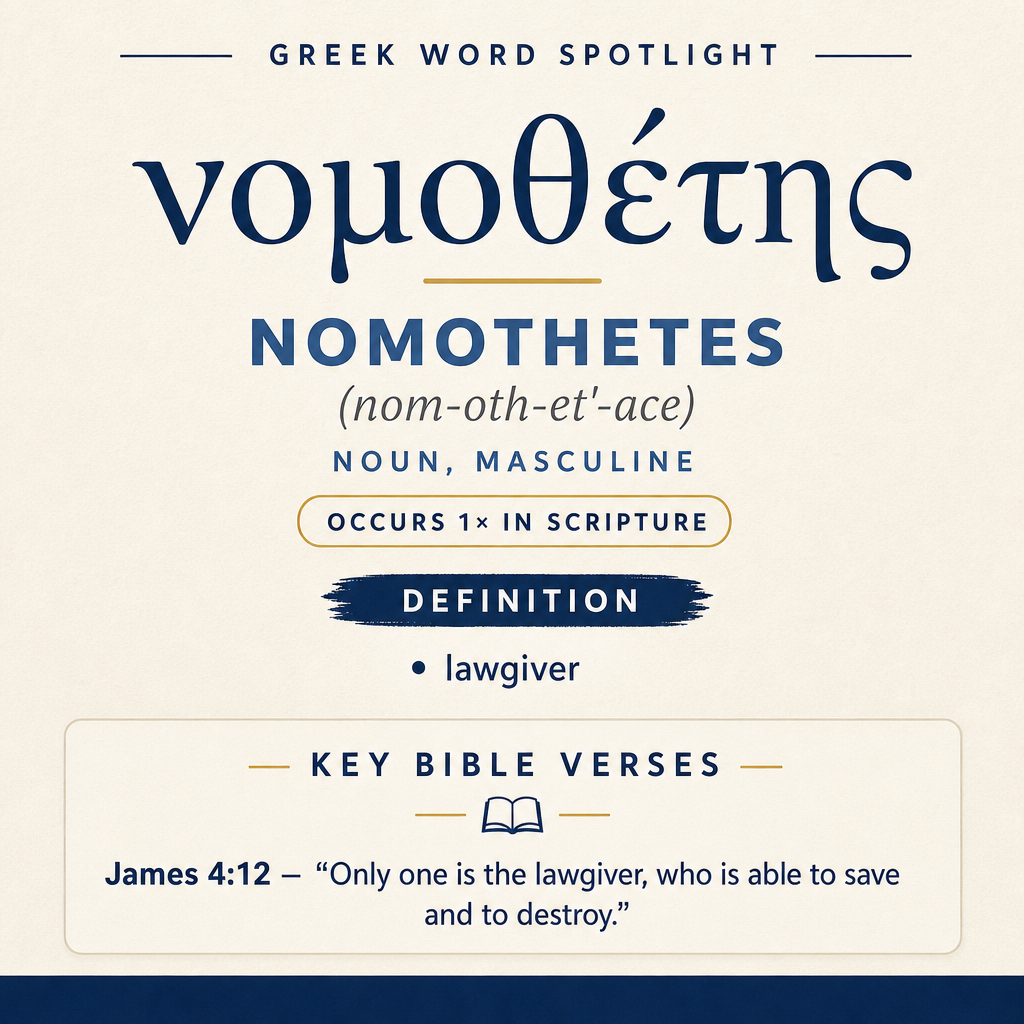
νομοθέτης means “lawgiver” and appears once in Scripture, in James 4:12.
James 4:12 Focus
James 4:12 says only one is the lawgiver, able to save and to destroy. The verse contrasts God’s authority with judging another.
Learn More →νομοθέτης refers to a “lawgiver,” a title used in Scripture for the single figure who holds rightful authority over judgment and ultimate outcomes. It appears once, in a brief but pointed statement about who may judge another.
Root and Related Words
νομοθέτης is connected with νόμος (nomos), “law” (Strong’s G3551), and τίθημι (tithemi), “to place” (Strong’s G5087). Together these related words frame the idea of law as something established or set in place, and of the lawgiver as the one associated with that establishment.

Occurrences
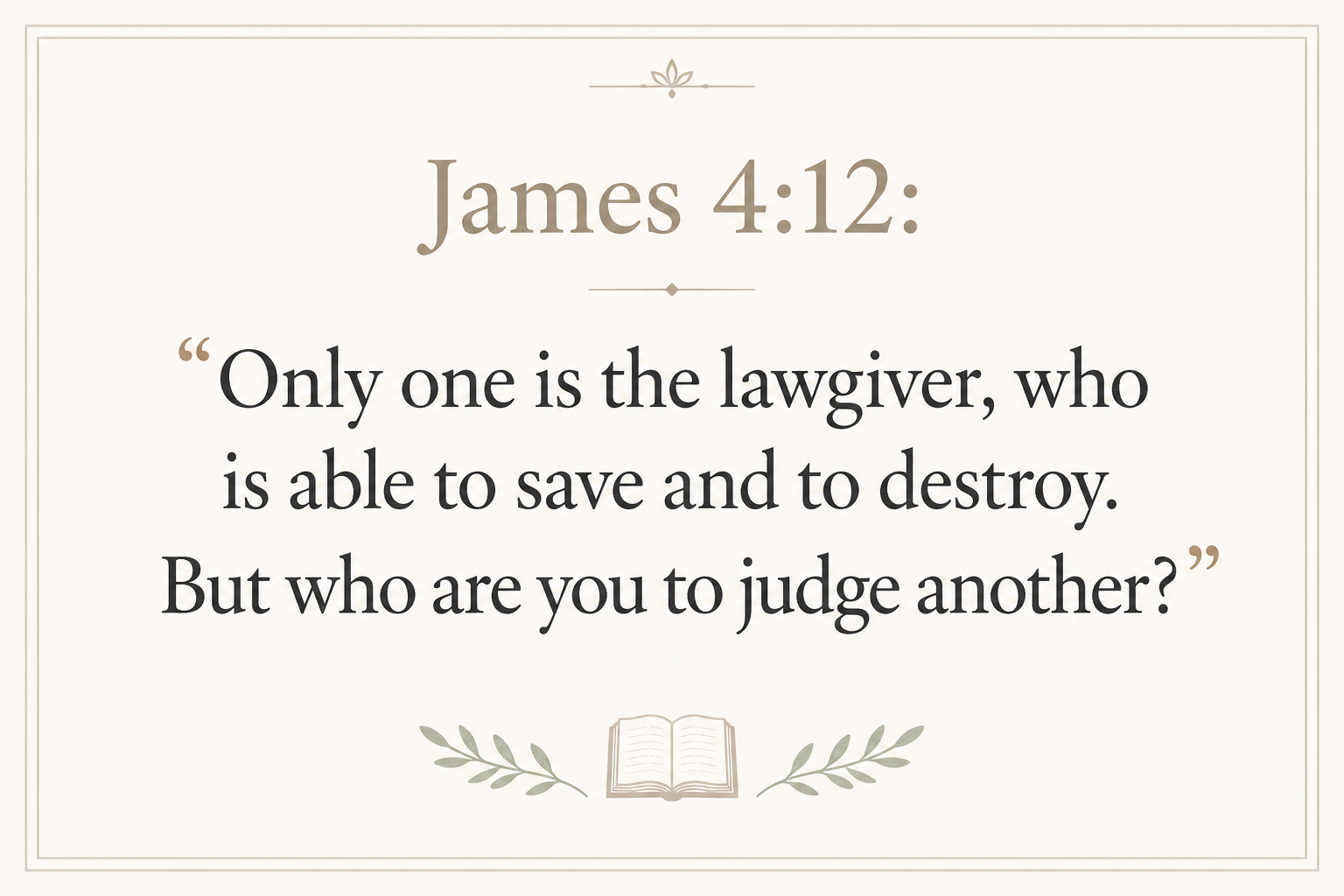
James 4:12: “Only one is the lawgiver, who is able to save and to destroy. But who are you to judge another?”
In James 4:12, νομοθέτης functions as a title of exclusivity: “Only one is the lawgiver.” The sentence immediately explains why this title belongs to only one—because this lawgiver “is able to save and to destroy.” The verse then turns outward with a direct challenge: “But who are you to judge another?” The placement of νομοθέτης at the head of the statement anchors the entire admonition. The reasoning runs from identity to capability to human limitation: if the lawgiver alone has the capacity that reaches to saving and destroying, then the posture of sitting in judgment over “another” is exposed as a role mismatch.
The verse also links lawgiving and judging closely. The mention of judging does not introduce a new topic so much as it presses the implication of recognizing the true lawgiver. James does not present judgment as a neutral human activity; it is constrained by the prior claim that there is a single lawgiver. The rhetorical question (“But who are you…?”) draws its force from the uniqueness asserted at the start. In this scene, νομοθέτης is not merely a descriptor of one who issues rules; it identifies the one whose authority stands behind the moral courtroom in which judgments are rendered.
Sense and Usage
The sense “lawgiver” in James 4:12 carries weight because it is paired with power over final outcomes: “able to save and to destroy.” The lawgiver is therefore portrayed as more than a legislative figure in the abstract. Within the verse’s own logic, the title marks the one whose authority is comprehensive enough to determine consequences that humans cannot. That pairing gives the term a strongly vertical orientation: lawgiving comes from above, not from peer-to-peer comparison.
In this single use, νομοθέτης also functions polemically, drawing a boundary around human judgment. The verse does not deny that people make evaluations; instead, it confronts the act of judging “another” with the prior reality of the one lawgiver. The title therefore serves a regulating purpose: it limits presumptuous judgment by re-centering authority in the one who stands in the position to enact what humans cannot—saving or destroying. The word’s force is sharpened by the contrast between “Only one” and “who are you,” a contrast that makes the title a hinge between divine prerogative and human restraint.
Because the verse presents the lawgiver as singular, νομοθέτης here is not distributed across multiple authorities. The term gathers the concepts of rule, judgment, and decisive power into a single office held by one. That concentration of authority explains why the word can do so much work in so few lines: once the identity of the true lawgiver is stated, the impropriety of taking the judge’s seat over another person follows as a practical consequence.
The related words help illuminate the contour of the title without expanding its meaning beyond “lawgiver.” νόμος (nomos), “law,” supplies the sphere in which a lawgiver operates: the ordering standard that stands over the community. τίθημι (tithemi), “to place,” suggests the notion of establishing or setting in place; in the context of James 4:12, the lawgiver is the one whose authority is associated with the placing of the law, not merely the enforcement of it. The verse’s emphasis, however, remains on the lawgiver’s unique capacity and rightful standing, not on the mechanics of how laws are issued.
Imagery
James 4:12 casts νομοθέτης in the imagery of a courtroom where the decisive authority belongs to one alone. The lawgiver is presented as the one able “to save and to destroy,” while the human impulse to “judge another” is depicted as stepping into a role that is already occupied. The term therefore evokes a single, higher bench from which judgment and outcome properly proceed.
Sources: Lexical data from Strong’s Exhaustive Concordance and the Translators Brief Lexicon of Extended Strongs for Greek (STEPBible, CC BY). Occurrence data from the Translators Amalgamated Greek New Testament (STEPBible, CC BY). Scripture quotations from the World English Bible (public domain).