
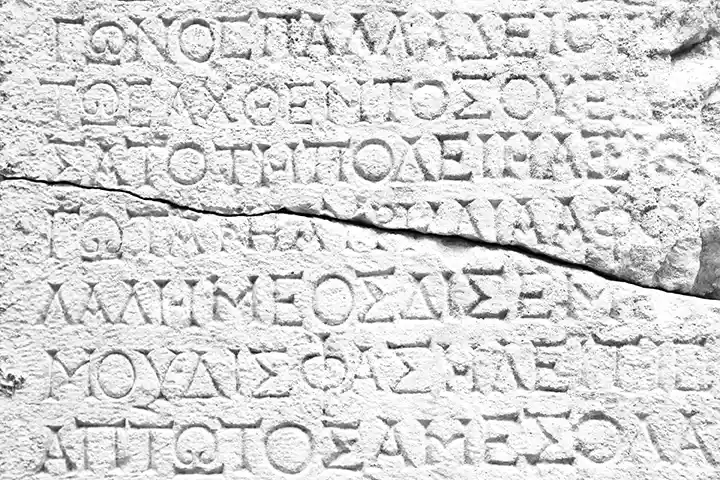
Eidololatreia
Eidololatreia Definition
- the worship of false gods, idolatry
- of the formal sacrificial feats held in honour of false gods
- of avarice, as a worship of Mammon
- in the plural, the vices springing from idolatry and peculiar to it
Understanding the Term “Eidololatreia”
“Eidololatreia” is a Greek term that appears in various forms in the New Testament of the Bible, usually translated as “idolatry.” To fully grasp its meaning, we must break down the word origins and implications within the biblical context.




The word is a compound of two parts: “eidolon” meaning “idol” or “image,” and “latreia,” meaning “worship” or “service.” Therefore, “eidololatreia” literally translates to “worship or service of idols.”
The Roots of Idolatry in Antiquity
Understanding the ancient roots of “eidololatreia” necessitates a dive into the history of idol worship. In ancient times, cultures across the world, including those in Greece and the broader Mediterranean, worshipped various gods and made idols to represent these deities. This practice was widespread well before the advent of Christianity.
In biblical terms, idol worship was not just a spiritual practice but a cultural norm. The Hebrews were, in many cases, an exception for their belief in a single, invisible God—Yahweh—making their opposition to “eidololatreia” a distinctive feature of their religion.
“Eidololatreia” in the Old Testament
While the Old Testament was written primarily in Hebrew, the Septuagint, a Greek translation of Hebrew Scriptures, uses “eidololatreia” to describe acts of idol worship among the Israelites. In Exodus 20:3-5, God explicitly commands that His people should have no other gods before Him, condemning the practice of crafting idols.
God’s disdain for idol worship is depicted in numerous stories, such as the tale of the Golden Calf (Exodus 32), where the Israelites, during Moses’ absence, create and worship a golden calf, invoking God’s anger and punishment. The prophets railed against idol worship as well, frequently citing it as a primary reason for Israel’s misfortunes.
Uses of “Eidololatreia” in the New Testament
“Eidololatreia” in Pauline Epistles
One of the most significant instances of “eidololatreia” in the New Testament appears in Paul’s letters. Paul, writing to early Christian communities, warns against reverting to pagan practices, including idol worship.
In 1 Corinthians 10:14, Paul urges: “Therefore, my dear friends, flee from idolatry (eidololatreia).” Here, Paul is making a clear distinction between the new Christian faith and the pagan practices prevalent in Corinth, a city known for its temples and idol worship.
In Galatians 5:19-21, Paul lists “eidololatreia” among the “acts of the flesh” and warns that those who engage in such practices will not inherit the kingdom of God. This underscores how seriously early Christians viewed the issue.
Revelation’s Stand Against Idolatry
The Book of Revelation, written by John, also addresses “eidololatreia.” In Revelation 21:8, idolatry is listed among the sins that will lead to the “second death” in the lake of fire. This apocalyptic imagery serves to amplify the dire consequences of such practices.
The Theological Significance of “Eidololatreia”
From a theological standpoint, “eidololatreia” is much more than the worship of statues or graven images. It is a broad term that encompasses any form of worship or reverence directed away from the true God. It symbolizes a rupture in the relationship between humanity and divinity, often leading people into moral and spiritual decay.
If we analyze the Second Commandment, it becomes clear that God views idolatry as a betrayal. The prohibition against idol worship in the Ten Commandments exists to maintain the purity and focus of the Israelites’ worship on Yahweh alone.
Cultural and Social Implications
Social Divides
During the early Christian era, the injunction against “eidololatreia” created clear divides between Christians and non-Christians. Many pagan rites involved idol worship, which put Christians in opposition to the surrounding culture. Refusing to participate in these practices could result in social ostracism or even persecution.
Philosophical Conflicts
In a broader philosophical context, “eidololatreia” also speaks to fundamental human tendencies to place ultimate trust and value in things other than God. These could be material possessions, power, or even abstract concepts like fame or success.
“Eidololatreia” in Modern Context
While the literal practice of idolatry might seem distant from contemporary life, many modern theologians argue that “eidololatreia” still exists in subtler forms today. Modern “idols” might include money, technology, and other things that people might prioritize over their spiritual life.
The concept of “eidololatreia” calls for introspection: are there things in our lives that occupy a place that should be reserved for the divine? This reflective question aims to help believers steer away from modern-day idols and focus on a meaningful relationship with God.
Conclusion
Understanding “eidololatreia” within the context of the Bible sheds light on the term’s multifaceted implications. At its core, “eidololatreia” represents a turning away from God, a theme that resonates strongly throughout both the Old and New Testaments. From the historical practices of idol worship to the strong theological stances in scripture, “eidololatreia” serves as a powerful warning to keep one’s faith pure and undivided.
In a world filled with distractions and competing priorities, the ancient word “eidololatreia” challenges us to consider what holds ultimate importance in our lives. Revisiting this term from the lens of biblical context can provide valuable lessons for maintaining spiritual integrity in a complex, modern world.