Exploring the Meaning of Mathetria in Greek
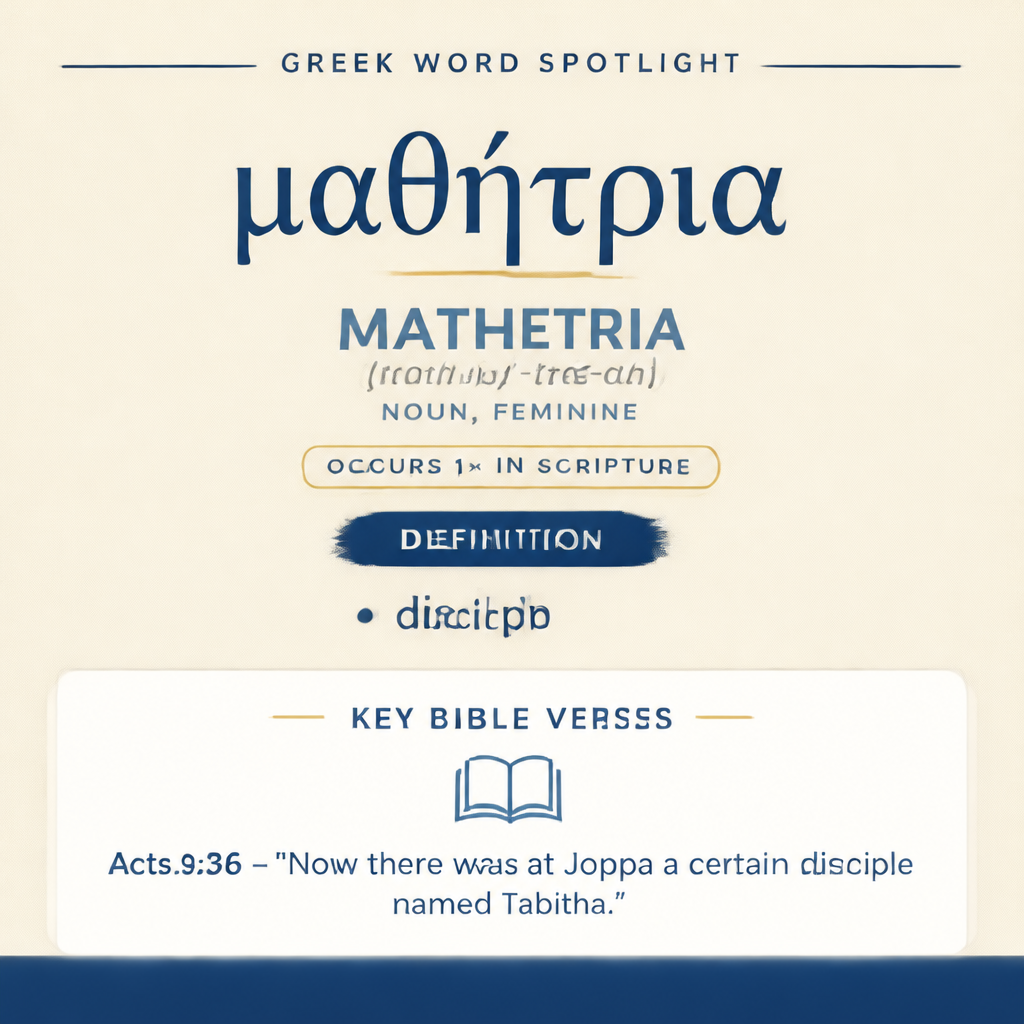
μαθήτρια means “disciple” and appears once in Scripture, in Acts 9:36.
Scripture Occurrence
This word occurs 1 time in Scripture. Its single occurrence is in Acts 9:36.
Learn More →Context in Acts
In Acts 9:36 it refers to a disciple named Tabitha (Dorcas) in Joppa.
Learn More →μαθήτρια means “disciple” and appears once in the New Testament, in Acts 9:36, describing a woman in Joppa named Tabitha (Dorcas). In that scene it functions as a compact designation of her recognized place among the Lord’s followers.
Root and Related Words
μαθήτρια (Mathetria) is derived from mathetes (μαθητής), “disciple” (Strong’s G3101). The relationship between the two forms marks μαθήτρια as the feminine counterpart built on the same disciple-word family.

Occurrences
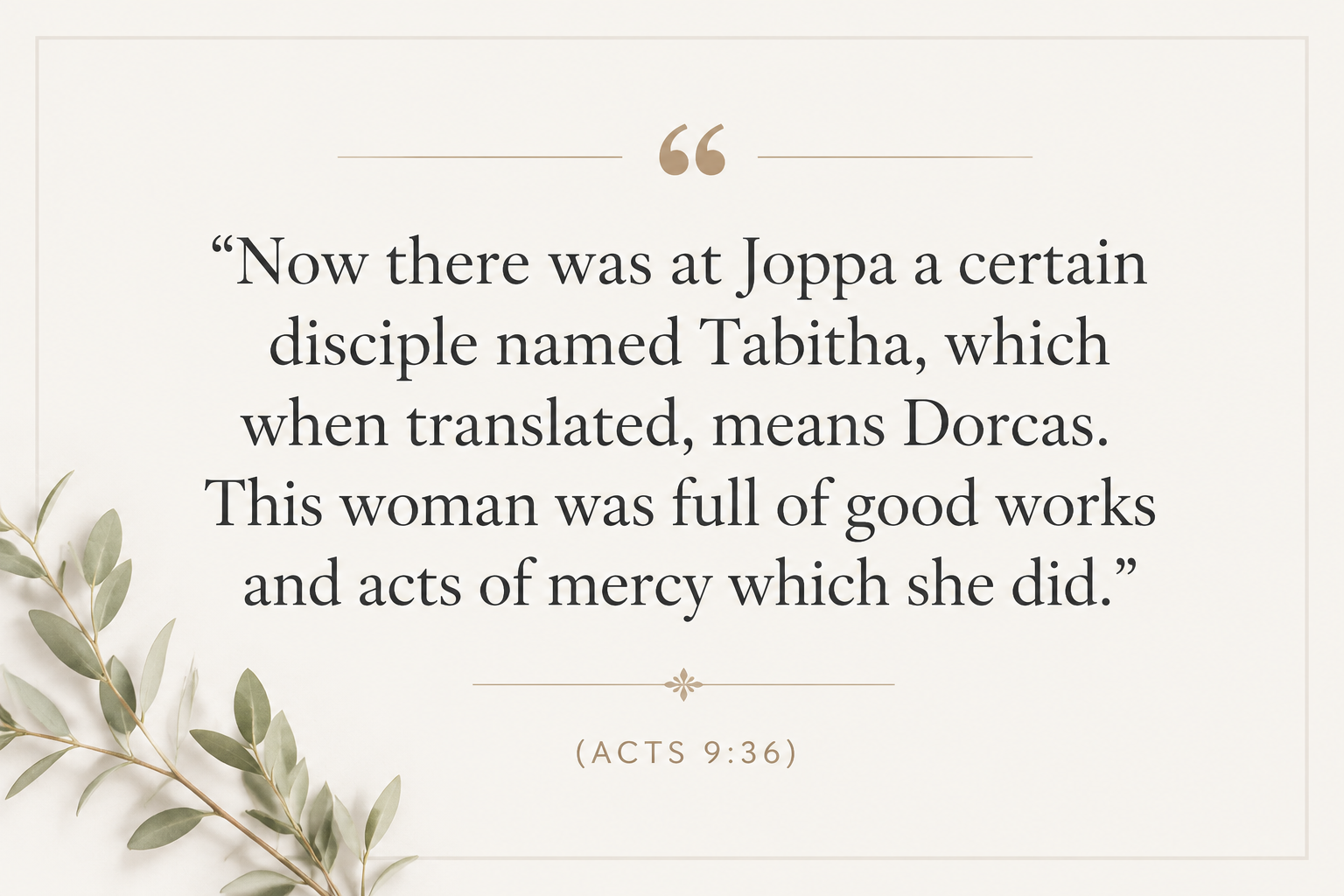
“Now there was at Joppa a certain disciple named Tabitha, which when translated, means Dorcas. This woman was full of good works and acts of mercy which she did.” (Acts 9:36)
Here μαθήτρια identifies Tabitha first and foremost as a “disciple,” before the narrative gives any further description of her character or activity. The verse immediately supplies two naming details—her Aramaic name “Tabitha” and its translation “Dorcas”—and then places her in the setting of Joppa. Against that local and linguistic specificity, the term “disciple” functions as her primary status-marker in the community: she is introduced not merely as a resident, benefactor, or notable woman, but as someone defined by belonging among disciples.
Within the verse, the word also frames the evaluation that follows: “This woman was full of good works and acts of mercy which she did.” The narrative does not present these works as detached philanthropy; they are attached to the identity “disciple” so that her actions read as the concrete expression of that designation in her life. The clause “full of good works and acts of mercy” is not a separate title; it is a description that comes after, and is tethered to, her being called a disciple. As a result, μαθήτρια in this context signals that her discipleship is publicly legible—her identity is recognizable enough that the narrator can introduce her with that term and then illustrate it with a pattern of deeds.
The wording also makes her gender explicit by the choice of the feminine form. The verse says, “a certain disciple named Tabitha … This woman was full of good works….” The combination of the feminine noun with the immediate clarification “This woman” holds together without strain: the designation “disciple” is applied to her as a woman, and the narrative proceeds to speak of her accordingly. The use of the feminine form, rather than a generic masculine term, makes the identification direct and personal: it is not an abstract claim that women may be disciples, but a concrete description of this particular woman as one.
Sense and Usage
The definition “disciple” is brief, but in Acts 9:36 its force is relational and communal rather than merely descriptive. The verse does not define what a disciple is; it assumes a known category and places Tabitha within it. The sense therefore works like a recognized label within the narrative world: it situates her among those characterized by allegiance and learning within the movement the book recounts, and it does so at the moment she enters the story.
Because μαθήτρια occurs in a single verse, its usage here is concentrated and programmatic. First, it functions as an introduction formula: “Now there was … a certain disciple named Tabitha….” In biblical narrative, an introduction formula often selects the most salient identity for the person being introduced. In this case the salient identity is her being a disciple. Her personal name, its translation, and her location are all supporting details; the lead descriptor is “disciple.” That ordering shows how the word can operate as a social identity that precedes other identifiers.
Second, the verse immediately connects this identity to observable conduct: “full of good works and acts of mercy which she did.” The term “disciple” itself does not mean “one who does good works,” yet in this scene it is the heading under which her merciful action is presented. The word thereby serves as a narrative bridge between belonging (being a disciple) and a life that is described as active and generous. The verse portrays no tension between discipleship and practical service; instead, the good works are presented as the characteristic overflow of the disciple’s life. In this way, the term carries an implicitly public dimension: her discipleship is not hidden, because the verse points to a pattern of deeds that others could observe and remember.
Third, μαθήτρια in this passage contributes a sense of honor without turning into a formal office. The text does not call her by a role-title tied to a specific task; rather, it places her under the general identity “disciple” and then highlights what she was “full of.” The honor in the term comes from what it signals about her affiliation and reputation. The narrative can present her as a disciple and then substantiate the designation through the summary of her mercy, implying that “disciple” is a valued identity within the community being narrated.
Finally, the feminine morphology matters for how the definition is heard in context. The related word mathetes (μαθητής) names “disciple” generally, but μαθήτρια shows the same identity spoken of in a specifically feminine way. Acts 9:36 does not treat this as noteworthy or exceptional; it simply uses the form that fits the person described. That quiet grammatical choice strengthens the narrative’s portrayal of Tabitha’s discipleship as straightforward and unambiguous.
Imagery
Acts 9:36 attaches “disciple” to a picture of abundant, embodied mercy: a woman in a coastal town, known by name, remembered for what she “did.” The term calls up the image of a life characterized by steady acts—good works not as occasional gestures, but as something she was “full of,” so that her identity as a disciple is introduced alongside the tangible pattern of compassion that marked her days.
Sources: Lexical data from Strong’s Exhaustive Concordance and the Translators Brief Lexicon of Extended Strongs for Greek (STEPBible, CC BY). Occurrence data from the Translators Amalgamated Greek New Testament (STEPBible, CC BY). Scripture quotations from the World English Bible (public domain).