Exploring the Meaning of Egkrateuomai in Greek
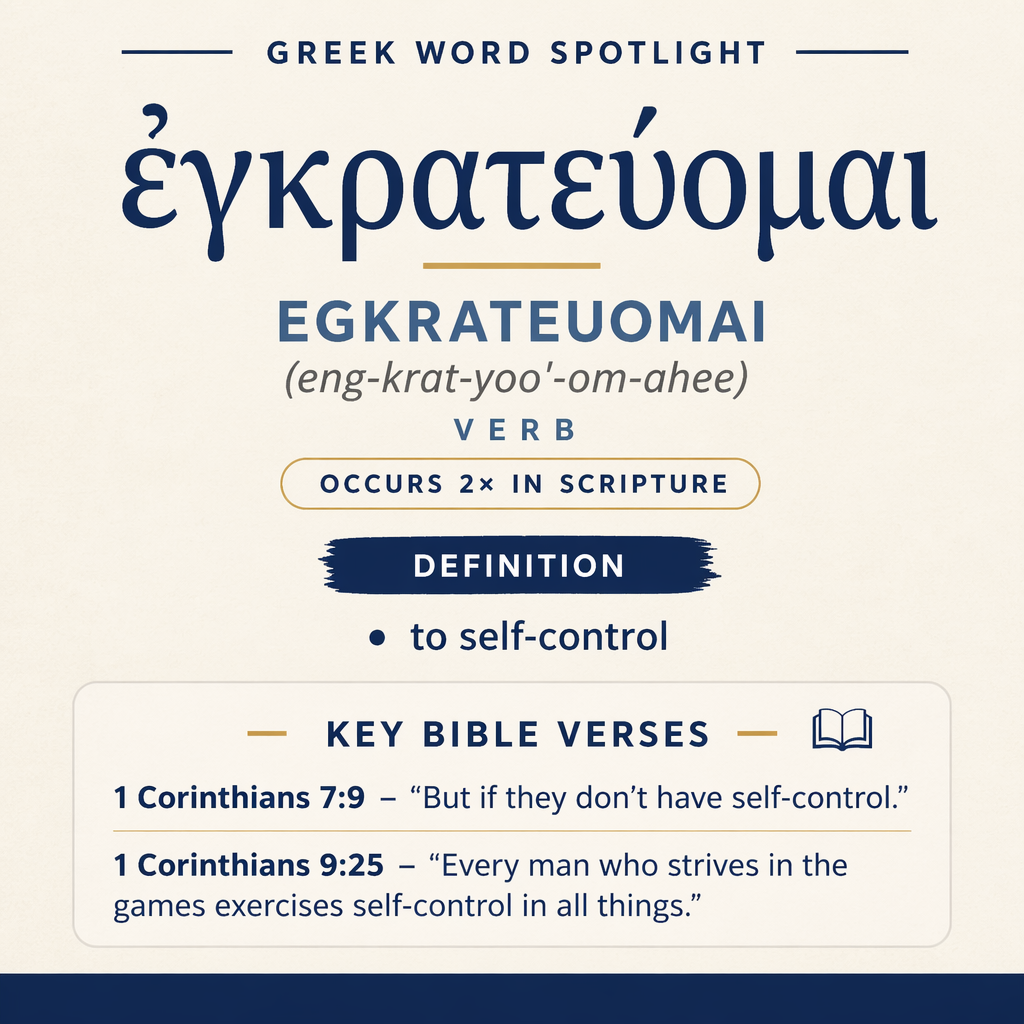
ἐγκρατεύομαι means “to self-control” and appears twice in Scripture, both in 1 Corinthians 7:9 and 1 Corinthians 9:25.
Scripture Occurrences
This verb occurs 2 times in Scripture. Both occurrences are in 1 Corinthians.
Learn More →Contextual Usage
In 1 Corinthians 7:9, it relates to self-control in the context of marriage. In 1 Corinthians 9:25, it describes the self-control of athletes striving for a crown.
Learn More →ἐγκρατεύομαι means “to self-control,” and in the New Testament it appears in Paul’s first letter to the Corinthians in two distinct settings: counsel about marriage and an illustration drawn from athletic competition. In both places, the verb marks restraint as an active practice directed toward a concrete end named in the immediate context.
Root and Related Words
ἐγκρατεύομαι derives from enkrates (ἐγκρατής), “self-controlled” (Strong’s G1468). The verb form expresses the exercise of what the related adjective describes.

Occurrences
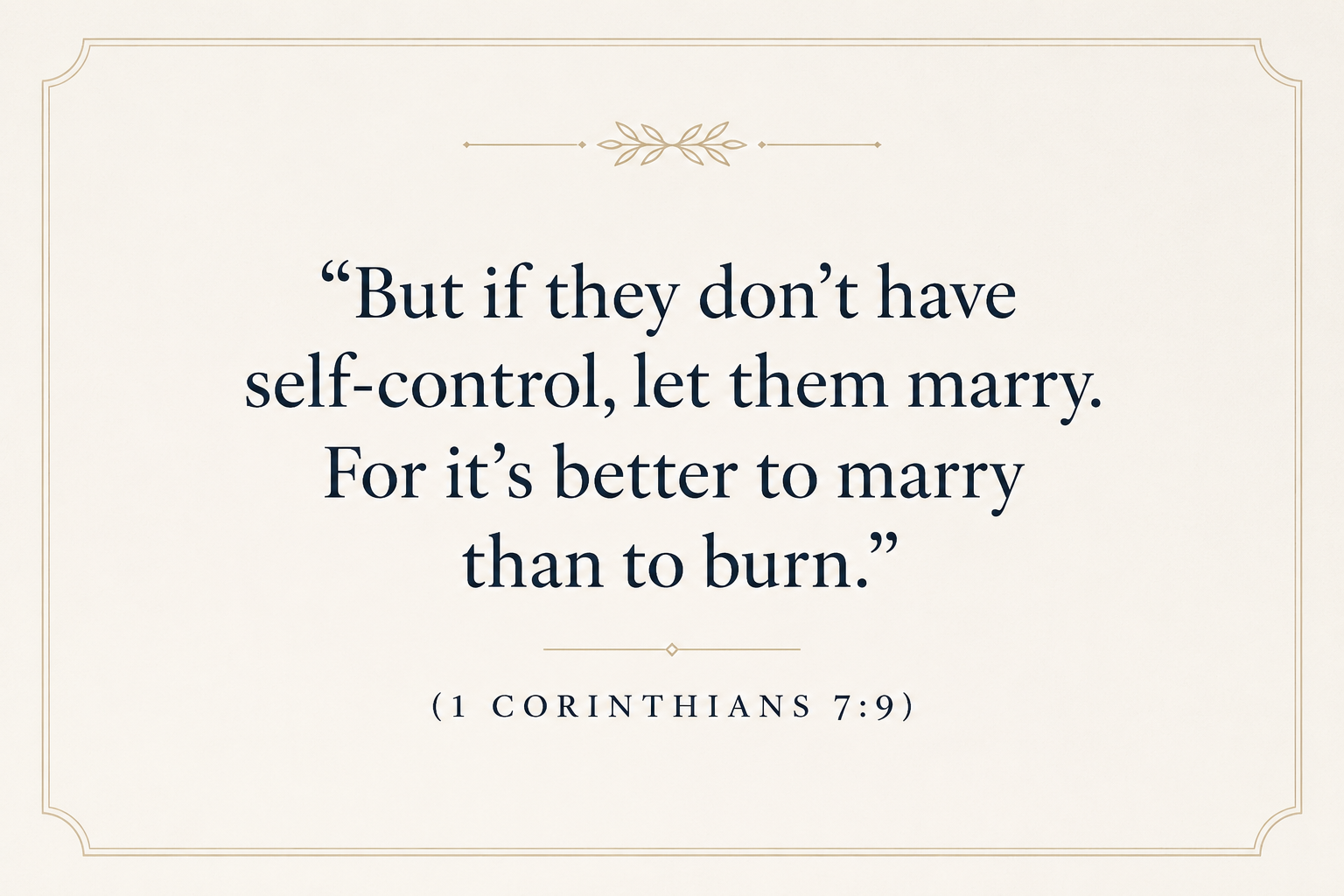
“But if they don’t have self-control, let them marry. For it’s better to marry than to burn.” (1 Corinthians 7:9)
Here ἐγκρατεύομαι is placed in a conditional frame (“if they don’t have…”), where the presence or absence of self-control functions as a practical criterion for what follows. The verb’s force is not theoretical; it names a capacity that can be lacking and, in that case, Paul directs a specific course of action: “let them marry.” The final sentence (“For it’s better to marry than to burn.”) grounds the counsel in a comparative outcome. In this setting, self-control is treated as a restraint that bears directly on personal conduct, with marriage presented as the preferable alternative when that restraint is not being exercised.
“Every man who strives in the games exercises self-control in all things. Now they do it to receive a corruptible crown, but we an incorruptible.” (1 Corinthians 9:25)
In this verse ἐγκρατεύομαι is cast as a characteristic action of an athlete: the one “who strives in the games” “exercises self-control in all things.” The verb is strengthened by its scope clause (“in all things”), portraying self-control as comprehensive rather than selective—restraint applied across the range of choices that affect performance. Paul then explains the athlete’s motive and outcome: “to receive a corruptible crown.” Against that, he sets a contrastive “but we an incorruptible.” Within the sentence, self-control is therefore linked to purposeful striving and to the pursuit of a prize, with the difference between “corruptible” and “incorruptible” sharpening the seriousness of disciplined restraint for Paul’s readers.
Sense and Usage
Across its two Corinthian occurrences, ἐγκρατεύομαι (“to self-control”) presents self-control as an exercised restraint—something enacted, not merely possessed. In 1 Corinthians 7:9 it appears in the negative (“don’t have self-control”), treating self-control as a decisive ability that, when absent, calls for a concrete, permitted remedy (“let them marry”). The verb thus operates as a threshold term: it separates one set of practical circumstances from another and helps explain why the recommended action is judged “better” than the alternative described as “to burn.”
In 1 Corinthians 9:25 the same verb is positive and habitual: the athlete “exercises self-control.” The picture is of deliberate training-like restraint that covers “all things,” suggesting consistency and breadth in what is restrained. The comparison to competitive games draws attention to intentionality—self-control is portrayed as chosen discipline directed toward an anticipated result (“to receive a corruptible crown”). Paul’s contrast (“but we an incorruptible”) then places the readers’ own striving in the same category of purposeful pursuit, implying that self-control is fitting where the goal is weighty.
Taken together, these uses keep the verb’s sense anchored in practical governance of one’s actions. In one passage the issue is a pressing personal situation where the absence of self-control makes a certain path advisable; in the other, self-control is the normal regimen of a competitor who subordinates immediate impulses for the sake of a prize. The verb therefore carries an implicit dynamic: self-control can be exercised broadly (“in all things”), and it can also be missing, with real-life consequences that must be addressed.
Imagery
The imagery surrounding ἐγκρατεύομαι in these verses is concrete and bodily. One scene weighs two lived outcomes—marrying versus “to burn”—and places self-control at the pivot point between them (1 Corinthians 7:9). The other evokes the training and restrictions of an athlete “who strives in the games,” practicing restraint for the sake of a crown (1 Corinthians 9:25). In both, self-control is pictured less as an inner label than as a practiced restraint that shapes what a person does next.
Sources: Lexical data from Strong’s Exhaustive Concordance and the Translators Brief Lexicon of Extended Strongs for Greek (STEPBible, CC BY). Occurrence data from the Translators Amalgamated Greek New Testament (STEPBible, CC BY). Scripture quotations from the World English Bible (public domain).