Exploring the Meaning of Dakru in Greek
δάκρυ, δάκρυον (Dakru) means “teardrop” and appears 11 times in Scripture, including Mark 9:24, Luke 7:38, Acts 20:19, and Hebrews 5:7.
Gospel Scenes
In Mark 9:24, a father cries out “with tears” as he pleads for help. In Luke 7:38, a woman wets Jesus’ feet with her tears.
Learn More →Prayer and Ministry
Acts 20:19 and 20:31 describe serving and admonishing “with many tears.” Hebrews 5:7 speaks of prayers and petitions offered with “strong crying and tears.”
Learn More →δάκρυ, δάκρυον denotes a teardrop, the physical sign of weeping. In the New Testament it appears in scenes of distress, repentance, pastoral concern, remembered sorrow, fervent prayer, and final consolation.

Occurrences
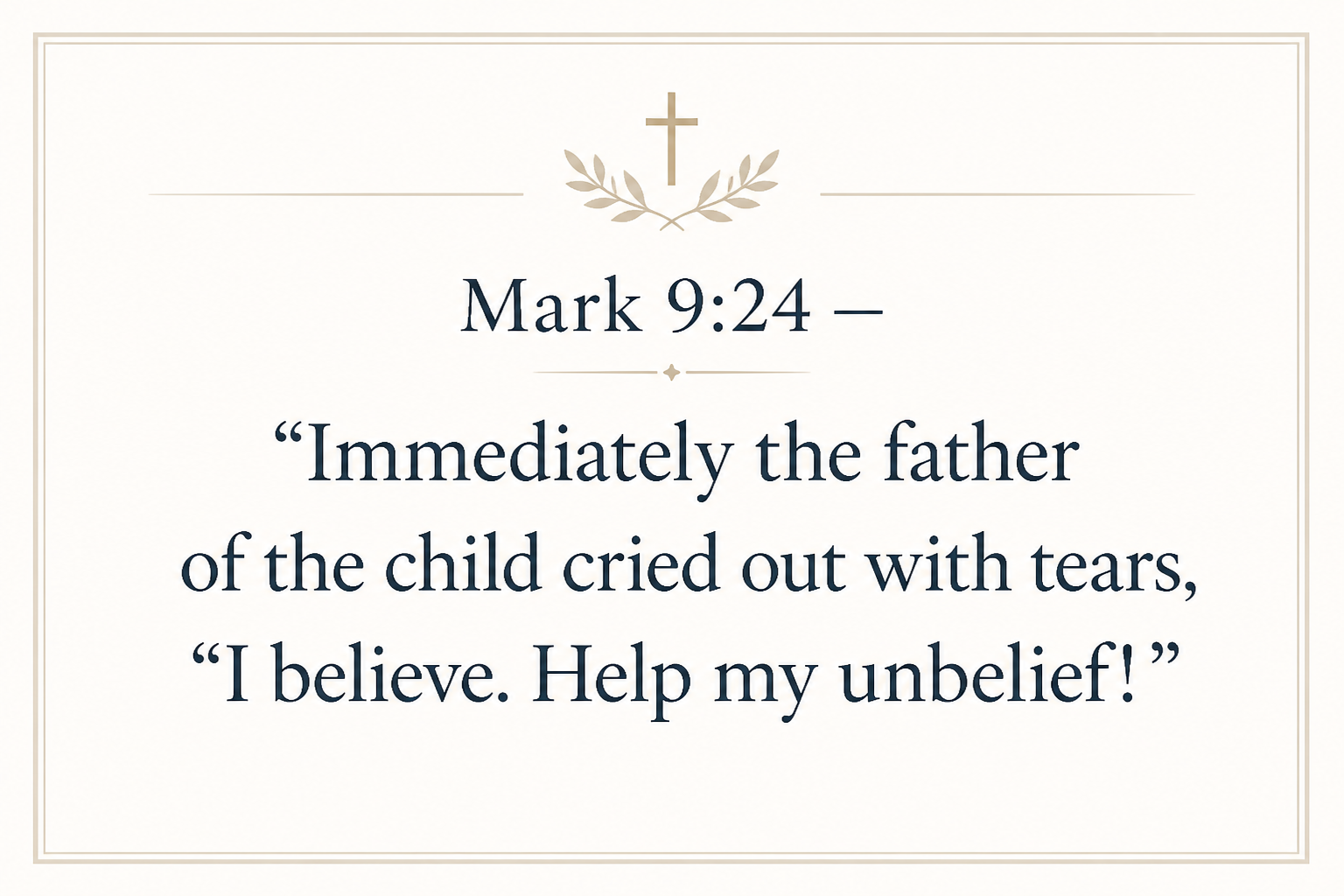
Mark 9:24 — “Immediately the father of the child cried out with tears, “I believe. Help my unbelief!””
Here the teardrops accompany a direct plea. The father’s words hold both confession (“I believe”) and acknowledged weakness (“Help my unbelief!”), and the tears intensify the immediacy and seriousness of the request.
Luke 7:38 — “Standing behind at his feet weeping, she began to wet his feet with her tears, and she wiped them with the hair of her head, kissed his feet, and anointed them with the ointment.”
The teardrops function almost like water: they “wet his feet.” The scene is bodily and concrete—tears, hair, kisses, ointment—and the word marks the woman’s weeping as abundant enough to be used in an act of care at Jesus’ feet.
Luke 7:44 — “Turning to the woman, he said to Simon, “Do you see this woman? I entered into your house, and you gave me no water for my feet, but she has wet my feet with her tears, and wiped them with the hair of her head.”
In this retelling within Jesus’ speech, teardrops are contrasted with the expected hospitality of “water for my feet.” The tears become an alternative washing, and the word helps frame her weeping as a meaningful, visible action that answers what was lacking.
Acts 20:19 — “serving the Lord with all humility, with many tears, and with trials which happened to me by the plots of the Jews;”
Teardrops are placed alongside “humility” and “trials,” describing the emotional cost of service. The phrase “many tears” presents weeping not as a single moment but as a repeated accompaniment to sustained ministry under pressure.
Acts 20:31 — “Therefore watch, remembering that for a period of three years I didn’t cease to admonish everyone night and day with tears.”
Here tears characterize the manner of admonition. The duration (“three years”), the constancy (“didn’t cease”), and the rhythm (“night and day”) are all joined to the word for teardrops, portraying correction as earnest and emotionally invested rather than detached.
2 Corinthians 2:4 — “For out of much affliction and anguish of heart I wrote to you with many tears, not that you should be made to grieve, but that you might know the love that I have so abundantly for you.”
Teardrops appear in connection with writing a letter. The tears belong to the writer’s “affliction and anguish of heart,” yet their purpose is clarified: not to cause grief, but to communicate “love.” The word thus marks weeping as compatible with deliberate pastoral intent.
2 Timothy 1:4 — “longing to see you, remembering your tears, that I may be filled with joy;”
Teardrops are recalled from a prior separation or painful moment, and memory of them shapes present longing. The line links “remembering your tears” with anticipated “joy,” showing how remembered weeping can sit within a relationship marked by affection and hope.
Hebrews 5:7 — “He, in the days of his flesh, having offered up prayers and petitions with strong crying and tears to him who was able to save him from death, and having been heard for his godly fear,”
In this depiction of Jesus’ earthly life, teardrops accompany “prayers and petitions” and are paired with “strong crying.” The word underscores that the praying is not merely verbal but embodied, and it belongs to an appeal directed to the One “who was able to save him from death.”
Hebrews 12:17 — “For you know that even when he afterward desired to inherit the blessing, he was rejected, for he found no place for a change of mind though he sought it diligently with tears.”
Tears here accompany an urgent pursuit—“sought it diligently”—yet the outcome remains “rejected.” The word places teardrops alongside desire and effort, while the verse’s logic makes clear that tears, however earnest, do not by themselves secure what is sought.
Revelation 7:17 — “for the Lamb who is in the middle of the throne shepherds them and leads them to springs of life-giving waters. And God will wipe away every tear from their eyes.”
Teardrops become the object of a promised act of removal: God “will wipe away every tear from their eyes.” In the same breath as shepherding and being led “to springs of life-giving waters,” the word evokes completed comfort, with tears no longer remaining to be shed or seen.
Revelation 21:4 — “He will wipe away every tear from their eyes. Death will be no more; neither will there be mourning, nor crying, nor pain, any more. The first things have passed away.”
Again “every tear” is wiped away, now placed within a wider horizon of changed conditions: no more “death,” “mourning,” “crying,” or “pain.” The teardrop stands as a concrete trace of former sorrow, and its removal signals that the realities producing tears belong to “the first things” that have passed.

Sense and Usage
Across these passages δάκρυ, δάκρυον keeps its straightforward reference to the teardrop, yet its narrative force shifts with context. In Mark 9:24, tears accompany a spoken appeal that is both confident and conflicted; the teardrop becomes the body’s accompaniment to a plea for help. In Luke 7:38 and 7:44, the teardrop is so abundant that it “wet his feet,” turning weeping into an act that can be seen and felt, and even into a substitute for customary water. In Acts 20:19 and 20:31, “many tears” describe an ongoing pattern rather than a single incident—tears occurring under “trials,” and even during sustained “admonish[ing]” carried out “night and day.”
In 2 Corinthians 2:4, teardrops are linked to communication at a distance (“I wrote to you”), locating weeping not only in face-to-face encounters but also behind written words; the tearful writing is framed as an expression of “love” rather than a desire to wound. In 2 Timothy 1:4, tears become something remembered; the teardrop is no longer present but still shapes relationship and longing. Hebrews 5:7 presents tears within prayer, joined to “strong crying,” and thus shows teardrops in the sphere of petition directed to God. Hebrews 12:17 places tears with determined seeking and a painful refusal, illustrating that teardrops can coincide with diligence and desire while not altering the stated result.
The two occurrences in Revelation push the word into a future-facing register. The teardrop is named as something that can be wiped away “from their eyes,” and the repeated “every tear” emphasizes completeness: not occasional relief, but the removal of all remaining traces of weeping. The word’s concreteness matters here—comfort is described not only as an inward change but as the end of visible, bodily sorrow, set within a world where “mourning,” “crying,” and “pain” are no more.
Imagery
These texts make the teardrop both intensely personal and publicly legible. Tears fall in a father’s cry, gather at Jesus’ feet, mark the emotional weight of service and admonition, stain a letter written in anguish, and linger in memory between companions. At the same time, Revelation envisions teardrops as something God removes directly from the eyes, pairing the smallest sign of grief with the broadest promise of relief.
Sources: Lexical data from Strong’s Exhaustive Concordance and the Translators Brief Lexicon of Extended Strongs for Greek (STEPBible, CC BY). Occurrence data from the Translators Amalgamated Greek New Testament (STEPBible, CC BY). Scripture quotations from the World English Bible (public domain).