Exploring the Meaning of ‘agar in Hebrew
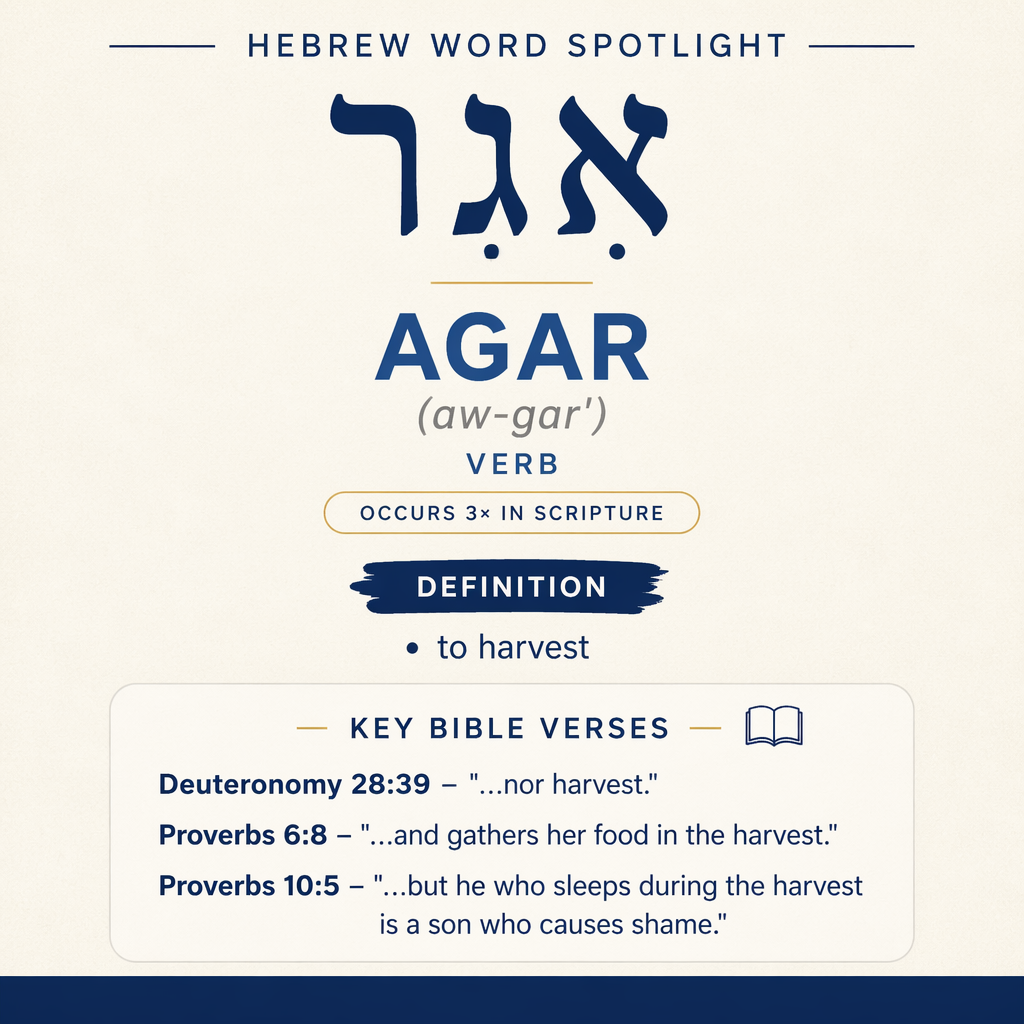
אָגַר means “to harvest” and appears three times: Deuteronomy 28:39, Proverbs 6:8, and Proverbs 10:5.
Core Meaning
אָגַר is defined as “to harvest.” It refers to gathering produce at harvest time.
Learn More →Scripture Occurrences
This verb occurs 3 times in Scripture: Deuteronomy 28:39; Proverbs 6:8; Proverbs 10:5. Each context relates to harvest or gathering food.
Learn More →Context Examples
In Deuteronomy 28:39, vineyards are planted but not harvested because worms eat the fruit. In Proverbs 6:8 and 10:5, it describes gathering food in summer and at harvest.
Learn More →אָגַר (agar) means “to harvest,” a verb used in contexts of vineyard work, summer provision, and the pressure of harvest-time opportunity. It appears in Deuteronomy 28:39 and twice in Proverbs (6:8; 10:5), each time tying the act of harvesting to the realities—whether loss, diligence, or shame—that surround agricultural seasons.
Occurrences
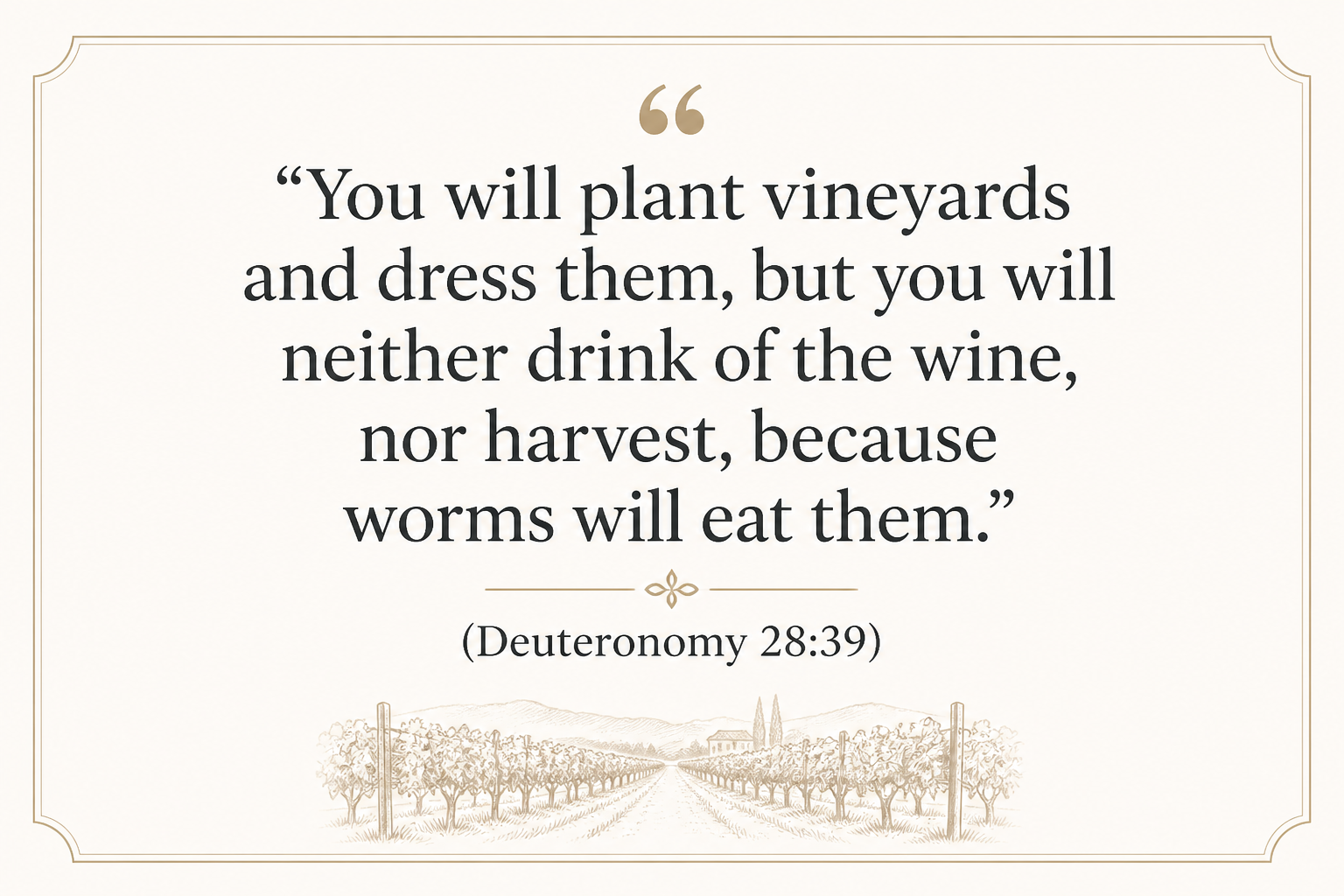
“You will plant vineyards and dress them, but you will neither drink of the wine, nor harvest, because worms will eat them.” (Deuteronomy 28:39)
Here אָגַר stands at the end of a full cycle of labor: planting and dressing vineyards are named explicitly, and “harvest” is the expected culmination. The verse sets “harvest” alongside the anticipated enjoyment of the vineyard’s product (“drink of the wine”), and denies both. In this line, the verb expresses the moment when long work should finally become gathered yield; instead, that moment is cut off by an external agent: “worms will eat them.” The force of the word in this scene is therefore sharply practical. The activity of harvesting is not merely a technical step; it is the turning point when effort would normally become possession and benefit. The mention of worms makes the interruption tangible: the crop is consumed before it can be taken in, so the harvest never reaches the worker’s hands.
“provides her bread in the summer, and gathers her food in the harvest.” (Proverbs 6:8)
In Proverbs 6:8, the verb occurs in a portrait of steady provision over time. The line is structured with two matching clauses: “provides her bread in the summer” and “gathers her food in the harvest.” The pairing of “summer” and “harvest” frames harvest as a season with its own tasks, and “gathers” describes the decisive work of securing food when it is available. The verse links harvest directly with sustenance: what is gathered is “food,” and the outcome is provision. Within this short proverb, אָגַר contributes the idea of action that meets a season’s demand; the harvest is not automatic advantage but an occasion requiring purposeful gathering. The scene is economical: the word stands where the actual taking-in happens, the moment when what is in the field becomes stored “food.”
“He who gathers in summer is a wise son, but he who sleeps during the harvest is a son who causes shame.” (Proverbs 10:5)
This proverb places harvesting language inside a family and moral frame: “a wise son” versus “a son who causes shame.” The verb describes the behavior that marks wisdom—“He who gathers in summer”—and is contrasted with refusal or failure to act—“he who sleeps during the harvest.” “Summer” and “harvest” again provide the seasonal setting, but here the harvest is explicitly a time when negligence can be measured. To “sleep during the harvest” is not presented as a harmless rest but as a choice made when there is work that must be done. In this context, the harvesting verb contributes more than the idea of collecting crops: it signals responsiveness to the right time. Harvest becomes the test of readiness and responsibility, and the action of gathering distinguishes one outcome (“wise”) from the other (“shame”).

Sense and Usage
The three occurrences concentrate on harvest as the critical moment when agricultural labor either succeeds or fails. In Deuteronomy 28:39, harvesting is the expected completion of work—“plant vineyards and dress them”—and the act that should open the way to enjoyment (“drink of the wine”). The denial of harvest highlights vulnerability: even sustained cultivation can be rendered fruitless when the crop is destroyed before it is collected. The verb therefore sits at the hinge between effort and reward; when the harvest does not happen, everything that precedes it becomes an unfinished story.
In Proverbs, the same harvesting activity is framed as wise, timely industry. Proverbs 6:8 speaks in terms of provision: “bread” and “food” are the direct ends of seasonal work. The focus is not the field itself but what results from gathering—sustenance secured for use. In Proverbs 10:5, the verb is embedded in a comparison that treats gathering as a sign of character. Harvest-time is pictured as limited and urgent: one may either gather when conditions allow or squander that window by sleeping. Thus, across the passages, harvesting is consistently bound to seasonality and consequence. It is an act that can be thwarted (by worms), accomplished through diligence (gathering food), or neglected to one’s shame (sleeping during harvest).
These uses also show how “to harvest” naturally carries the idea of appropriating what has matured. Each passage speaks in the language of agriculture but points to outcomes that touch daily life: wine one would drink, bread and food one would live on, and the honor or shame attributed to a son’s conduct. Harvesting is the moment when what is grown must be actively brought in. The verb is therefore well suited to proverbs, which value right timing and practical wisdom: harvest is a season that does not wait, and gathering is the appropriate response to it.
Imagery
The imagery attached to אָגַר in these texts is concrete and seasonal: vineyards tended but stripped by worms, summer labor that results in bread, and harvest-time fields where one person works while another sleeps. Together they present harvest as both opportunity and risk—an appointed time when the field’s promise is either secured through gathering or lost through destruction or neglect.
Sources: Lexical data from Strong’s Exhaustive Concordance and the Open Scriptures Hebrew Lexicon. Occurrence data from the Westminster Leningrad Codex with STEPBible reference data (CC BY). Scripture quotations from the World English Bible (public domain).