
Who was Sibbechai in the bible?
Sibbecai (Sibbechai) was an Israelite called “the Hushathite,” named in 1 Chronicles 11:29; 1 Chronicles 20:4; 1 Chronicles 27:11; and 2 Samuel 21:18.
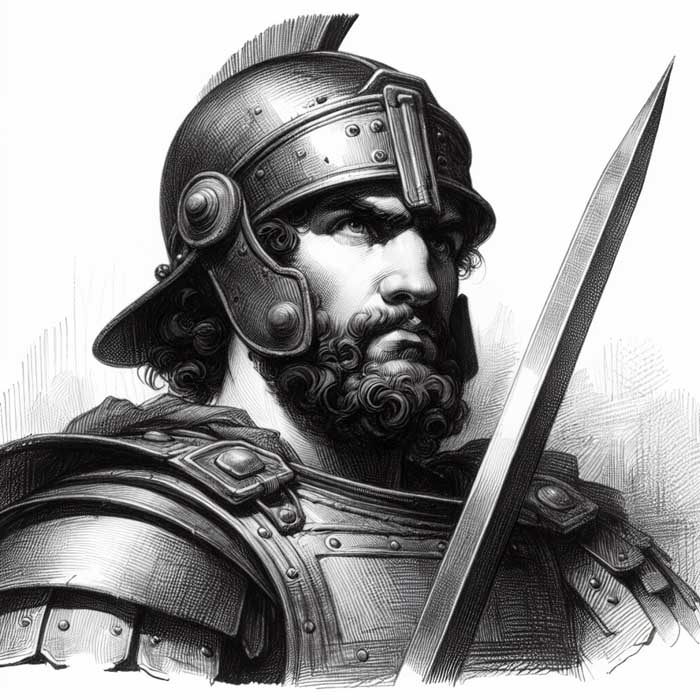
Warfare Deeds
In war with the Philistines, “Sibbecai the Hushathite killed Saph, who was of the sons of the giant” (2 Samuel 21:18). In a parallel report, “Sibbecai the Hushathite killed Sippai, of the sons of the giant; and they were subdued” (1 Chronicles 20:4).
Learn More →Military Command
He held a command role: “The eighth captain for the eighth month was Sibbecai the Hushathite, of the Zerahites. In his division were twenty-four thousand” (1 Chronicles 27:11).
Learn More →Sibbechai (also spelled “Sibbecai”) is presented as an Israelite; his name is explained (in lexicon paraphrase) as deriving from a root meaning “to entwine,” with a sense described as “copse-like.” In Scripture he appears as “Sibbecai the Hushathite,” listed among notable warriors, and he is also named as a military captain and as a fighter in wars with the Philistines.
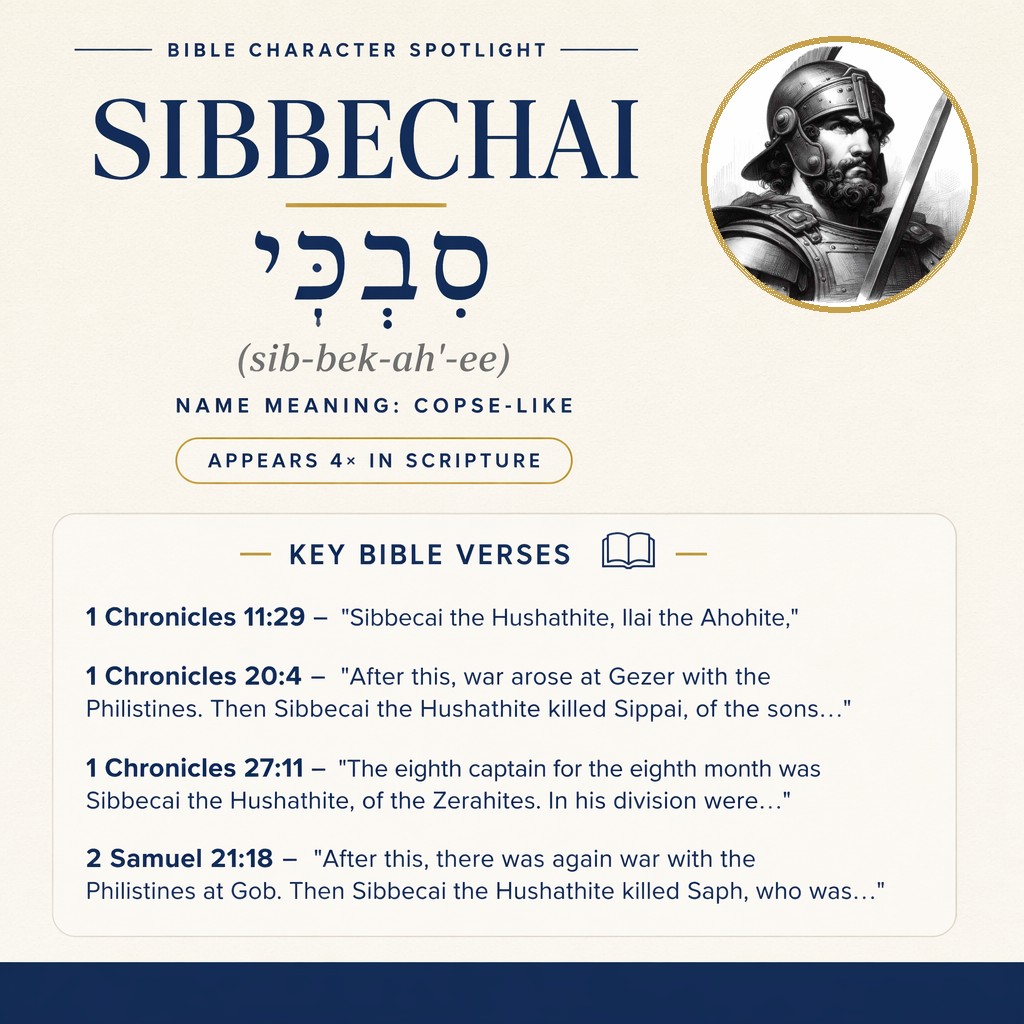
Sibbechai in Scripture
Sibbechai first appears in a list of “mighty men” connected with the armies. The list situates him among other named warriors and places him within a larger roster of military figures.
“The mighty men of the armies also include Asahel the brother of Joab, Elhanan the son of Dodo of Bethlehem,” (1 Chronicles 11:26, WEB)
“Sibbecai the Hushathite, Ilai the Ahohite,” (1 Chronicles 11:29, WEB)
In the same passage, the roster continues past Sibbechai with further names and identifications, maintaining the same catalog style.
“Maharai the Netophathite, Heled the son of Baanah the Netophathite,” (1 Chronicles 11:30, WEB)
A second cluster of passages places Sibbechai within a sequence of military events. The narrative begins with a campaign led by Joab and then returns to actions involving David, before moving on to renewed conflict with the Philistines. This sets the stage for Sibbechai’s specific act in battle.
“At the time of the return of the year, at the time when kings go out, Joab led out the army, and wasted the country of the children of Ammon, and came and besieged Rabbah. But David stayed at Jerusalem. Joab struck Rabbah, and overthrew it.” (1 Chronicles 20:1, WEB)
The account continues with David taking spoil and bringing plunder from the city, and then describes harsh treatment of the conquered population before the return to Jerusalem.
“David took the crown of their king from off his head, and found it to weigh a talent of gold, and there were precious stones in it. It was set on David’s head, and he brought very much plunder out of the city.” (1 Chronicles 20:2, WEB)
“He brought out the people who were in it, and had them cut with saws, with iron picks, and with axes. David did so to all the cities of the children of Ammon. Then David and all the people returned to Jerusalem.” (1 Chronicles 20:3, WEB)
“After this,” the scene shifts to another war, now “at Gezer with the Philistines.” Here Sibbechai is singled out for killing a named opponent connected with “the sons of the giant,” and the result is summarized in a brief concluding clause.
“After this, war arose at Gezer with the Philistines. Then Sibbecai the Hushathite killed Sippai, of the sons of the giant; and they were subdued.” (1 Chronicles 20:4, WEB)
The broader sequence continues beyond Sibbechai’s act: “Again there was war with the Philistines,” and other Israelite fighters are credited with killing other notable Philistine figures, including a relative of Goliath, and then another man “born to the giant.” The writer closes that cluster by attributing these defeats to David and his servants together.
“These were born to the giant in Gath; and they fell by the hand of David, and by the hand of his servants.” (1 Chronicles 20:8, WEB)
A parallel notice appears in Samuel, set inside a short run of episodes introduced by renewed Philistine war. The passage describes David going down to fight with “his servants,” David becoming faint, and a dangerous opponent who “thought he would kill David,” before David is helped and the men of David speak directly to him.
“The Philistines had war again with Israel; and David went down, and his servants with him, and fought against the Philistines. David grew faint;” (2 Samuel 21:15, WEB)
“But Abishai the son of Zeruiah helped him, and struck the Philistine, and killed him. Then the men of David swore to him, saying, ‘Don’t go out with us to battle any more, so that you don’t quench the lamp of Israel.’” (2 Samuel 21:17, WEB)
Within that same set of renewed conflicts, Sibbechai is again identified as “the Hushathite” and is credited with killing another individual described as being “of the sons of the giant.”
“After this, there was again war with the Philistines at Gob. Then Sibbecai the Hushathite killed Saph, who was of the sons of the giant.” (2 Samuel 21:18, WEB)
Finally, Chronicles presents Sibbechai not only as a fighter but also as a commander within an organized rotation of leadership. He is identified by the month of service, his title, and the size of the unit under him.
“The eighth captain for the eighth month was Sibbecai the Hushathite, of the Zerahites. In his division were twenty-four thousand.” (1 Chronicles 27:11, WEB)
Name and Meaning
The Hebrew form of the name is סִבְּכַי, transliterated Cibbekay and pronounced sib-bek-ah’-ee. In a lexicon explanation, it is derived from a root linked to the idea “to entwine” (from the component cabak, סָבַךְ), and it is glossed with the sense “copse-like.”
Observation
Across the passages, Sibbechai is consistently styled “the Hushathite” and is portrayed both as one of the listed “mighty men” (1 Chronicles 11:29) and as a decisive combatant in repeated Philistine wars, where he “killed” opponents counted among “the sons of the giant” (1 Chronicles 20:4; 2 Samuel 21:18).
Frequently Asked Questions
What does the name Sibbechai mean?
Sibbechai is given the meaning “copse-like.”
How many times does Sibbechai appear in the Bible?
Sibbechai appears 4 times.
Who was Sibbechai?
Sibbechai (Sibbecai) is identified as an Israelite and is called “the Hushathite” in several passages (1 Chronicles 11:29).
What is Sibbechai known for in battle?
He is described as killing a warrior “of the sons of the giant” during war with the Philistines (2 Samuel 21:18; 1 Chronicles 20:4).
Explore Further
If you found this page about Sibbechai interesting and would like to discover more about other biblical characters, explore our comprehensive Encyclopedia of Biblical Characters. For those looking to delve deeper into the Greek origins of these names and terms, our Greek Lexicon is an invaluable resource.
Sources: Name and occurrence data from Strong’s Exhaustive Concordance and STEPBible reference data (CC BY). Scripture quotations from the World English Bible (public domain).




