
Who was Pilate in the bible?
Pilate (Pilatos) appears in Matthew 27 and Mark 15 as “Pontius Pilate, the governor,” before whom Jesus was brought for judgment.
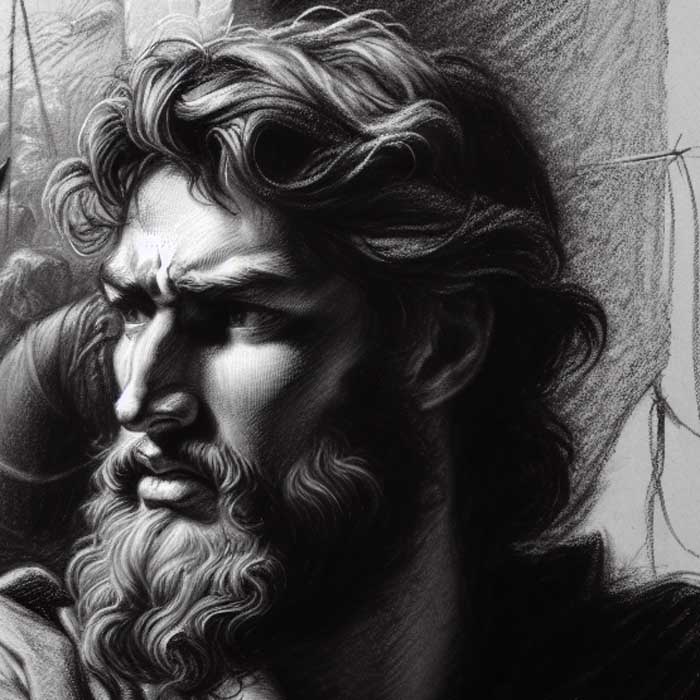
Role in Trial
Pilate questioned Jesus and the crowd: “Are you the King of the Jews?” (Mark 15:2) and “Whom do you want me to release to you?” (Matthew 27:17). Seeing a disturbance, he washed his hands, saying, “I am innocent of the blood of this righteous person. You see to it.” (Matthew 27:24).
Learn More →After Jesus’ Death
Joseph asked for Jesus’ body, and “Pilate commanded the body to be given up” (Matthew 27:58). Pilate also told the chief priests and Pharisees, “You have a guard. Go, make it as secure as you can.” (Matthew 27:65).
Learn More →Pilate (a name of Latin origin) appears in the Gospels as “Pontius Pilate, the governor,” the official to whom Jesus was delivered for judgment and crucifixion (Matthew 27:2). In the passages provided, he questions Jesus, addresses the crowd about releasing a prisoner, and issues commands regarding Jesus’ body and the securing of the tomb.
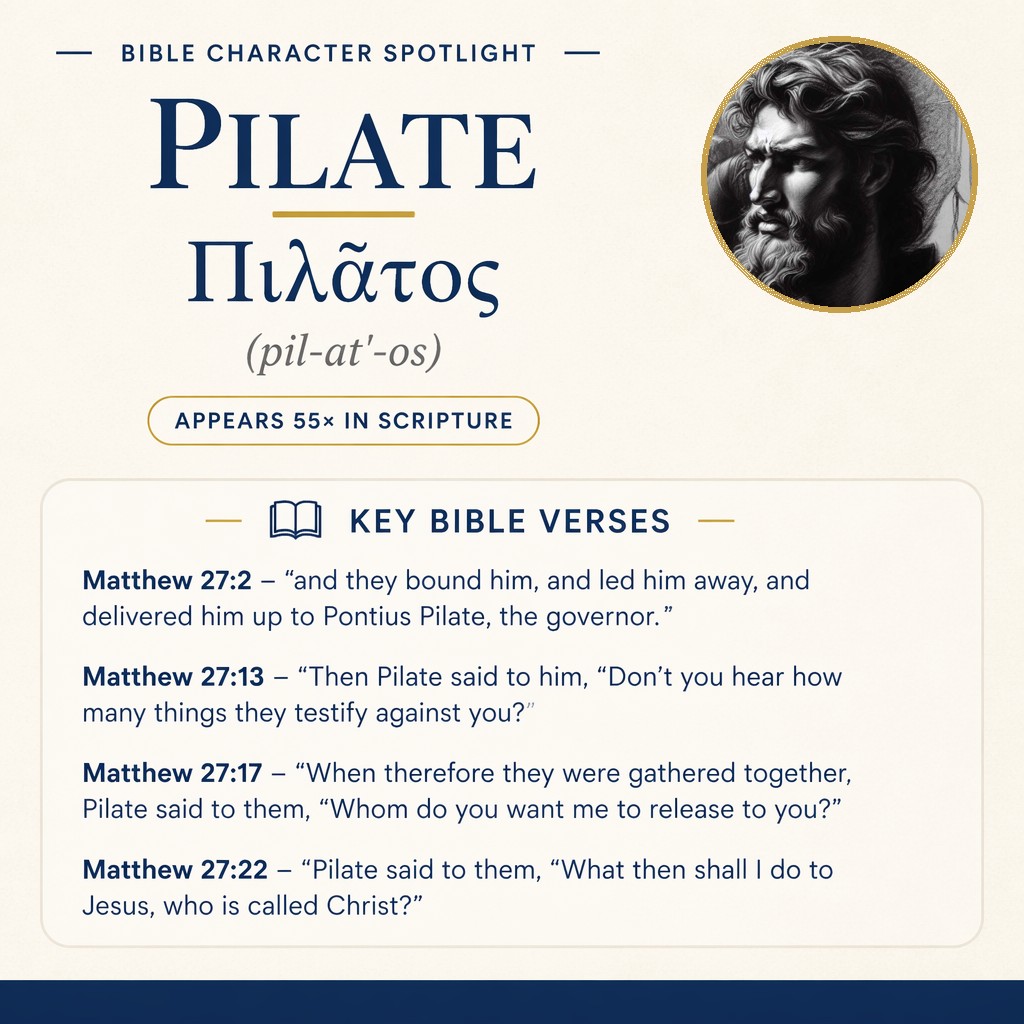
Pilate in Scripture
In Matthew’s account, Pilate is introduced at the moment the chief priests and elders bring Jesus to him.
“and they bound him, and led him away, and delivered him up to Pontius Pilate, the governor.” (Matthew 27:2, WEB)
Jesus is then presented “before the governor,” and the governor interrogates him about kingship. The narrative identifies Pilate as the one asking the central question, with Jesus giving a brief reply.
“Now Jesus stood before the governor: and the governor asked him, saying, ‘Are you the King of the Jews?’ Jesus said to him, ‘So you say.’ ” (Matthew 27:11, WEB)
As accusations come from the chief priests and elders, Jesus does not answer, and Pilate comments on the volume of testimony against him.
“Then Pilate said to him, ‘Don’t you hear how many things they testify against you?’ ” (Matthew 27:13, WEB)
Matthew frames Pilate’s actions in the setting of a customary release at the feast: “the governor was accustomed to release to the multitude one prisoner, whom they desired” (Matthew 27:15). Pilate brings the choice into the open, naming both Barabbas and Jesus.
“When therefore they were gathered together, Pilate said to them, ‘Whom do you want me to release to you? Barabbas, or Jesus, who is called Christ?’ ” (Matthew 27:17, WEB)
While Pilate is “sitting on the judgment seat,” a message arrives from his wife warning him about Jesus’ righteousness and her distressing dream (Matthew 27:19). The chief priests and elders then persuade the multitudes to ask for Barabbas and destroy Jesus (Matthew 27:20). Pilate continues to question the crowd, including what should be done with Jesus; the crowd’s response is that Jesus should be crucified.
“Pilate said to them, ‘What then shall I do to Jesus, who is called Christ?’ They all said to him, ‘Let him be crucified!’ ” (Matthew 27:22, WEB)
As the cries intensify and “a disturbance was starting,” Pilate makes a public gesture and declaration. He washes his hands before the multitude and disclaims responsibility for Jesus’ blood, placing the matter back on those demanding the sentence.
“So when Pilate saw that nothing was being gained, but rather that a disturbance was starting, he took water, and washed his hands before the multitude, saying, ‘I am innocent of the blood of this righteous person. You see to it.’ ” (Matthew 27:24, WEB)
In the same sequence, Matthew reports that Barabbas is released, and “Jesus he flogged and delivered to be crucified” (Matthew 27:26). After Jesus’ death, Pilate appears again when Joseph requests the body, and Pilate issues the order that it be handed over.
“This man went to Pilate, and asked for Jesus’ body. Then Pilate commanded the body to be given up.” (Matthew 27:58, WEB)
Pilate’s final role in Matthew 27 concerns the tomb. “On the next day,” the chief priests and Pharisees approach him and ask for the tomb to be secured because they recall Jesus’ words: “After three days I will rise again” (Matthew 27:62–64). Pilate grants them a guard and instructs them to secure the site as best they can; they then “made the tomb secure, sealing the stone” (Matthew 27:66).
“Pilate said to them, ‘You have a guard. Go, make it as secure as you can.’ ” (Matthew 27:65, WEB)
Mark’s narrative parallels the handover and interrogation, emphasizing that the leaders “bound Jesus” and “delivered him up to Pilate,” and that Pilate asks directly about Jesus’ identity as king.
“Immediately in the morning the chief priests, with the elders and scribes, and the whole council, held a consultation, bound Jesus, carried him away, and delivered him up to Pilate.” (Mark 15:1, WEB)
“Pilate asked him, ‘Are you the King of the Jews?’ He answered, ‘So you say.’ ” (Mark 15:2, WEB)
Mark also records Pilate’s repeated questioning in the face of accusations and Jesus’ continued silence, culminating in Pilate’s amazement: “Jesus made no further answer, so that Pilate marveled” (Mark 15:5).
Name and Meaning
The Greek form of the name is Πιλᾶτος (transliteration: Pilatos; pronunciation: pil-at’-os). The lexicon information given describes the name as being of Latin origin.
Observation
Across these passages, Pilate is consistently portrayed as the governor who questions Jesus—“Are you the King of the Jews?”—and who, amid public pressure and unrest, declares, “I am innocent of the blood of this righteous person,” even as he “delivered [Jesus] to be crucified” (Matthew 27:11, 24, 26).
Frequently Asked Questions
What does the name Pilate mean?
Pilate is presented as a name of Latin origin meaning “Pilate.”
How many times does Pilate appear in the Bible?
Pilate occurs 55 times.
Who was Pilate?
Pilate is identified as “Pontius Pilate, the governor” (Matthew 27:2). In the trial of Jesus, Pilate questioned him and addressed the crowd about whether to release Barabbas or Jesus (Matthew 27:17; Mark 15:2).
What did Pilate do when he saw a disturbance starting?
Pilate took water and washed his hands before the multitude (Matthew 27:24).
Explore Further
If you found this page about Pilate interesting and would like to discover more about other biblical characters, explore our comprehensive Encyclopedia of Biblical Characters. For those looking to delve deeper into the Greek origins of these names and terms, our Greek Lexicon is an invaluable resource.
Sources: Name and occurrence data from Strong’s Exhaustive Concordance and STEPBible reference data (CC BY). Scripture quotations from the World English Bible (public domain).





