Who was Phanuel in the bible?
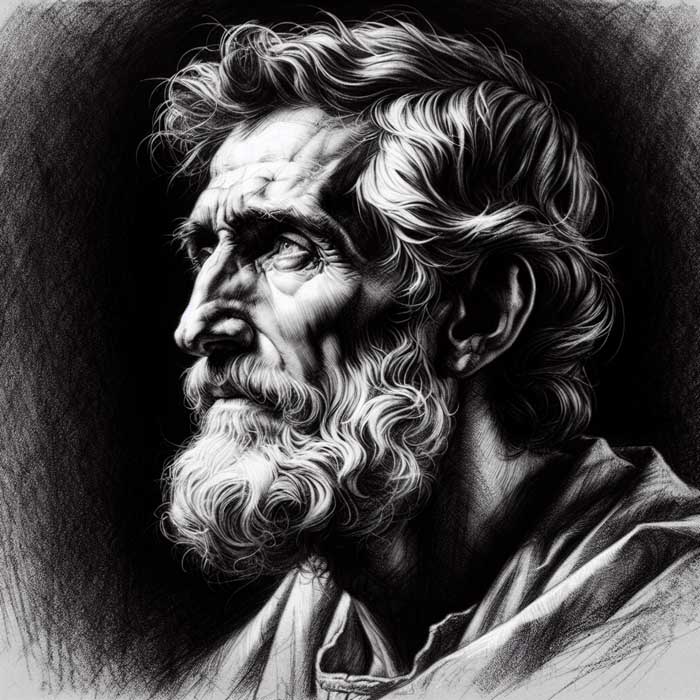
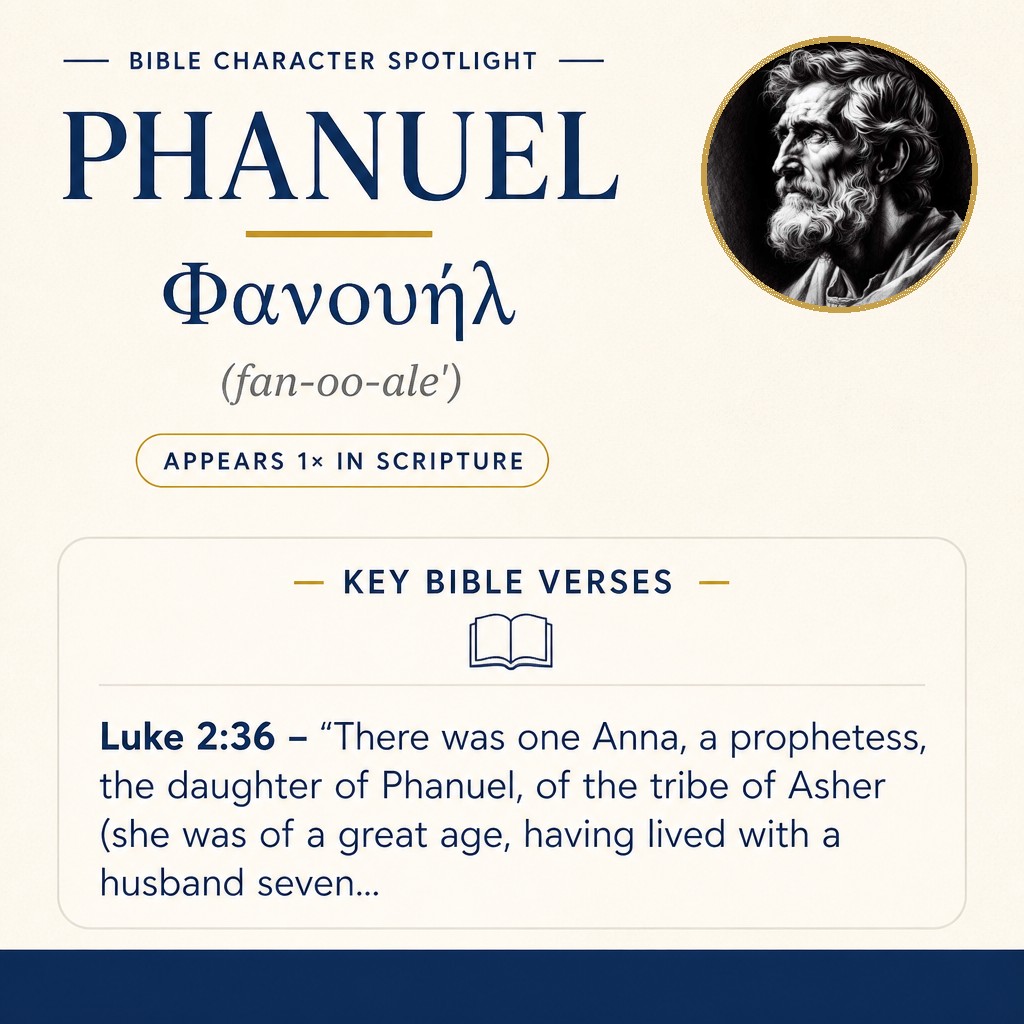
Phanuel is named in Luke 2:36 as the father of Anna, a prophetess, of the tribe of Asher.
Biblical Mention
Phanuel appears once in Scripture, within the narrative surrounding Anna at the temple (Luke 2:36–38).
Learn More →Name and Origin
Strong’s gloss lists Phanuel (Φανουήλ, Phanouel) as a Greek form “of Hebrew origin (H06439).”
Learn More →Phanuel (Greek Φανουήλ, Phanouel) is named in the New Testament as the father of Anna, “a prophetess.” The lexicon entry describes the name as being of Hebrew origin.
Phanuel in Scripture
Phanuel appears once, identified through his daughter Anna within Luke’s account set in the temple setting in Jerusalem. The immediate narrative frames the moment around Simeon’s words concerning the child and the responses of those present.
“and Simeon blessed them, and said to Mary, his mother, ‘Behold, this child is set for the falling and the rising of many in Israel, and for a sign which is spoken against.’” (Luke 2:34, WEB)
“‘Yes, a sword will pierce through your own soul, that the thoughts of many hearts may be revealed.’” (Luke 2:35, WEB)
Within that setting, Anna is introduced with lineage and tribal identification, and Phanuel is mentioned as her father. This is the only explicit information Scripture provides about him in the cited material: his name, his fatherhood of Anna, and the tribal association given in Anna’s description.
“There was one Anna, a prophetess, the daughter of Phanuel, of the tribe of Asher (she was of a great age, having lived with a husband seven years from her virginity,” (Luke 2:36, WEB)
The narrative continues by describing Anna’s longstanding widowhood and her ongoing presence in the temple. These details, while focused on Anna, also form the only extended context in which Phanuel’s name is preserved: he is the father of a woman depicted as devoted to worship in the temple.
“and she had been a widow for about eighty-four years), who didn’t depart from the temple, worshiping with fastings and petitions night and day.” (Luke 2:37, WEB)
Anna then responds at that moment by giving thanks and speaking to others. Phanuel is not described as participating in these actions, but his identification remains embedded in the introduction of Anna who does so.
“Coming up at that very hour, she gave thanks to the Lord, and spoke of him to all those who were looking for redemption in Jerusalem.” (Luke 2:38, WEB)
The chapter’s immediate movement concludes with the completion of what was “according to the law of the Lord” and a return to Galilee. Phanuel is not mentioned again, and the text does not add further biographical detail about him.
“When they had accomplished all things that were according to the law of the Lord, they returned into Galilee, to their own city, Nazareth.” (Luke 2:39, WEB)
Name and Meaning
The New Testament form of the name is written in Greek as Φανουήλ (transliteration: Phanouel; pronunciation: fan-oo-ale’). According to the lexicon note provided, Phanuel is a name “of Hebrew origin” (H06439).
Observation
In Luke’s narrative, Phanuel is remembered through a single genealogical notice: Anna is introduced as “the daughter of Phanuel, of the tribe of Asher” (Luke 2:36), which places his name within a temple-centered scene of testimony and expectation in Jerusalem (Luke 2:34–38).
Frequently Asked Questions
Who was Phanuel in the Bible?
Phanuel is mentioned as the father of Anna the prophetess in Luke 2:36.
What does the name Phanuel mean?
Phanuel is a Greek form of a name of Hebrew origin.
How many times does Phanuel appear in the Bible?
Phanuel appears 1 time.
Where is Phanuel mentioned?
He is mentioned in Luke 2:36, which identifies Anna as “the daughter of Phanuel” (Luke 2:36).
Explore Further
If you found this page about Phanuel interesting and would like to discover more about other biblical characters, explore our comprehensive Encyclopedia of Biblical Characters. For those looking to delve deeper into the Greek origins of these names and terms, our Greek Lexicon is an invaluable resource.
Sources: Name and occurrence data from Strong’s Exhaustive Concordance and STEPBible reference data (CC BY). Scripture quotations from the World English Bible (public domain).