Who was Bar-Jona in the bible?
Bar Jona (Barionas) appears once in Scripture as “Simon Bar Jonah” in Matthew 16:17, addressed by Jesus during Peter’s confession.
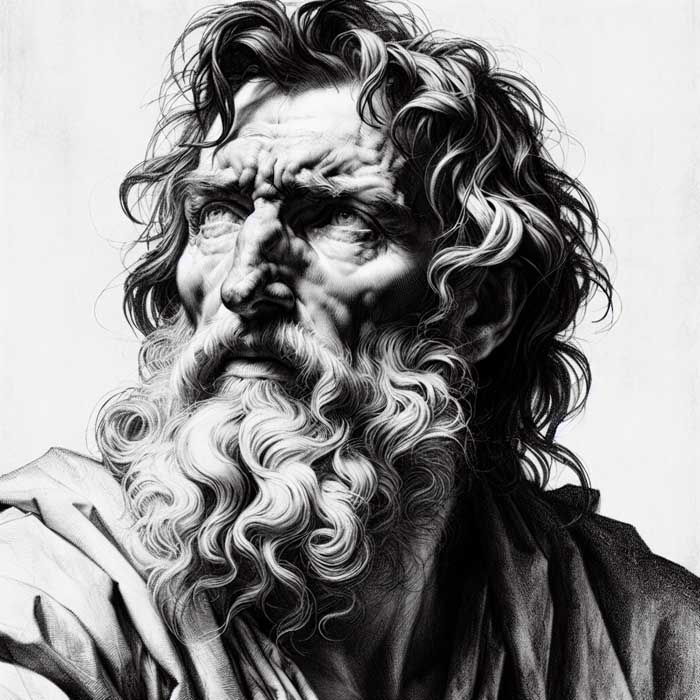
Spoken To Him
Jesus said, “flesh and blood has not revealed this to you, but my Father who is in heaven” (Matthew 16:17).
Learn More →Name Form
Strong’s G920 gives the form Barionas, glossed as Bar-Jonah, described as of Chaldee origin.
Learn More →Bar Jona (Bar-Jonah) is a name applied by Jesus to Simon Peter in Matthew 16:17. The lexicon gloss identifies it as “Bar-Jonah,” and the name’s derivation indicates a Chaldee-origin form built from two component words.

Bar Jona in Scripture
The single occurrence of Bar Jona appears within a conversation Jesus has with his disciples about his identity. Others’ opinions are reported first:
Matthew 16:14: “They said, ‘Some say John the Baptizer, some, Elijah, and others, Jeremiah, or one of the prophets.’”
Jesus then presses the disciples for their own answer:
Matthew 16:15: “He said to them, ‘But who do you say that I am?’”
Simon Peter responds with a direct confession about Jesus:
Matthew 16:16: “Simon Peter answered, ‘You are the Christ, the Son of the living God.’”
Jesus answers Simon using the form “Simon Bar Jonah,” and he links Simon’s confession to revelation from God rather than ordinary human sources:
Matthew 16:17: “Jesus answered him, ‘Blessed are you, Simon Bar Jonah, for flesh and blood has not revealed this to you, but my Father who is in heaven.’”
In the same exchange, Jesus also addresses Simon with another name and speaks about what he will do:
Matthew 16:18: “I also tell you that you are Peter, and on this rock I will build my assembly, and the gates of Hades will not prevail against it.”
Jesus continues with language of authority connected to the “Kingdom of Heaven,” describing “keys” and the consequences of binding and releasing:
Matthew 16:19: “I will give to you the keys of the Kingdom of Heaven, and whatever you bind on earth will have been bound in heaven; and whatever you release on earth will have been released in heaven.”
After this, Jesus gives an instruction to the disciples about what they should say:
Matthew 16:20: “Then he commanded the disciples that they should tell no one that he was Jesus the Christ.”
The narrative then shifts from the identity question to Jesus’ teaching about what “must” happen to him. He “began to show his disciples” a sequence of suffering, death, and being raised:
Matthew 16:21: “From that time, Jesus began to show his disciples that he must go to Jerusalem and suffer many things from the elders, chief priests, and scribes, and be killed, and the third day be raised up.”
Peter responds by taking Jesus aside and rebuking him, rejecting the stated outcome:
Matthew 16:22: “Peter took him aside, and began to rebuke him, saying, ‘Far be it from you, Lord! This will never be done to you.’”
Jesus turns and answers Peter sharply, identifying Peter’s objection as a hindrance and contrasting “the things of God” with “the things of men”:
Matthew 16:23: “But he turned, and said to Peter, ‘Get behind me, Satan! You are a stumbling block to me, for you are not setting your mind on the things of God, but on the things of men.’”
Jesus then speaks to the wider group (“his disciples”) with a general call that includes self-denial, taking up the cross, and following:
Matthew 16:24: “Then Jesus said to his disciples, ‘If anyone desires to come after me, let him deny himself, and take up his cross, and follow me.’”
He explains the paradox of saving and losing one’s life “for my sake,” and he frames the question in terms of profit and exchange:
Matthew 16:25: “For whoever desires to save his life will lose it, and whoever will lose his life for my sake will find it.”
Matthew 16:26: “For what will it profit a man, if he gains the whole world, and forfeits his life? Or what will a man give in exchange for his life?”
Within this chapter sequence, “Bar Jona” belongs to the moment when Jesus blesses Simon for his confession (“You are the Christ, the Son of the living God”) and attributes that insight to “my Father who is in heaven,” before the narrative moves to Jesus’ prediction of suffering and Peter’s rebuke.
Name and Meaning
The Greek form is Βαριωνᾶς (transliteration: Barionas; pronunciation: bar-ee-oo-nas’). Strong’s derivation describes it as “of Chaldee origin” and connects it to two component words (H01247 and H03124). The lexicon identity gloss renders the name as Bar-Jonah.
Observation
In Matthew 16, the address “Simon Bar Jonah” occurs at the point where Jesus calls Simon “Blessed” because his confession is said to come not from “flesh and blood” but from “my Father who is in heaven” (Matthew 16:17).
Frequently Asked Questions
Who was Bar Jona?
Bar Jona (Barionas) is used as a name in Matthew 16:17 in the phrase “Simon Bar Jonah.”
What does the name Bar Jona mean?
The name means “Bar-Jonah.”
How many times does Bar Jona appear in the Bible?
It occurs 1 time.
What is said in Matthew 16:17 about Simon Bar Jonah?
Jesus says, “Blessed are you, Simon Bar Jonah, for flesh and blood has not revealed this to you, but my Father who is in heaven” (Matthew 16:17).
Explore Further
If you found this page about Bar-Jona interesting and would like to discover more about other biblical characters, explore our comprehensive Encyclopedia of Biblical Characters. For those looking to delve deeper into the Greek origins of these names and terms, our Greek Lexicon is an invaluable resource.
Sources: Name and occurrence data from Strong’s Exhaustive Concordance and STEPBible reference data (CC BY). Scripture quotations from the World English Bible (public domain).