Exploring the Meaning of Sumpnigo in Greek
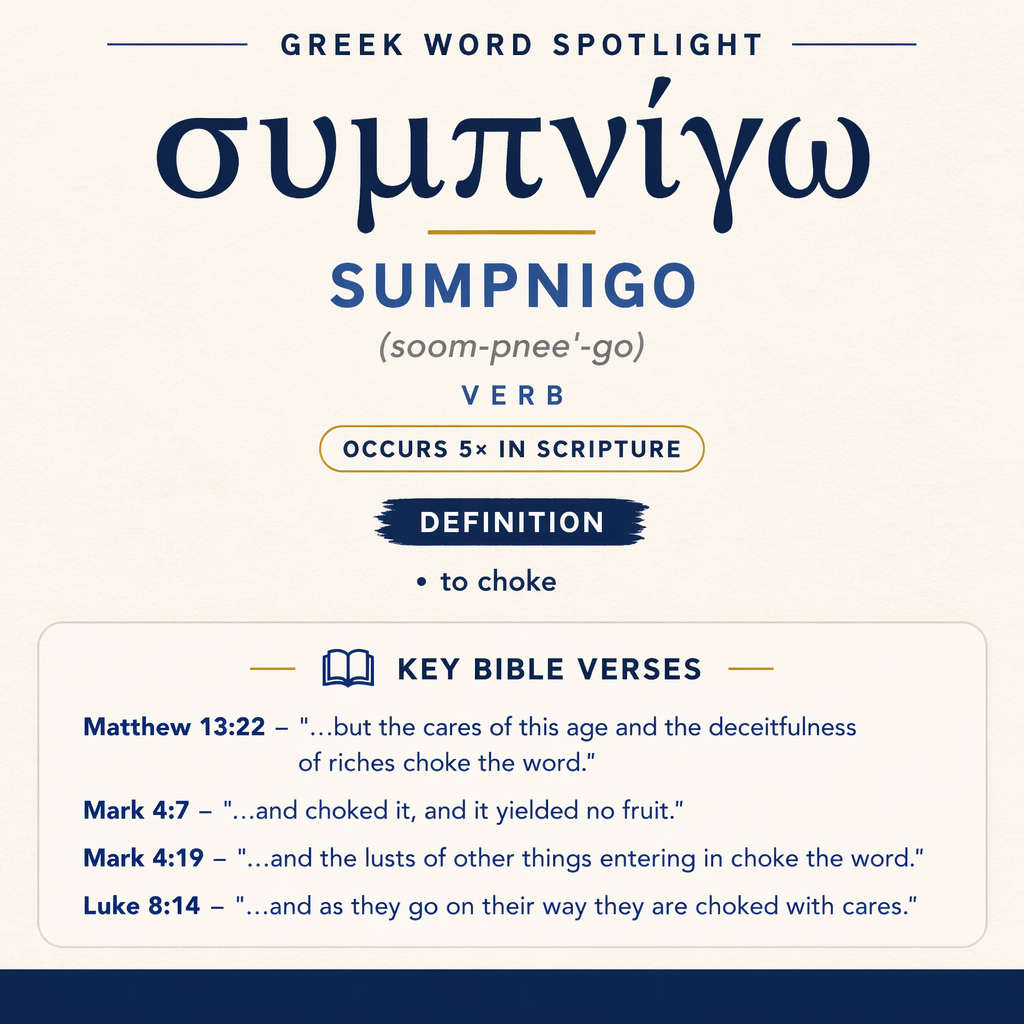
συμπνίγω means “to choke” and occurs five times in Scripture in Matthew 13:22; Mark 4:7, 4:19; and Luke 8:14, 8:42.
Gospel Occurrences
It appears 5 times in Scripture: Matthew 13:22; Mark 4:7, 4:19; Luke 8:14, 8:42.
Learn More →Usage in Context
In Matthew 13:22, Mark 4:19, and Luke 8:14 it describes cares and riches choking what was heard. In Mark 4:7 it describes thorns choking what was sown.
Learn More →συμπνίγω means “to choke” and appears in Gospel contexts that picture growth being cut off or life being constricted. Its main cluster of uses sits inside Jesus’ parable of the sower, where the image of choking explains why what is heard fails to bear fruit.
Root and Related Words
συμπνίγω (Sumpnigo) is formed with σύν (syn), “with” (Strong’s G4862), joined to πνίγω (pnigo), “to choke” (Strong’s G4155).

Occurrences
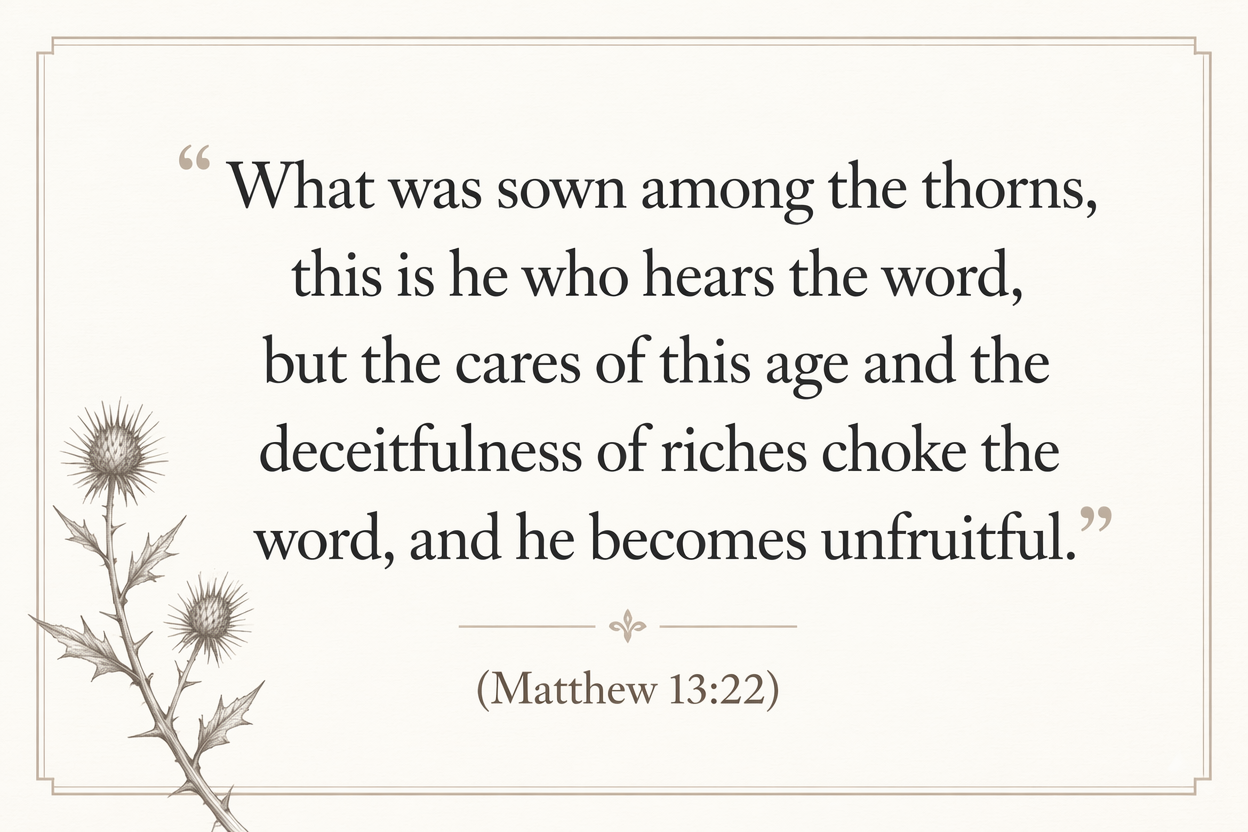
“What was sown among the thorns, this is he who hears the word, but the cares of this age and the deceitfulness of riches choke the word, and he becomes unfruitful.” (Matthew 13:22)
Here “choke” interprets what “thorns” do to seed as a spiritual outcome in a hearer. The verse names the choking agents in human terms: “the cares of this age” and “the deceitfulness of riches.” The object being choked is “the word,” and the result is explicit: “he becomes unfruitful.” The verb thus links inward pressures (cares) and alluring pressures (riches’ deceitfulness) to a loss of fruitfulness, presenting choking as a decisive interference with the word’s productive effect.
“Others fell among the thorns, and the thorns grew up, and choked it, and it yielded no fruit.” (Mark 4:7)
This occurrence stays within the parable’s agricultural picture. The subject that does the choking is “the thorns,” and they do so as they “grew up,” suggesting a gradual constriction that overtakes what had been sown. The direct consequence is stated in harvest language: “it yielded no fruit.” In this scene, “choked” marks the point where competing growth overwhelms the intended crop, turning what might have developed into a fruitless outcome.
“and the cares of this age, and the deceitfulness of riches, and the lusts of other things entering in choke the word, and it becomes unfruitful.” (Mark 4:19)
Mark expands the list of pressures that function like thorns. Alongside “the cares of this age” and “the deceitfulness of riches,” the verse adds “the lusts of other things entering in,” portraying the choking as something that happens as competing desires “enter in” and crowd the interior life. Again, the thing choked is “the word,” and the effect is the same stated end: “it becomes unfruitful.” The verb captures not merely a momentary hindrance but a stifling that blocks the word from reaching the stage of visible fruit.
“That which fell among the thorns, these are those who have heard, and as they go on their way they are choked with cares, riches, and pleasures of life, and bring no fruit to maturity.” (Luke 8:14)
Luke keeps the thorn setting but shifts the phrasing to describe the people themselves: “they are choked with cares, riches, and pleasures of life.” The choking is not only something that happens to “the word” but something experienced by the hearers “as they go on their way,” placing the action along the path of ordinary life. The outcome is not just “no fruit” but “no fruit to maturity,” which frames choking as a process that prevents completion—fruit may begin but never reaches ripeness. The trio “cares, riches, and pleasures of life” shows choking as a comprehensive crowding of attention and desire, compressing the hearer’s capacity to bring the heard word to its intended end.
“for he had an only daughter, about twelve years of age, and she was dying. But as he went, the multitudes pressed against him.” (Luke 8:42)
In this narrative setting, the verb describes physical crowding: “the multitudes pressed against him.” The urgency of the scene (“she was dying”) provides the backdrop for a constricted movement through a dense crowd. The sense of choking fits the bodily pressure implied by the press of many people upon one person, depicting a force that restricts and compresses rather than merely delays. The verb therefore serves Luke’s narration by conveying how the crowd’s closeness bears in on Jesus as he goes.
Sense and Usage
Across these passages, “to choke” consistently conveys a constricting pressure that blocks expected outcome. In the parable material, the action explains why something that has been sown and heard fails to produce what it should: fruit. Mark 4:7 presents the image in its simplest form—thorns grow and choke, and fruit does not appear. Matthew 13:22 and Mark 4:19 interpret that agricultural choking in terms of life pressures that compete with “the word,” each listing forces that crowd it out from effectual growth. Luke 8:14 develops the experiential angle: choking happens “as they go on their way,” and it prevents fruit not only from appearing but from reaching “maturity.”
Luke 8:42 shows the same basic idea of constriction in a different register—literal bodily pressure from a crowd that “pressed against him.” This narrative use helps define the verb’s force: choking is not only an inner metaphor but also a vivid description of being hemmed in. Read back into the parable explanations, the metaphor of choking gains texture: cares, riches, and pleasures do not merely distract; they press in upon the hearer and compress the space in which the word would otherwise grow and bear fruit.
Imagery
The passages pair choking with growth imagery and with pressing crowds. Thorns “grew up” and then “choked,” creating a picture of competing life forces that expand until they constrict what was planted (Mark 4:7). The interpretive sayings put names to those thorns—“cares,” “riches,” and “pleasures of life”—and show choking as the reason fruit is absent or never reaches “maturity” (Matthew 13:22; Mark 4:19; Luke 8:14). The crowd that “pressed against him” supplies a concrete scene of pressure from every side (Luke 8:42), reinforcing choking as an image of being crowded in a way that hinders forward progress.
Sources: Lexical data from Strong’s Exhaustive Concordance and the Translators Brief Lexicon of Extended Strongs for Greek (STEPBible, CC BY). Occurrence data from the Translators Amalgamated Greek New Testament (STEPBible, CC BY). Scripture quotations from the World English Bible (public domain).