Exploring the Meaning of Sepo in Greek
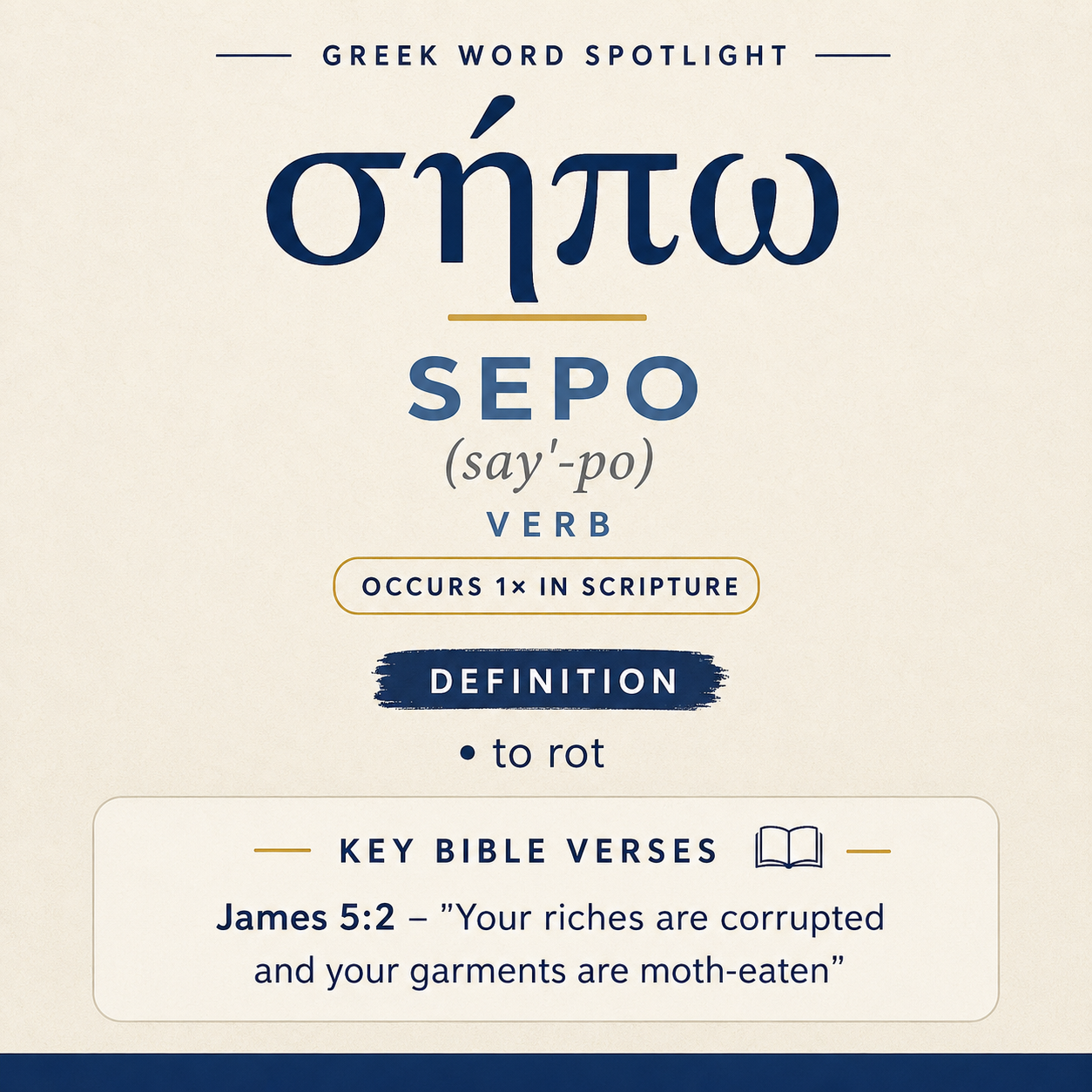
σήπω means “to rot” and appears once in Scripture, in James 5:2.
James 5:2 Usage
In James 5:2 it is used in the statement, “Your riches are corrupted and your garments are moth-eaten.”
Learn More →σήπω expresses the idea “to rot” and appears in the New Testament in James’s warning about wealth. In its lone use it functions as a vivid description of material decay that exposes the fragility of stored riches.
Occurrences
“Your riches are corrupted and your garments are moth-eaten.” (James 5:2)
In this line James pairs two images of deterioration: riches that are “corrupted” and garments that are “moth-eaten.” σήπω supplies the decay-language behind “corrupted,” portraying wealth as undergoing a process of spoilage rather than remaining fixed or secure. The verse does not argue about the mere possession of “riches” but depicts them as subject to a wasting change, set beside clothing damaged by insects. The coupling of these two clauses tightens the point: what is accumulated can break down in different ways—one by rotting, the other by being eaten—yet both arrive at the same end, a loss of integrity and usefulness. Within the sentence, the verb’s force is concrete and physical: riches are imagined as having the kind of vulnerability ordinarily associated with perishable goods, not with stable treasure.

Sense and Usage
The sense “to rot” evokes a slow but unmistakable corruption: something once intact becomes compromised from within, moving toward ruin. In James 5:2 the word serves as a verbal shock, because “riches” typically suggest durability, security, and stored value; rot belongs to the realm of perishables. By applying rotting to riches, the statement collapses the distance between what people treat as enduring and what plainly deteriorates. The clause “Your riches are corrupted” works as a judgment rendered in imagery: wealth is pictured not simply as less valuable but as actively decaying.
In the same breath, “your garments are moth-eaten” supplies a parallel decay-image that is more obviously familiar: clothing stored away can be ruined by pests. Together the two clauses create a coordinated portrait of loss. σήπω contributes the first half of that portrait by framing the wealthy person’s stored goods as susceptible to a process that undermines them even if no one is presently using them. The verb thus aligns with a theme of hidden deterioration—rot often progresses out of sight until its effects become undeniable. The sentence’s structure makes that deterioration feel immediate (“are corrupted … are moth-eaten”), presenting the decay as a present reality rather than a distant possibility.
Because the verse offers no detail about the specific form of “riches,” the verb’s imagery remains broad enough to cover the category as a whole: what is being relied upon can decay. The verb’s contribution is therefore less about identifying which possessions rot and more about describing the fate of wealth as such when it is treated as a lasting store. In this context, “to rot” functions as an evaluative description: riches are shown to be subject to breakdown, and so they cannot bear the weight of trust that their owners place on them.
σήπω also shapes the tone of the warning by using language that is sensory and unpleasant. Rot suggests not only loss but defilement: what rots becomes offensive, unusable, and compromised. Even without adding further description, the verb itself paints wealth as moving toward a state that repels rather than impresses. That rhetorical move fits the verse’s tight pairing of corruption and moth damage—both are processes that silently eat away at what people prize, turning what was meant to be preserved into something diminished. In James 5:2, then, σήπω functions as a verb of material collapse: it portrays riches not as safely stored but as already touched by the kind of decay that makes human hoarding look foolish.
Imagery
The imagery of James 5:2 is domestic and tangible: stored riches and stored garments, both imagined in a state of ruin. σήπω supplies the picture of rot at work, suggesting that decay can inhabit what looks secure. Set alongside moth-eaten clothing, the rotting of riches becomes part of a larger scene in which treasured possessions are quietly undone, leaving only evidence that accumulation cannot prevent deterioration.
Sources: Lexical data from Strong’s Exhaustive Concordance and the Translators Brief Lexicon of Extended Strongs for Greek (STEPBible, CC BY). Occurrence data from the Translators Amalgamated Greek New Testament (STEPBible, CC BY). Scripture quotations from the World English Bible (public domain).