
Exploring the Meaning of Proseloo in Greek
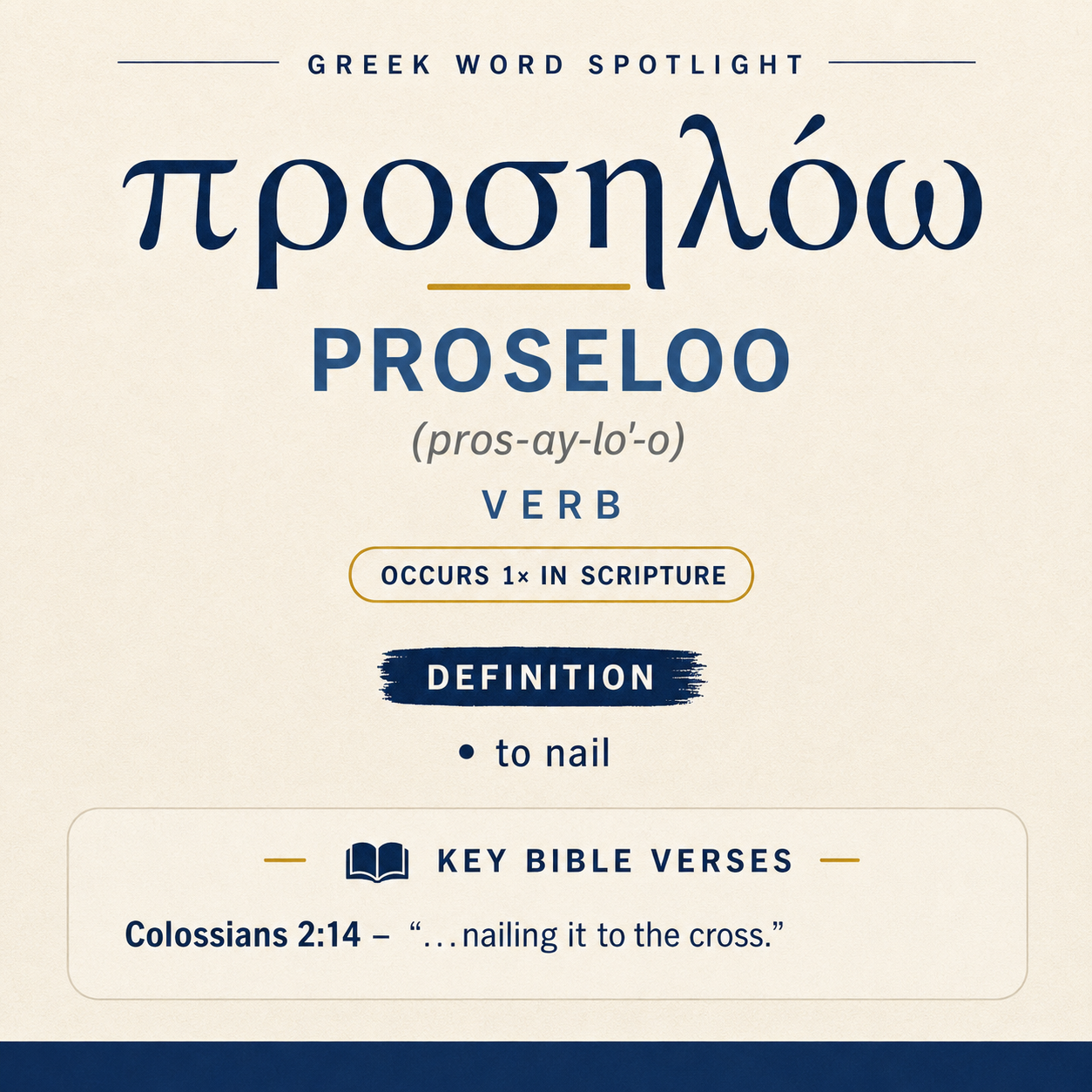
προσηλόω means “to nail” and appears once in Scripture in Colossians 2:14.
Context in Colossians
In Colossians 2:14, it describes “nailing it to the cross” after the handwriting in ordinances was taken out of the way.
Learn More →προσηλόω means “to nail,” and it appears in the New Testament in Paul’s description of what God has done with what stood against us in Colossians 2:14. The word contributes a concrete, physical image to that verse’s explanation of removal and decisive action.
Root and Related Words
προσηλόω (Proseloo) is formed from πρός (pros), “to/with,” and ἧλος (helos), “nail.”
Occurrences
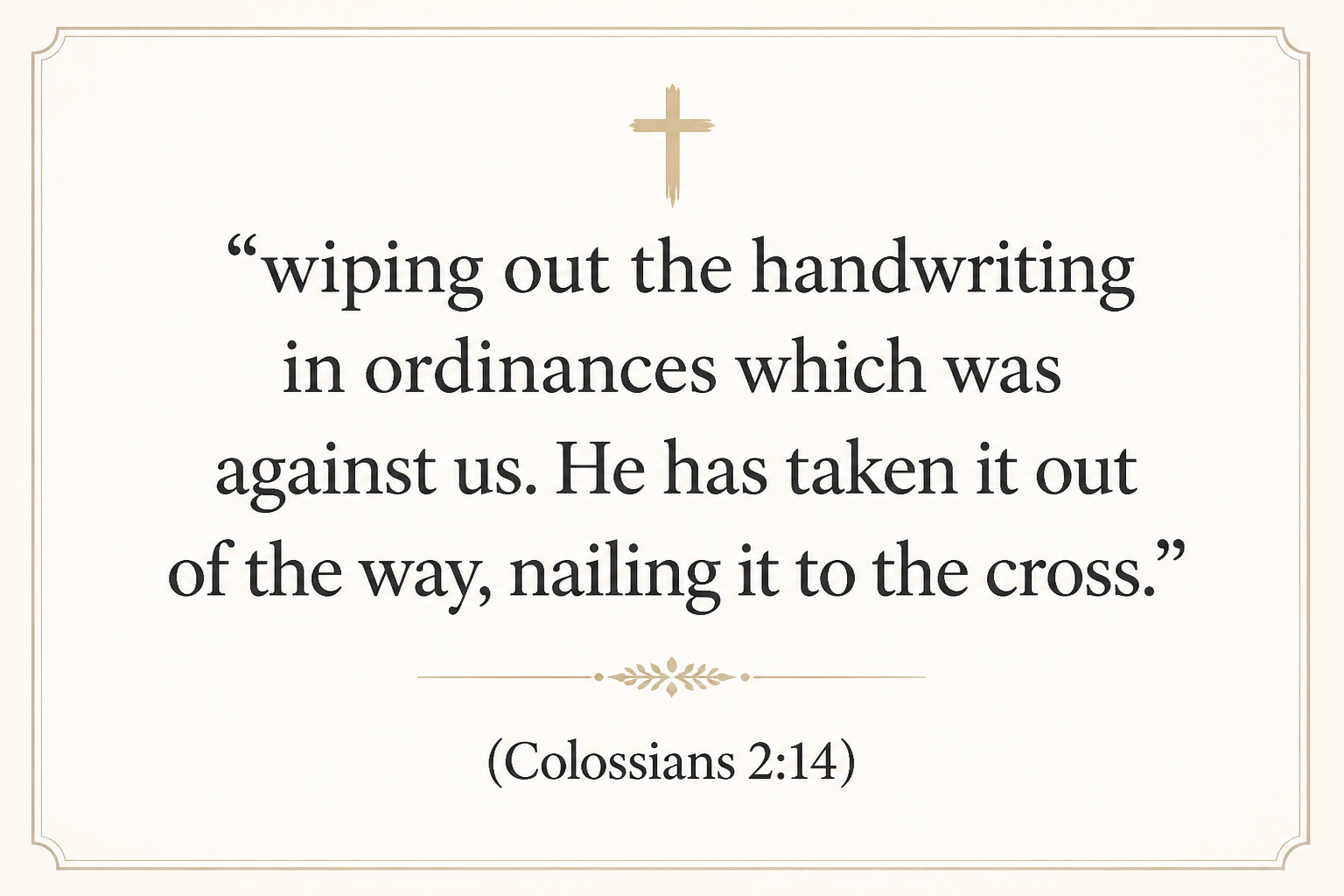
“wiping out the handwriting in ordinances which was against us. He has taken it out of the way, nailing it to the cross.” (Colossians 2:14)
Here προσηλόω supplies the climactic action at the end of a sequence: something “against us” is first “wip[ed] out,” then “taken…out of the way,” and then dealt with in a final, vivid manner—“nailing it to the cross.” The verb anchors the verse’s argument in the tangible act of fastening an object to wood with nails. In the flow of the sentence, this is not a minor detail or ornament; it functions as the closing verb that portrays removal as irreversible and publicly fixed. What was once “against us” is no longer merely erased or moved aside; it is treated in a way that evokes permanence and exposure, since a nailed item is not loosely set down but affixed.
The immediate object of the action is “it,” referring back to “the handwriting in ordinances.” Whatever this “handwriting” represents in Paul’s wording, the verse portrays it as a distinct thing that can be handled—wiped out, removed, and finally nailed. προσηλόω therefore helps the reader picture that the obstacle is not dealt with only in an abstract sense; the verse frames the obstacle as something that can be decisively fastened to “the cross.” By attaching the act of nailing to the “cross,” the verb also keeps the imagery centered on an execution instrument rather than on a generic surface: the place of fastening is specified, so the action is located at the cross itself, not merely near it.
Sense and Usage
Within its lone New Testament occurrence, the sense “to nail” functions as a deliberately concrete verb used to express finality. A nailed object is secured by puncturing and fixing; it is not simply associated with the cross but attached to it in a way that conveys that it has been dealt with decisively. In Colossians 2:14 the clause “nailing it to the cross” is the capstone of two preceding actions—“wiping out” and “tak[ing]…out of the way.” The verb thus carries the rhetorical weight of completion: the verse does not stop at cancellation and removal, but depicts a third action that visually seals the result.
The construction also connects an impersonal item (“the handwriting in ordinances”) with a physical method of disposal or display, and this juxtaposition is part of the verse’s force. By choosing a verb of fastening rather than a verb of mere deletion or dismissal, the language ties the fate of what was “against us” to an event and location: “the cross.” The word’s physicality presses the reader to imagine an act done with tools and force—an action that leaves marks and does not easily reverse. In this way, “to nail” serves the verse’s broader movement from opposition (“against us”) to removal (“taken it out of the way”) and then to fixed resolution at the cross.
Imagery
Colossians 2:14 frames the cross as the place where what stood in opposition is not only removed but fastened there. The image created by “nailing” is not gentle or vague: it is an act with weight and finality, turning the cross into the site where the hostile “handwriting in ordinances” is put beyond its former function “against us” by being fixed in a new place.
Sources: Lexical data from Strong’s Exhaustive Concordance and the Translators Brief Lexicon of Extended Strongs for Greek (STEPBible, CC BY). Occurrence data from the Translators Amalgamated Greek New Testament (STEPBible, CC BY). Scripture quotations from the World English Bible (public domain).





