
Exploring the Meaning of Plegma Greek
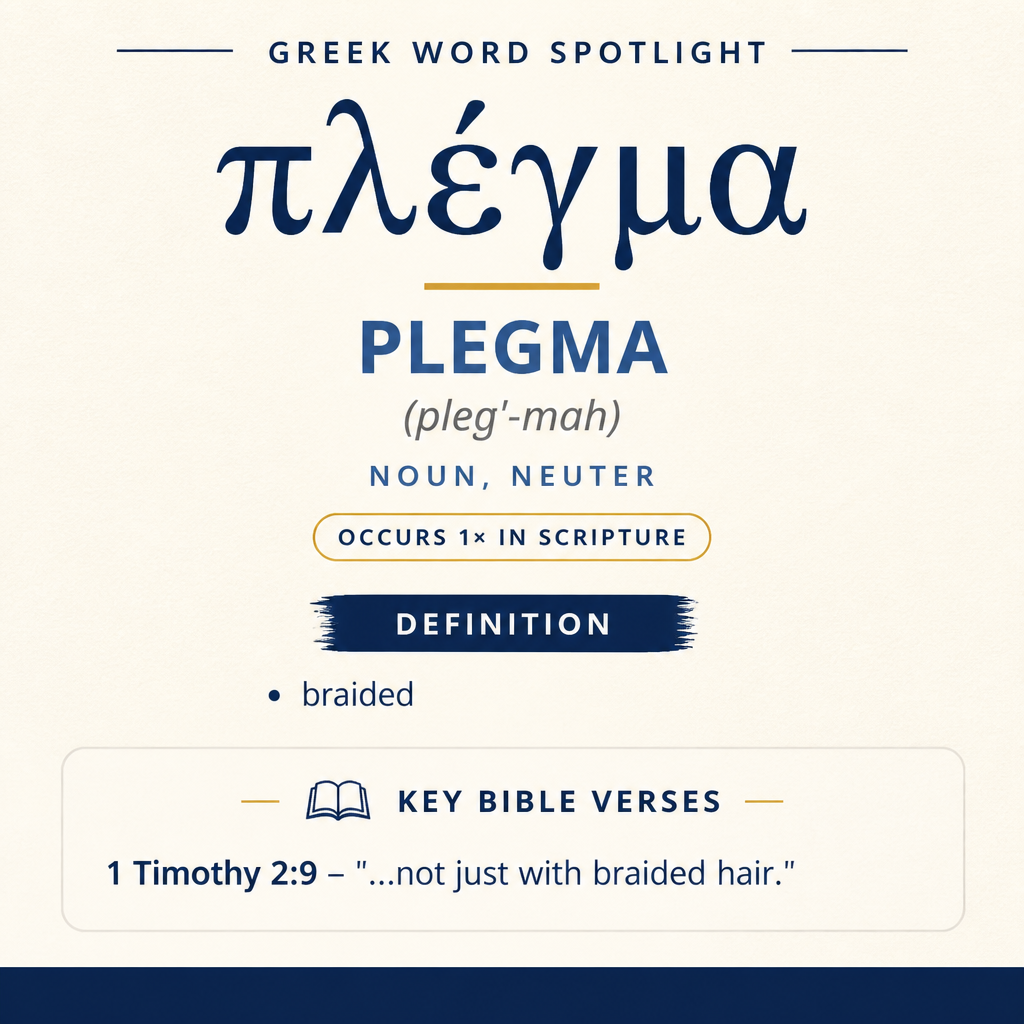
πλέγμα means “braided” and appears once in Scripture, in 1 Timothy 2:9.
Verse Context
In 1 Timothy 2:9, it appears in the phrase “not just with braided,” within guidance about women’s adornment.
Learn More →πλέγμα means “braided” and is used in a single New Testament instruction about outward adornment. It appears in a list of adornments that are set alongside modesty and propriety.
Root and Related Words
πλέγμα relates to the verb pleko (πλέκω), “to weave” (Strong’s G4120). The connection to “weaving” highlights the idea of hair arranged by interlacing strands into an intentional pattern.

Occurrences
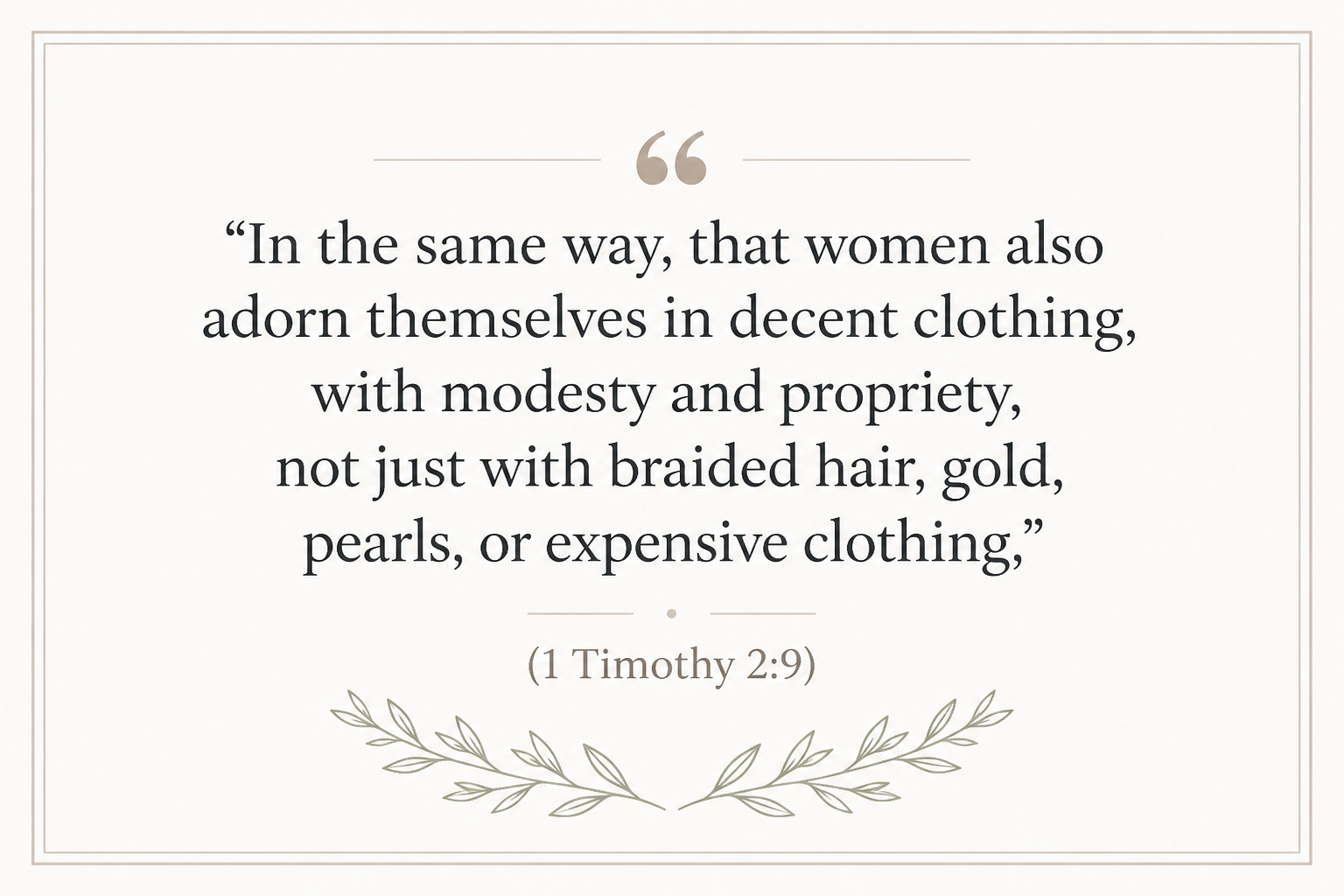
“In the same way, that women also adorn themselves in decent clothing, with modesty and propriety, not just with braided hair, gold, pearls, or expensive clothing,” (1 Timothy 2:9)
Here πλέγμα qualifies “hair” within a larger sentence about how women “adorn themselves.” The verse places “braided hair” alongside “gold, pearls, or expensive clothing,” forming a set of recognizable, outward markers of dress and ornament. Within the flow of the sentence, πλέγμα points to hair that has been arranged with visible care—an adornment that takes time and attention, and that can function socially like jewelry or costly garments.
The phrase “not just with braided hair” embeds πλέγμα in a contrast between the external and the internal. The text does not treat clothing or adornment as irrelevant (it speaks of “decent clothing”), but it frames the whole matter with “modesty and propriety.” Against that frame, πλέγμα serves as a concrete example of personal presentation: a particular kind of hair styling that, by its nature as “braided,” signals deliberate arrangement rather than mere grooming.
The placement of πλέγμα in a list also shapes how it functions. “Braided hair” stands as one item in a series of adornments: hair styling, precious materials (“gold”), luxury items (“pearls”), and the economic category of “expensive clothing.” The list invites the reader to see braided hair as part of the same outward sphere as these other visible additions. πλέγμα therefore contributes specificity: it names a recognizable form of hair adornment so that the instruction is not left at the level of vague generalities about appearance.
Sense and Usage
The definition “braided” is inherently descriptive, marking an attribute rather than naming the object itself. In 1 Timothy 2:9 it does this by attaching to “hair,” drawing attention not to hair as such but to hair presented in a particular way. A braid is formed by arranging strands into an interwoven structure; that structure can be simple or intricate, but the common feature is the visible result of intentional ordering.
Because πλέγμα appears in a context about adornment, its sense is bound to the public-facing aspect of appearance. “Adorn themselves” indicates a purposeful action; πλέγμα fits that purposeful action because braiding is not accidental. The word thus functions as a concrete instance of adornment that is achieved by shaping what is already present (hair) rather than adding a separate object (gold, pearls). In the verse’s list, some items are added to the body (gold, pearls), one is a category of garment (expensive clothing), and πλέγμα describes a way of arranging the body’s own hair. This mix broadens the picture of “adornment”: it includes both what is worn and what is crafted from one’s own appearance.
The sentence’s structure—“in decent clothing, with modesty and propriety, not just with braided hair, gold, pearls, or expensive clothing”—sets the word within a guidance about emphasis. πλέγμα is not singled out as the only concern; it is one representative example among several. As a result, the word’s contribution is illustrative: it gives the reader a tangible referent for the kind of outward focus that the verse places in a secondary position to “modesty and propriety.” The adjective-like force of “braided” helps the instruction stay rooted in ordinary practices of dress and grooming rather than remaining abstract.
Imagery
In 1 Timothy 2:9, πλέγμα carries the imagery of strands drawn together and arranged into a pattern—an act of forming order and presentation. Set beside gold, pearls, and costly clothing, the braided hair becomes a picture of visible, crafted appearance, which the verse places within a broader call for decorum in how one presents oneself.
Sources: Lexical data from Strong’s Exhaustive Concordance and the Translators Brief Lexicon of Extended Strongs for Greek (STEPBible, CC BY). Occurrence data from the Translators Amalgamated Greek New Testament (STEPBible, CC BY). Scripture quotations from the World English Bible (public domain).




