
Exploring the Meaning of Peitharcheo in Greek
πειθαρχέω means “to obey” and occurs four times in Scripture: Acts 5:29, Acts 5:32, Acts 27:21, and Titus 3:1.
Acts Usage
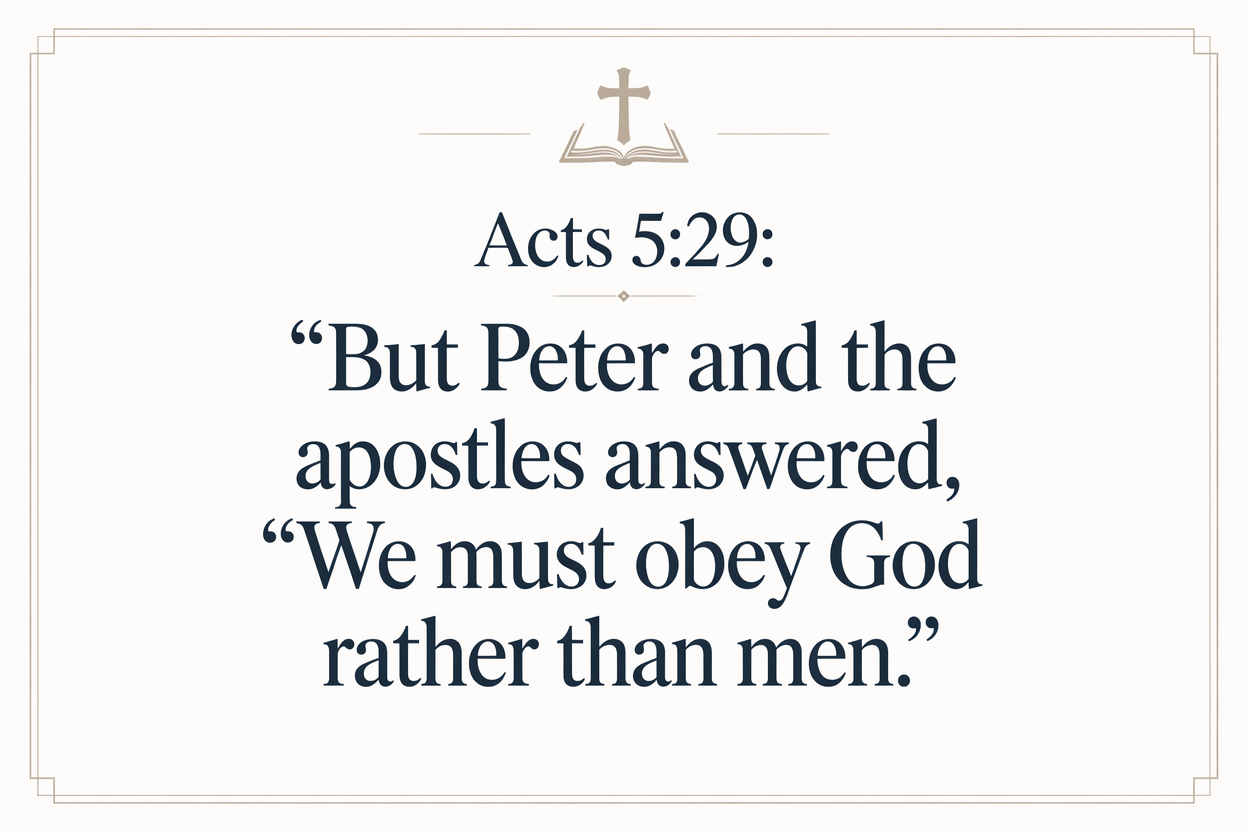
In Acts 5:29, Peter and the apostles say, “We must obey God rather than men.” In Acts 5:32, God gives the Holy Spirit to those who obey Him.
Learn More →Other Occurrences
In Acts 27:21, Paul tells them they should have listened. In Titus 3:1, believers are reminded to be obedient to rulers and authorities.
Learn More →πειθαρχέω expresses the act of obeying, and in the New Testament it appears in settings that range from public testimony before authorities to communal instruction and practical judgment at sea. Its four occurrences in Acts, Titus, and the narrative of Acts’ voyage scenes show obedience as a concrete, lived posture toward God, leaders, and counsel.

Root and Related Words
πειθαρχέω is connected with the verb peithō (πείθω), “to persuade” (Strong’s G3982), and the verb archō (ἄρχω), “be first” (Strong’s G757). These related words frame the term within the ideas of persuasion and primacy, which help situate how obedience is portrayed in the cited passages.

Occurrences
Acts 5:29: “But Peter and the apostles answered, “We must obey God rather than men.”
In this scene, the word marks a decisive choice in a conflict of claims. Peter and the apostles respond with necessity (“We must…”) and set two possible objects of obedience in contrast: God on the one hand and “men” on the other. The force of the statement is not merely that they have a preference, but that obedience is treated as an obligation that cannot be shared when commands compete; their stance is framed as a matter of rightful priority expressed in action.
Acts 5:32: “We are his witnesses of these things; and so also is the Holy Spirit, whom God has given to those who obey him.”
Here the word appears inside a claim about divine giving and the identity of those who receive. The apostles present themselves as “witnesses,” and they place the Holy Spirit alongside their testimony (“and so also is the Holy Spirit”). Obedience functions as the description of the recipients: God has given the Holy Spirit “to those who obey him.” Within the sentence’s logic, obedience is not a private trait but a defining marker of a group, and it is linked with God’s action of giving. The wording ties obedience directly to relationship (“obey him”) and to participation in what God is doing, since the Spirit is mentioned as an accompanying witness.
Acts 27:21: “When they had been long without food, Paul stood up in the middle of them, and said, “Sirs, you should have listened to me, and not have set sail from Crete and have gotten this injury and loss.”
In the voyage narrative, the word is embedded in hindsight and practical consequence. After “long without food,” Paul addresses those with him and points to a missed obligation: “you should have listened to me.” The statement is framed as counsel that ought to have been followed, and Paul connects that failure to tangible outcomes—“this injury and loss.” Obedience here is not presented as an abstract virtue but as responsiveness to guidance that would have averted harm. The setting—fatigue, deprivation, and the aftermath of a hazardous decision—lets the word’s idea land in the realm of judgment, prudence, and the weight of ignored warning.
Titus 3:1: “Remind them to be in subjection to rulers and to authorities, to be obedient, to be ready for every good work,”
In Titus, the word belongs to a chain of communal exhortations. The instruction is mediated through leadership (“Remind them”), and it targets a community’s public posture: “be in subjection to rulers and to authorities.” Obedience is coordinated with subjection and readiness; it is not isolated from conduct but stands alongside being “ready for every good work.” The verse places obedience within ordinary civic life—rulers and authorities—while also linking it to moral energy and preparedness. The word thus contributes to a picture of ordered, responsive living that is outward-facing and practically oriented.
Sense and Usage
Across these passages, “to obey” consistently carries the sense of directed allegiance expressed in concrete response. Acts 5:29 shows obedience as a necessity when loyalties collide: the apostles speak as people compelled to choose God as the one to be obeyed, even when “men” represent pressure or contrary demand. The contrast is sharp and public, placing obedience in the realm of confession and costly resolve.
Acts 5:32 adds a relational and communal contour. Obedience is not merely compliance with an instruction; it describes “those who obey him” as a recognizable group to whom God gives the Holy Spirit. Within the verse, obedience is closely tied to belonging and participation: it is the posture that corresponds with receiving what God gives and with standing within the sphere where witness is borne.
Acts 27:21 illustrates how obedience can refer to heeding counsel in a concrete decision. The narrative does not depict obedience as purely religious language; it is the kind of listening that should shape action, and the failure to obey is measured in “injury and loss.” This use highlights an aspect of obedience that can be assessed by outcome: the word fits a context where decisions have consequences that are visible, communal, and difficult to reverse.
Titus 3:1 places obedience into the pattern of a community’s stable life. The instruction ties obedience to “subjection to rulers and to authorities” and to readiness for “every good work.” In this frame, obedience is a cultivated habit: something to be reinforced by reminding, practiced in relation to societal structures, and expressed in active readiness rather than passive stillness.
Taken together, these uses show that the verb’s basic sense of obeying stretches across different objects and contexts—God, authorities, and counsel—while maintaining the core idea of responsive submission. The passages also show obedience evaluated by different criteria: by rightful priority (God rather than men), by participation in divine giving (those who obey him), by consequence in lived experience (injury and loss), and by communal reputation and preparedness (ready for every good work).
Imagery in Context
The scenes that carry πειθαρχέω give it strong situational color. In Acts 5, obedience stands in a courtroom-like tension where testimony and authority are in view, and where the choice of whom to obey is spoken aloud as a settled necessity. In Acts 27, the word is heard against the backdrop of hunger and hardship at sea, where obedience would have meant heeding a warning before irreversible loss. In Titus 3, the imagery is quieter but no less concrete: a community being reminded to live under rulers and authorities with a readiness that shows itself in good work.
Sources: Lexical data from Strong’s Exhaustive Concordance and the Translators Brief Lexicon of Extended Strongs for Greek (STEPBible, CC BY). Occurrence data from the Translators Amalgamated Greek New Testament (STEPBible, CC BY). Scripture quotations from the World English Bible (public domain).





