
Exploring the Meaning of Ophelimos in Greek
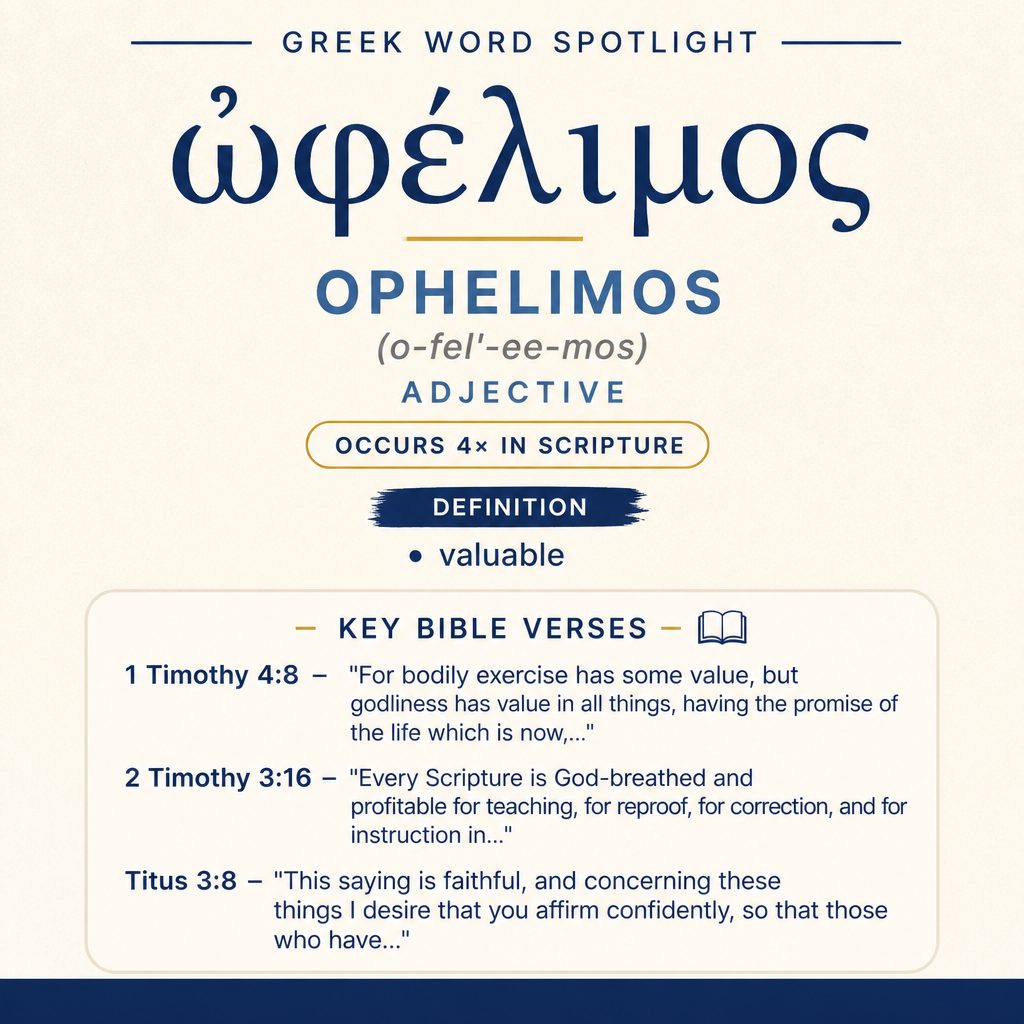
ὠφέλιμος means “valuable” and occurs four times in Scripture, including 1 Timothy 4:8, 2 Timothy 3:16, and Titus 3:8.
Scripture Occurrences
It occurs 4 times in Scripture. Listed references include 1 Timothy 4:8, 2 Timothy 3:16, and Titus 3:8.
Learn More →Context Snapshots
In 1 Timothy 4:8 it describes value in relation to godliness. In 2 Timothy 3:16 it describes Scripture as profitable.
Learn More →ὠφέλιμος expresses the idea of what is valuable, especially as it bears on practice and formation. In the Pastoral Epistles it is applied to bodily exercise, to Scripture, and to good works in the life of believers.
Root and Related Words
ὠφέλιμος (Ophelimos) derives from ὄφελος (ophelos), “gain” (Strong’s G3786). The adjective presents value in terms of what yields gain.

Occurrences
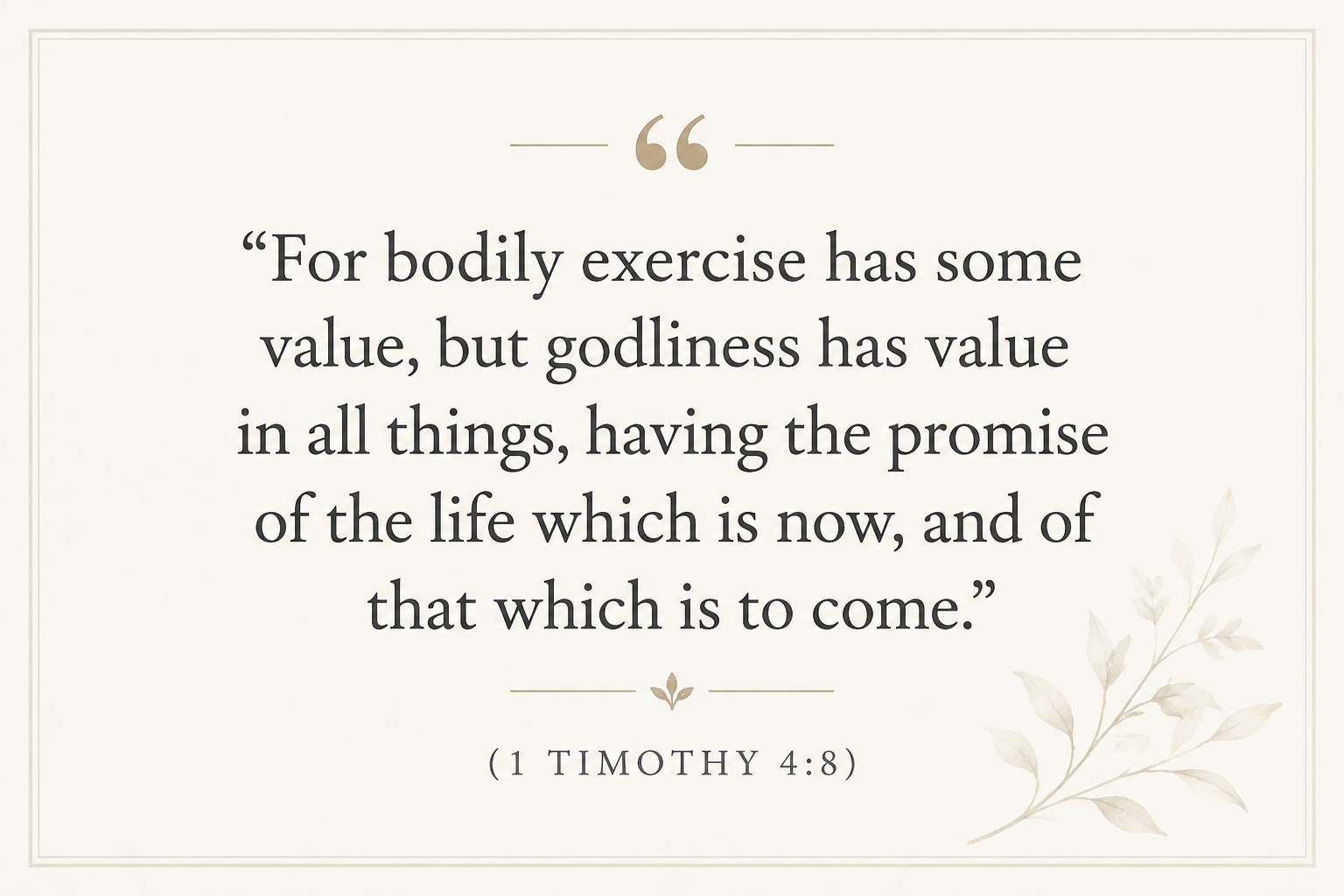
“For bodily exercise has some value, but godliness has value in all things, having the promise of the life which is now, and of that which is to come.” (1 Timothy 4:8)
Here ὠφέλιμος frames a comparison of two pursuits by measuring them in terms of value. “Bodily exercise has some value” assigns real, but limited, worth to physical training; it counts as valuable within a constrained scope. The contrast clause then expands the evaluative field: “godliness has value in all things,” extending the same category of value across every sphere. The sentence itself explains the breadth of that value: godliness carries “the promise of the life which is now, and of that which is to come.” In this setting, ὠφέλιμος functions as a practical yardstick—what is worth the effort because it yields a promised benefit—while allowing for degrees (“some”) and for comprehensiveness (“in all things”).
“Every Scripture is God-breathed and profitable for teaching, for reproof, for correction, and for instruction in righteousness,” (2 Timothy 3:16)
In this statement, ὠφέλιμος is attached to “Every Scripture,” describing its value in concrete ministerial and formative uses. The line does not treat value as a vague compliment; it specifies four arenas in which Scripture proves valuable: “teaching,” “reproof,” “correction,” and “instruction in righteousness.” The adjective thus highlights usefulness within a process: forming understanding (“teaching”), confronting what is wrong (“reproof”), setting what is wrong right (“correction”), and shaping ongoing formation toward a right pattern (“instruction in righteousness”). Within the sentence, the value of Scripture is directly connected to its character as “God-breathed,” and ὠφέλιμος marks the outworking of that character in the community’s life.
“This saying is faithful, and concerning these things I desire that you affirm confidently, so that those who have believed God may be careful to maintain good works. These things are good and profitable to men;” (Titus 3:8)
In Titus, ὠφέλιμος appears in the plural frame “These things,” pointing back to the content Titus is to “affirm confidently” and forward to the intended result: believers being “careful to maintain good works.” The adjective is paired with another evaluative term—“good”—and together they appraise the teaching and its practical outcome. The final phrase “profitable to men” adds a human-facing orientation: what Titus is to press upon the believers is not only right in itself (“good”) but also valuable in its effects among people. In this setting, ὠφέλιμος stands close to moral exhortation; it describes the worth of apostolic instruction as it produces an observable pattern of life (“maintain good works”) that benefits others.
Sense and Usage
Across these passages ὠφέλιμος operates as an evaluative adjective for determining what is worth attention, confidence, and sustained effort. It is not used for abstract worth disconnected from outcomes; each context ties value to discernible ends. In 1 Timothy 4:8, value is expressed comparatively (“some value” versus “value in all things”) and temporally (“the life which is now, and of that which is to come”), showing that what counts as valuable can be assessed by the reach of its promise. In 2 Timothy 3:16, value is distributed across a set of functions that shape people—teaching and training, exposing error, correcting it, and moving toward righteousness—so the adjective emphasizes value as productive capacity. In Titus 3:8, value is social (“to men”) and ethical (“maintain good works”), presenting what is valuable as that which issues in conduct recognized as good and beneficial in human life.
The three uses also show that ὠφέλιμος can qualify diverse subjects without changing its core evaluative force: a discipline (“bodily exercise”), a sacred corpus (“Every Scripture”), and a body of affirmed instruction that leads to practice (“These things … maintain good works”). In each case, the word draws attention away from mere claims and toward demonstrated worth. The comparison in 1 Timothy shows that something may be valuable without being ultimate; the adjective can admit limited value while making room for a fuller, broader value. The specification in 2 Timothy shows that something is valuable because it serves multiple purposes in shaping a life toward righteousness. The closing in Titus shows that value includes benefit as it is experienced within human relationships and communities.
Imagery
Though ὠφέλιμος is an evaluative term, these passages give it a concrete feel by placing it next to visible practices and effects. The reader can picture training of the body, the public reading and application of Scripture for teaching and correction, and the steady maintenance of good works; in each scene the adjective functions like a practical verdict on what bears real worth in lived experience.
Sources: Lexical data from Strong’s Exhaustive Concordance and the Translators Brief Lexicon of Extended Strongs for Greek (STEPBible, CC BY). Occurrence data from the Translators Amalgamated Greek New Testament (STEPBible, CC BY). Scripture quotations from the World English Bible (public domain).





