
Exploring the Meaning of Katastrophe in Greek
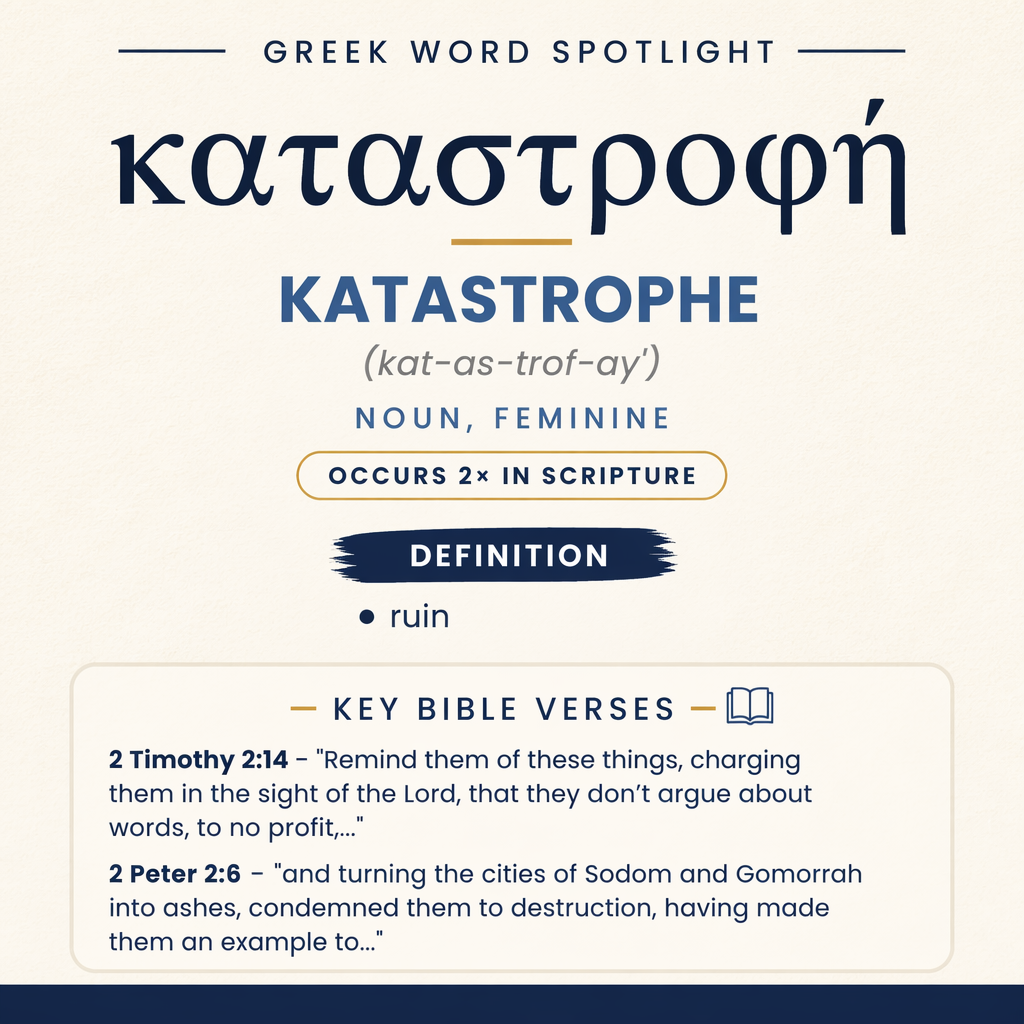
καταστροφή means “ruin” and occurs twice in Scripture, in 2 Timothy 2:14 and 2 Peter 2:6.
Scripture Occurrences
It appears 2 times in Scripture: 2 Timothy 2:14 and 2 Peter 2:6.
Learn More →Context Snapshots
In 2 Timothy 2:14 it is linked to arguing about words “to no profit.” In 2 Peter 2:6 it relates to the condemnation of Sodom and Gomorrah.
Learn More →καταστροφή expresses the idea of ruin. It appears in two New Testament warnings: one about contentious speech and its effect on listeners, and one about a historical judgment set forth as an example.
Root and Related Words
καταστροφή is related to the verb katastrepho (καταστρέφω), “to overturn” (Strong’s G2690). This relationship places the noun in a word-family that pictures something brought down or turned over, a fitting conceptual backdrop for ruin as an outcome.

Occurrences
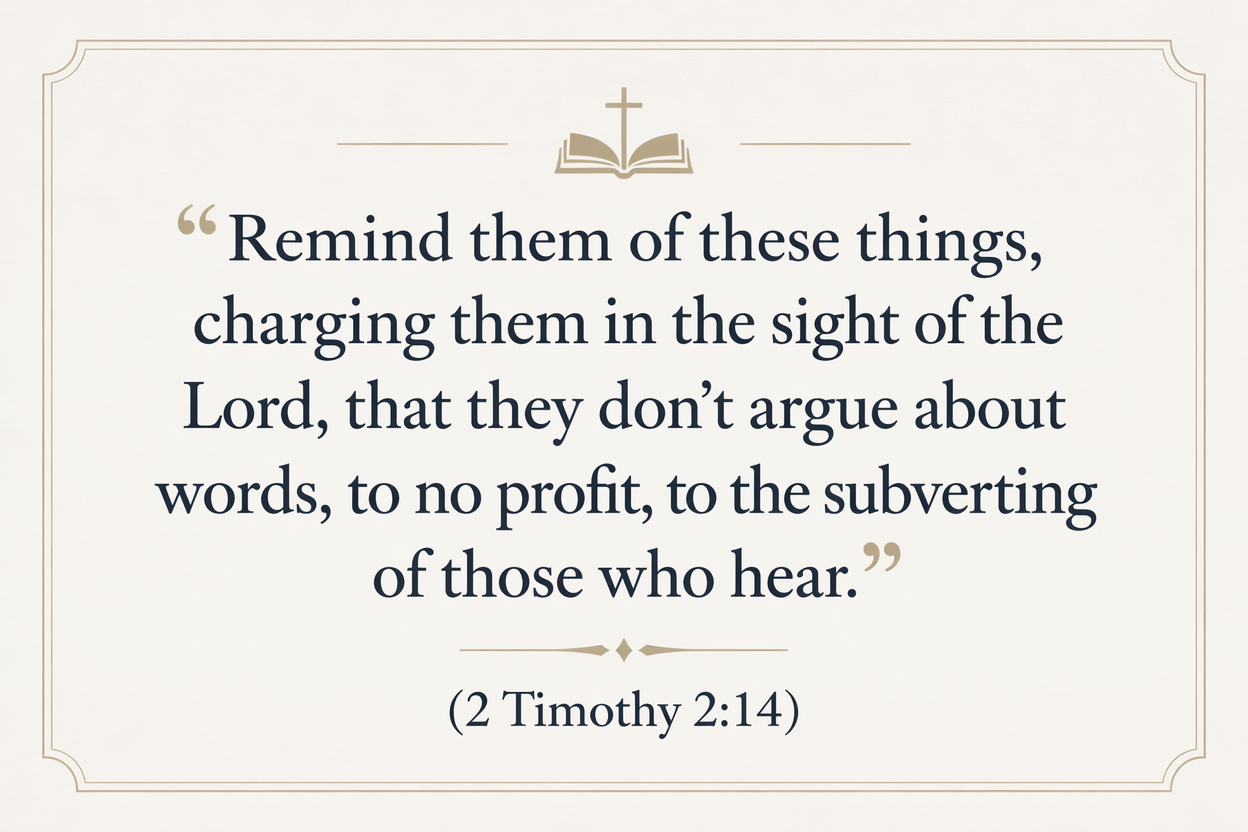
“Remind them of these things, charging them in the sight of the Lord, that they don’t argue about words, to no profit, to the subverting of those who hear.” (2 Timothy 2:14)
In 2 Timothy 2:14, καταστροφή names the harmful result that can follow “argu[ing] about words.” The verse sets up a contrast: such disputes are “to no profit,” yet they still have real consequences—“the subverting of those who hear.” In that setting, ruin is not framed as a dramatic physical collapse but as damage done to people through speech: listeners are affected, and the effect is presented as serious enough to be placed under a solemn charge “in the sight of the Lord.” The word therefore serves to sharpen the warning by giving a concrete outcome to what might otherwise seem like harmless verbal sparring: empty argumentation can contribute to ruin in the lives of hearers.
“and turning the cities of Sodom and Gomorrah into ashes, condemned them to destruction, having made them an example to those who would live in an ungodly way;” (2 Peter 2:6)
In 2 Peter 2:6, καταστροφή is used in the depiction of divine judgment on “the cities of Sodom and Gomorrah.” The line moves through a sequence of actions and results: the cities are “turn[ed]…into ashes,” then “condemned…to destruction,” and their fate is made “an example.” Here ruin is presented as comprehensive and irreversible within the imagery of the verse; “ashes” evokes the aftermath of a catastrophe that leaves nothing intact. The term functions not merely as a report of what happened but as a moral warning embedded in the sentence: this ruin stands as a cautionary pattern “to those who would live in an ungodly way.” Thus, the word contributes weight and finality to the example, grounding the warning in a scene of total collapse.
Sense and Usage
Across these two passages, ruin appears in two distinct but complementary frames. In 2 Timothy, the ruin is tied to speech and its communal effects: an argument “about words” can carry listeners toward “subverting,” a kind of undoing that spreads from talker to hearer. The focus is on process and influence—how an unprofitable practice corrodes and destabilizes those who are exposed to it. The verse’s phrasing places that outcome at the end of a chain (“argue…to no profit, to…subverting”), so the noun marks the grim endpoint of something that begins as mere verbal contention.
In 2 Peter, ruin is tied to judgment that is visible and historically memorable within the letter’s argument: cities are reduced “into ashes,” and the resulting destruction serves as an “example.” The usage there stresses outcome more than process. Ruin is portrayed as a settled verdict (“condemned them”), and the point is not the mechanics of how the cities became ashes but the certainty and instructive force of what that ruin signifies for future conduct.
Together, these occurrences show καταστροφή functioning as a term for ruin that can operate on different scales: it can describe the undoing of people through corrosive disputes, and it can describe the devastation of communities under condemnation. The contexts also show how ruin can be communicated with different kinds of language: in one place, a relational and auditory setting (“those who hear”); in the other, a stark material picture (“into ashes”). In both, the word serves a warning purpose: it marks a destructive end that the reader is meant to take seriously, whether the path to it is careless speech or ungodly living.
Imagery
The two passages pair ruin with two vivid images. One is the quiet scene of words spoken and heard, where the damage is not immediately visible but is real enough to be named and guarded against under a solemn charge. The other is the public ruin of cities reduced to ashes, a scene set forth as a standing example. In this way, καταστροφή can carry the weight of both unseen collapse in a community’s life and overt, catastrophic destruction—each reinforcing the seriousness of the warnings in their respective contexts.
Sources: Lexical data from Strong’s Exhaustive Concordance and the Translators Brief Lexicon of Extended Strongs for Greek (STEPBible, CC BY). Occurrence data from the Translators Amalgamated Greek New Testament (STEPBible, CC BY). Scripture quotations from the World English Bible (public domain).





