Exploring the Meaning of Hubristes in Greek
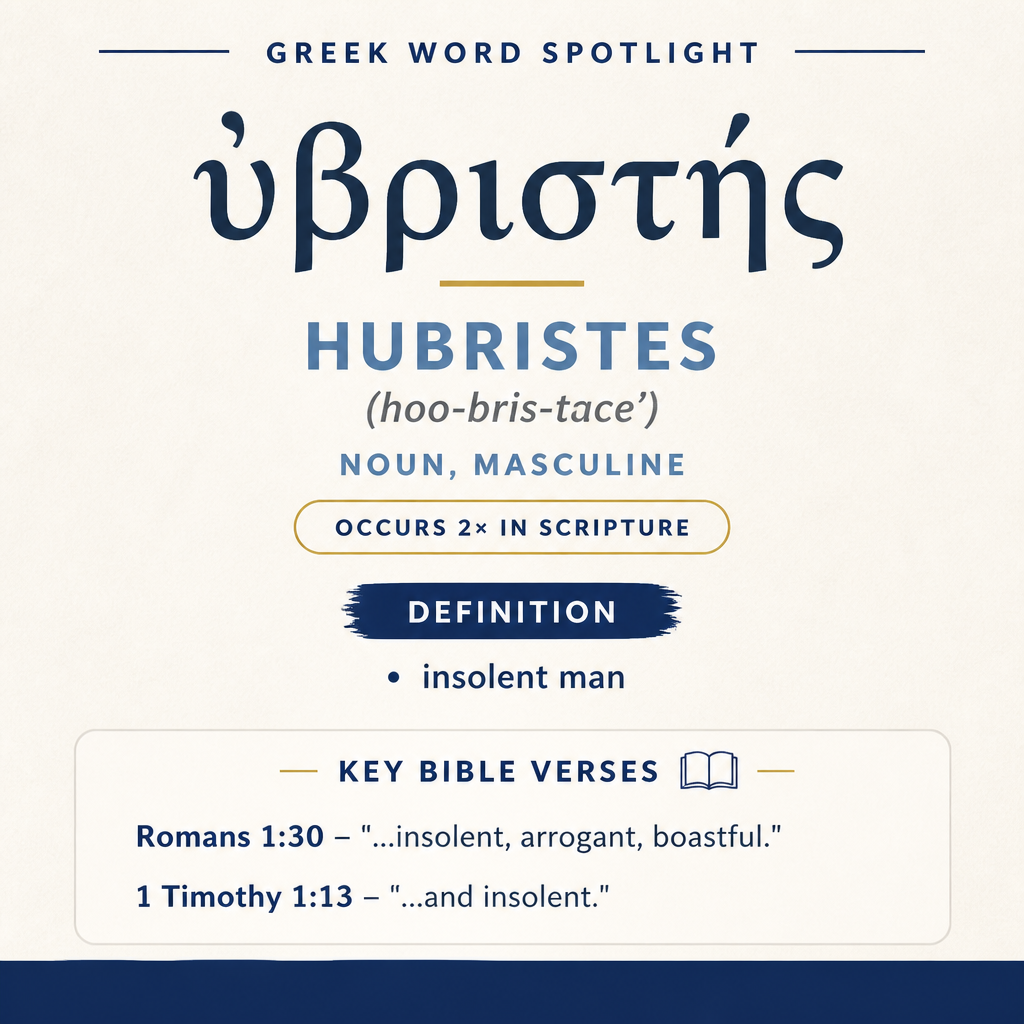
ὑβριστής means “insolent man” and appears twice in Scripture: Romans 1:30 and 1 Timothy 1:13.
Biblical Usage
In Romans 1:30 it appears in a list of sins: “insolent, arrogant, boastful.”
Learn More →Noted Occurrence
In 1 Timothy 1:13 Paul says he “used to be…insolent,” yet obtained mercy.
Learn More →ὑβριστής means “insolent man,” a term for a person marked by insolence. It appears in two New Testament settings: a catalog of vices in Romans and a personal recollection in 1 Timothy.
Root and Related Words
ὑβριστής is connected with the verb hybrizo (ὑβρίζω), “to mistreat” (Strong’s G5195). The relationship between the noun and the verb links the description of an “insolent man” with behavior that expresses itself in mistreatment.

Occurrences
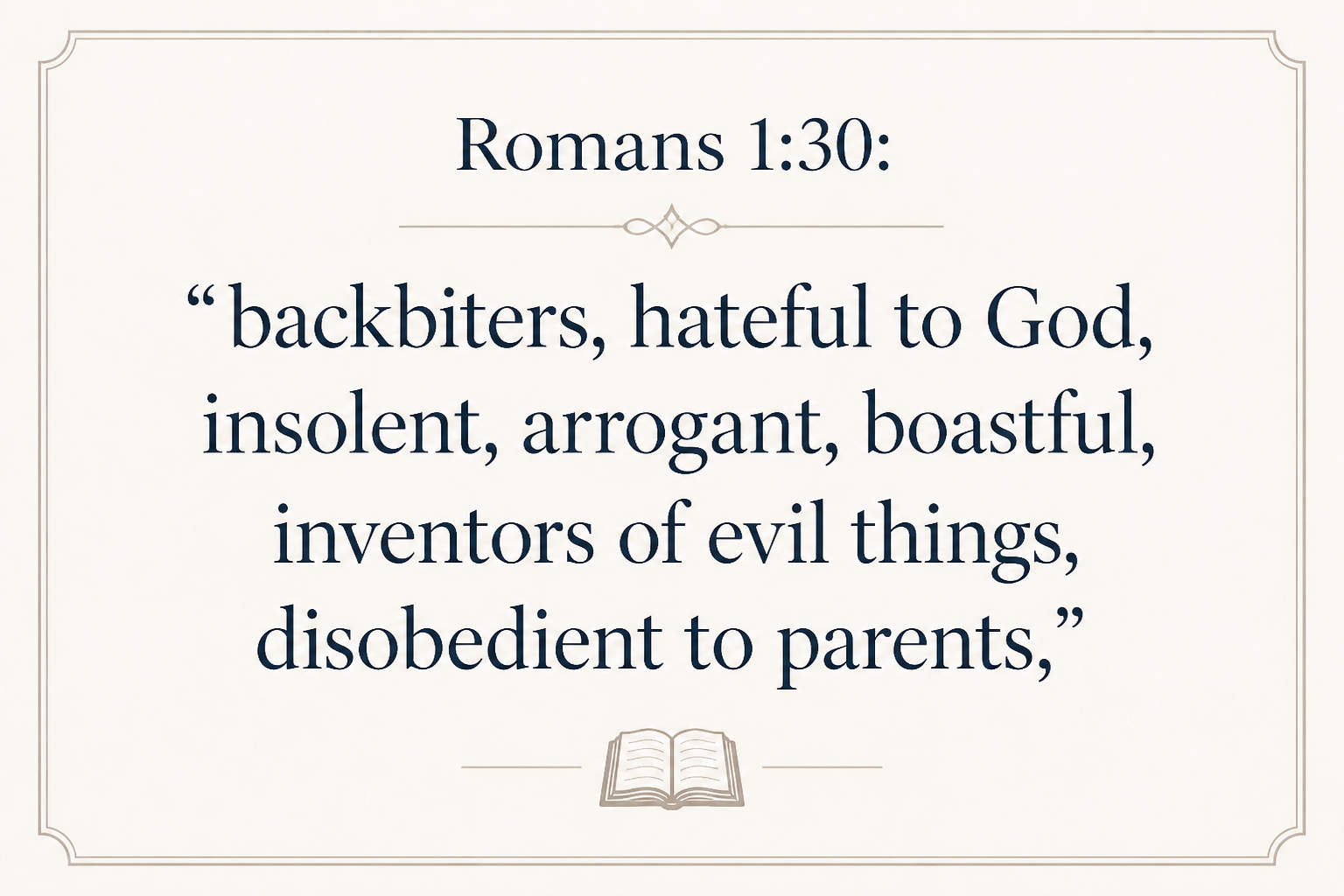
Romans 1:30: “backbiters, hateful to God, insolent, arrogant, boastful, inventors of evil things, disobedient to parents,”
Here ὑβριστής stands in a compressed series of character labels, each naming a recognizable kind of wrongdoing. The immediate neighbors—“arrogant” and “boastful”—place “insolent” among sins of posture and disposition rather than a single isolated act: it is a way of being that shows itself publicly and relationally. In the flow of the list, “backbiters” points to speech that harms, and “inventors of evil things” points to creativity in wrongdoing; “insolent” sits between these as a social stance that throws off fitting restraint. The word contributes the idea of a person who acts with brazen disregard in company with other patterns that disrupt ordinary human obligations, culminating in “disobedient to parents,” which signals a breakdown of basic honor within the household. Within this catalog, ὑβριστής is not an incidental adjective; it helps sketch a recognizable moral profile—someone whose insolence belongs with disdain, pride, and self-display.
1 Timothy 1:13: “although I used to be a blasphemer, a persecutor, and insolent. However, I obtained mercy, because I did it ignorantly in unbelief.”
In this autobiographical confession, ὑβριστής is framed by two other descriptors: “a blasphemer” and “a persecutor.” The triad moves from speech (“blasphemer”), to active hostility (“persecutor”), to the personal quality expressed by “insolent.” In this setting, “insolent” functions as a moral characterization of the speaker’s former self: not merely that he did harmful things, but that his manner in doing them carried insolence—an impudent disregard that fits with persecuting zeal. The second sentence sets that former identity against an act of grace: “However, I obtained mercy.” The word therefore participates in the contrast between what the speaker “used to be” and what mercy has interrupted. The clause “because I did it ignorantly in unbelief” locates those actions in a condition of ignorance and unbelief; within that explanation, “insolent” is part of what is being confessed and owned as real guilt, even while the speaker also explains the state of mind in which the insolence operated. The term thus bears weight as a self-indicting label, not a detached observation.
Sense and Usage
Across these two passages, ὑβριστής names an identifiable kind of person: an “insolent man” is someone whose interactions are marked by insolence as a settled trait. Romans 1:30 shows the term at home in a public moral inventory, where it stands alongside other settled dispositions (“arrogant, boastful”) and relational failures (“backbiters… disobedient to parents”). In that list, the word’s force lies in how it contributes to a composite portrait: insolence is not a private thought but a social presence, a way of carrying oneself that belongs among behaviors that corrode trust and respect.
1 Timothy 1:13 shows the same label operating at the level of personal history and repentance. The speaker does not merely admit to isolated missteps; he names himself with terms that describe identity and conduct over time (“I used to be…”). In that confession, “insolent” carries the sting of remembered character: it is the kind of person he was when he acted as “a blasphemer” and “a persecutor.” Yet the verse also demonstrates that the label can be placed in the past tense without being minimized. The word remains a frank description within a narrative that moves from culpable former life to mercy received, with “ignorantly in unbelief” describing the condition in which the insolence was expressed. In this way, ὑβριστής can function both as a category in a moral taxonomy (Romans) and as a personal epithet in testimony (1 Timothy).
The related verb hybrizo (ὑβρίζω), “to mistreat,” sheds light on how insolence can be understood as something that does not stay internal. Even when the noun serves as a label for a person, the connection to mistreatment helps explain why “insolent” is grouped naturally with actions and attitudes that harm others. In Romans 1:30, the term appears where words and actions injure community life; in 1 Timothy 1:13, it stands next to persecution. The two contexts together present insolence as more than impolite boldness: it is a culpable manner of life that belongs in the vocabulary of sin and requires mercy.
Imagery in Context
The passages evoke insolence through concrete relational scenes rather than through abstract definition. Romans 1:30 pictures a society where speech turns against others (“backbiters”), pride swells (“arrogant, boastful”), and even the parent-child bond is breached (“disobedient to parents”); “insolent” supplies the feel of a person who moves through such a world with shameless disregard. 1 Timothy 1:13 places the word in the mouth of a former “persecutor,” so insolence is seen not as a stray flaw but as part of a life that required mercy to stop and transform.
Sources: Lexical data from Strong’s Exhaustive Concordance and the Translators Brief Lexicon of Extended Strongs for Greek (STEPBible, CC BY). Occurrence data from the Translators Amalgamated Greek New Testament (STEPBible, CC BY). Scripture quotations from the World English Bible (public domain).