
Exploring the Meaning of Chortazo in Greek
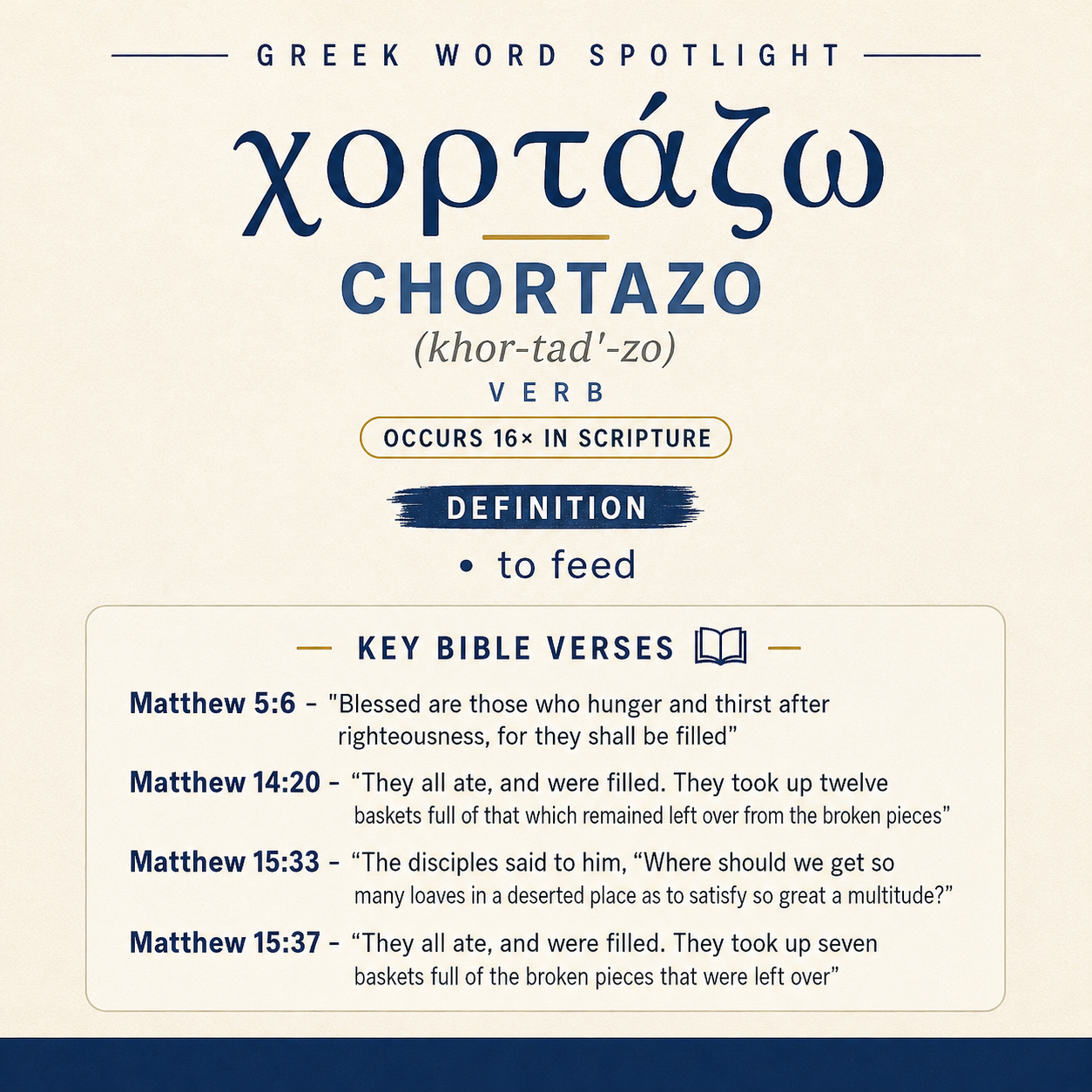
χορτάζω (Chortazo) means “to feed” and appears in Scripture in passages such as Matthew 5:6; 14:20; 15:33, 37; Mark 6:42; 7:27; 8:4, 8.
Core Meaning
χορτάζω means “to feed.” In several contexts it is translated “be filled.”
Learn More →Gospel Occurrences
This word occurs 16 times in Scripture. The provided examples come from Matthew and Mark.
Learn More →Usage in Context
It describes people eating and being filled, with leftover baskets gathered afterward (Matthew 14:20; 15:37; Mark 8:8). It is also used for being filled in Matthew 5:6.
Learn More →χορτάζω expresses the act of feeding in a way that reaches a point of being “filled,” and it appears in sayings about hunger and in narratives of crowds being fed. In these passages it can describe literal eating, figurative longing, and even the harsh edge of deprivation.
Occurrences
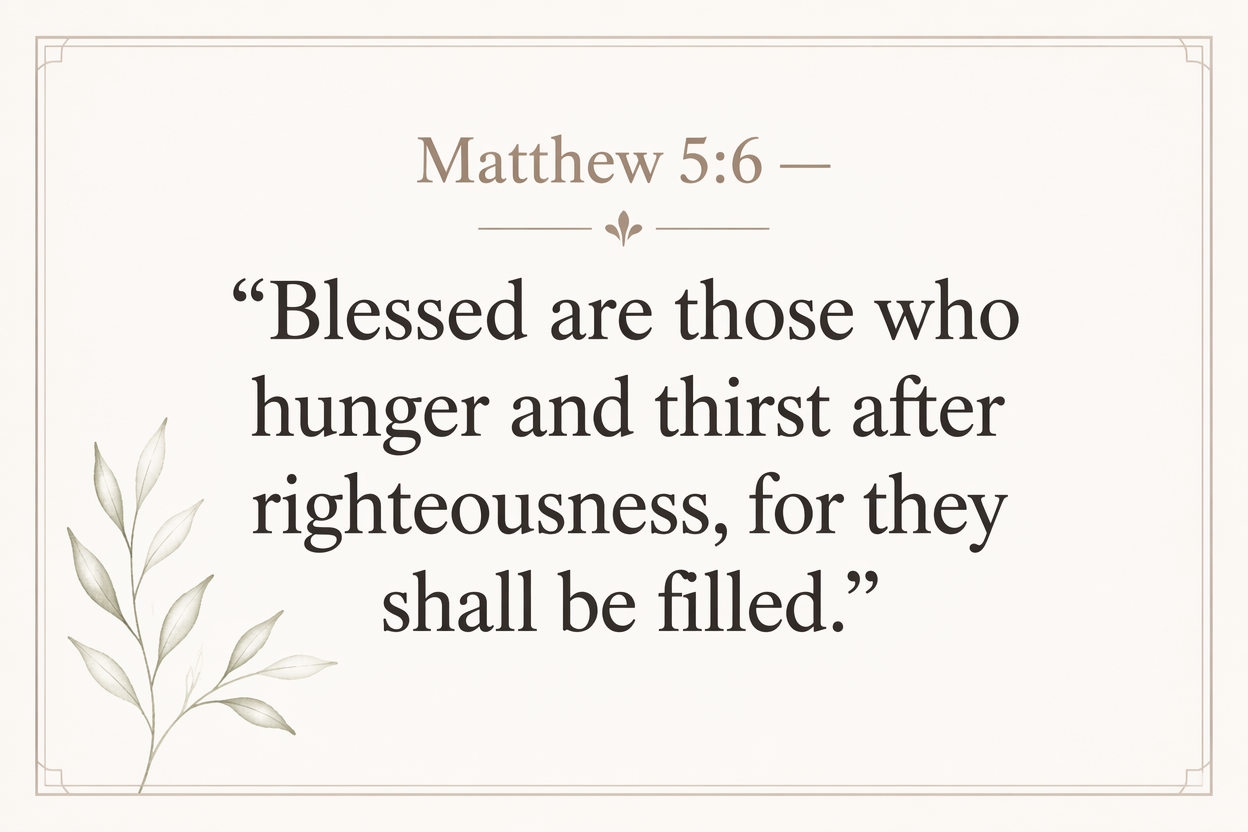
Matthew 5:6 — “Blessed are those who hunger and thirst after righteousness, for they shall be filled.”
Here χορτάζω frames the promise that answers “hunger and thirst after righteousness.” The image is not of a small taste but of hunger met with a filling that matches the intensity of the longing named in the verse. The verb supplies the completion: those who “hunger and thirst” are not left in perpetual appetite; their hunger is brought to a condition of being filled.
Matthew 14:20 — “They all ate, and were filled. They took up twelve baskets full of that which remained left over from the broken pieces.”
In this feeding account, χορτάζω marks the outcome after “they all ate”: the crowd’s eating reaches fullness. The verse then underscores abundance by moving from personal satisfaction (“were filled”) to communal surplus (“twelve baskets full” of leftovers). The verb therefore functions as the hinge between eating and the evidence that the provision exceeded immediate need.
Matthew 15:33 — “The disciples said to him, “Where should we get so many loaves in a deserted place as to satisfy so great a multitude?””
The disciples’ question highlights the practical problem of feeding: a “deserted place” and “so great a multitude.” χορτάζω stands behind “satisfy” as the specific concern—providing enough bread for a crowd to be fed to the point implied by the verb. The word sharpens the contrast between the setting and the scale of need: the issue is not offering something minimal, but feeding a multitude adequately.
Matthew 15:37 — “They all ate, and were filled. They took up seven baskets full of the broken pieces that were left over.”
As in Matthew 14:20, χορτάζω describes the crowd’s condition after eating: “were filled.” Again, the narrative pairs fullness with leftovers, this time “seven baskets full.” The verb anchors the report of success—feeding that reaches fullness—while the remaining pieces confirm that fullness was achieved without exhausting the supply.
Mark 6:42 — “They all ate, and were filled.”
This concise statement places χορτάζω as the summary result of the meal. The brevity emphasizes the completeness of the feeding: the entire group (“they all”) experiences the same endpoint (“were filled”). The verb carries the weight of the scene’s resolution: eating ends in fullness rather than continued hunger.
Mark 7:27 — “But Jesus said to her, “Let the children be filled first, for it is not appropriate to take the children’s bread and throw it to the dogs.””
χορτάζω here is part of a priority statement: “Let the children be filled first.” Feeding is not merely a general good; it is tied to order and appropriateness within the saying’s imagery of “children’s bread” and “dogs.” The verb supports the picture of bread given to meet need fully, with the “first” indicating that the filling of one group precedes any other distribution.
Mark 8:4 — “His disciples answered him, “From where could one satisfy these people with bread here in a deserted place?””
Once more the setting “in a deserted place” raises the difficulty of feeding. χορτάζω underlies the disciples’ concern about “satisfy” with “bread”: the question is how anyone could feed these people adequately here. The verb thus spotlights the gap between limited resources and the aim of bringing people to fullness.
Mark 8:8 — “They ate, and were filled. They took up seven baskets of broken pieces that were left over.”
The crowd’s eating results in being “filled,” with leftovers gathered afterward. χορτάζω provides the key outcome word: the meal is successful not merely because food was shared, but because eating reached fullness. The gathered “broken pieces” serve as a concrete measure that the feeding achieved its goal with excess remaining.
Luke 6:21 — “Blessed are you who hunger now, for you will be filled. Blessed are you who weep now, for you will laugh.”
χορτάζω responds to “hunger now” with the promise “you will be filled.” The time contrast (“now” versus what “will” be) makes feeding a future reversal of present lack. In this beatitude, the verb functions as the assurance that current hunger is not permanent; it is met with a filling that changes the person’s condition.
Luke 9:17 — “They ate and were all filled. They gathered up twelve baskets of broken pieces that were left over.”
Here fullness is explicitly universal: “were all filled.” χορτάζω frames the feeding as complete across the whole group and leads naturally into the detail of “twelve baskets” of leftovers. The verb therefore conveys not only that people ate, but that the feeding reached a shared, sufficient end.
Luke 15:16 — “He wanted to fill his belly with the husks that the pigs ate, but no one gave him any.”
In this scene of desperation, χορτάζω is tied to bodily need: “fill his belly.” The object is not bread but “husks that the pigs ate,” and even that desire is frustrated: “no one gave him any.” The verb intensifies the poverty of the moment by showing that the goal is basic feeding to the point of being filled, yet the person cannot obtain even the lowest kind of food.
Luke 16:21 — “and desiring to be fed with the crumbs that fell from the rich man’s table. Yes, even the dogs came and licked his sores.”
χορτάζω appears as a longing “to be fed,” and the hoped-for provision is minimal—only “the crumbs that fell from the rich man’s table.” The verse’s imagery reinforces the depth of deprivation: the person desires feeding from leftovers while “even the dogs” approach and “licked his sores.” The verb thus brings the theme of feeding into a stark social contrast between the rich man’s table and another’s hunger.

Sense and Usage
Across these passages, χορτάζω consistently points to feeding that resolves hunger by bringing someone to a state described as being “filled.” In the crowd-feedings (Matthew 14:20; 15:37; Mark 6:42; 8:8; Luke 9:17), the verb is coupled with eating and confirmed by the practical aftermath of “broken pieces that were left over,” showing a pattern: feeding leads to fullness, and fullness is followed by surplus. Where the disciples speak (Matthew 15:33; Mark 8:4), χορτάζω appears in the question of possibility—how to feed adequately in a “deserted place”—making the verb the benchmark of success that seems unreachable apart from extraordinary provision.
In sayings rather than narratives, χορτάζω carries the metaphor of hunger into moral and social realms without losing the concrete force of being filled. Matthew 5:6 joins “hunger and thirst after righteousness” to the promise “they shall be filled,” portraying longing answered with fullness. Luke 6:21 similarly names present hunger and promises a future filling, placing feeding language within the theme of reversal. Mark 7:27 uses the verb within an analogy about bread, priority, and appropriateness—“Let the children be filled first”—so that feeding becomes an ordered act: someone is fed to fullness before bread is considered for others.
The last two Lukan uses (Luke 15:16; 16:21) show χορτάζω in scenes where fullness is desired but not granted. One person wants to “fill his belly” with animal fodder and is denied any gift; another desires to “be fed” with mere “crumbs.” In these, the verb does not describe a completed feeding but a craving for it, exposing the sharpness of want by keeping the goal—being fed—plainly in view.
Imagery
χορτάζω gathers a set of recurring images: hungry people, bread in limited places, and the decisive moment when hunger gives way to being “filled.” The narratives depict that moment as communal and measurable, with baskets of leftovers as the visible remainder after feeding. The sayings lean on the same bodily picture to speak about deeper longings and reversals—hunger “now” that will be met, and hunger “after righteousness” that will reach fullness—while the parable scenes press the image into its darkest register, where even crumbs or husks are imagined as enough, if only someone would give them.
Sources: Lexical data from Strong’s Exhaustive Concordance and the Translators Brief Lexicon of Extended Strongs for Greek (STEPBible, CC BY). Occurrence data from the Translators Amalgamated Greek New Testament (STEPBible, CC BY). Scripture quotations from the World English Bible (public domain).




