Exploring the Meaning of Cheimazo in Greek
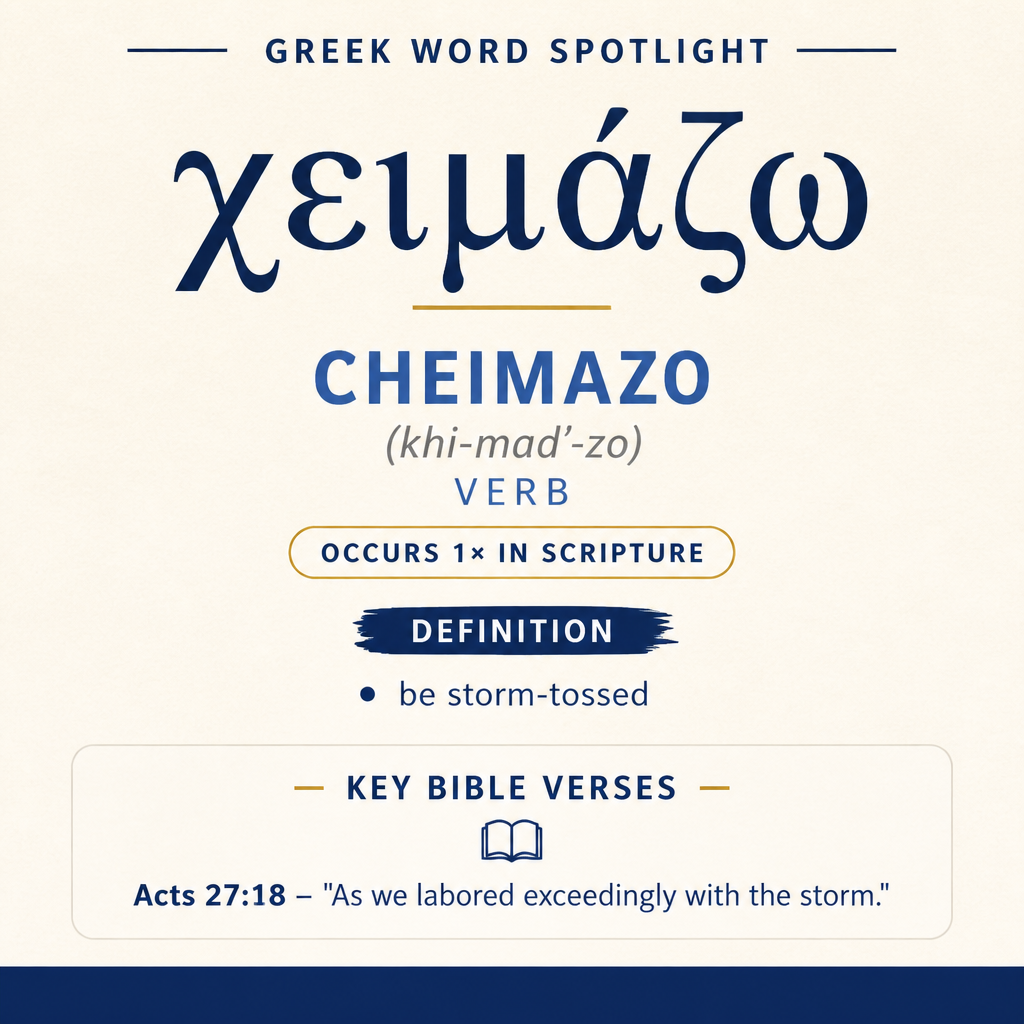
χειμάζω means “be storm-tossed” and appears once in Scripture, in Acts 27:18.
Biblical Occurrence
This word occurs 1 time in Scripture. Its single occurrence is in Acts 27:18.
Learn More →Context in Acts
In Acts 27:18, it describes laboring exceedingly with the storm. The next day, they began throwing things overboard.
Learn More →χειμάζω describes being storm-tossed, and it appears once in the New Testament, in the narrative of a ship struggling through dangerous weather. In that scene, the verb helps name the kind of hardship the crew endures and explains the desperate measures they take.
Root and Related Words
χειμάζω is derived from cheimon (χειμών), “winter” (Strong’s G5494). The relationship links the verb to the season associated with severe weather at sea, anchoring the verb’s imagery in conditions marked by storm and hardship.

Occurrences
“As we labored exceedingly with the storm, the next day they began to throw things overboard.” (Acts 27:18)
In Acts 27:18, the verb belongs to a tightly packed description of crisis aboard ship. The speaker includes himself—“we labored exceedingly”—so the line is not a detached report but an account from within the ordeal. The storm is not merely present in the background; it presses the crew into exhausting work, and that strain forms the immediate context for the ship’s next action.
The sentence moves from sustained struggle (“labored exceedingly with the storm”) to a drastic decision (“the next day they began to throw things overboard”). χειμάζω, as “be storm-tossed,” fits this kind of progression: the storm’s force does not just make travel difficult; it batters the vessel and its occupants to the point that ordinary seamanship gives way to emergency loss. The throwing of cargo or equipment is presented as a response to a continuing threat, and the timing (“the next day”) suggests the battering did not quickly pass. The verb thus contributes an experienced, bodily sense of being at the mercy of violent weather—an ongoing condition that drives costly choices aimed at survival.
Sense and Usage
In its lone New Testament use, χειμάζω functions as a situational verb: it characterizes what happens to people and ship when weather is not simply adverse but dominating. The definition “be storm-tossed” points to more than encountering a storm; it conveys being acted upon by it, as by repeated blows. The crew’s “labor” shows the human side of that condition—unceasing effort to manage what is happening—while the decision to jettison cargo shows the practical outcome of being pushed beyond normal limits.
Because the verse pairs intense labor with the storm itself, the verb’s sense is closely tied to the storm’s agency. The storm is not described as an object they control but as a force they contend with. The line therefore frames the ordeal as both physical and procedural: physical in the exhausting work of staying afloat, procedural in the shift toward damage control. Within that framework, being storm-tossed is not a momentary jolt; it is a state that persists long enough to reshape priorities from preserving goods to preserving life.
The related word cheimon (χειμών), “winter,” contributes a seasonal coloring to the verb’s background. Even when “winter” is not stated in the verse itself, the derivation evokes the kind of weather that makes a sea journey precarious and unpredictable. That connection strengthens the verb’s imagery: the storm is not a passing shower but the sort of conditions that can dominate a voyage and overwhelm human planning. In Acts 27:18, this aligns with the narrative’s emphasis on endurance (“we labored exceedingly”) and escalating measures (“they began to throw things overboard”).
Imagery
The imagery of χειμάζω in Acts 27:18 is the image of a vessel repeatedly struck and driven by wind and waves, with the people aboard reduced to hard labor and hard choices. The brief verse compresses a whole day of strain into a single movement from toil to sacrifice: storm pressure, sustained effort, and the shedding of what once seemed necessary. In that compressed scene, χειμάζω gives the storm a shaping role in the story, marking the experience as one of being battered rather than merely inconvenienced.
Sources: Lexical data from Strong’s Exhaustive Concordance and the Translators Brief Lexicon of Extended Strongs for Greek (STEPBible, CC BY). Occurrence data from the Translators Amalgamated Greek New Testament (STEPBible, CC BY). Scripture quotations from the World English Bible (public domain).