
Understanding the Significance of Blepo in Greek
βλέπω (Blepo) means “to see” and occurs 136 times in Scripture, including Matthew 5:28 and Matthew 7:3.
Core Meaning
βλέπω means “to see.” In Matthew 11:4 it appears with “hear,” describing what Jesus’ followers witness.
Learn More →Matthew Examples
In Matthew 7:3 it describes noticing a “speck” in a brother’s eye. In Matthew 5:28 it is used of gazing in a way tied to lust.
Learn More →Seen in Secret
Matthew 6:4, 6:18, and 6:6 use “see” for the Father who sees in secret. These passages contrast what is hidden from people with what God sees.
Learn More →βλέπω means “to see,” a verb that appears across Gospel scenes ranging from private devotion to public miracles and moral instruction. In the selected passages it can describe ordinary visual perception, deliberate looking, and the difference between merely having sight and truly taking in what is before one.

Occurrences
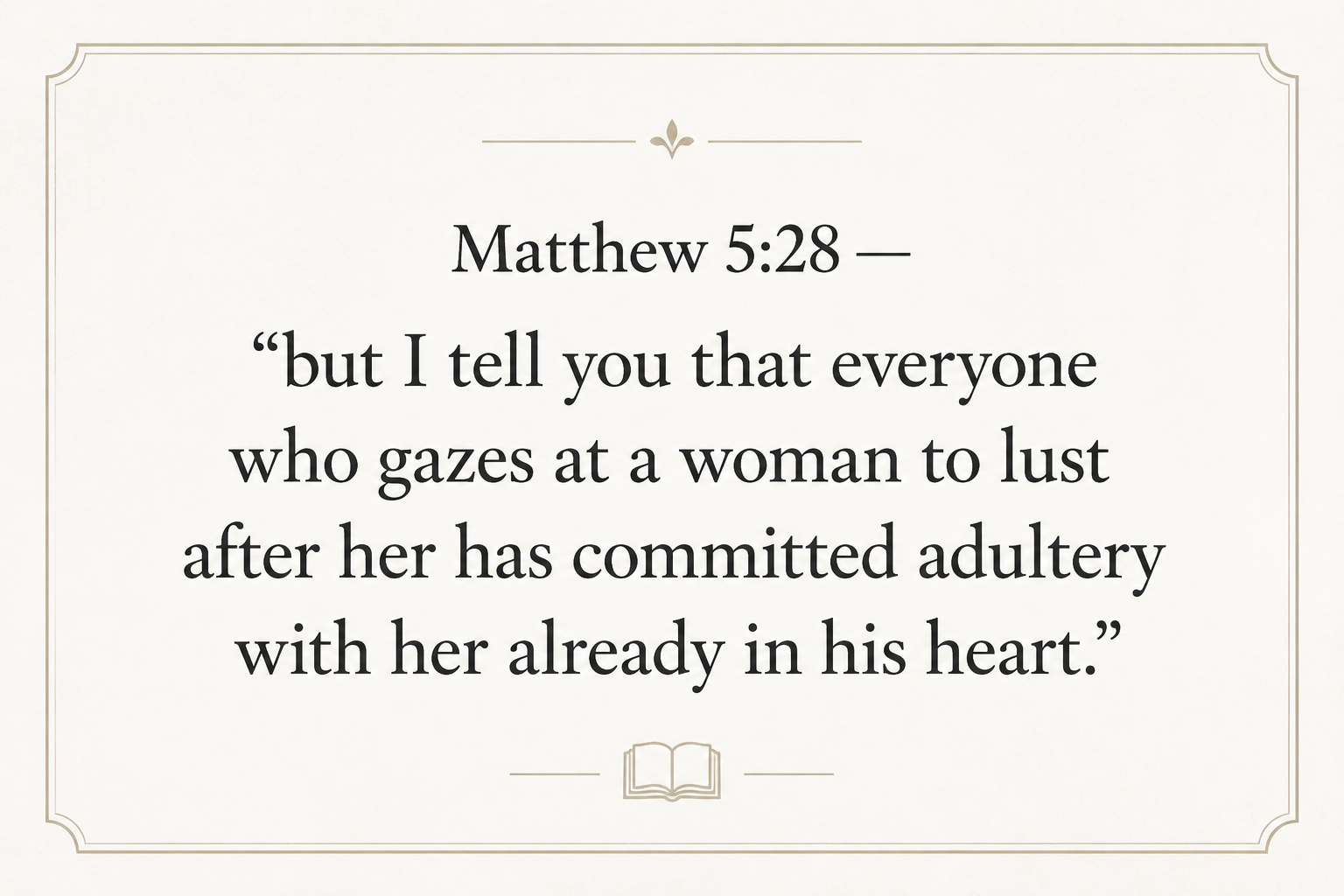
Matthew 5:28 — “but I tell you that everyone who gazes at a woman to lust after her has committed adultery with her already in his heart.”
Here “to see” is presented as an intentional, sustained act (“gazes”), not a passing glance. The verse ties that directed looking to an inward outcome (“in his heart”), so the act of seeing functions as a doorway from external perception into internal intention and moral consequence.
Matthew 6:4 — “so that your merciful deeds may be in secret, then your Father who sees in secret will reward you openly.”
Seeing is attributed to “your Father,” and it is explicitly compatible with secrecy: deeds can be hidden from human notice yet still be fully seen. The contrast between “in secret” and “openly” frames seeing as the basis for just recognition even when no public audience is present.
Matthew 6:6 — “But you, when you pray, enter into your inner room, and having shut your door, pray to your Father who is in secret, and your Father who sees in secret will reward you openly.”
Seeing again belongs to the Father, and the setting tightens from general secrecy to a shut-door “inner room.” The verb supports the point that hidden prayer is not unseen; the one addressed is also the one who sees, and that seeing grounds the promised response.
Matthew 6:18 — “so that you are not seen by men to be fasting, but by your Father who is in secret, and your Father, who sees in secret, will reward you.”
This occurrence sets two possible audiences for sight side by side: “men” and “your Father.” Being “seen by men” would make fasting a display, but the desired posture is to be seen by the Father in secrecy. Seeing here marks the difference between human appraisal and divine awareness.
Matthew 7:3 — “Why do you see the speck that is in your brother’s eye, but don’t consider the beam that is in your own eye?”
Seeing is used to expose selective perception: a person readily notices a tiny “speck” in another while failing to reckon with a “beam” in oneself. The verb does more than report eyesight; it highlights misdirected attention and the moral irony of clear-sightedness toward others paired with blindness toward oneself.
Matthew 11:4 — “Jesus answered them, “Go and tell John the things which you hear and see:”
Seeing is paired with hearing as content that can be reported—observable realities that serve as testimony. In this commission, “see” indicates publicly accessible evidence, the kind of thing witnesses can recount rather than private impressions.
Matthew 12:22 — “Then one possessed by a demon, blind and mute, was brought to him and he healed him, so that the blind and mute man both spoke and saw.”
The verb refers to restored sight: the man who was “blind and mute” comes out of healing able to “spoke and saw.” Seeing is concrete and bodily here, named alongside speech as a regained faculty, underscoring the completeness of the change described in the sentence.
Matthew 13:13 — “Therefore I speak to them in parables, because seeing they don’t see, and hearing, they don’t hear, neither do they understand.”
Seeing is used paradoxically: people can be in the posture of seeing and yet “don’t see.” The line links this failure of seeing with a failure of hearing and culminates in lack of understanding, so “see” functions as a gateway to comprehension that can remain closed even when the eyes are engaged.
Matthew 13:14 — “In them the prophecy of Isaiah is fulfilled, which says, ‘By hearing you will hear, and will in no way understand; Seeing you will see, and will in no way perceive:”
This verse intensifies the distinction between sight and perception. “Seeing you will see” acknowledges the activity of seeing, but “will in no way perceive” denies the corresponding grasp of what is seen. The verb thus participates in a contrast between outward experience and inward recognition.
Matthew 13:16 — ““But blessed are your eyes, for they see; and your ears, for they hear.”
Seeing is attributed to “your eyes” as a positive condition, placed in parallel with hearing. The blessing falls on the organs of perception because they actually accomplish their purpose in this context: they see rather than being caught in the earlier pattern of seeing without perceiving.
Matthew 13:17 — “For most certainly I tell you that many prophets and righteous men desired to see the things which you see, and didn’t see them; and to hear the things which you hear, and didn’t hear them.”
Seeing is framed as a privileged experience tied to specific “things.” The statement contrasts desire (“desired to see”) with lack (“didn’t see them”), and then contrasts that with the audience’s present seeing (“the things which you see”). The verb therefore marks access to realities that others longed for but did not experience.
Matthew 14:30 — “But when he saw that the wind was strong, he was afraid, and beginning to sink, he cried out, saying, “Lord, save me!””
Seeing focuses attention and shapes response: noticing “that the wind was strong” leads immediately to fear and then to a cry for rescue. The verb anchors a turning point in the scene, where what is seen becomes the trigger for emotion and action in rapid sequence.

Sense and Usage
Across these passages, βλέπω (“to see”) moves between straightforward sight and sight laden with moral and spiritual significance. In Matthew 12:22 it is the plain recovery of visual ability, paired with speech as a tangible result of healing. In Matthew 14:30 it remains recognizably perceptual—attention lands on the strength of the wind—but the narrative shows how seeing can redirect the heart toward fear and the mouth toward urgent appeal.
Several uses highlight intentionality in looking. Matthew 5:28 presents seeing as a directed gaze that is not morally neutral; the way one looks can be bound up with what one wants, and the verse places that inwardly (“in his heart”). Matthew 7:3 similarly treats seeing as attention selectively applied: the act of noticing is accurate enough to spot a “speck,” yet it is misapplied when it ignores the larger reality closer to home. In both, “to see” is not reduced to optics; it describes what a person chooses to focus on and what that focus reveals.
Another cluster uses “to see” for divine awareness that penetrates secrecy. In Matthew 6:4, 6:6, and 6:18, the repeated phrase “sees in secret” attaches seeing to the Father as the true witness of hidden devotion—merciful deeds, prayer behind a shut door, fasting not performed for human notice. These lines set up a consistent contrast: humans may or may not see, but the Father sees where humans cannot, and that seeing undergirds the stated reward. In this setting, “to see” establishes accountability and recognition without requiring public visibility.
Finally, Matthew 13:13–17 explores the tension between the act of seeing and the effect of seeing. The sayings draw a distinction between having eyes engaged (“seeing you will see”) and arriving at perception or understanding (“will in no way perceive”; “neither do they understand”). Against that negative pattern stands a positive one: “blessed are your eyes, for they see,” and the audience is said to see “things” many longed to see but did not. Within these statements, seeing becomes a marker of access to meaning and reality, not merely the reception of light and shape.
Imagery
The word’s imagery ranges from the hidden room with a shut door (Matthew 6:6) to the public sphere where deeds could be performed “to be fasting” before others (Matthew 6:18), from the intimate closeness of an eye with a speck and a beam (Matthew 7:3) to the wide-open immediacy of weather and water where the strength of the wind is seen and fear follows (Matthew 14:30). In these scenes, seeing can be quiet and secret, sharply evaluative, openly evidential, or suddenly alarming—yet in each case it names the moment perception becomes decisive in the story being told.
Sources: Lexical data from Strong’s Exhaustive Concordance and the Translators Brief Lexicon of Extended Strongs for Greek (STEPBible, CC BY). Occurrence data from the Translators Amalgamated Greek New Testament (STEPBible, CC BY). Scripture quotations from the World English Bible (public domain).




