Understanding the Meaning of Asthenes in Greek
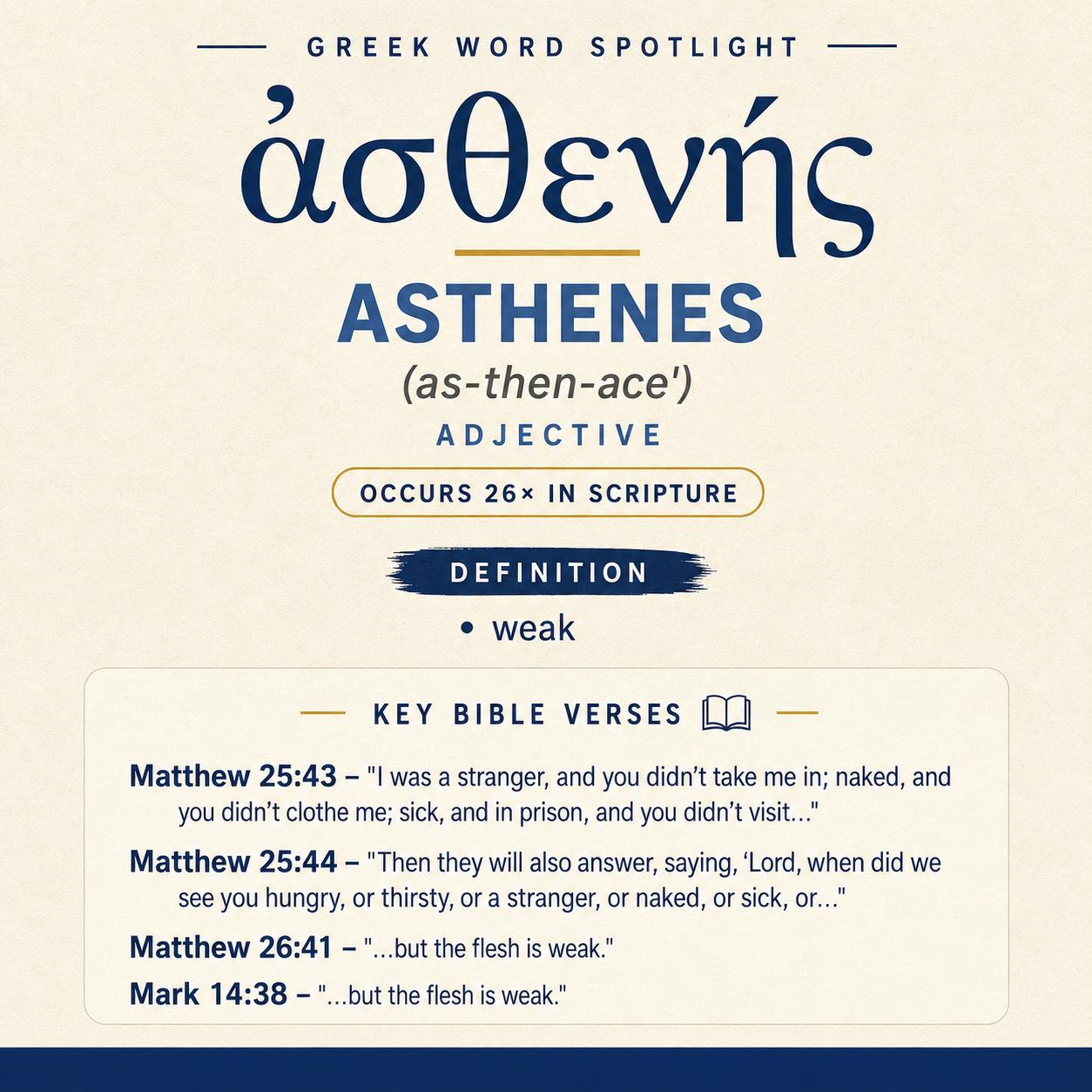
ἀσθενής means “weak” and occurs 26 times in Scripture, including Matthew 25:43–44; 26:41; Mark 14:38; Luke 9:2; 10:9; Acts 4:9; 5:15.
Core Meaning
ἀσθενής is defined as “weak.” In the cited passages it describes sickness and human weakness.
Learn More →Gospel Contexts
In Matthew 25:43–44 it appears in the list that includes the “sick” needing care. In Matthew 26:41 and Mark 14:38 it describes the flesh as “weak.”
Learn More →Acts and Healing
In Luke 9:2 and 10:9, Jesus sends out disciples to heal the sick. In Acts 4:9 and 5:15 it appears in contexts of healing the sick.
Learn More →ἀσθενής expresses the idea of being weak, and it appears in a range of scenes from Jesus’ teaching to apostolic preaching. In these passages it can describe bodily frailty and sickness, but it also reaches into moral and spiritual vulnerability and even rhetorical contrast.
Occurrences
Matthew 25:43
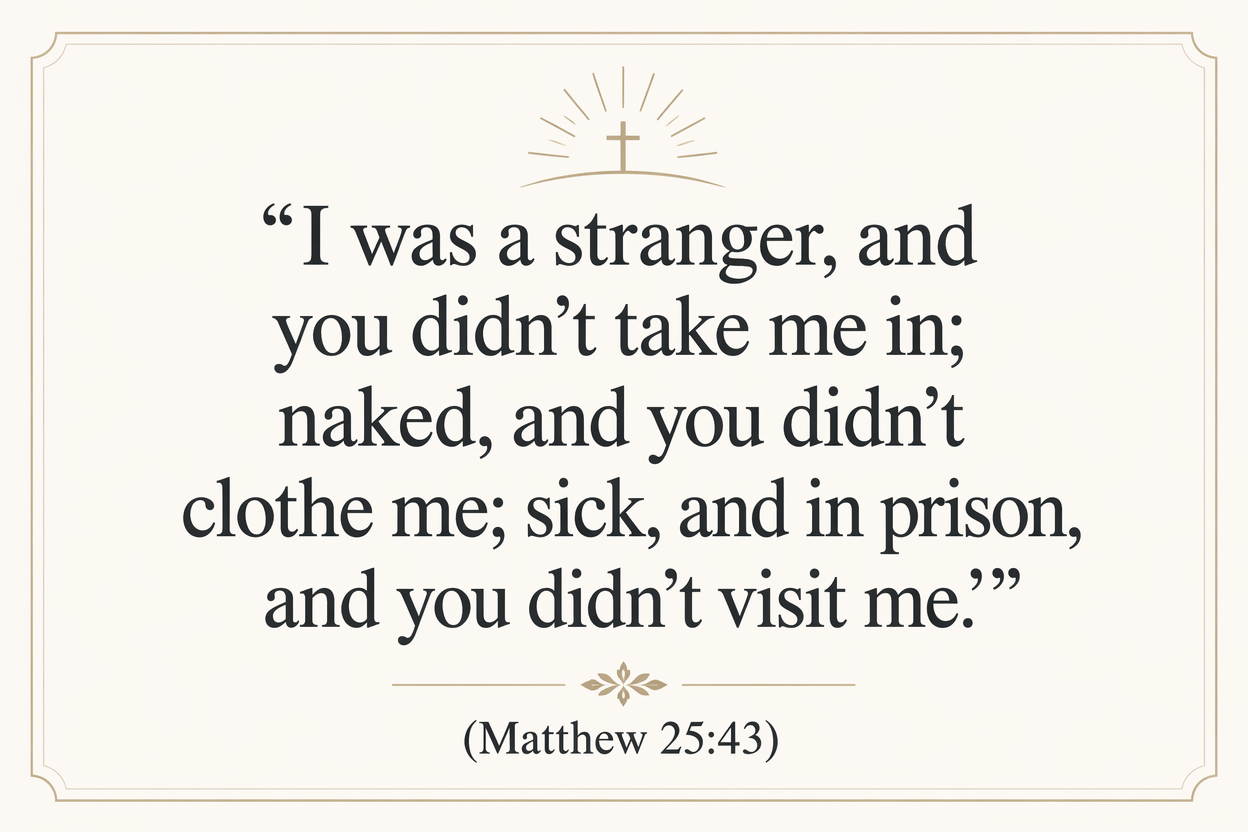
“I was a stranger, and you didn’t take me in; naked, and you didn’t clothe me; sick, and in prison, and you didn’t visit me.’” (Matthew 25:43)
Here ἀσθενής is rendered “sick” and stands alongside conditions of exposure and need: being a stranger without welcome, naked without clothing, and imprisoned without care. The word marks a state of weakness that should have prompted personal attention (“you didn’t visit me”), so the weakness is socially visible and ethically demanding within the scene’s list of neglected mercies.
Matthew 25:44
“Then they will also answer, saying, ‘Lord, when did we see you hungry, or thirsty, or a stranger, or naked, or sick, or in prison, and didn’t help you?’” (Matthew 25:44)
Again translated “sick,” ἀσθενής appears in a defensive reply that repeats the categories of need. Its contribution is to name a recognizable kind of weakness—one that could have been seen and responded to—yet the speakers claim they never perceived the moment of obligation. Within this repetition, the word functions as part of the evidence: weakness that should have been noticed becomes a point of contested recognition.
Matthew 26:41
“Watch and pray, that you don’t enter into temptation. The spirit indeed is willing, but the flesh is weak.” (Matthew 26:41)
In this warning ἀσθενής is “weak” and is predicated of “the flesh,” set in contrast to a “willing” spirit. The weakness here is not described as illness but as susceptibility in the face of temptation: vigilance and prayer are urged because the human condition (“the flesh”) lacks strength to carry through the spirit’s good intention without failing.
Mark 14:38
“Watch and pray, that you may not enter into temptation. The spirit indeed is willing, but the flesh is weak.” (Mark 14:38)
This parallel wording places ἀσθενής in the same antithesis—willing spirit versus weak flesh—reinforcing weakness as a factor that threatens perseverance. In the logic of the sentence, weakness explains why spiritual readiness must be paired with practices (“watch and pray”) that address vulnerability before it becomes actual collapse into temptation.
Luke 9:2
“He sent them out to preach God’s Kingdom and to heal the sick.” (Luke 9:2)
Here ἀσθενής is “the sick,” the object of healing as the disciples are commissioned for a twofold task: proclamation and restoration. The word identifies people whose weakness is bodily enough to require “heal,” placing weakness among the conditions that the mission confronts as a sign of the kingdom’s nearness in their work.
Luke 10:9
“Heal the sick who are there, and tell them, ‘God’s Kingdom has come near to you.’” (Luke 10:9)
Again, ἀσθενής designates “the sick,” but now within a specific locality (“who are there”), tying weakness to concrete communities encountered on the road. Healing the weak and announcing the kingdom are joined in one instruction, so weakness becomes the immediate setting in which the message “has come near” is embodied and confirmed.
Acts 4:9
“if we are examined today concerning a good deed done to a crippled man, by what means this man has been healed,” (Acts 4:9)
In this courtroom-like examination, ἀσθενής lies behind “crippled man” and the repeated emphasis on healing (“has been healed”). Weakness is framed publicly as the occasion for “a good deed,” and the word’s force in the scene is to anchor the discussion in an observable human impairment that demands an account of how strength and restoration came to him.
Acts 5:15
“They even carried out the sick into the streets, and laid them on cots and mattresses, so that as Peter came by, at the least his shadow might overshadow some of them.” (Acts 5:15)
Here ἀσθενής is “the sick,” portrayed in a striking street scene: people are carried out and laid on “cots and mattresses.” The word signals weakness severe enough to require others’ assistance and special arrangements, and it sets the expectation of benefit from proximity to Peter—so weakness becomes the reason for urgent, public movement and hopeful exposure.
Acts 5:16
“The multitude also came together from the cities around Jerusalem, bringing sick people and those who were tormented by unclean spirits: and they were all healed.” (Acts 5:16)
Once more ἀσθενής appears as “sick people,” paired with another afflicted group (“those who were tormented by unclean spirits”). The word contributes a category of weakness within a larger gathering of need, and the closing statement—“they were all healed”—depicts weakness as something decisively reversed in this moment of communal arrival and mass restoration.
Romans 5:6
“For while we were yet weak, at the right time Christ died for the ungodly.” (Romans 5:6)
In this theological statement ἀσθενής is “weak” and describes the condition of “we,” aligned with being “ungodly.” The weakness is not framed as sickness or a need for medical healing; it is the human state that forms the backdrop for Christ’s death “at the right time.” The word thus carries explanatory weight: the act described meets people in weakness rather than waiting for strength.
1 Corinthians 1:25
“because the foolishness of God is wiser than men, and the weakness of God is stronger than men.” (1 Corinthians 1:25)
Here ἀσθενής appears as “weakness” in a provocative comparison: “the weakness of God is stronger than men.” The word functions rhetorically to sharpen contrast; what could be labeled weak—set alongside “foolishness”—is still portrayed as surpassing human strength. Within the sentence, weakness is not a final evaluation but a term placed into a reversal that exposes the limits of human measures.
1 Corinthians 1:27
“but God chose the foolish things of the world that he might put to shame those who are wise. God chose the weak things of the world that he might put to shame the things that are strong.” (1 Corinthians 1:27)
In this selection-and-reversal theme, ἀσθενής is “the weak things of the world,” explicitly contrasted with “the things that are strong.” The word’s contribution is to name what is ordinarily disregarded or discounted, now presented as deliberately chosen for an outcome of public reversal (“put to shame”). Weakness here becomes a category through which strength is challenged and redefined within the argument.

Sense and Usage
Across these passages ἀσθενής consistently marks weakness, but the nature of that weakness shifts with the setting. In Matthew 25 it is weakness that should have been met with compassionate presence; the word belongs to a chain of needs that are obvious enough to be listed, remembered, and rehearsed in dialogue. The weakness of being “sick” is framed as an occasion for visitation and help, so it is not only a personal state but also a test of response.
In Matthew 26:41 and Mark 14:38, weakness is internalized: “the flesh is weak.” The contrast with a “willing” spirit shows weakness operating as a limiting factor that can undermine good intention. The imperative “Watch and pray” places weakness into a practical moral landscape—weakness is something one must account for in order not to “enter into temptation.”
Luke and Acts highlight bodily weakness that draws healing action into public view. Luke joins healing the weak with proclamation of God’s kingdom, presenting weakness as a lived context in which the message comes near. Acts intensifies the public dimension: weakness becomes the basis for examination (“concerning a good deed”), and it produces visible scenes of dependence—people carried into streets, laid out on cots and mattresses, and brought in from surrounding cities. In these accounts, ἀσθενής names those whose weakness gathers community attention and is answered with healing described in comprehensive terms (“they were all healed”).
Paul’s letters extend the word into theological and rhetorical contrasts. Romans 5:6 presents weakness as the human condition in which a decisive act occurs: weakness is paired with “ungodly,” and the timing of Christ’s death is set against that backdrop. In 1 Corinthians 1, weakness becomes a term used to dismantle ordinary hierarchies: “weakness” and “weak things” are set against “strong,” but the argument turns the expected valuation upside down. In these uses, ἀσθενής does not cease to mean weakness; rather, it becomes the stage on which divine action and divine choosing are portrayed as overturning human expectations about where strength truly lies.
Imagery
The word’s imagery ranges from quiet vulnerability—sickness that calls for a visit—to urgent public scenes of the weak laid in streets hoping for help. It also pictures an inner fault line: a willing spirit matched with weak flesh, where weakness is the pressure point that makes watchfulness necessary. Finally, it can be heard as a deliberate paradox in speech: “the weakness of God” and “the weak things of the world,” placed into comparisons that reverse the normal direction of honor and power.
Sources: Lexical data from Strong’s Exhaustive Concordance and the Translators Brief Lexicon of Extended Strongs for Greek (STEPBible, CC BY). Occurrence data from the Translators Amalgamated Greek New Testament (STEPBible, CC BY). Scripture quotations from the World English Bible (public domain).