Exploring the Meaning of Artemon in Greek
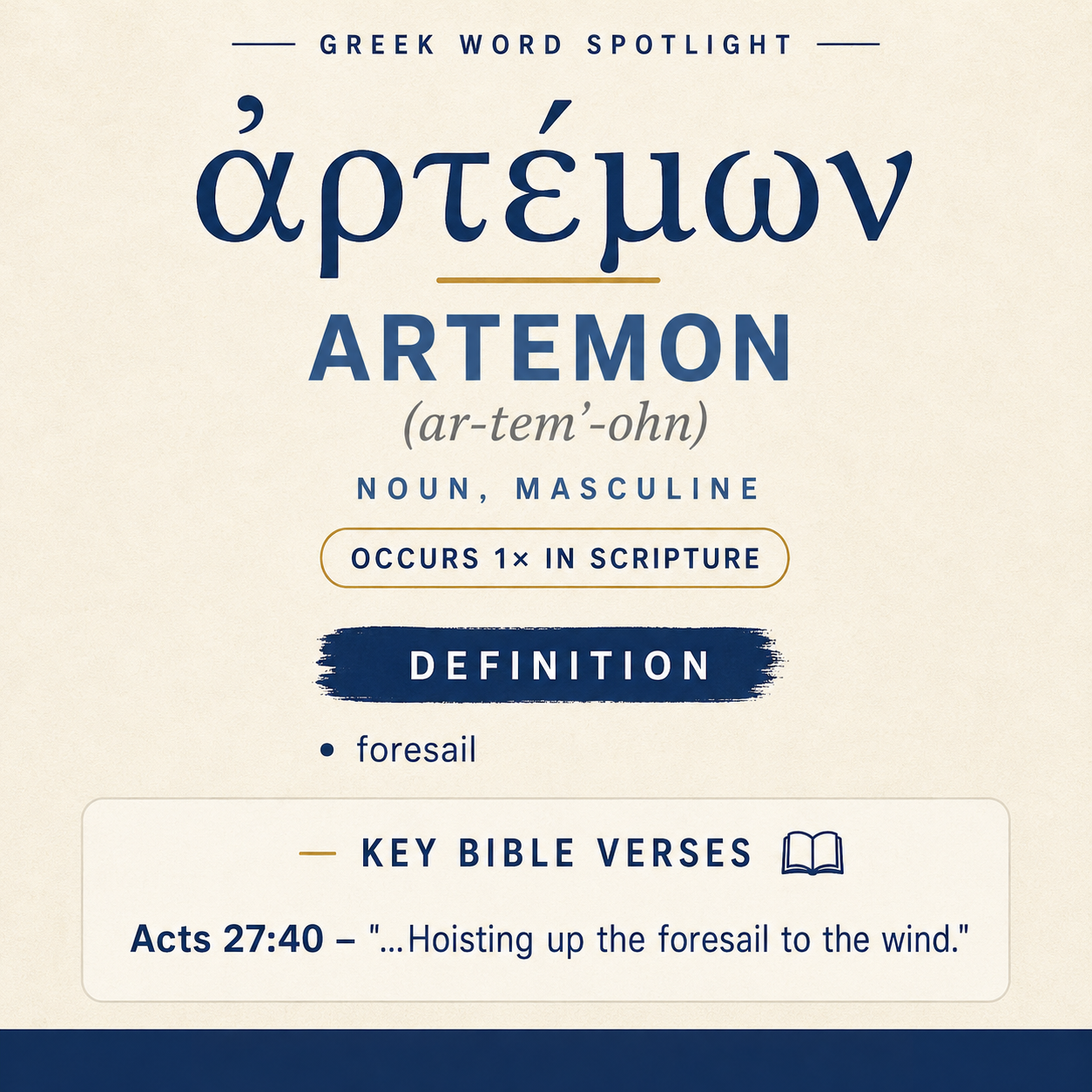
ἀρτέμων means “foresail” and appears once in Scripture, in Acts 27:40.
Scripture Occurrence
This word occurs 1 time in Scripture. Its single occurrence is in Acts 27:40.
Learn More →Verse Context
In Acts 27:40, it appears in a nautical scene describing hoisting up the foresail.
Learn More →ἀρτέμων means “foresail,” a sailing term used once in the New Testament. It appears in the shipwreck narrative of Acts 27, describing a specific action taken as a vessel is driven toward shore.
Root and Related Words
ἀρτέμων is related (per Strong’s) to the adverb ἄρτι (arti), “now” (Strong’s G737).

Occurrences
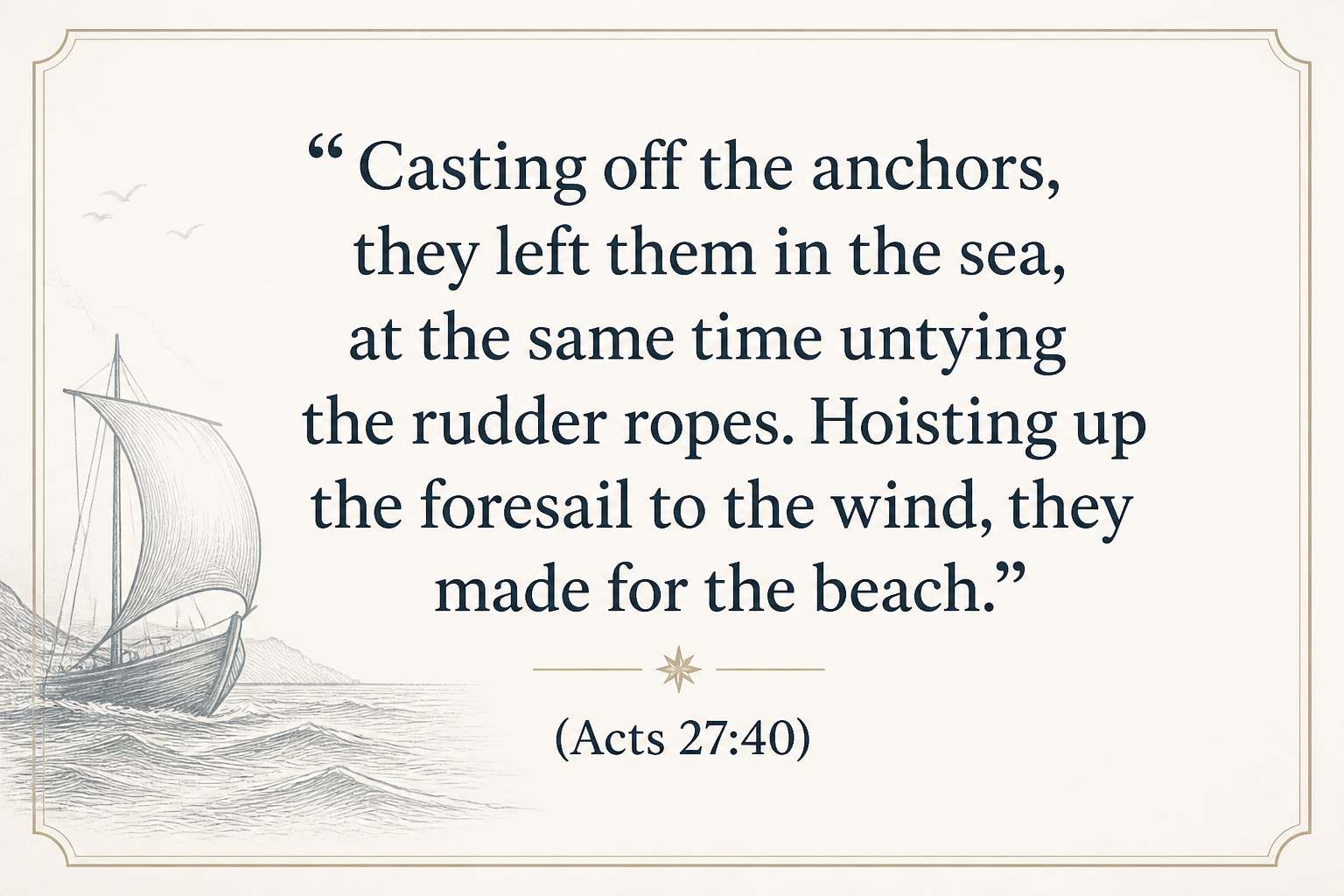
“Casting off the anchors, they left them in the sea, at the same time untying the rudder ropes. Hoisting up the foresail to the wind, they made for the beach.” (Acts 27:40)
Here ἀρτέμων names the sail raised in the final sequence of emergency seamanship: anchors are abandoned, steering control is restored by untying the rudder ropes, and then the sail is hoisted “to the wind” so the ship can “make for the beach.” The term contributes a concrete, technical detail within a tightly linked chain of actions. The narrative is not content to say merely that the ship moved; it describes how the crew coordinated release (casting off anchors), direction (rudder ropes), and propulsion (hoisting the foresail). By specifying the foresail rather than speaking generically of “sails,” the sentence presents the moment as deliberate and practiced: they set a sail in direct relation to the wind in order to drive the vessel toward a chosen landing point (“the beach”).
The placement of the word also shows its function in the scene’s pacing. The participial phrasing (“Hoisting up… they made for the beach”) makes the act of raising the foresail the immediate means by which the ship’s run to shore is attempted. In context, it stands as the final positive maneuver after acts of loss and release—anchors are “left… in the sea,” and only then is the foresail put up. The word therefore anchors the description of forward motion at the decisive moment when the crew commits to beaching the ship.
Sense and Usage
In Acts 27:40, “foresail” functions as a precise label for the sail being raised “to the wind.” The wording implies a sail positioned so that, once hoisted, it can immediately take wind and contribute to controlled movement toward shore. The term’s sense is therefore realized in a setting of navigation under pressure: a sail is not decorative equipment but an instrument employed for a particular purpose at a particular time.
Because ἀρτέμων occurs within a list of coordinated nautical actions, it helps the reader picture the vessel as something managed through distinct components: anchors that can be cast off, rudder ropes that can be untied, and a foresail that can be hoisted. The foresail belongs to the ship’s working gear, and the narrative’s choice to name it supports the realism of the account by tying the ship’s approach to shore to a specific adjustment made in response to wind. The immediate prepositional phrase “to the wind” further defines its use: the foresail is raised in direct orientation to the wind’s force, so that the ship can be driven toward the beach rather than merely drift.
Within this single attestation, the word’s usage carries a strongly situational character. It appears at the hinge between drifting danger and purposeful attempt: after the anchors are abandoned, the crew does not resign itself to the sea but acts to harness the wind. “Hoisting up the foresail” names that harnessing, presenting wind not as an uncontrollable threat but as a force that can be met with the appropriate sail and turned toward a goal (“they made for the beach”).
Imagery
The imagery of ἀρτέμων in Acts 27:40 is the sight of a sail being raised into wind at the edge of landfall. In a sentence full of motion and decision, the foresail stands as the visible sign that the ship’s crew has shifted from holding position (anchors) to steering and driving toward shore, committing themselves to the final run “for the beach.”
Sources: Lexical data from Strong’s Exhaustive Concordance and the Translators Brief Lexicon of Extended Strongs for Greek (STEPBible, CC BY). Occurrence data from the Translators Amalgamated Greek New Testament (STEPBible, CC BY). Scripture quotations from the World English Bible (public domain).