Understanding the Significance of Alethinos in Greek
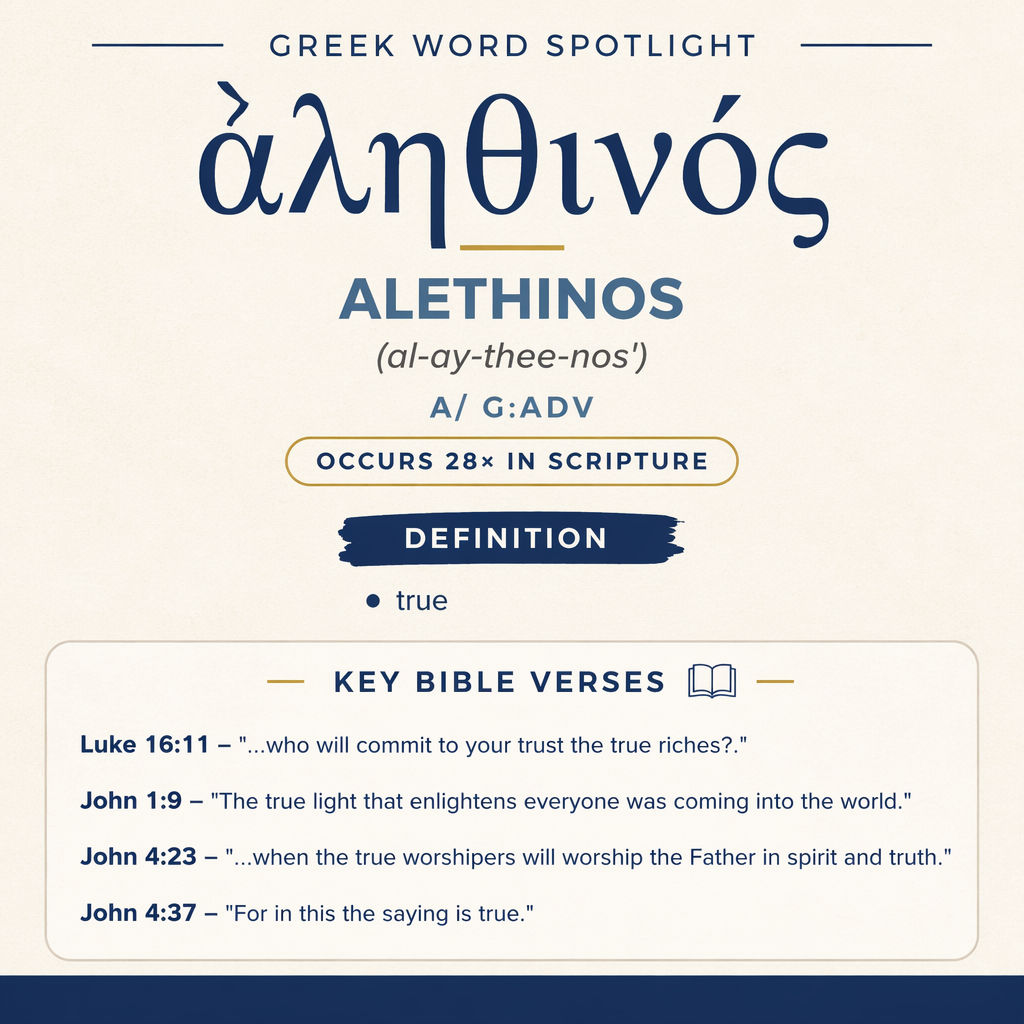
ἀληθινός means “true” and occurs 28 times in Scripture, including Luke 16:11 and multiple passages in John.
Core Meaning
ἀληθινός is defined as “true.” In Scripture it describes what is genuine, such as “true riches” and “true light.”
Learn More →Gospel Occurrences
Examples include Luke 16:11 and John 1:9; 4:23, 4:37; 6:32; 7:28; 8:16; and 15:1. These passages repeatedly use it to qualify key realities in Jesus’ teaching.
Learn More →Key Phrases
John uses ἀληθινός in expressions like “the true light” (John 1:9) and “the true vine” (John 15:1). It also appears in “true worshipers” (John 4:23) and “my judgment is true” (John 8:16).
Learn More →ἀληθινός means “true.” In the passages where it appears, it marks persons, things, worship, judgment, testimony, and even proverbial speech as genuinely what they are claimed to be.
Occurrences
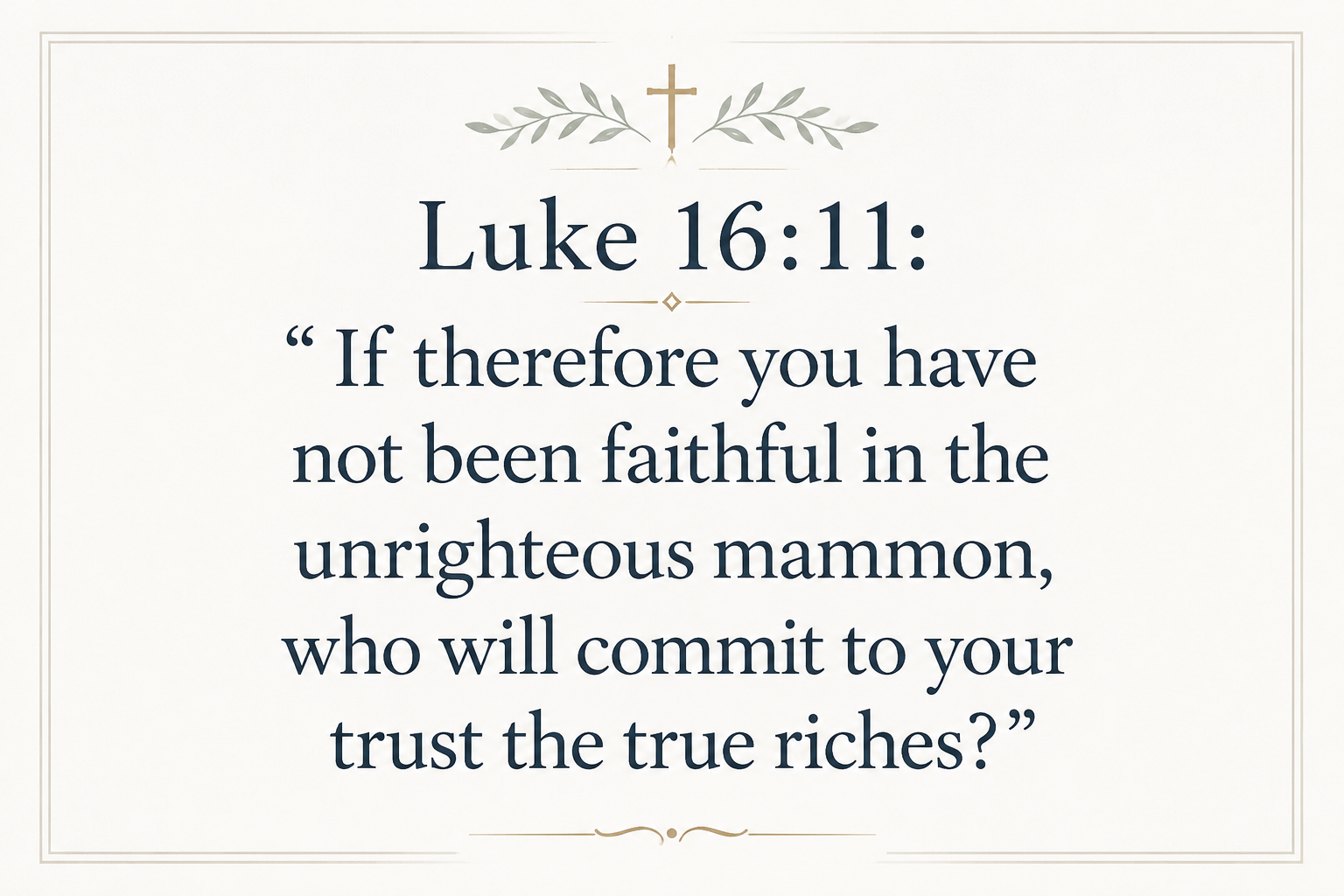
Luke 16:11: “If therefore you have not been faithful in the unrighteous mammon, who will commit to your trust the true riches?”
Here ἀληθινός distinguishes “the true riches” from “unrighteous mammon.” In Jesus’ question, the adjective frames a contrast: unfaithfulness with money raises doubt about being entrusted with what is truly valuable, presented as “riches” of a different order.
John 1:9: “The true light that enlightens everyone was coming into the world.”
In this scene the word modifies “light.” ἀληθινός emphasizes the light’s genuineness in its role: it “enlightens everyone” and is described as “coming into the world,” so the adjective heightens the claim that this light is the real illumination people need.
John 4:23: “But the hour comes, and now is, when the true worshipers will worship the Father in spirit and truth, for the Father seeks such to be his worshipers.”
ἀληθινός qualifies “worshipers,” locating what makes them true in the way they worship: “in spirit and truth.” The statement also attaches this reality to God’s purpose—“the Father seeks such”—so the adjective marks worshipers who match what the Father is looking for.
John 4:37: “For in this the saying is true, ‘One sows, and another reaps.’”
Here the term evaluates a “saying.” ἀληθινός asserts that the proverb accurately fits the situation Jesus is describing, making the maxim more than a familiar phrase: it is a true description of how sowing and reaping can be distributed among different people.
John 6:32: “Jesus therefore said to them, “Most certainly, I tell you, it wasn’t Moses who gave you the bread out of heaven, but my Father gives you the true bread out of heaven.”
ἀληθινός modifies “bread.” The immediate contrast is between what they credit to Moses and what Jesus attributes to “my Father.” Calling it “the true bread out of heaven” presses the point that the Father’s gift is genuinely the bread from heaven, surpassing the crowd’s assumptions about the source.
John 7:28: “Jesus therefore cried out in the temple, teaching and saying, “You both know me, and know where I am from. I have not come of myself, but he who sent me is true, whom you don’t know.”
In the temple setting, ἀληθινός describes “he who sent me.” The adjective strengthens Jesus’ claim about the sender’s character: the sender is “true,” yet the audience “don’t know” him. The word functions polemically, drawing a line between their confidence (“You both know me”) and their ignorance of the true one who sent Jesus.
John 8:16: “Even if I do judge, my judgment is true, for I am not alone, but I am with the Father who sent me.”
ἀληθινός here qualifies “judgment.” Jesus grounds the truth of his judgment in relationship and presence: “I am not alone,” but with “the Father who sent me.” The adjective therefore does not float as a bare claim; it is tied to the stated basis for why his judgment is true.
John 15:1: ““I am the true vine, and my Father is the farmer.”
In this agricultural metaphor, ἀληθινός identifies Jesus as “the true vine.” The statement sets him as the genuine vine within the image, while “my Father is the farmer” provides the relational framework: the vine and the farmer belong together in the picture, and the adjective underscores the vine’s authentic identity.
John 17:3: “This is eternal life, that they should know you, the only true God, and him whom you sent, Jesus Christ.”
ἀληθινός modifies “God” in a tightly focused confession: “the only true God.” The sentence connects eternal life with knowing this true God and “him whom you sent, Jesus Christ,” so the adjective marks the God to be known as the genuine and exclusive referent of such knowledge.
John 19:35: “He who has seen has testified, and his testimony is true. He knows that he tells the truth, that you may believe.”
At this climactic narrative moment, ἀληθινός validates “testimony.” The verse pairs the adjective with an insistence on reliability—“He knows that he tells the truth”—and it states the intended effect: “that you may believe.” The word thus functions as a warrant for belief rooted in eyewitness testimony.
1 Thessalonians 1:9: “For they themselves report concerning us what kind of a reception we had from you, and how you turned to God from idols, to serve a living and true God,”
Here ἀληθινός describes God in a conversion context. The Thessalonians “turned to God from idols” in order “to serve a living and true God.” The adjective sharpens the contrast implied by the turn away from idols: the God now served is characterized as true, set alongside “living” as a defining quality of the one they now worship.
Hebrews 8:2: “a servant of the sanctuary and of the true tabernacle, which the Lord pitched, not man.”
In this description of priestly service, ἀληθινός modifies “tabernacle.” The verse further specifies this tabernacle as one “which the Lord pitched, not man,” and the adjective works with that clause to mark the tabernacle as the genuine one in view, distinguished by divine rather than human construction.

Sense and Usage
Across these occurrences, ἀληθινός consistently operates as an adjective that authenticates the noun it modifies. It can mark something as genuinely valuable (Luke 16:11), genuinely illuminating (John 1:9), genuinely aligned with what God seeks (John 4:23), or genuinely fitting as an assessment of a common maxim (John 4:37). In each case, “true” is not an abstract label attached without context; it functions inside a contrast, a justification, or a purpose statement that shows what “true” does in the argument.
John’s Gospel in particular places ἀληθινός on key terms—light, bread, sender, judgment, vine, God, testimony—so that “true” becomes a way of drawing attention to what should be recognized as real in the midst of misunderstanding or dispute. The adjective can validate what is given (“the true bread out of heaven,” John 6:32), validate who is behind the mission (“he who sent me is true,” John 7:28), or validate the reliability of claims that demand trust (“his testimony is true,” John 19:35). Even when it describes people (“the true worshipers,” John 4:23), it does so by pointing to the defining features of their worship rather than merely praising sincerity.
Several passages show ἀληθινός clarifying identity by narrowing reference. “The only true God” (John 17:3) is a concentrated expression where “true” functions as a marker of the genuine God who is to be known, paired with the sending of Jesus Christ. Similarly, “the true tabernacle” (Hebrews 8:2) is specified by who established it—“the Lord,” “not man”—so “true” works in tandem with the source named in the sentence. In these uses, ἀληθινός does not merely approve; it identifies what counts as the genuine referent of the term being used.
Imagery
The word’s “true” quality is often carried by concrete images: “light” that “enlightens everyone” (John 1:9), “bread out of heaven” given by the Father (John 6:32), and a “vine” tended by a “farmer” (John 15:1). These images make “true” visible and tangible, while other occurrences anchor “true” in relational and judicial settings—being sent by the true one (John 7:28), rendering judgment that is true because the Father is with the Son (John 8:16), and giving testimony that is true so that belief may follow (John 19:35). Together they present “true” as a quality that bears weight in worship, knowledge of God, and trust in witness.
Sources: Lexical data from Strong’s Exhaustive Concordance and the Translators Brief Lexicon of Extended Strongs for Greek (STEPBible, CC BY). Occurrence data from the Translators Amalgamated Greek New Testament (STEPBible, CC BY). Scripture quotations from the World English Bible (public domain).