Exploring the Meaning of Agathoergeo in Greek
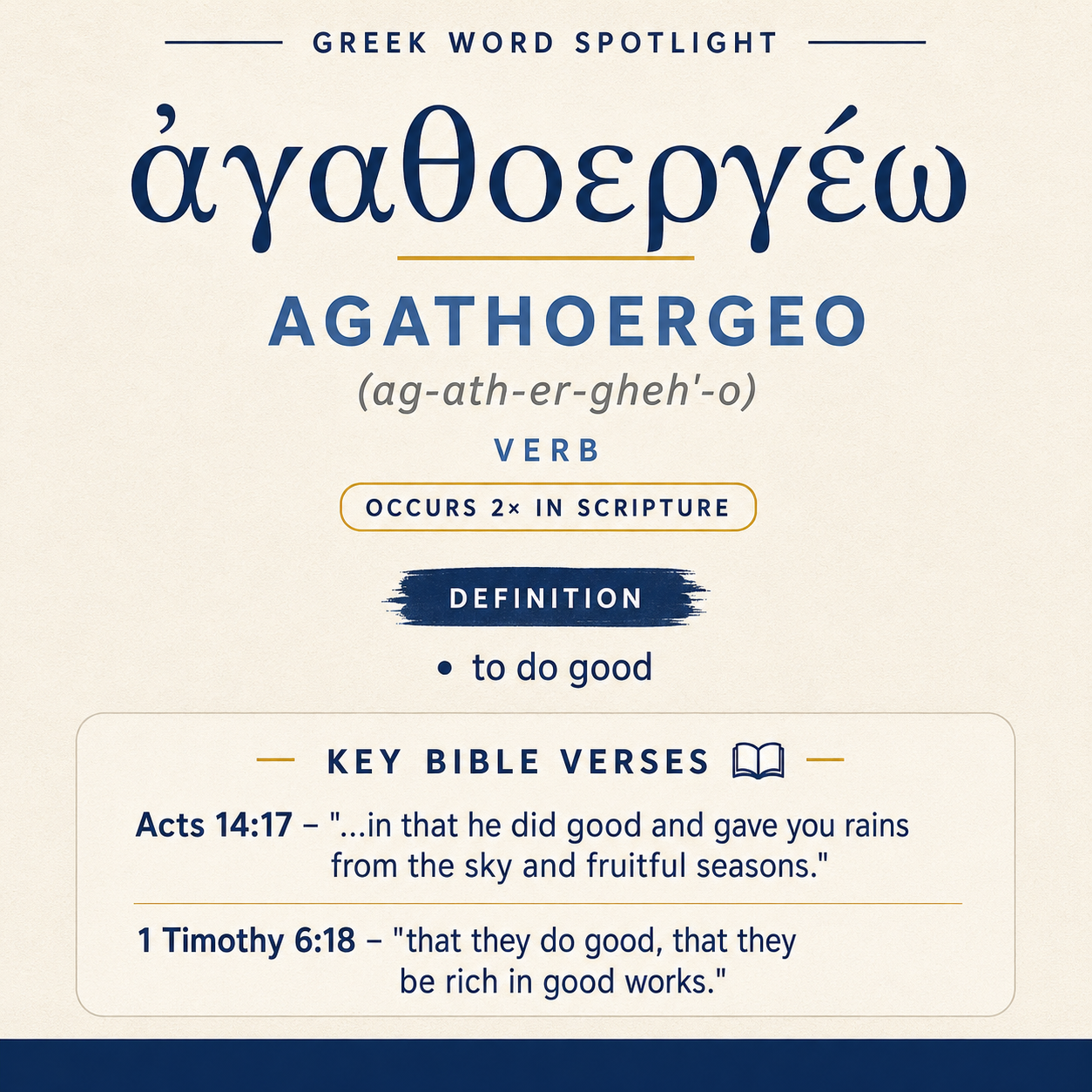
ἀγαθοεργέω means “to do good” and appears in Acts 14:17 and 1 Timothy 6:18.
Context Snapshots
In Acts 14:17, it describes God doing good through rains and fruitful seasons. In 1 Timothy 6:18, it exhorts believers to do good and be rich in good works.
Learn More →ἀγαθοεργέω means “to do good.” It appears in Paul’s speech to pagans at Lystra and in pastoral instruction about the conduct expected of the wealthy.
Root and Related Words
ἀγαθοεργέω is a compound built from ἀγαθός (agathos), “good” (Strong’s G18), and ἔργον (ergon), “work” (Strong’s G2041). The word’s shape links “good” with “work,” presenting “doing good” as something enacted rather than merely spoken.

Occurrences
“Yet he didn’t leave himself without witness, in that he did good and gave you rains from the sky and fruitful seasons, filling our hearts with food and gladness.” (Acts 14:17)
In this sentence, “did good” stands at the head of a series of concrete provisions: “gave you rains from the sky and fruitful seasons,” and the result, “filling our hearts with food and gladness.” The verb frames these gifts as active beneficence rather than random benefit. The good being done is publicly observable: rains, seasons, food, and gladness are presented as “witness.” The verb therefore functions here as a summary label for tangible, recurring kindness that can be seen in the rhythms of life. It gathers multiple actions (giving rain, granting fruitful seasons, filling with food and gladness) into one description of beneficent action.
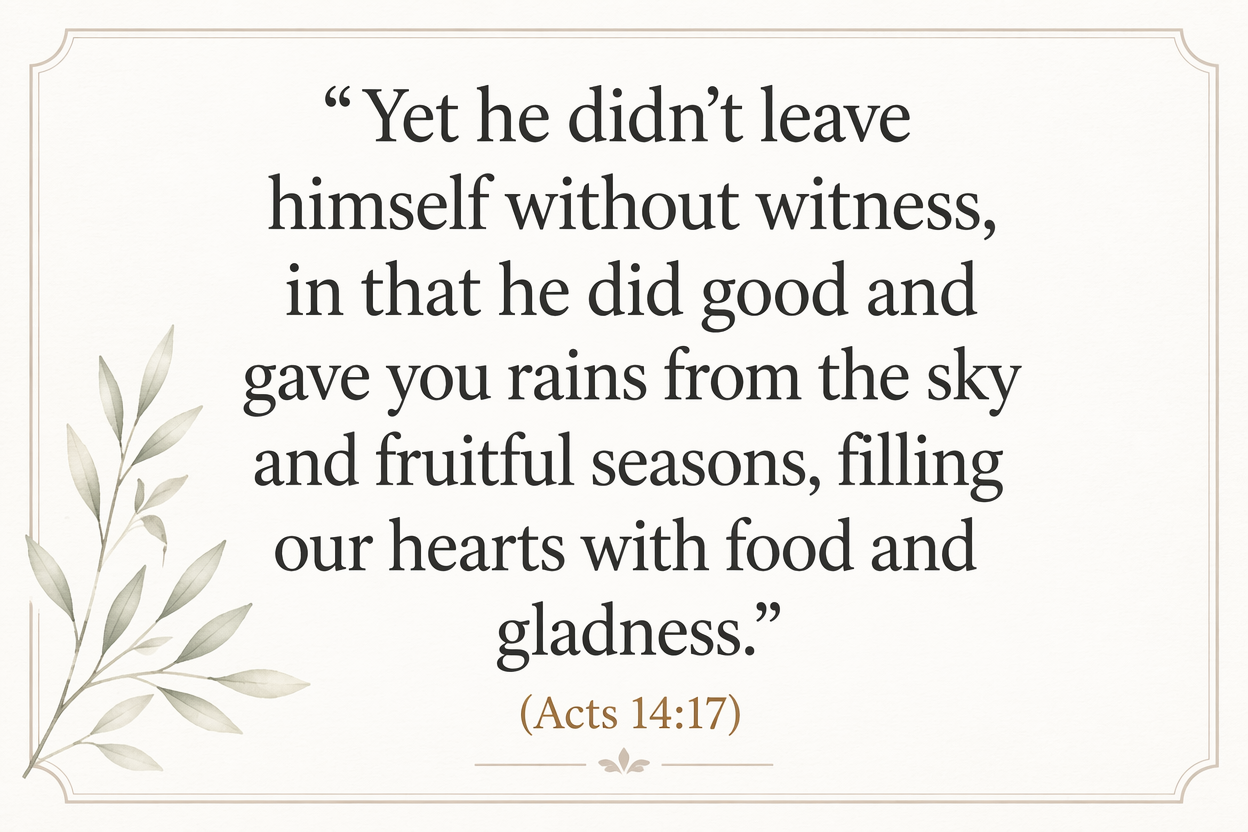
The phrasing also places the action within an argument about knowledge of God: he “didn’t leave himself without witness.” The clause “in that he did good” introduces the evidences that follow, so the “good” is not an abstract quality but a track record demonstrated in provision. The scene turns “doing good” into something with a material footprint—rain, harvest, meals—and an emotional effect—gladness—so that the hearers can recognize it within their own experience.
“that they do good, that they be rich in good works, that they be ready to distribute, willing to share;” (1 Timothy 6:18)
Here “do good” is a charge directed at a particular group (“they”), immediately expanded by parallel expressions: “be rich in good works,” “be ready to distribute,” and “willing to share.” The verb sets the headline expectation, while the following phrases specify what such good looks like in practice within this line of instruction: generosity and a posture of readiness. In this verse, “doing good” is not left vague; it is placed beside “good works” and then narrowed to concrete habits of giving and sharing.
The construction is cumulative: doing good is paired with abundance (“be rich in good works”) and with eagerness (“ready to distribute”) and disposition (“willing to share”). The verb thus contributes a call to active beneficence that expresses itself through repeated, intentional actions toward others. The verse portrays “doing good” as a way of living that can be described in terms of observable deeds and openhandedness.
Sense and Usage
Across these two passages, “to do good” is presented as active beneficence expressed through deeds with real effects. In Acts 14:17, the action is described on the scale of creation’s provisions—rain and fruitful seasons—ending in the everyday realities of “food” and “gladness.” The good is experienced broadly and repeatedly, and it functions as evidence that can be pointed to: it is “witness.” In 1 Timothy 6:18, the action is relocated to human conduct, where “doing good” is shown in generosity—distribution and sharing—framed as consistent practice (“be rich in good works”) and readiness.
The two uses together show the definition “to do good” operating in both divine action and human obligation without changing its essential idea: good is something performed. In Acts, the verb gathers a list of benefactions under one heading; in 1 Timothy, it introduces a list of behaviors that embody beneficence. The word therefore naturally suits contexts where the speaker wants to move from the general concept of good to the concrete enactment of good—either by pointing to gifts already received or by directing readers toward deeds they should carry out.
The immediate companions of the verb in each passage also color its practical profile. In Acts, the good is associated with giving (“gave you rains…”) and filling (“filling our hearts…”), highlighting supply and satisfaction. In 1 Timothy, the good is associated with “works,” “distribute,” and “share,” emphasizing generosity as a recurring form of beneficent action. In both cases, the verb draws attention to goodness that can be traced through results: nourishment, gladness, and tangible help given to others.
Imagery
Acts 14:17 paints “doing good” with the imagery of rain and harvest: “rains from the sky and fruitful seasons,” leading to “food and gladness.” The verb gathers those visible gifts into a single portrayal of beneficent action. 1 Timothy 6:18 shifts the imagery to openhanded giving—being “ready to distribute” and “willing to share”—so that “doing good” is pictured not as an inner attitude but as readiness and generosity expressed in concrete acts.
Sources: Lexical data from Strong’s Exhaustive Concordance and the Translators Brief Lexicon of Extended Strongs for Greek (STEPBible, CC BY). Occurrence data from the Translators Amalgamated Greek New Testament (STEPBible, CC BY). Scripture quotations from the World English Bible (public domain).