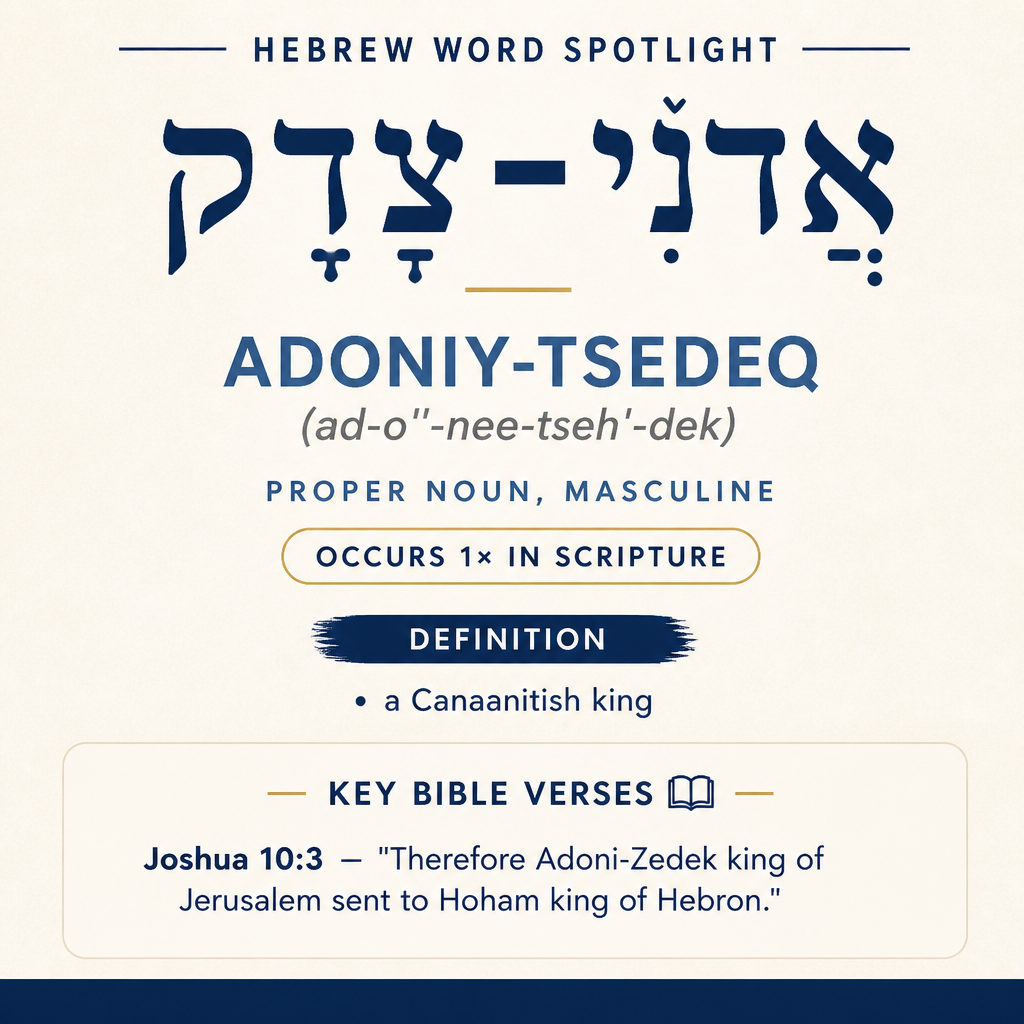
‘Adoniy-Tsedeq
‘Adoniy-Tsedeq Definition
Adoni-zedek = “my lord is righteous”
- Canaanite king slain by
What Does Adoniy-Tsedeq Mean in Hebrew?
Understanding the meaning of the Hebrew term “Adoniy-Tsedeq” can be complex due to its unique components and historical context. “Adoniy-Tsedeq” translates to “My Lord is Righteousness.” This term combines two key Hebrew words: “Adoniy,” which means “my lord,” and “Tsedeq,” meaning “righteousness.” This phrase carries significant implications in biblical texts, particularly in relation to leadership and justice.
The Components of Adoniy-Tsedeq
Adoniy
The word “Adoniy” (אֲדוֹנִי) is derived from “Adon,” meaning “lord” or “master.” It’s often used to refer to someone with authority or socio-political power, such as a king or a chief. In Hebrew literature, it conveys deep respect and recognition of someone’s rightful position. For example, in the story of Abraham, he refers to God as “Adonai,” illustrating a respectful intimacy.
Tsedeq
On the other hand, “Tsedeq” (צֶדֶק) translates to “righteousness” or “justice.” In biblical Hebrew, it encompasses not only moral uprightness but also legal justice. Righteousness represents a crucial characteristic for leaders and judges in ancient Israel, reflecting their duty to uphold fairness and equity. In various passages, particularly in the Psalms, Tsedeq is associated with God’s nature and His expectations for human behavior.
Historical Context of Adoniy-Tsedeq
Biblical References
The term “Adoniy-Tsedeq” appears in the Bible in the context of a king. In Joshua 10:1, we find references to Adonizedek (the Anglicized form of Adoniy-Tsedeq) who was the king of Jerusalem. This figure opposed Israelite conquests and collaborated with other local kings to resist the Israelites led by Joshua.
Leadership Implications
By referring to the king as “Adoniy-Tsedeq,” the biblical narrative emphasizes the king’s responsibility to govern with righteousness. It highlights the expectation that a leader should possess moral integrity and act justly to gain the respect and loyalty of his subjects.
In this instance, Adonizedek’s failure to embody the principles of Tsedeq relates to the challenges he faces against Joshua and the Israelites. This conflict illustrates the broader narrative of good versus evil, righteousness versus tyranny that plays a significant role in biblical storytelling.
Real-World Applications of Adoniy-Tsedeq
Lessons in Leadership
Understanding the term “Adoniy-Tsedeq” provides valuable lessons in contemporary leadership. Today, leaders can draw upon the values embedded in righteousness and justice found in this concept. For instance, a business leader who champions fair practices and equitable treatment among employees reflects a modern-day embodiment of “righteousness” in their industry.
Consider a hypothetical scenario involving a corporate CEO who implements policies favoring diversity and inclusion within their company. By advocating for equitable hiring practices, they embody the principles of Tsedeq. Their efforts create a fair workplace, echoing the biblical tenets tied to the concept of righteous leadership.
Community and Justice
The implications of “Adoniy-Tsedeq” extend to community leaders as well. Take, for example, a school principal who advocates for fair treatment of all students, regardless of their background. They work to ensure that disciplinary actions are administered justly and that all students’ voices are heard—an expression of righteousness in action. This reflects the expectation rooted within the term “Adoniy-Tsedeq,” as they fulfill their role as a leader with integrity.
Theological Dimensions of Adoniy-Tsedeq
God as the Ultimate Righteousness
In theological discourse, “Adoniy-Tsedeq” also prompts deeper reflections on divine nature. In many religious traditions, God is recognized as the ultimate standard of righteousness. For believers, understanding God in the light of “Adoniy-Tsedeq” reveals the expectation that humans strive to emulate divine qualities, promoting a commitment to justice in their lives.
Many religious texts teach that human actions should mirror the characteristics of God, emphasizing qualities such as love, mercy, and justice. Therefore, when believers invoke the term, they acknowledge both God’s calling to righteousness and their own role in upholding those values within their communities.
The Role of Justice in Faith
Faith traditions often advocate for social justice as a reflection of living out “Tsedeq.” For instance, organizations that work to alleviate poverty and promote equity resonate with the concept of Adoniy-Tsedeq. This shows a practical application of the term as it connects spiritual principles with real-world actions, demonstrating how sacred beliefs can influence societal change.
Moreover, this connection between faith and justice can ignite movements aimed at reforming systems seen as unjust, showcasing how the essence of “Adoniy-Tsedeq” can serve as a rallying cry for those advocating for righteousness today.
Language Nuances in Adoniy-Tsedeq
Phonetics and Usage
The pronunciation of “Adoniy-Tsedeq” (ah-do-nee-tseh-dek) often carries significant emphasis in biblical recitations and prayers. Ensuring the correct articulation of this phrase can enhance its impact in religious ceremonies, reflecting the reverence attributed to both the words themselves and the concept of righteousness.
In a practical sense, those who frequently use this term in religious contexts—such as cantors or facilitators in synagogue services—often employ it to invoke a sense of justice and ethical moral consideration in their teachings. Whether through liturgy or study sessions, the phrase serves as a powerful reminder of the core ethical responsibilities laid out within Hebrew scripture.
Modern Interpretations of Adoniy-Tsedeq
Adoniy-Tsedeq in Popular Culture
Even though “Adoniy-Tsedeq” might not be a common term in mainstream culture, its essence can be seen in various forms of media that promote justice and righteousness. Films or books that highlight leaders fighting against corruption resonate with the historical character of Adonizedek. In these narratives, heroic characters often reflect the qualities of “Tsedeq,” battling against oppressive forces.
For example, in modern cinema, protagonists standing up against injustice—like those depicted in superhero films—often embody the moral qualities associated with “Adoniy-Tsedeq.” They fight not only for their own rights but also for those who cannot fight for themselves, showcasing a contemporary application of righteousness that feels eerily similar to the ancient expectations of leaders from biblical texts.
Activism and Righteousness
Activists today can also be seen as modern-day manifestations of “Adoniy-Tsedeq.” Individuals and groups advocating for social change—whether it is environmental justice, racial equality, or human rights—often echo the principle of righteousness that the term embodies. By striving for equality and fairness within society, these leaders project their values in line with the essence of “Adoniy-Tsedeq.”
For instance, a grassroots organization focused on providing education to underprivileged communities operates under the ideals of justice and righteousness. This parallels the significance of the term as they work towards establishing a fairer system for all, embodying the faith that drives movements aimed at social change across various contexts.
Conclusion of Adoniy-Tsedeq Meaning
The detailed examination of “Adoniy-Tsedeq” reveals its rich historical, theological, and cultural dimensions. Its components reflect a profound understanding of authority intertwined with a commitment to righteousness. By harnessing the meaning of this term, individuals can find inspiration in leadership styles and community interactions that emphasize justice and equity. Whether in business, education, or advocacy, the principles of “Adoniy-Tsedeq” continue to resonate today, encouraging the pursuit of righteousness in all walks of life.
Little Known Secrets
The meaning of the name Adoniy-Tsedeq is rich with history and significance in Hebrew culture.
- Literally translates: Adoniy-Tsedeq means “My Lord is Righteous” in Hebrew. “Adoniy” comes from “Adon,” which means “lord” or “master,” while “Tsedeq” means “righteousness” or “justice.”
- Biblical reference: Adoniy-Tsedeq appears in the Bible in the context of a king of Jerusalem during the time of Joshua, showcasing the title’s importance for leadership and moral standing.
- Titles and authority: The use of “Adoniy” emphasizes not just authority but a divine connection to righteousness, suggesting that a true leader is one who embodies justice.
- Canaanite roots: The name reflects the cultural and religious practices of ancient Canaan, where kings often aligned themselves with gods of justice, making it more than just a personal title.
- Symbol of righteousness: In biblical context, the name represents a challenge; Adoniy-Tsedeq faced Joshua, symbolizing the struggle between righteousness and opposition.
- Suffix significance: The suffix “-iy” in “Adoniy” denotes a personal relationship, suggesting that the concept of lordship is intimately tied to the character of righteousness, not merely a title of power.
- Historical implications: The emergence of kings like Adoniy-Tsedeq highlights the tensions between different cultures and their religious beliefs during the time of Israel’s conquest of Canaan.
- Contrast with other kings: Unlike other kings mentioned in the Bible who are often portrayed negatively, Adoniy-Tsedeq’s title of righteousness invites deeper exploration of his character and actions.
- Moral lessons: The emphasis on “Tsedeq” demonstrates that the Hebrew Bible often intertwines ethics with leadership, stressing that true success relies on moral governance.
- Variations in translations: Different translations of the Bible may render Adoniy-Tsedeq in various ways, affecting how readers perceive his role and significance in biblical history.
Conclusion
In summary, the name Adoniy-Tsedeq combines two important Hebrew words: “Adoniy,” meaning “my lord,” and “Tsedeq,” which means “righteousness” or “justice.” Together, they highlight values of authority and fairness. This name appears in the Bible, specifically referring to a king of Jerusalem during the time of Joshua. Understanding this name helps us see how the ancient Hebrews viewed leadership and justice, emphasizing that true leaders should also be just and fair. As we explore more about Hebrew words, we uncover deeper meanings that enrich our understanding of biblical stories and characters.
Common Questions Related to What Does Adoniy-Tsedeq Mean In Hebrew
Q. What does the word “Adoniy” mean in Hebrew?
A. “Adoniy” means “my lord” or “my master” in Hebrew. It is a term of respect and authority.
Q. What does “Tsedeq” mean in Hebrew?
A. “Tsedeq” means “righteousness” or “justice” in Hebrew. It refers to being fair and moral.
Q. Who is Adoniy-Tsedeq in the Bible?
A. Adoniy-Tsedeq is a king mentioned in the Book of Joshua. He ruled over Jerusalem and opposed the Israelites.
Q. What is the significance of the name Adoniy-Tsedeq?
A. The name Adoniy-Tsedeq signifies a ruler who embodies righteousness and justice, although he opposed God’s people.
Q. How is Adoniy-Tsedeq described in the Bible?
A. Adoniy-Tsedeq is described as a strong king who feared the Israelites because of their victories and Israel’s God.
Q. Why is the concept of righteousness important in Hebrew culture?
A. Righteousness is important because it reflects a person’s moral integrity and their relationship with God and others.
Q. What roles do leaders like Adoniy-Tsedeq play in biblical stories?
A. Leaders in biblical stories often represent either the fulfillment of God’s promises or the opposition to His will.
Q. What can we learn from the story of Adoniy-Tsedeq?
A. We can learn about the consequences of opposing God and the importance of justice in leadership.
Q. How does the name Adoniy-Tsedeq reflect his character?
A. The name suggests that he had a title of authority (“Adoniy”) but did not live up to the ideals of righteousness (“Tsedeq”).
Q. Is Adoniy-Tsedeq a positive or negative figure in the Bible?
A. He is generally viewed as a negative figure because he opposed the Israelites and did not follow God’s ways.