Exploring the Meaning of Cheiron in Greek
χείρων means “worse than” and occurs 11 times in Scripture, including Matthew, Mark, Luke, John, and 1 Timothy.
Core Meaning
χείρων expresses a comparative sense: “worse than.” It marks a condition or outcome as worse in contrast to something else.
Learn More →Gospel Usage
It appears in Gospel warnings about a “worse” outcome or state (Matthew 9:16; 12:45; 27:64; Mark 2:21; 5:26; Luke 11:26; John 5:14). These contexts include worsening conditions and more evil spirits.
Learn More →Epistle Example
In 1 Timothy 5:8, χείρων is used to describe someone as “worse than” another. The verse connects this comparison to providing for one’s household.
Learn More →Cheiron expresses a comparative worsening—something turns out “worse than” a prior condition, expectation, or standard. Across its New Testament uses, it marks deterioration (a situation becoming more harmful or severe) and intensifies warnings by contrasting an earlier state with a later, more damaging one.

Occurrences
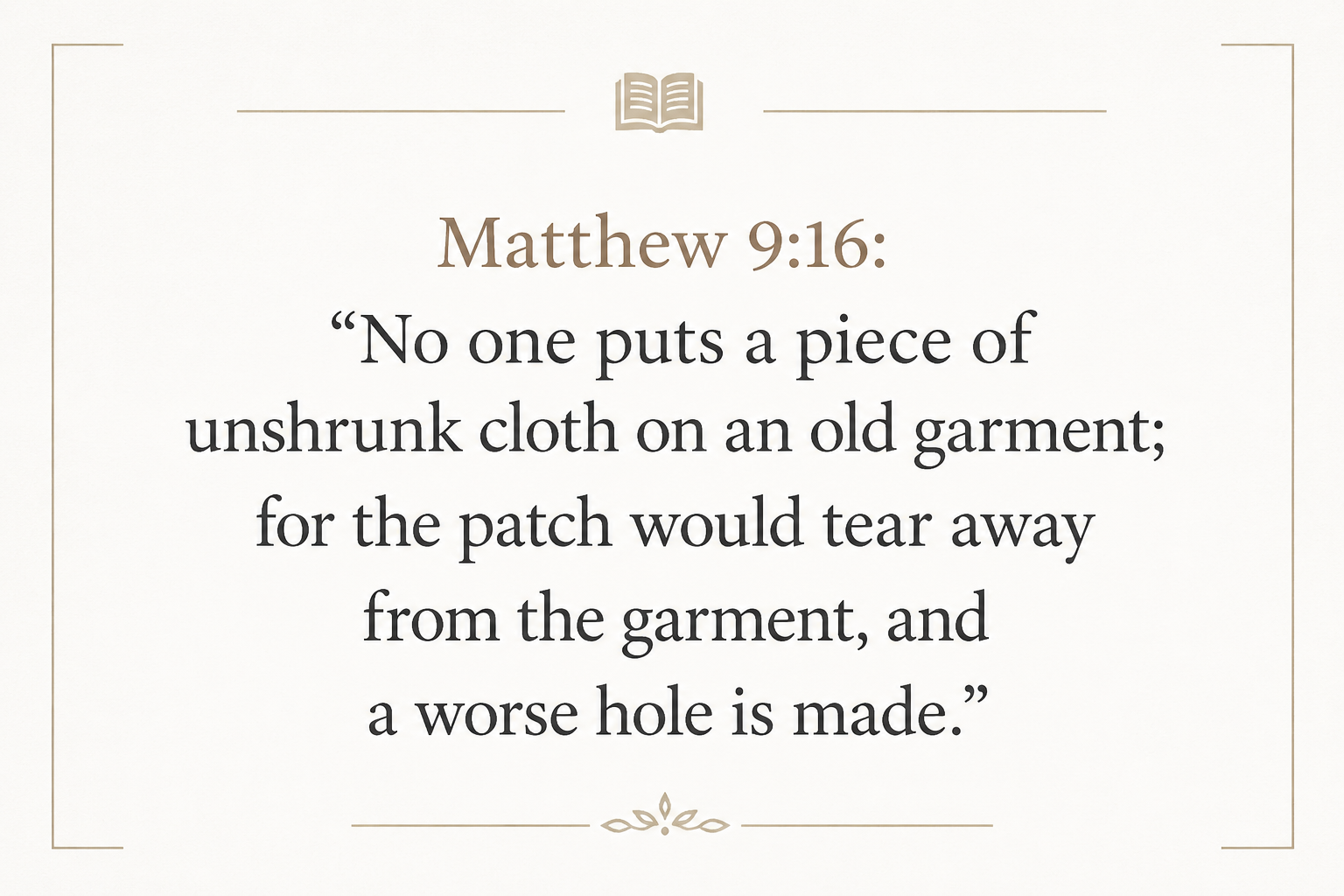
Matthew 9:16: “No one puts a piece of unshrunk cloth on an old garment; for the patch would tear away from the garment, and a worse hole is made.”
Here cheiron sharpens the point of the clothing illustration: an attempted repair does not merely fail but produces a more damaging result than the original tear. The “worse hole” is the tangible outcome of mixing what does not fit, where the remedy multiplies the harm.
Matthew 12:45: “Then he goes, and takes with himself seven other spirits more evil than he is, and they enter in and dwell there. The last state of that man becomes worse than the first. Even so will it be also to this evil generation.”
Cheiron frames the warning about relapse after deliverance: the “last state” is compared directly to the “first,” and the later condition is portrayed as a deeper misery. The comparative sets the force of the warning—returning to an emptied life does not reset things to the starting point; it ends in a more grievous outcome.
Matthew 27:64: “Command therefore that the tomb be made secure until the third day, lest perhaps his disciples come at night and steal him away, and tell the people, ‘He is risen from the dead;’ and the last deception will be worse than the first.”
In this request for a secured tomb, cheiron measures a feared escalation in public deception. The leaders imagine two stages—an initial “deception” and a later one—and insist the latter would surpass the former in severity and consequence. The comparative is rhetorical: it supplies urgency to the preventative action they seek.
Mark 2:21: “No one sews a piece of unshrunk cloth on an old garment, or else the patch shrinks and the new tears away from the old, and a worse hole is made.”
As in Matthew’s parallel, cheiron labels the end result of an ill-matched patch: the damage is increased. The “worse hole” is not simply a larger tear; it represents the net effect of an incompatible fix that intensifies the problem instead of resolving it.
Mark 5:26: “and had suffered many things by many physicians, and had spent all that she had, and was no better, but rather grew worse,”
Cheiron describes deterioration over time despite repeated attempts at help. The verse contrasts expectations (“no better”) with reality (“grew worse”), so the comparative signals the downward trajectory of her condition—effort and expense culminate not in improvement but in increased suffering.
Luke 11:26: “Then he goes, and takes seven other spirits more evil than himself, and they enter in and dwell there. The last state of that man becomes worse than the first.”
Luke’s form of the warning repeats the same comparative logic: a former state is bad, but the later state is worse. Cheiron anchors the caution against superficial change; the comparative contrast is essential to the warning’s weight, depicting a second condition that exceeds the first in misery.
John 5:14: “Afterward Jesus found him in the temple, and said to him, “Behold, you are made well. Sin no more, so that nothing worse happens to you.”
Cheiron appears inside a personal admonition that links moral direction (“Sin no more”) to the possibility of a negative outcome (“nothing worse happens to you”). The comparative does not specify the nature of the potential harm in the sentence itself; it functions by placing any future consequence on a scale where it would exceed what has already been endured.
1 Timothy 5:8: “But if anyone doesn’t provide for his own, and especially his own household, he has denied the faith, and is worse than an unbeliever.”
Cheiron here evaluates a person’s standing by comparison: neglecting one’s household renders someone “worse than an unbeliever.” The comparative heightens the moral judgment by placing the offender below a baseline category named in the verse, presenting the failure as a serious breach with a stark ranking.
2 Timothy 3:13: “But evil men and impostors will grow worse and worse, deceiving and being deceived.”
Cheiron is doubled to express compounding decline: “worse and worse.” The comparative is not tied to a single before-and-after moment but to an ongoing progression, where deception both practiced and experienced marks a continuing intensification of evil.
Hebrews 10:29: “How much worse punishment do you think he will be judged worthy of who has trodden under foot the Son of God, and has counted the blood of the covenant with which he was sanctified an unholy thing, and has insulted the Spirit of grace?”
Cheiron intensifies an argument about culpability and judgment: “How much worse punishment” invites the reader to weigh a penalty exceeding an implied standard of punishment. The comparative underscores the gravity of the actions described in the verse—contempt, desecration, and insult—and presses the logic that such acts merit a more severe outcome.
2 Peter 2:20: “For if, after they have escaped the defilement of the world through the knowledge of the Lord and Savior Jesus Christ, they are again entangled in it and overcome, the last state has become worse for them than the first.”
Cheiron marks a tragic reversal: an initial escape is followed by renewed entanglement and defeat, and the resulting “last state” is compared to the “first” as worse. The comparative is central to the warning—returning to defilement after a genuine deliverance leads not back to the starting line but to a more damaging condition.

Sense and Usage
Cheiron consistently functions as the language of comparison, not merely stating that something is bad but setting it against a prior point of reference and placing it lower on a scale of well-being, safety, integrity, or outcome. In the garment illustrations (Matthew 9:16; Mark 2:21), the comparison is concrete and immediate: an action meant to help produces a “worse” tear, making cheiron a word of practical consequence. In the healing narrative (Mark 5:26), the comparison is experiential and temporal: prolonged effort results in worsening rather than improvement, and cheiron captures that reversal of hope.
In several warnings, cheiron gives the moral and spiritual logic its sharp edge by contrasting “first” and “last” states (Matthew 12:45; Luke 11:26; 2 Peter 2:20). The comparative implies that later conditions can surpass earlier ones in severity, so the danger is escalation. John 5:14 uses the same comparative framework on an individual level, linking the command to stop sinning with the possibility of a worse outcome, thereby placing future consequences on a scale defined by what has already happened.
Cheiron also serves evaluative and argumentative purposes. In 1 Timothy 5:8 it ranks a person’s moral position (“worse than an unbeliever”) to convey seriousness through comparison. In 2 Timothy 3:13, the repeated comparative (“worse and worse”) depicts worsening as a pattern, an intensifying trajectory of deception. Hebrews 10:29 employs cheiron in a rhetorical question to press the mind toward a heavier verdict—“How much worse punishment”—so the comparative becomes a tool for moral reasoning, pushing the reader to recognize an increase in deserved consequence.
Imagery
The passages give cheiron vivid contours: a tear in fabric that becomes more destructive (Matthew 9:16; Mark 2:21), an illness that does not plateau but declines (Mark 5:26), and “first” and “last” states that portray worsening as a measurable descent (Matthew 12:45; Luke 11:26; 2 Peter 2:20). Even where the setting is judicial or communal (Matthew 27:64; Hebrews 10:29), cheiron keeps the focus on escalation—an outcome feared or deserved that is heavier than what came before.
Sources: Lexical data from Strong’s Exhaustive Concordance and the Translators Brief Lexicon of Extended Strongs for Greek (STEPBible, CC BY). Occurrence data from the Translators Amalgamated Greek New Testament (STEPBible, CC BY). Scripture quotations from the World English Bible (public domain).