
Exploring the Meaning of Samareitis in Greek
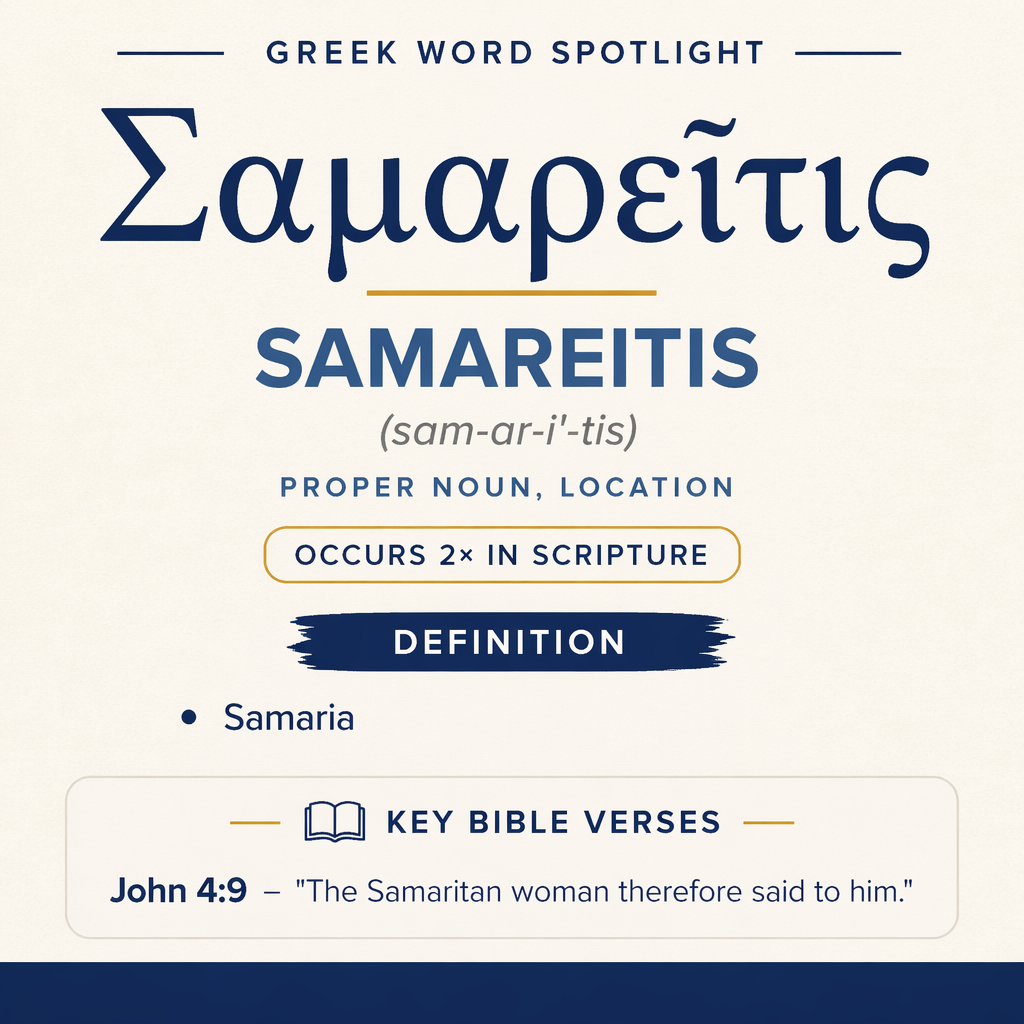
Σαμαρεῖτις (Samareitis) means “Samaria” and appears in the Gospel of John, including John 4:9.
John 4:9 Context
In John 4:9, it appears in the phrase “a Samaritan woman” in the woman’s words to Jesus.
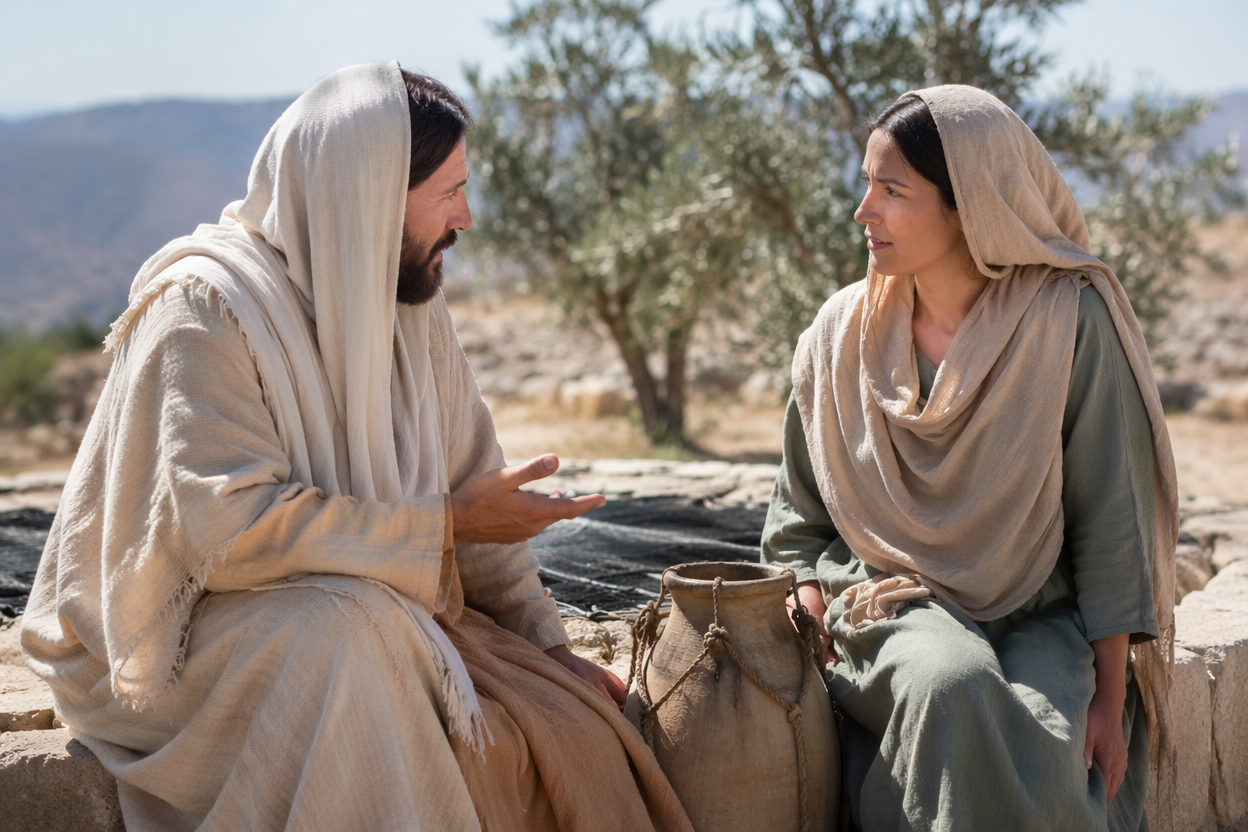
Learn More →Σαμαρεῖτις refers to Samaria and appears in the dialogue at Jacob’s well in John 4. In that scene it frames the woman’s self-description over against Jesus’ Jewish identity and brings social boundaries into the conversation.
Root and Related Words
Σαμαρεῖτις (Samareitis) is related to Σαμαρείτης (Samareites), meaning “Samaritan” (Strong’s G4541). The relationship between the two forms connects the place-name sense with a term used for a person associated with that locale.
Occurrences
John 4:9 — “The Samaritan woman therefore said to him, “How is it that you, being a Jew, ask for a drink from me, a Samaritan woman?” (For Jews have no dealings with Samaritans.)”
Here Σαμαρεῖτις is embedded in the woman’s own identification: she is “a Samaritan woman,” and she places that identity alongside Jesus’ being “a Jew.” The force of the word in this line is not merely descriptive but contrastive: it names the regional identity that, in her words, makes Jesus’ request—“ask for a drink from me”—socially unexpected. The parenthetical explanation, “For Jews have no dealings with Samaritans,” draws the reader’s attention to the practical consequences of this distinction in ordinary life: even a basic request for water carries the weight of established separation.
Within the verse, the term functions as the hinge of the woman’s question. She does not ask first about the water or the well; she asks about the mismatch between identities implied by “you, being a Jew” and “me, a Samaritan woman.” By placing her own designation in parallel with his, the word marks the boundary line that she assumes should govern interaction. The setting implied by “ask for a drink” makes the point concrete: at the level of shared vessels and shared water, her Samarian identity is presumed to restrict normal hospitality and exchange.
Sense and Usage
The definition “Samaria” comes into focus through the way the term is used to locate a person socially. In John 4:9, the place-name sense is carried into personal identification: “Samaritan” is the lived expression of belonging to Samaria, and that belonging is treated as a meaningful category in a face-to-face encounter. The word thus contributes a geographic label that, in practice, signals group membership and the expectations attached to that membership.
Because the verse pairs the woman’s designation with Jesus’ Jewish identity, Σαμαρεῖτις operates as a marker of difference that is immediately relational: it matters because it defines how each party is expected to behave toward the other. The woman’s surprise shows that the term is not neutral in this context; it is a recognized dividing line that shapes what seems appropriate, even in an everyday act like giving someone a drink. The explanatory aside reinforces the same point by stating the broader social reality that stands behind her question.
In this scene the word’s contribution is also rhetorical. The woman names herself with the term while speaking directly to Jesus; it is not applied to her from the outside in the quoted line, but voiced as part of her own reasoning. That makes Σαμαρεῖτις an element of self-understanding: it is how she interprets the situation and why she interprets Jesus’ request as unusual. The passage therefore shows the term functioning at the intersection of place, identity, and social practice.
Imagery
In John 4:9, Σαμαρεῖτις gathers its imagery around the simple, tangible act of drawing water and the complicated, intangible boundaries of communal life. A request for “a drink” becomes the occasion for naming Samaria as a category that people carry with them into conversation, shaping what they expect from one another at the edge of a shared well.
Sources: Lexical data from Strong’s Exhaustive Concordance and the Translators Brief Lexicon of Extended Strongs for Greek (STEPBible, CC BY). Occurrence data from the Translators Amalgamated Greek New Testament (STEPBible, CC BY). Scripture quotations from the World English Bible (public domain).





