Exploring the Meaning of Paideuo in Greek
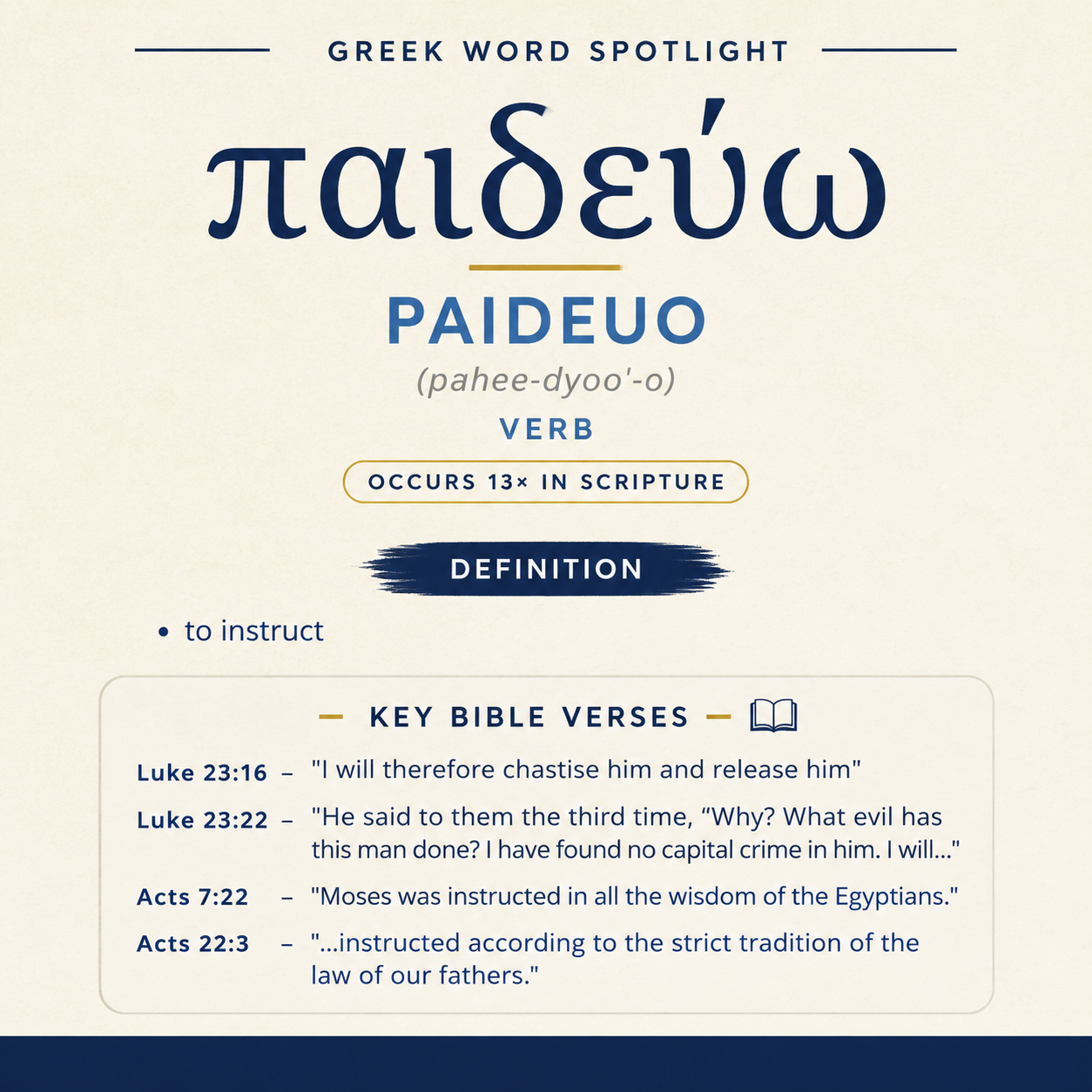
παιδεύω (Paideuo) means “to instruct” and occurs 13 times in Scripture, including Luke 23:16–22, Acts 7:22, Acts 22:3, and multiple epistles.
Core Meaning
παιδεύω is defined as “to instruct.” In several passages it is rendered with ideas of chastising or punishment (Luke 23:16; 1 Corinthians 11:32).
Learn More →Narrative Examples
Acts 7:22 uses it for Moses being instructed in all the wisdom of the Egyptians. Acts 22:3 uses it for being instructed at the feet of Gamaliel.
Learn More →Corrective Context
It appears in disciplinary or corrective settings, including being punished by the Lord (1 Corinthians 11:32) and being taught not to blaspheme (1 Timothy 1:20).
Learn More →παιδεύω expresses the act of instructing, and in these passages it appears in settings ranging from formal education to corrective measures. The occurrences show instruction given through teaching, training, and disciplinary action within legal, communal, and familial relationships.
Occurrences
“I will therefore chastise him and release him.” (Luke 23:16)
Here the verb sits inside a judicial decision: the speaker proposes a course of action that pairs chastisement with release. Within this sentence, παιδεύω supplies the purposeful step between accusation and freedom—an action taken toward the man before he is let go.
He said to them the third time, “Why? What evil has this man done? I have found no capital crime in him. I will therefore chastise him and release him.” (Luke 23:22)
This repetition places the proposed chastisement in explicit contrast with “capital crime.” The speaker’s reasoning turns on proportion: because no death-worthy offense is found, the stated alternative is to chastise and then release. παιδεύω therefore functions as a measured, lesser response within a legal evaluation of guilt and punishment.
Moses was instructed in all the wisdom of the Egyptians. He was mighty in his words and works. (Acts 7:22)
In this account, παιδεύω describes Moses’ education: he is “instructed in all the wisdom of the Egyptians.” The scope (“all the wisdom”) highlights comprehensive formation, and the following clause (“mighty in his words and works”) frames this instruction as shaping competence and capability.
“I am indeed a Jew, born in Tarsus of Cilicia, but brought up in this city at the feet of Gamaliel, instructed according to the strict tradition of the law of our fathers, being zealous for God, even as you all are today. (Acts 22:3)
Here παιδεύω belongs to a self-description of upbringing and training. The speaker links being “brought up… at the feet of Gamaliel” with being “instructed according to the strict tradition of the law of our fathers.” Instruction is thus presented as transmission of a defined tradition, with zeal portrayed as a lived outcome of that training.
But when we are judged, we are punished by the Lord, that we may not be condemned with the world. (1 Corinthians 11:32)
In this line, παιδεύω is attached to divine action: “punished by the Lord.” The purpose clause (“that we may not be condemned with the world”) frames the punitive aspect as corrective and preventative within judgment. Instruction is communicated through an adverse experience that aims at a different final verdict.
as unknown, and yet well known; as dying, and behold, we live; as punished, and not killed; (2 Corinthians 6:9)
Here παιδεύω appears in a series of contrasts describing the apostolic condition. “Punished, and not killed” places punitive treatment alongside continued life. The word contributes the idea of being subjected to chastening experiences while preserved, underscoring endurance under corrective or harsh treatment without destruction.
of whom are Hymenaeus and Alexander, whom I delivered to Satan, that they might be taught not to blaspheme. (1 Timothy 1:20)
In this personal note, παιδεύω is explicitly pedagogical: the goal is “that they might be taught not to blaspheme.” The surrounding action (“delivered to Satan”) shows instruction pursued through severe communal discipline, but the stated endpoint remains learning—a change in behavior regarding speech about God.
in gentleness correcting those who oppose him: perhaps God may give them repentance leading to a full knowledge of the truth, (2 Timothy 2:25)
Although the verse uses “correcting,” the scene defines the manner and hope of παιδεύω: it is done “in gentleness” toward “those who oppose him,” with an eye to repentance and “a full knowledge of the truth.” Instruction here is relational and patient, aiming at inner change and clearer grasp of what is true.
instructing us to the intent that, denying ungodliness and worldly lusts, we would live soberly, righteously, and godly in this present age; (Titus 2:12)
In Titus, παιδεύω is ongoing moral formation. The verb governs a lived curriculum: instruction has a stated purpose (“to the intent that”) and tangible results—denial of ungodliness and lusts, and a sober, righteous, godly manner of life. The setting (“in this present age”) emphasizes instruction as shaping conduct in ordinary time, not merely conveying information.
for whom the Lord loves, he disciplines, and chastises every son whom he receives.” (Hebrews 12:6)
This line places παιδεύω within a family framework where love, reception, and chastisement are held together. Instruction is described as discipline administered by the Lord to “every son whom he receives.” The word contributes the idea that corrective action belongs to the relationship, not outside it.
It is for discipline that you endure. God deals with you as with children, for what son is there whom his father doesn’t discipline? (Hebrews 12:7)
Here παιδεύω is interpreted as the meaning of endurance: “It is for discipline that you endure.” The rhetorical question about a father and son sets instruction inside normal parental practice. The verb thus frames hardship not as random suffering but as purposeful training within a child-parent analogy.
For they indeed, for a few days, punished us as seemed good to them; but he for our profit, that we may be partakers of his holiness. (Hebrews 12:10)
In this contrast between human parents and God, παιδεύω appears as “punished us” and is evaluated by its aim. Human discipline lasts “for a few days” and follows what “seemed good to them,” while God’s discipline is “for our profit,” oriented toward sharing in “his holiness.” The word contributes the concept of instruction through discipline with a defined moral end.
Sense and Usage
Across these texts, παιδεύω consistently involves intentional formation: someone acts to shape another person’s understanding or conduct. The settings show that instruction can be conveyed through structured learning (Moses “instructed in all the wisdom of the Egyptians,” and a later speaker “instructed according to the strict tradition of the law of our fathers”), through corrective conversation (“in gentleness correcting those who oppose him”), and through disciplinary measures that aim at change (“that they might be taught not to blaspheme,” and divine punishment “that we may not be condemned with the world”).
Two features recur. First, παιδεύω is repeatedly tied to an intended outcome stated in the text itself. In 1 Corinthians 11:32, the punitive element aims to avert condemnation; in 1 Timothy 1:20, the action aims at learning not to blaspheme; in Titus 2:12, instruction aims at a particular way of life marked by denial of ungodliness and by sober, righteous, godly living. Even in Hebrews 12, the family metaphor makes the goal explicit: God’s discipline is “for our profit,” with the stated result that “we may be partakers of his holiness.”
Second, the word’s use ranges from formal and prestigious instruction to painful correction. Acts presents παιδεύω with intellectual and traditional content—“wisdom” and “strict tradition.” Luke and the Corinthian letters show instruction enacted through chastisement or punishment within public and communal realities: legal proceedings (“chastise him and release him”), life under pressure (“punished, and not killed”), and divine judgment that functions as discipline. Hebrews gathers these threads into a single frame by depicting discipline as parental dealings: instruction is not reduced to speech but includes endurance under corrective treatment within a recognized relationship (“God deals with you as with children”).
Imagery
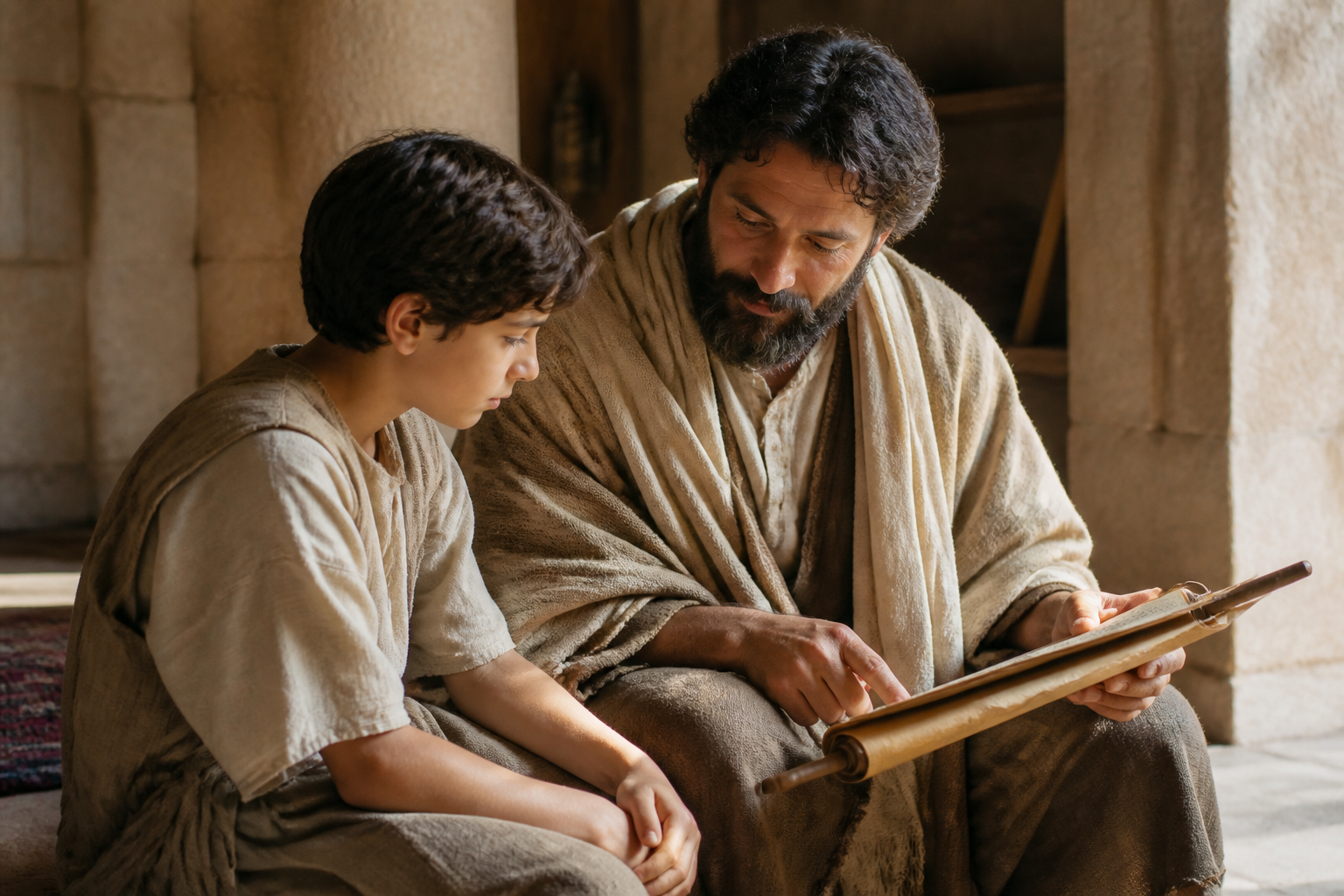
The passages give παιδεύω a concrete texture: a ruler weighing penalties and release in a courtroom; a student formed by “wisdom” and a disciple trained in “strict tradition”; a community confronting blasphemy with severe measures aimed at teaching; and a father-child picture where discipline is interpreted as love and purposeful training. Taken together, these scenes present instruction as something that can be gentle or severe, but always directed toward shaping what a person knows, does, and becomes.
Sources: Lexical data from Strong’s Exhaustive Concordance and the Translators Brief Lexicon of Extended Strongs for Greek (STEPBible, CC BY). Occurrence data from the Translators Amalgamated Greek New Testament (STEPBible, CC BY). Scripture quotations from the World English Bible (public domain).