Exploring the Meaning of Horizo in Greek
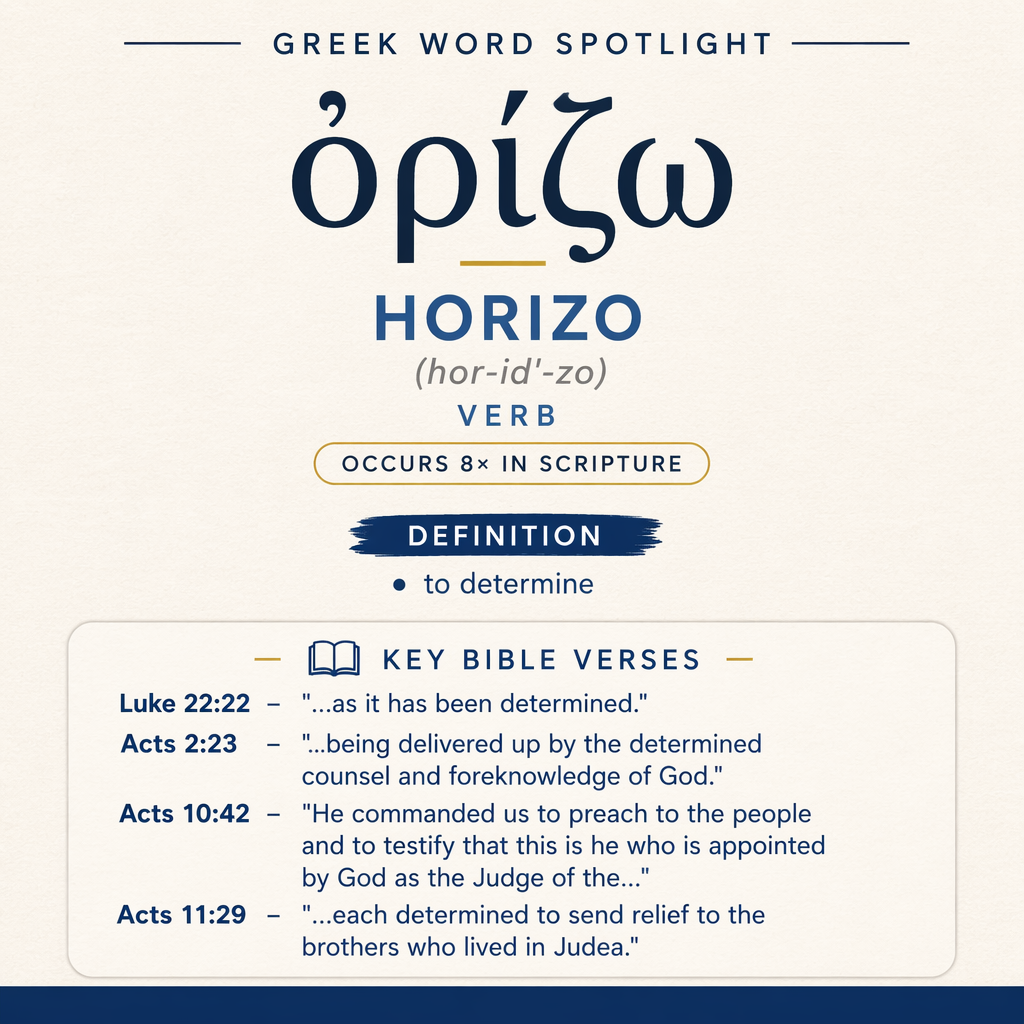
ὁρίζω means “to determine” and occurs 8 times in Scripture: Luke 22:22; Acts 2:23; 10:42; 11:29; 17:26; 17:31; Romans 1:4; Hebrews 4:7.
Core Meaning
ὁρίζω means “to determine.” In its listed verses, it marks what is determined or appointed.
Learn More →Where It Appears
It occurs 8 times across Luke, Acts, Romans, and Hebrews. The references are Luke 22:22; Acts 2:23; 10:42; 11:29; 17:26; 17:31; Romans 1:4; Hebrews 4:7.
Learn More →Usage Examples
It is used for what “has been determined” (Luke 22:22) and for what God has “appointed” or “ordained” (Acts 10:42; 17:31). It is also used when disciples “determined” to send relief (Acts 11:29).
Learn More →ὁρίζω means “to determine,” and in the New Testament it is used for decisions set in place—by God, by communities, and within the flow of salvation history. The occurrences gathered here span Gospel narrative, apostolic preaching in Acts, a Pauline confession, and a warning-exhortation in Hebrews.
Occurrences
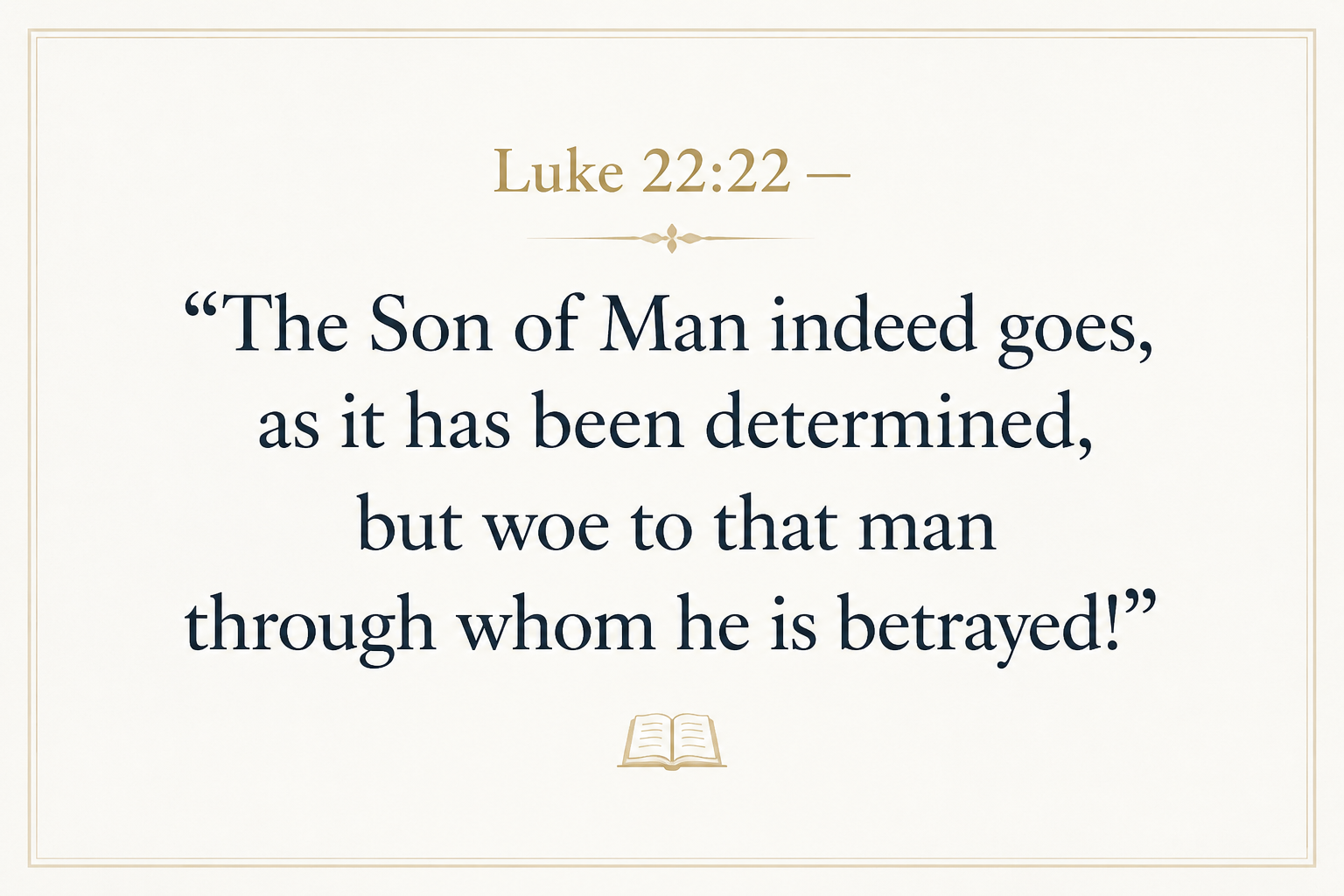
Luke 22:22 — “The Son of Man indeed goes, as it has been determined, but woe to that man through whom he is betrayed!”
Here the verb frames Jesus’ path to betrayal and death as something already settled. The saying holds together two elements in the same sentence: the Son of Man’s going is determined, yet the betrayer remains under “woe.” The determination supplies the backdrop for the passion without dissolving the moral weight of the betrayal named in the second clause.
Acts 2:23 — “him, being delivered up by the determined counsel and foreknowledge of God, you have taken by the hand of lawless men, crucified and killed;”
In Peter’s public proclamation, determination belongs to God’s “counsel” and is paired with “foreknowledge.” The verse then moves immediately to human action: “you have taken… crucified and killed.” The determination language marks the handing over of Jesus as occurring within a settled divine plan, even as the speech confronts the audience with responsibility for what was done.
Acts 10:42 — “He commanded us to preach to the people and to testify that this is he who is appointed by God as the Judge of the living and the dead.”
The determination in this scene concerns appointment to a role: God has set Jesus as “the Judge of the living and the dead.” The verb supports the apostolic testimony as something grounded in God’s decision, not merely in human opinion. It also situates the preaching task (“He commanded us”) alongside the content of proclamation: Jesus’ divinely appointed judicial authority.
Acts 11:29 — “As any of the disciples had plenty, each determined to send relief to the brothers who lived in Judea;”
Here determination is communal and practical. “Each” disciple makes a settled decision corresponding to ability (“As any… had plenty”), resulting in a concrete act: sending relief. The verb underscores intentional resolve rather than impulse; the community’s care for Judean believers is portrayed as a chosen course of action distributed across individuals.
Acts 17:26 — “He made from one blood every nation of men to dwell on all the surface of the earth, having determined appointed seasons, and the boundaries of their dwellings,”
In Paul’s Areopagus address, determination is cosmic in scope. God’s making of the nations is linked with his setting of “appointed seasons” and “the boundaries of their dwellings.” The verb presents these features of human life—times and places—as defined by divine decision. Determination here functions as an ordering act: life on “all the surface of the earth” unfolds within parameters God has set.
Acts 17:31 — “because he has appointed a day in which he will judge the world in righteousness by the man whom he has ordained; of which he has given assurance to all men, in that he has raised him from the dead.”
This occurrence focuses on a fixed point in time: God has appointed “a day” for judgment. The verse ties that appointed day to an appointed agent (“by the man whom he has ordained”) and then to public assurance grounded in resurrection. Determination language therefore anchors eschatological judgment in a settled divine timetable and a divinely set judge, presented as universally relevant (“to all men”).
Romans 1:4 — “who was declared to be the Son of God with power, according to the Spirit of holiness, by the resurrection from the dead, Jesus Christ our Lord,”
Within this confessional statement about Jesus Christ, the verb contributes the idea of a decisive designation: he “was declared to be the Son of God with power.” The declaration is located “by the resurrection from the dead,” which functions as the event through which this determination is made known. The verb thus serves the paragraph’s focus on who Jesus is, as publicly marked out in a powerful way.
Hebrews 4:7 — “he again defines a certain day, today, saying through David so long a time afterward (just as has been said), “Today if you will hear his voice, don’t harden your hearts.””
Here determination appears as the setting of a named time for response: “he again defines a certain day, today.” The verse uses that defined “today” to press urgency—hearing God’s voice and refusing hardness of heart. The determination is not abstract; it shapes the hearers’ present moment by marking it as the day set for attentive listening and obedient softness.

Sense and Usage
Across these passages, “to determine” functions in several consistent ways: it establishes a course (Luke 22:22), situates events within divine counsel (Acts 2:23), assigns roles and authority (Acts 10:42), guides deliberate communal action (Acts 11:29), orders human times and places (Acts 17:26), fixes a future moment and its appointed agent (Acts 17:31), decisively marks out identity through a climactic event (Romans 1:4), and defines a time of hearing and response (Hebrews 4:7).
Two main subjects carry out this determining. God is repeatedly the determiner: his counsel surrounds the handing over of Jesus (Acts 2:23), he appoints Jesus as Judge (Acts 10:42), he determines seasons and boundaries for nations (Acts 17:26), and he appoints a day of judgment and ordains the man through whom it will occur (Acts 17:31). Even in Hebrews 4:7, the definitional act—setting “today” as the relevant day—comes with divine speech “through David.” Alongside these, human determining appears in Acts 11:29, where the disciples themselves decide on relief. The word can therefore depict resolve at different levels: divine determination that structures history and human determination that expresses concrete obedience and solidarity.
The objects of determination vary, and the variety clarifies how the verb works. It can attach to an outcome or pathway (“goes, as it has been determined,” Luke 22:22). It can describe the shaping of an event’s delivery (“delivered up by the determined counsel,” Acts 2:23). It can set a person into an office (“appointed by God as the Judge,” Acts 10:42). It can fix a practical plan (“determined to send relief,” Acts 11:29). It can set temporal and spatial parameters (“appointed seasons… boundaries,” Acts 17:26) and specify a decisive time (“appointed a day,” Acts 17:31; “defines a certain day, today,” Hebrews 4:7). In Romans 1:4 it attaches to a declarative marking-out of identity in connection with resurrection, presenting determination as something made evident and authoritative.
Several occurrences hold determination alongside human action without collapsing one into the other. In Luke 22:22, determination does not remove the “woe” pronounced on the betrayer; the saying preserves the seriousness of betrayal within a determined course. In Acts 2:23, the determined counsel and foreknowledge of God stand in the same breath as the audience’s culpable participation: “you have taken… crucified and killed.” Acts 17:31 similarly combines fixed appointment (a day; an ordained man) with a call for public assurance grounded in resurrection. The verb thus supports proclamation that is both theologically anchored and ethically pressing.
In Acts 17:26–31 taken together, determination gathers into a single vision: God sets the times and boundaries of human life and also sets the day of judgment. Determination therefore describes not only beginnings and continuities (nations dwelling on earth within seasons and boundaries) but also an endpoint (a day of judgment in righteousness). Hebrews 4:7 brings the theme into the present tense of exhortation, where a defined “today” becomes the arena in which responsiveness to God’s voice is demanded.
Framing Imagery
The passages use determination language to place lines on a map and dates on a calendar: “appointed seasons,” “boundaries of their dwellings” (Acts 17:26), “appointed a day” (Acts 17:31), and “defines a certain day, today” (Hebrews 4:7). Alongside these, the word also marks a person for an office (“appointed… as the Judge,” Acts 10:42) and marks out Jesus’ identity “with power… by the resurrection from the dead” (Romans 1:4). In narrative and proclamation alike, determination supplies the sense of settled direction—history moving on a set course, decisive moments fixed, and hearers addressed within a defined time for response.
Sources: Lexical data from Strong’s Exhaustive Concordance and the Translators Brief Lexicon of Extended Strongs for Greek (STEPBible, CC BY). Occurrence data from the Translators Amalgamated Greek New Testament (STEPBible, CC BY). Scripture quotations from the World English Bible (public domain).