
Exploring the Meaning of Metropolis in Greek
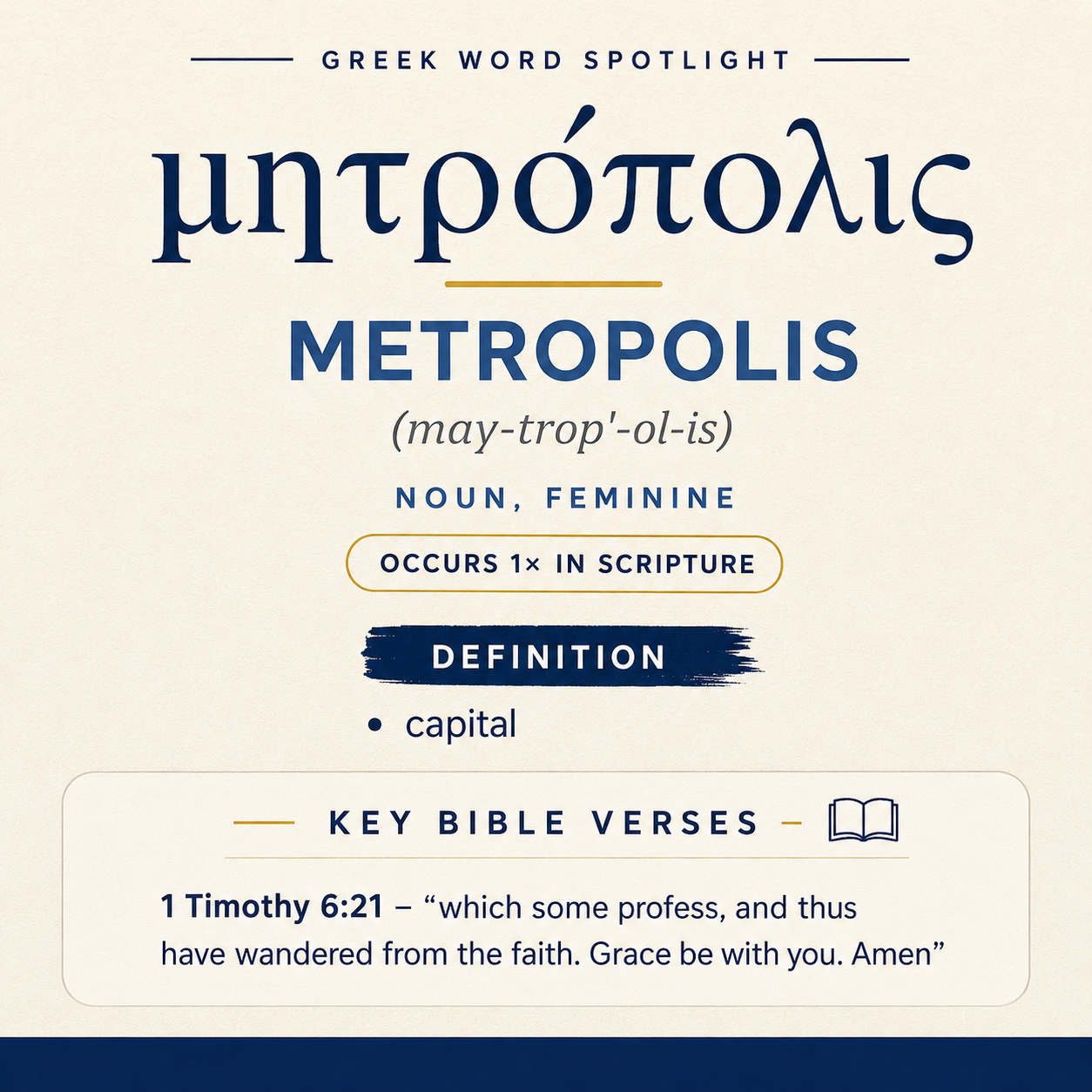
μητρόπολις means “capital” and occurs once in Scripture, in 1 Timothy 6:21.
Verse Context
In 1 Timothy 6:21, the verse reads: “which some profess, and thus have wandered from the faith. Grace be with you. Amen.”
Learn More →μητρόπολις means “capital” and appears once in Scripture, in 1 Timothy 6:21. In its lone setting, the word belongs to Paul’s closing lines, where he warns about wandering from the faith and ends with a benediction.
Root and Related Words
μητρόπολις derives from meter (μήτηρ), “mother” (Strong’s G3384), and polis (πόλις), “city” (Strong’s G4172). The combination places the idea of a “capital” within the conceptual world of a “mother” and a “city,” language that naturally suggests a principal city in relation to others.
Occurrences
“which some profess, and thus have wandered from the faith. Grace be with you. Amen.” (1 Timothy 6:21)
In this closing verse the letter turns from instruction to a final assessment and farewell. The line speaks of a confession (“which some profess”) whose outcome is spiritual disorientation (“thus have wandered from the faith”), followed by a brief blessing (“Grace be with you”). Within such a compressed conclusion, a term meaning “capital” would function as a concentrated piece of social vocabulary: it evokes the reality of central places—primary cities that stand as hubs of influence and belonging. In a context warning about people being pulled off course, the image of a “capital” would underline the presence of recognized centers: places that can gather, direct, and shape movement, whether toward stability or away from it.
The immediate surroundings of the verse heighten the contrast the word would bring. The text presents wandering as a movement away from the faith, a departure rather than an arrival. Against that, “Grace be with you” is a stabilizing closing wish. A word meaning “capital,” set in this kind of final sentence, would naturally contribute a sense of what is central, definitive, or focal—language that fits a letter closing with a clear boundary between those who drift and the community addressed by the benediction.
Sense and Usage
As “capital,” μητρόπολις belongs to the sphere of civic organization and the ordering of space: the world in which some cities are understood as principal over others. The term’s force is not in describing any ordinary urban location but in naming a city in its central role, the place with a primacy recognized by its relationship to other places. In reading terms like this, the key feature is not architecture or population but status—being a focal city within a larger framework.
In 1 Timothy 6:21, the verse itself is brief and pastoral, focusing on the consequences of a confession that ends in wandering and on a final wish of grace. A term for “capital” fits that genre precisely because it is a compact word that carries an entire social picture in a single expression. Without needing a narrative description, it can call to mind the difference between a center and a periphery, between what is established and what is unsettled. In a line concerned with wandering “from the faith,” that contrast between center and departure provides an apt conceptual pairing: the warning depicts movement away, while the vocabulary of a “capital” implies an acknowledged center.
The word’s derived elements also shape how “capital” is heard. Built from meter (“mother”) and polis (“city”), μητρόπολις naturally suggests a principal city understood in relation to others, the way a mother is understood in relation to children. That does not add a new gloss beyond “capital,” but it helps explain why the term can feel relational rather than merely geographic: it is a name for centrality that presumes a network of connected places. In a letter that closes by distinguishing between those who have wandered and those receiving grace, the notion of a central, defining place works as a compact way of framing what it means to have a point of reference and what it means to drift from it.
Imagery
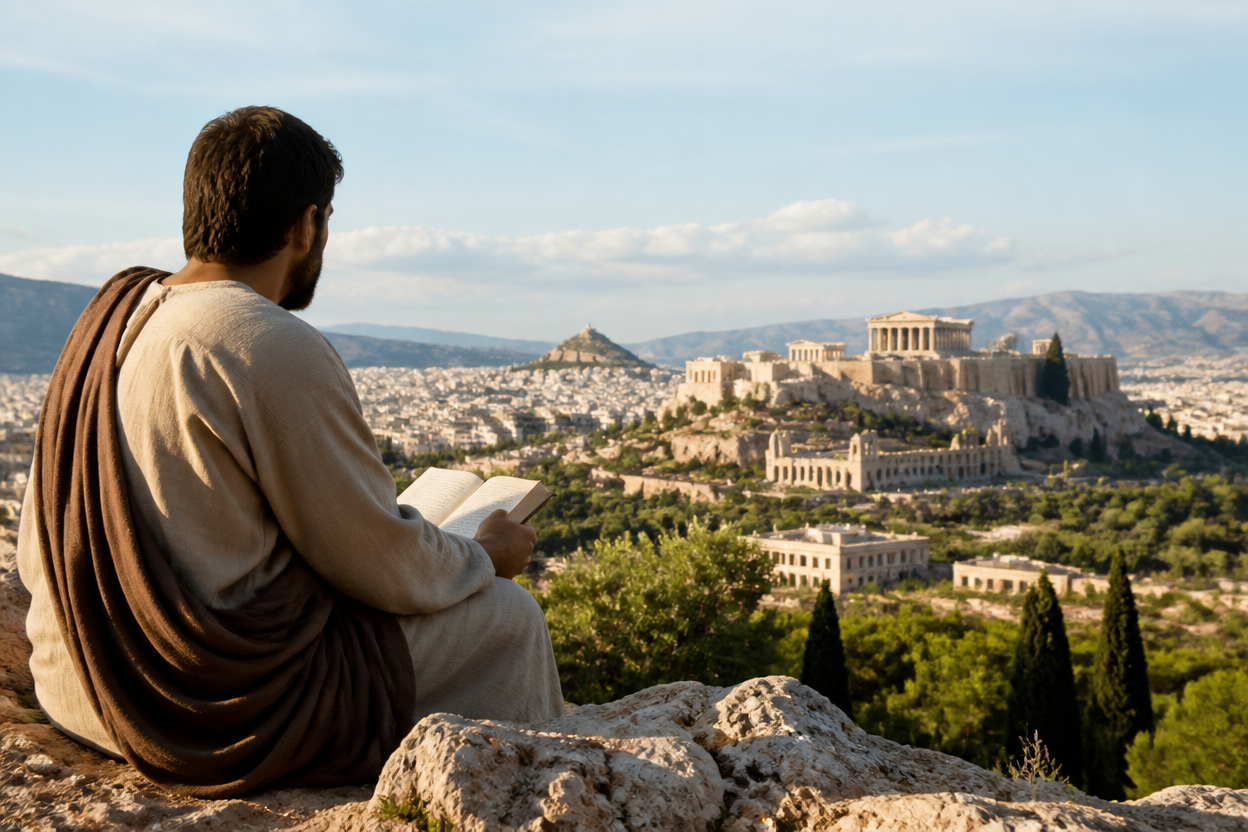
Even in a short closing like 1 Timothy 6:21, a word meaning “capital” carries tangible imagery: a chief city standing as a recognized center within a wider landscape. Read alongside “wandered from the faith,” the picture is of motion away from what is central and fixed; read alongside “Grace be with you,” it suggests the steadying presence of what holds a community together.
Sources: Lexical data from Strong’s Exhaustive Concordance and the Translators Brief Lexicon of Extended Strongs for Greek (STEPBible, CC BY). Occurrence data from the Translators Amalgamated Greek New Testament (STEPBible, CC BY). Scripture quotations from the World English Bible (public domain).





