Exploring the Meaning of Mesotoichon in Greek
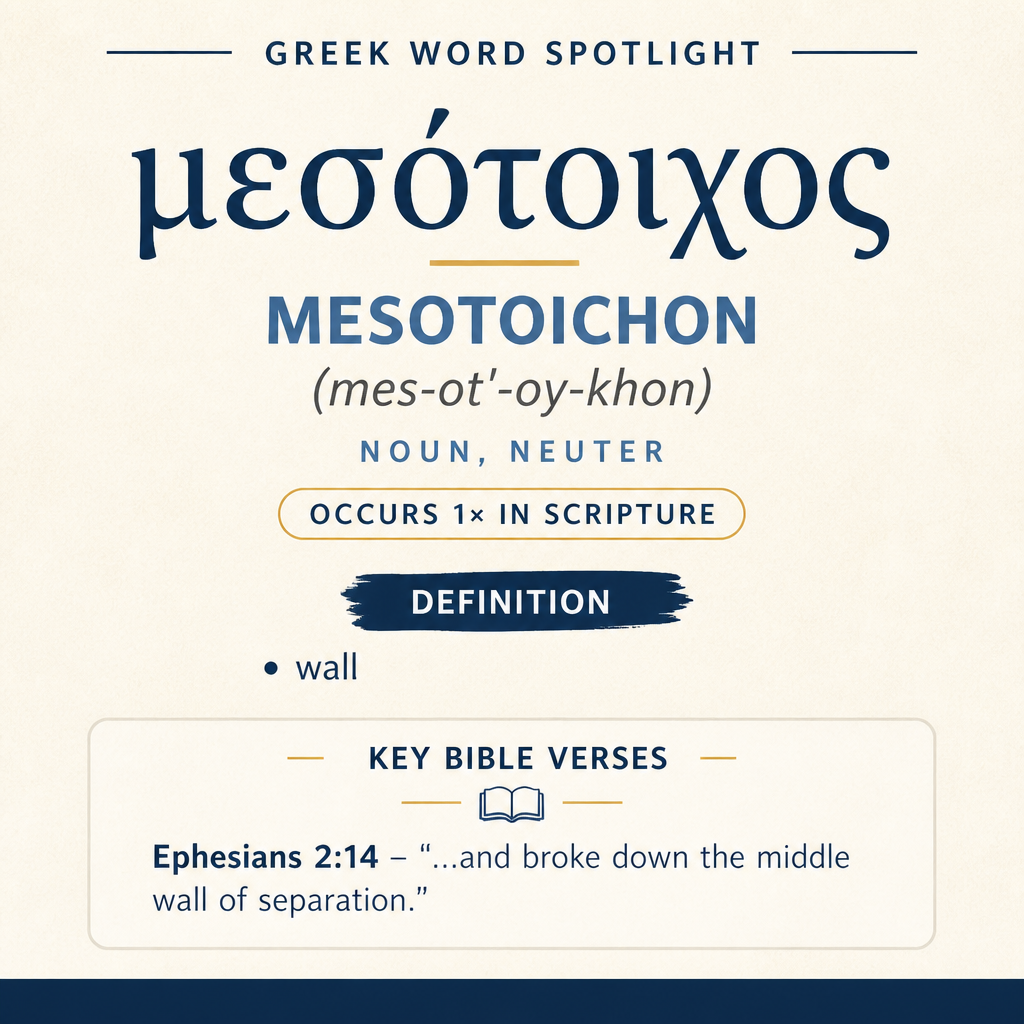
μεσότοιχος means “wall” and appears once in Scripture, in Ephesians 2:14.
Biblical Occurrence
This word occurs 1 time in Scripture. It appears in Ephesians 2:14.
Learn More →Verse Context
In Ephesians 2:14, it is used in the phrase “the middle wall of separation.”
Learn More →μεσότοιχος denotes a wall and appears once in the New Testament, in Paul’s description of what Christ has done for “both” groups in Ephesians 2:14. In that verse it is the specific barrier that is “broke[n] down,” serving as a concrete image for separation being removed.
Root and Related Words
μεσότοιχος is formed from mesos (μέσος), “midst,” and toichos (τοῖχος), “wall.” The combined shape of the word points to a wall conceived in relation to the “middle” or “midst,” and to a wall understood as a structural divider rather than merely an outer boundary.
Occurrences
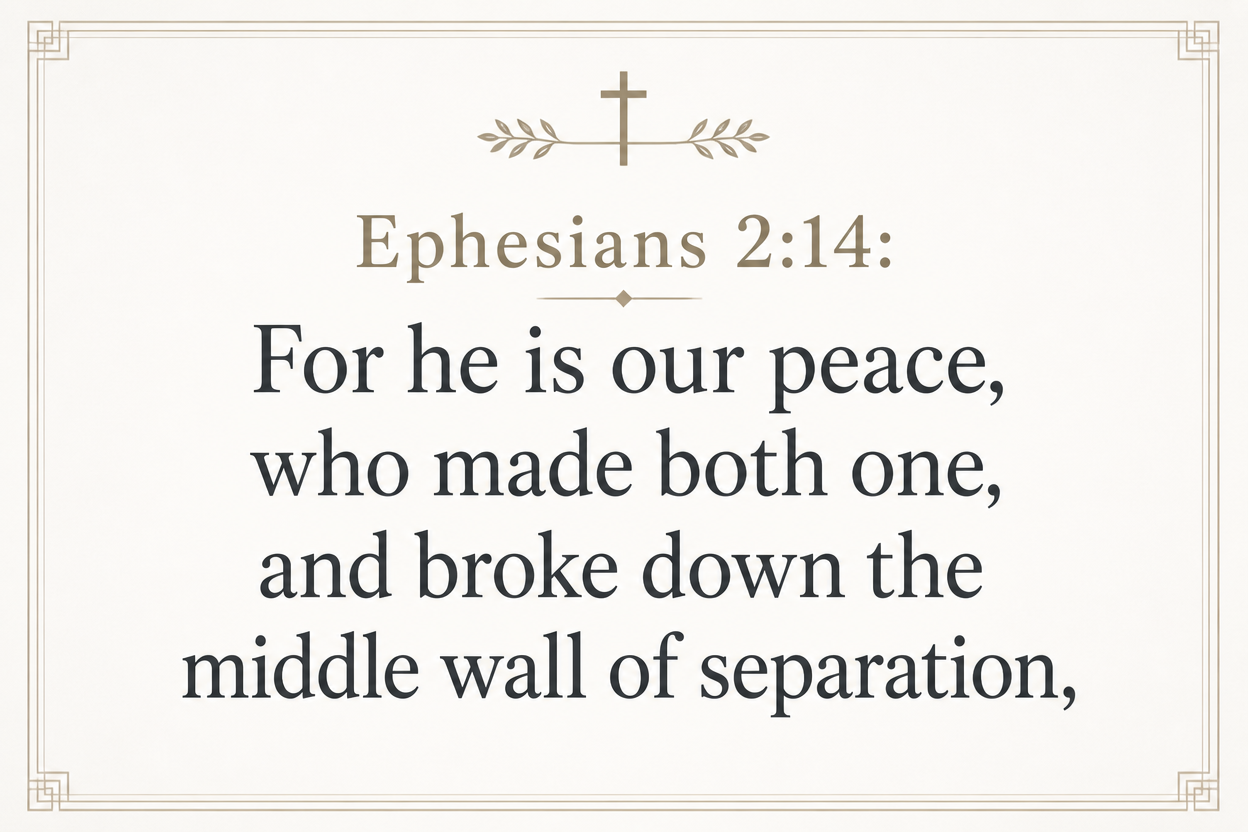
Ephesians 2:14: For he is our peace, who made both one, and broke down the middle wall of separation,
Here μεσότοιχος is the object associated with an action of removal: it is “broke[n] down.” The clause pairs two results—“made both one” and “broke down the middle wall of separation”—so the wall functions as the pictured obstacle to unity. The verse does not treat the wall as a protective feature that remains useful; it is a divider that stands between “both” and must be dismantled for “both” to become “one.”
The phrasing also gives the wall a particular location and role. It is a “middle wall,” which situates it between parties rather than at the edge of a single party’s space. And it is explicitly a wall “of separation,” so its defining function in this sentence is to separate, not simply to support or enclose. In the logic of the verse, peace is not only an inner attitude but an achieved condition in which the separating structure has been removed.
Sense and Usage
As used in Ephesians 2:14, the sense of “wall” is sharpened by the surrounding descriptors and verbs. The word participates in a compact sequence of images: peace, two parties, oneness, and a demolished barrier. The wall is not introduced to describe architecture for its own sake; it is introduced because “wall” is an apt, concrete way to speak about a real division that can be conceived as standing between parties.
The immediate collocation “middle wall” tightens the image. A wall can mark an outside limit, but a wall “middle” in relation to two sides is experienced as an intervening obstacle. This suits the verse’s concern with the relationship of “both”: the wall belongs to the space between them, representing an entrenched separation that is more than mere distance. The verse’s grammar makes that separation active and consequential: the wall is something that prevents “both” from being “one,” so its removal is portrayed as necessary for unity.
The action applied to the wall—“broke down”—treats it as something constructed and therefore something that can be dismantled. The verb choice gives the wall a certain solidity: it is not a mist or a misunderstanding but something that stands and must be forcibly removed. Yet the verse also keeps the focus on the agent and outcome: “he is our peace” frames the breaking down not as an end in itself, but as the means by which peace results in “both one.” The wall, though material in imagery, is subordinate to the relational outcome stated in the same breath.
The genitive-like phrase “of separation” (as expressed in English) identifies the wall by its effect. A wall may be neutral in other contexts, but here it is characterized by what it does between the parties: it separates. This clarifies how “wall” is functioning semantically in this passage: it is a divider that defines two sides over against each other. The verse then presents the breaking down of that divider as congruent with peacemaking—peace is pictured as the removal of the dividing structure that maintained separation.
Because μεσότοιχος occurs only here, its semantic contribution in the New Testament is concentrated and vivid. The single attestation makes the immediate context decisive: whatever broader associations a reader might bring to “wall,” the verse directs attention to the wall’s position (“middle”) and purpose (“separation”), and it interprets Christ’s work as the decisive act of dismantling that barrier so that unity (“both one”) becomes the new reality described.
Imagery
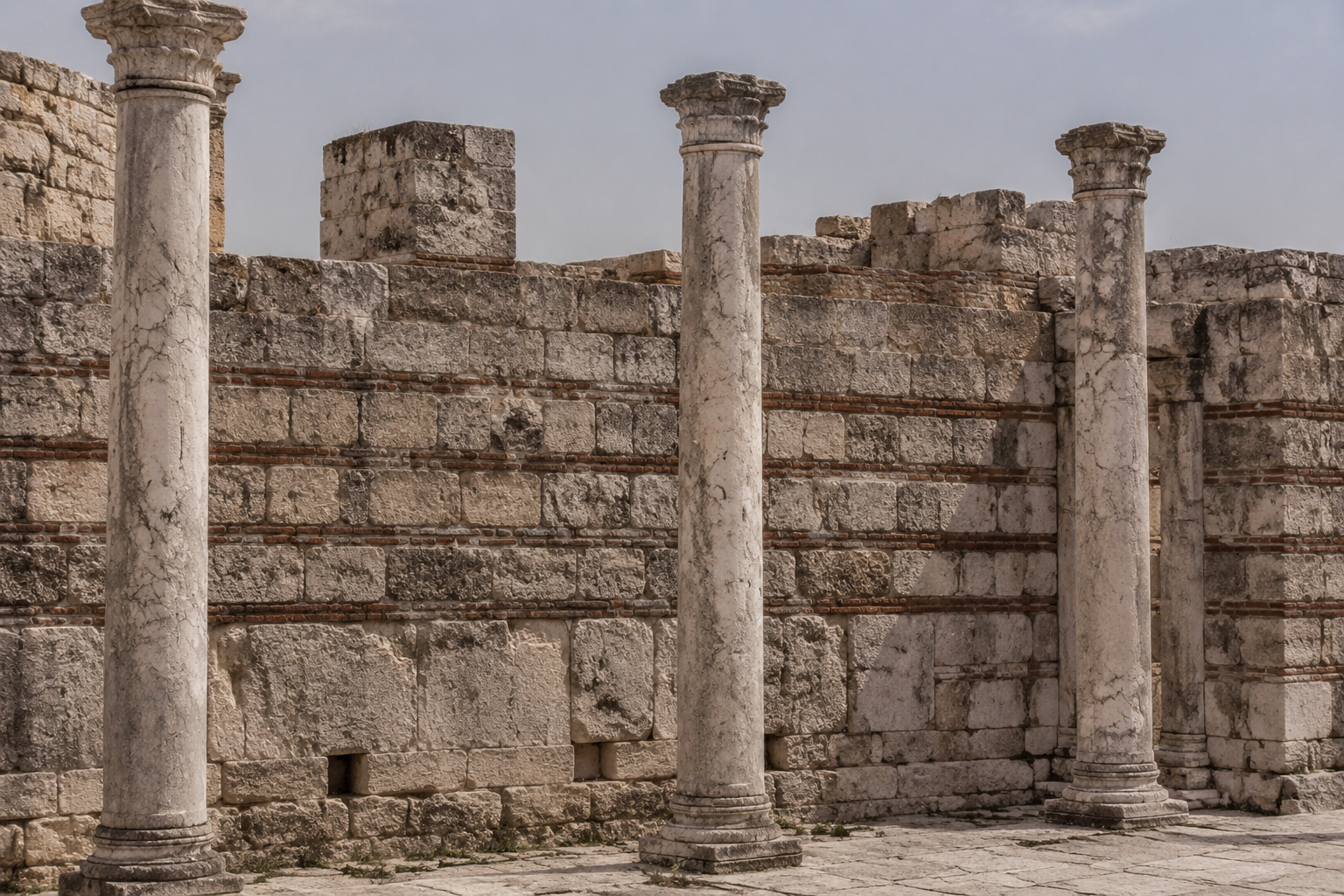
The image carried by μεσότοιχος in Ephesians 2:14 is a standing barrier between two sides that is then torn down. The verse invites the reader to picture a solid partition in the space between separated parties and to understand “peace” as the collapse of that partition, clearing the way for “both” to be joined as “one.”
Sources: Lexical data from Strong’s Exhaustive Concordance and the Translators Brief Lexicon of Extended Strongs for Greek (STEPBible, CC BY). Occurrence data from the Translators Amalgamated Greek New Testament (STEPBible, CC BY). Scripture quotations from the World English Bible (public domain).