
Exploring the Meaning of Katartismos in Greek
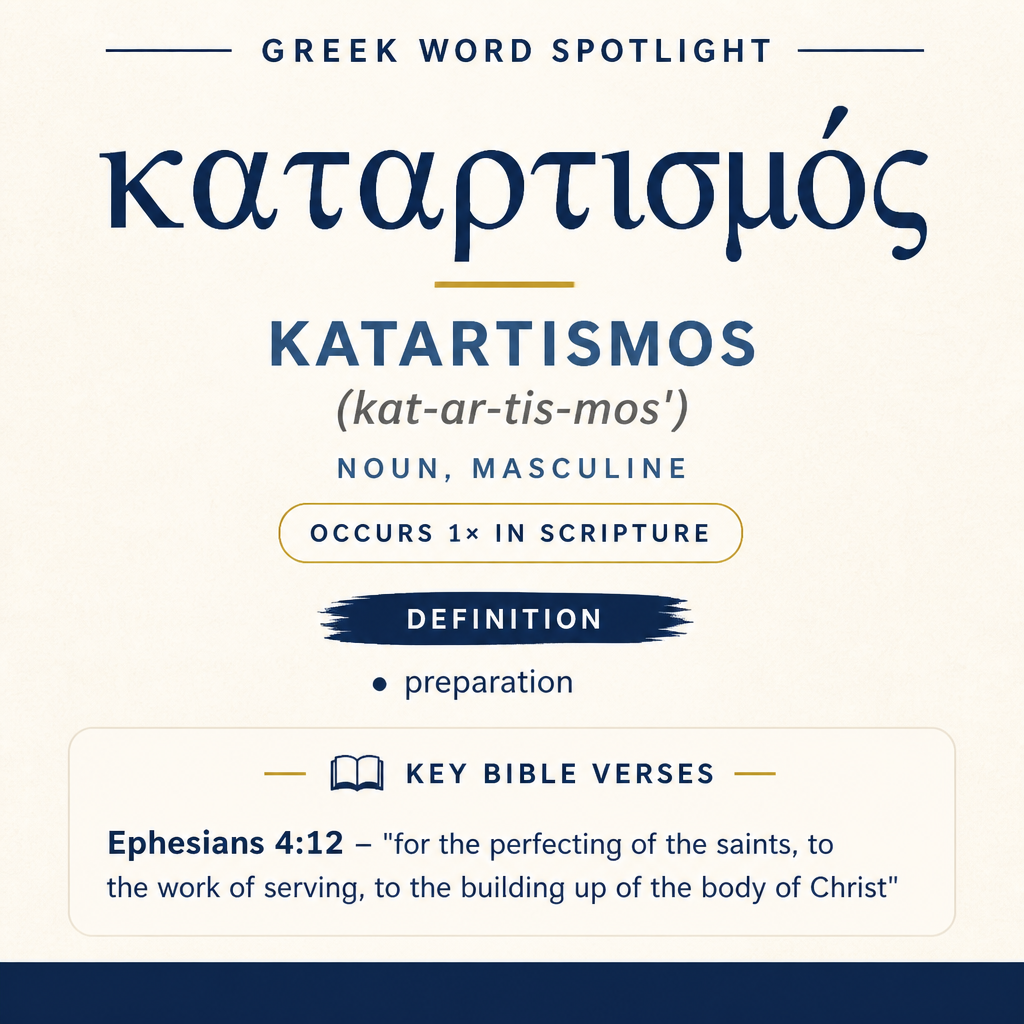
καταρτισμός means “preparation” and appears once in Scripture, in Ephesians 4:12.
Verse Context
In Ephesians 4:12 it appears in the phrase “for the perfecting of the saints,” connected to service and building up Christ’s body.
Learn More →καταρτισμός expresses the idea of preparation in a church-setting instruction about how believers are equipped for service and growth. It appears in Ephesians 4:12, where it frames the purpose of ministry for the saints and the strengthening of Christ’s body.
Root and Related Words
καταρτισμός is connected with the verb katartizō (καταρτίζω), “to complete” (Strong’s G2675). The noun presents the result or aim associated with that verbal idea as it functions in context.
Occurrences
Ephesians 4:12 — “for the perfecting of the saints, to the work of serving, to the building up of the body of Christ,”
In this line, καταρτισμός stands at the head of a sequence of purpose phrases. The verse moves from an initial goal (“for the perfecting of the saints”) to a lived-out activity (“to the work of serving”) and then to a corporate outcome (“to the building up of the body of Christ”). Within that progression, the word supplies the first step: the saints are being brought into a state of readiness that fits them for the work that follows. It is not an end that remains private or merely inward; it is presented as the shaping that leads directly into “serving,” and through serving into the strengthening and growth of “the body of Christ.”
The structure of the verse treats this preparation as purposeful and directed. It is not preparation in the abstract, but preparation of the saints—a readiness that pertains to the people who belong to Christ. The line then places that prepared condition in immediate relationship to “the work of serving,” so that readiness and service belong together: the preparation envisioned is the kind that equips for actual labor on behalf of others. Finally, the verse links that service to a larger communal effect: “the building up of the body of Christ.” The word therefore participates in an ordered chain: preparation → service → building up. In this single occurrence, it helps the reader see that the body’s growth is not accidental; it is pursued through the purposeful readiness of the saints for ministry.
Sense and Usage
The sense “preparation” in καταρτισμός is clarified by how it is positioned among the other goals in Ephesians 4:12. The verse treats preparation as something done with a view to a task. It is the kind of readiness that makes “the work of serving” possible and effective, rather than a vague state of being informed or inspired. Because the same line also names “the building up of the body of Christ,” the preparation is implicitly oriented toward the health of a community, not merely the improvement of an isolated individual. Readiness here is practical and constructive: it aims at service that contributes to the body’s growth.
This usage also shows how preparation can function as a purposeful process with measurable direction, even when the details of that process are not spelled out in the verse. The saints are prepared so that service can happen; service is rendered so that the body can be built up. The word therefore carries the idea of being set in order for a role: preparation is what situates the saints to take part in the work that strengthens Christ’s people as a whole. In this way, the term belongs to the language of equipping and formation as it relates to ministry outcomes—readiness that expresses itself in service and results in building up.
Imagery
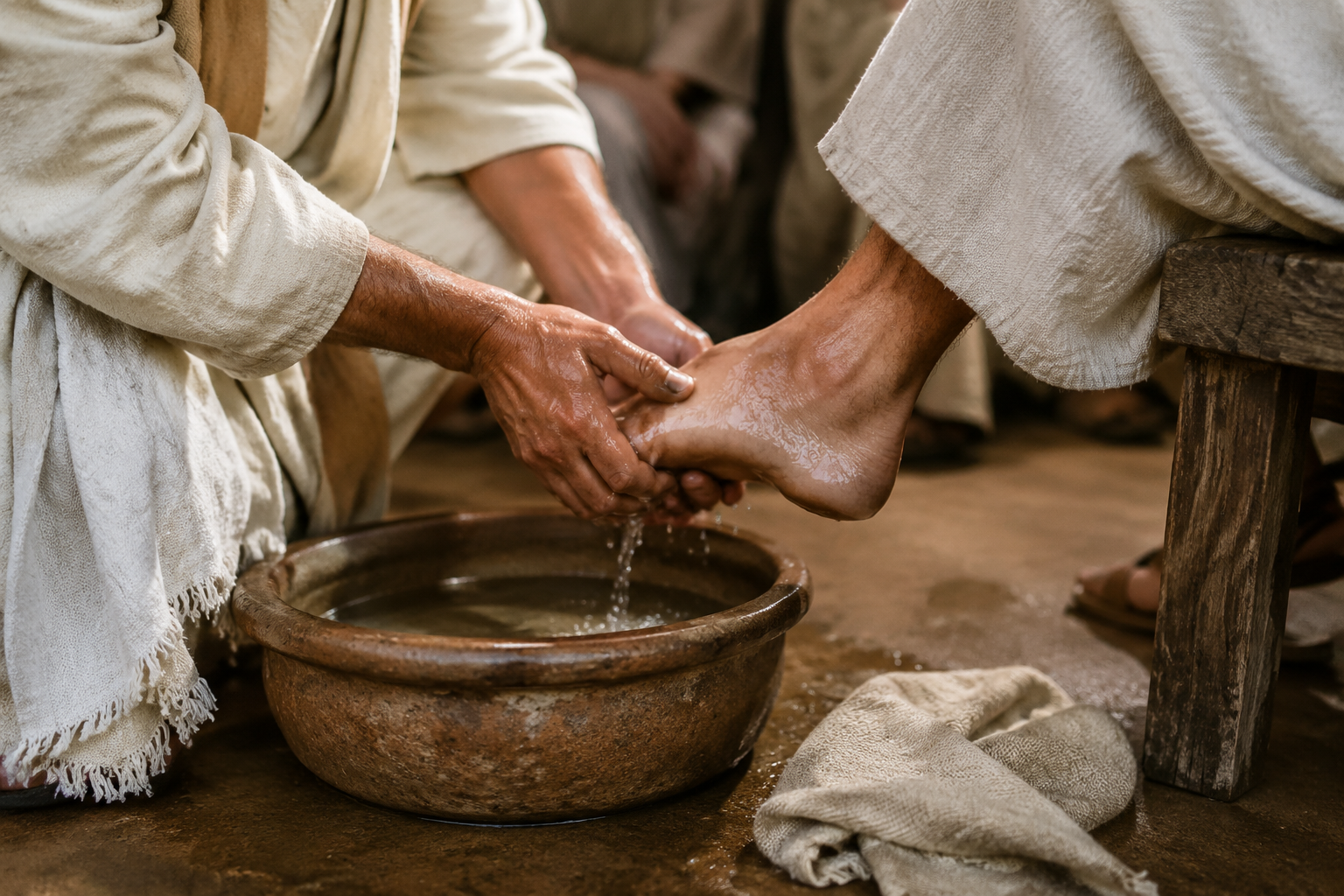
Although the verse does not paint a physical scene, its wording evokes the picture of a body under construction and care: “the building up of the body of Christ.” Within that implied imagery, καταρτισμός corresponds to the preparatory stage that makes building possible—getting people ready for the work that contributes to the body’s growth through service.
Sources: Lexical data from Strong’s Exhaustive Concordance and the Translators Brief Lexicon of Extended Strongs for Greek (STEPBible, CC BY). Occurrence data from the Translators Amalgamated Greek New Testament (STEPBible, CC BY). Scripture quotations from the World English Bible (public domain).




