Exploring the Meaning of Kakopatheia in Greek
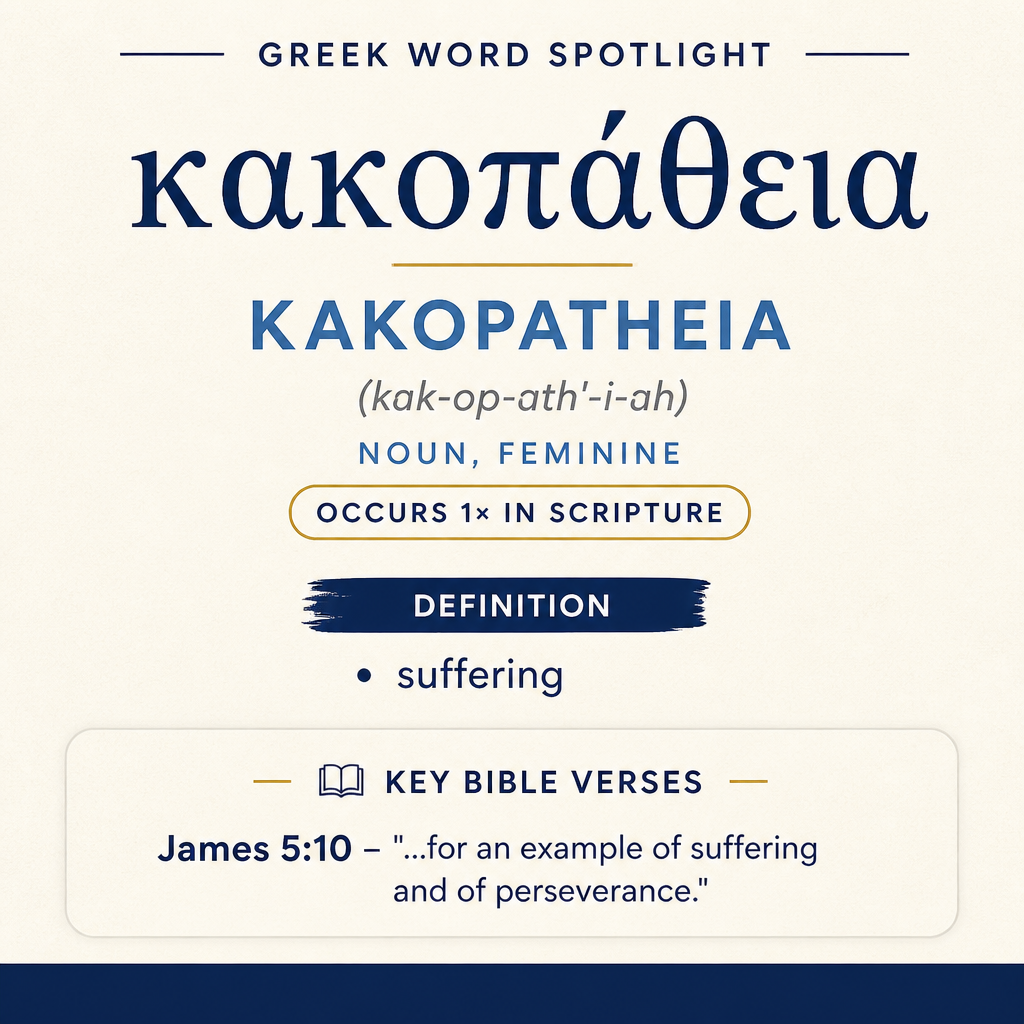
κακοπάθεια means “suffering” and appears once in Scripture, in James 5:10.
James 5:10 Context
James 5:10 presents the prophets as an example of suffering and perseverance as they spoke in the Lord’s name.
Learn More →κακοπάθεια means “suffering” and appears in James as part of an exhortation that points readers to the prophets as a model. In that setting, it is paired with perseverance and anchored in the prophets’ speech “in the name of the Lord.”
Root and Related Words
κακοπάθεια is connected with πάθος (pathos), “passion” (Strong’s G3806). A further related term in the word’s derivation list is ἡμιώριον (hemiorion), “half an hour” (Strong’s G2256).

Occurrences
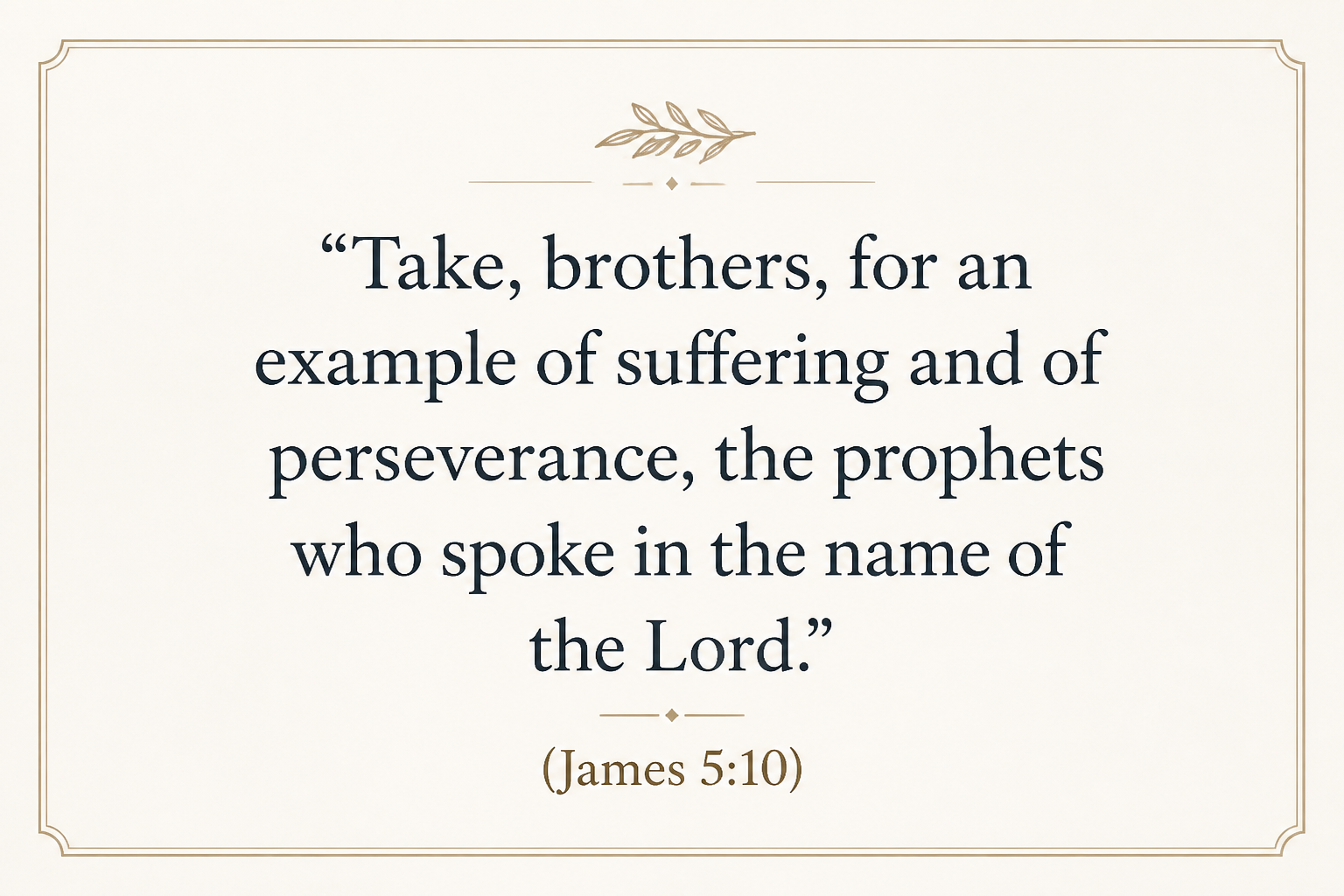
“Take, brothers, for an example of suffering and of perseverance, the prophets who spoke in the name of the Lord.” (James 5:10)
Here κακοπάθεια names what the prophets exemplify, set alongside “perseverance” as a paired feature of their experience. James frames it as an “example” to be taken—something concrete enough to function as a pattern for “brothers,” rather than an abstract topic for discussion. The immediate literary effect is to place “suffering” within a moral and spiritual portrait: it belongs to a life that persists, and it is associated with the prophets’ public role as those “who spoke in the name of the Lord.”
The wording also locates suffering within vocation: it is not described as random misfortune but as part of the prophets’ story as speakers. James does not analyze the causes or mechanics of the suffering in this line; instead, the verse uses it as a recognized feature of prophetic witness. By coupling it with perseverance, the text guides the reader to view “suffering” as something endured over time, something that calls forth steadiness rather than collapse. The prophets are not merely illustrations of pain; they are “an example” precisely because their endurance accompanies their suffering and stands in continuity with their faithfulness in speech.
Sense and Usage
Within its lone New Testament appearance, “suffering” functions as a category of lived experience that can be pointed to, learned from, and imitated in its response. James treats κακοπάθεια as something that can be recognized in exemplary lives: the prophets provide a known case, and their suffering is presented as part of the evidence that their perseverance was real. In this way, the sense of the word is not isolated to the sensation of pain; it is interwoven with a pattern of endurance that can serve as instruction.
The syntax in James 5:10 also gives “suffering” a didactic role. It sits within the phrase “for an example of suffering and of perseverance,” which makes it one of the two named qualities that together form the lesson. That structure makes “suffering” describable and discussable: it can be held up as an example, not only experienced. It also implies that suffering is not automatically virtuous or instructive by itself; what becomes exemplary is suffering as borne by those who persevere, and borne by those whose lives are defined by speaking “in the name of the Lord.”
Because James identifies the prophets by their speech, the verse places suffering in proximity to testimony and proclamation. The prophets are remembered here not for private experiences but for public faithfulness—“who spoke in the name of the Lord.” In that frame, κακοπάθεια becomes part of the costliness that can attend faithful speaking. The word therefore contributes to James’s pastoral aim: he directs attention to figures whose suffering did not silence their voice, and whose perseverance did not detach from the realities of hardship.
Finally, the pairing of “suffering” with “perseverance” shapes the word’s rhetorical force. Suffering is presented not as the endpoint of the story but as one element in a sequence that includes steadfast continuance. The verse’s imperative, “Take, brothers,” places the reader under instruction: suffering is something to understand through an example, and perseverance is the interpretive companion that shows what faithful suffering looks like in practice.
Imagery
James 5:10 evokes the picture of prophets standing and speaking “in the name of the Lord,” with suffering as the backdrop of that calling. The imagery is not graphic or detailed; it is a remembered pattern—voices that continue, and lives that persist, even while marked by hardship.
Sources: Lexical data from Strong’s Exhaustive Concordance and the Translators Brief Lexicon of Extended Strongs for Greek (STEPBible, CC BY). Occurrence data from the Translators Amalgamated Greek New Testament (STEPBible, CC BY). Scripture quotations from the World English Bible (public domain).