Exploring the Meaning of Threnos in Greek
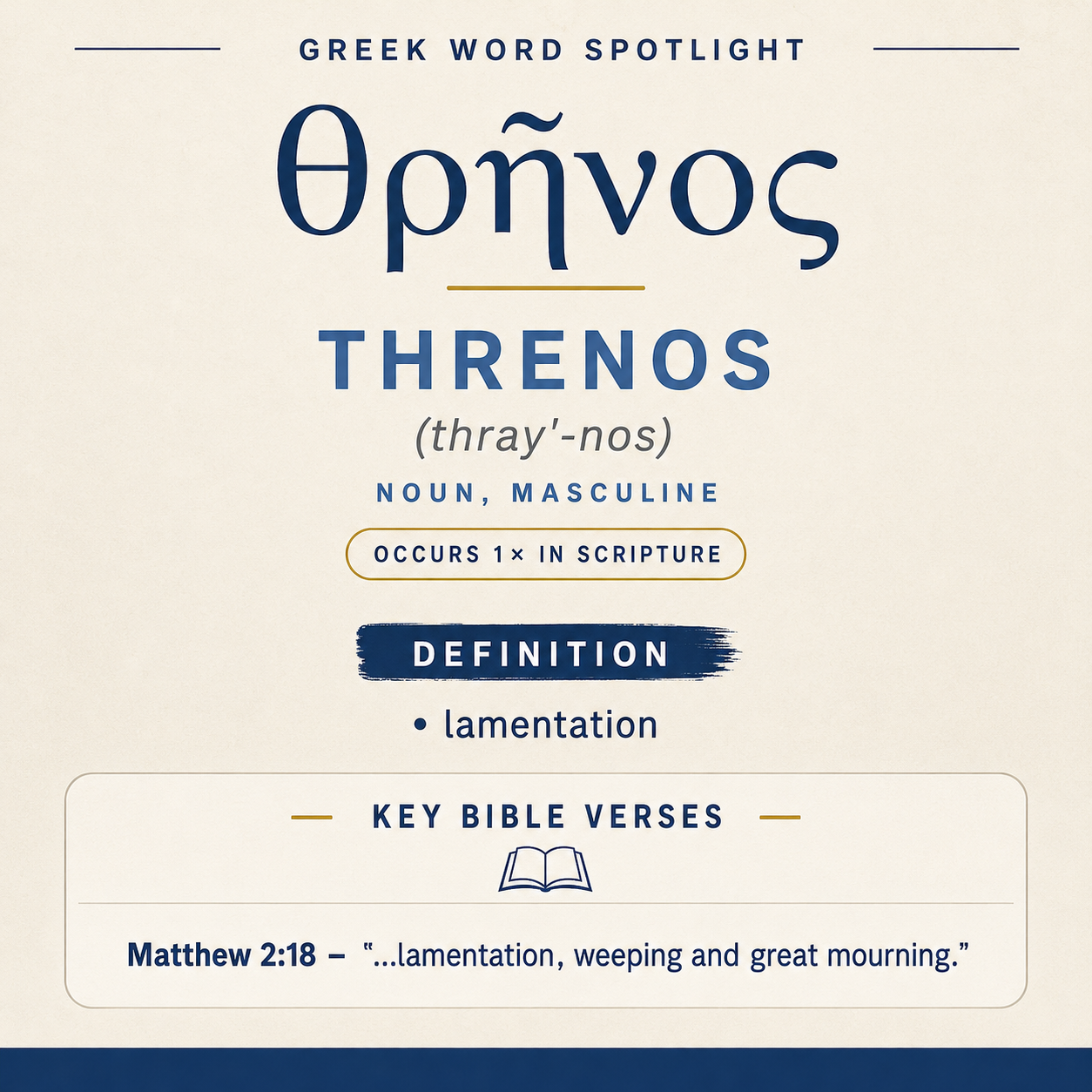
θρῆνος (Threnos) means “lamentation” and appears once in Scripture, in Matthew 2:18.
Matthew Context
In Matthew 2:18 it appears in the phrase “lamentation, weeping and great mourning,” describing Rachel weeping for her children.
Learn More →θρῆνος names “lamentation,” the kind of voiced grief that rises publicly and audibly in a moment of loss. It appears once, in Matthew’s depiction of a cry heard at Ramah.
Root and Related Words
θρῆνος is connected with the verb θροέω (throeo), “to alarm” (Strong’s G2360). The pairing places the noun in the neighborhood of emotional disturbance that is intense enough to be felt and heard, not merely held inwardly.

Occurrences
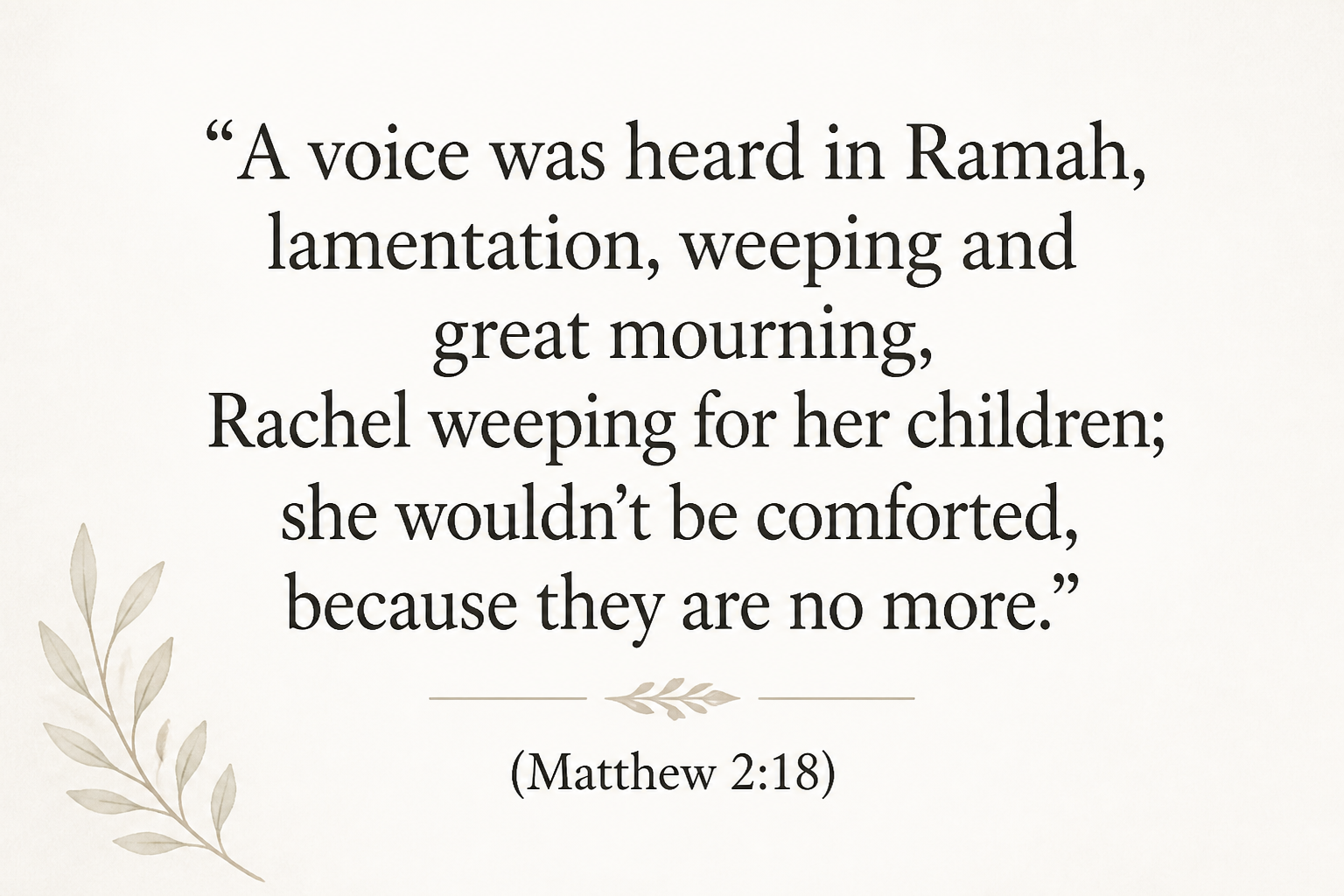
“A voice was heard in Ramah, lamentation, weeping and great mourning, Rachel weeping for her children; she wouldn’t be comforted, because they are no more.” (Matthew 2:18)
Here θρῆνος stands in a clustered description of grief: “lamentation, weeping and great mourning.” The verse begins with sound—“A voice was heard”—and θρῆνος contributes directly to that emphasis. It marks grief as something that breaks into the open as a voiced cry, an audible expression rather than a silent feeling. The text is not content to say there was sorrow; it sketches sorrow as heard, voiced, and multiplied in form.
Placed alongside “weeping” and “great mourning,” θρῆνος helps portray grief with layers. “Weeping” can point to tears, and “mourning” can describe the broader posture of sorrow; θρῆνος gives the scene the sound of sorrow—lamentation as a voiced outcry. The clustering suggests that the event is not confined to one kind of response but spills over into speech and crying and communal sadness.
The lamentation is tied to a mother’s grief: “Rachel weeping for her children.” Within the verse’s imagery, lamentation is not detached from relationship; it is grief for “her children,” and the personal bond is what gives the lamentation its force. The line “she wouldn’t be comforted” shows the persistence of the lamentation: it is not a brief outburst quickly soothed, but an ongoing refusal of consolation. θρῆνος, in this sentence, participates in portraying that unrelieved anguish.
The closing reason—“because they are no more”—anchors the lamentation in loss that is final within the frame of the verse. θρῆνος is therefore not a complaint about inconvenience or disappointment; it belongs to bereavement language, sorrow expressed where absence is permanent and the one lamenting cannot be persuaded out of grief. The lamentation is the voice of someone meeting a reality that has shattered the possibility of comfort.
Sense and Usage
In its sole attested use here, θρῆνος functions as a specific label for grief that is expressed vocally. The verse introduces it with the auditory cue “A voice was heard,” and then sets it among other grief-terms. This positioning gives θρῆνος a distinct role: it contributes a sense of uttered sorrow—grief made into sound.
The verse’s threefold grouping (“lamentation, weeping and great mourning”) also shows how θρῆνος can be one component in a fuller portrait of mourning. Lamentation is not identical to the other elements; it sits beside them, implying a grief that can be described from multiple angles at once. Within this single sentence, lamentation is one strand of a larger fabric of bereavement: tears (“weeping”), a sustained state (“mourning”), and the vocal outcry (“lamentation”).
Matthew 2:18 further shapes the word’s sense by attaching it to a named figure and an explicit relational loss. “Rachel weeping for her children” places lamentation in the mouth of a mother whose grief is for her own. That detail keeps θρῆνος from being abstract; the word is bound to a concrete situation of parental bereavement. Lamentation in this verse is therefore portrayed as intensely personal, not merely ceremonial.
The phrase “she wouldn’t be comforted” gives θρῆνος a texture of resistance to consolation. Lamentation here is not easily interrupted by kind words or reassurances; it persists because its cause persists: “because they are no more.” The verse uses the unyielding nature of the loss to explain the unyielding nature of the lamentation. In that way, θρῆνος is presented as an expression of grief that corresponds to irreversible absence.
Finally, the word participates in the verse’s public quality. The lamentation is not hidden; it is “heard.” Whether the scene is imagined as one household or many, the line frames the grief as carrying through the air, reaching beyond the one who suffers it. θρῆνος therefore fits an image of sorrow that becomes communal in its audibility—pain that makes a place ring with crying and mourning.
Imagery
The imagery attached to θρῆνος in Matthew 2:18 is the sound of grief filling a location: “A voice was heard in Ramah.” Lamentation is pictured as something that travels—an audible cry joined with “weeping and great mourning”—and as something that cannot be quieted when the loss is summed up in the words “they are no more.”
Sources: Lexical data from Strong’s Exhaustive Concordance and the Translators Brief Lexicon of Extended Strongs for Greek (STEPBible, CC BY). Occurrence data from the Translators Amalgamated Greek New Testament (STEPBible, CC BY). Scripture quotations from the World English Bible (public domain).